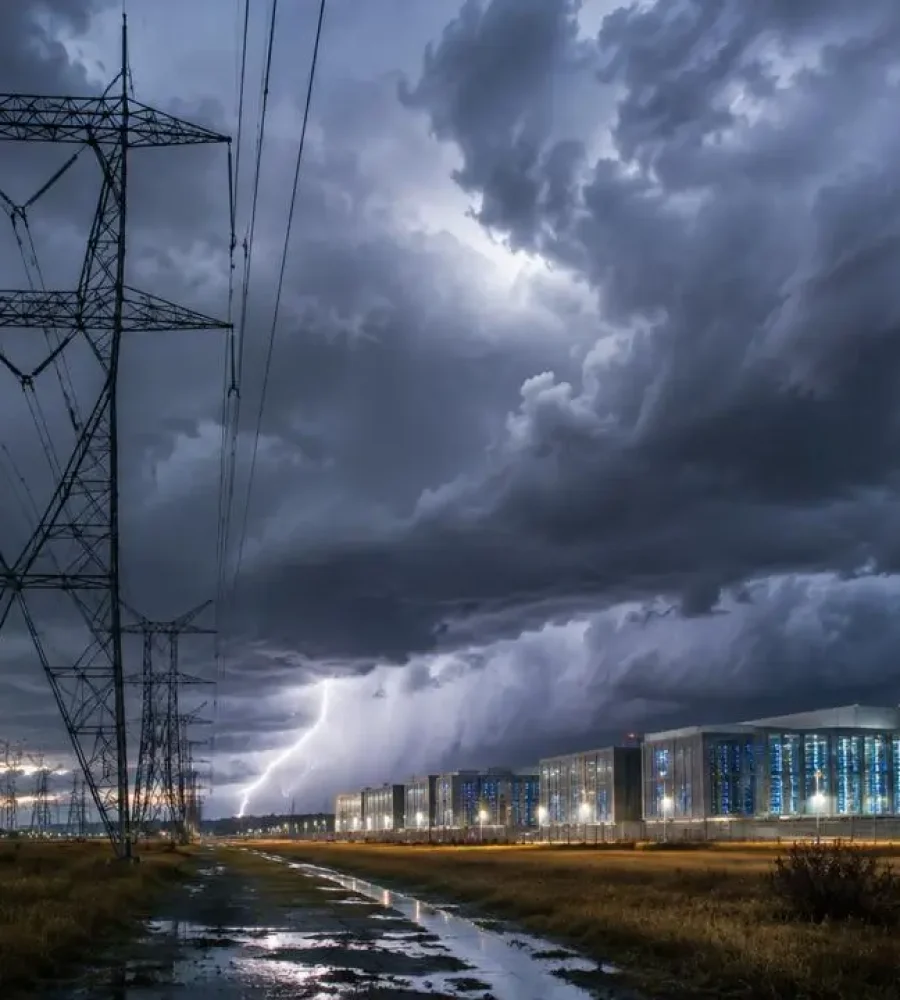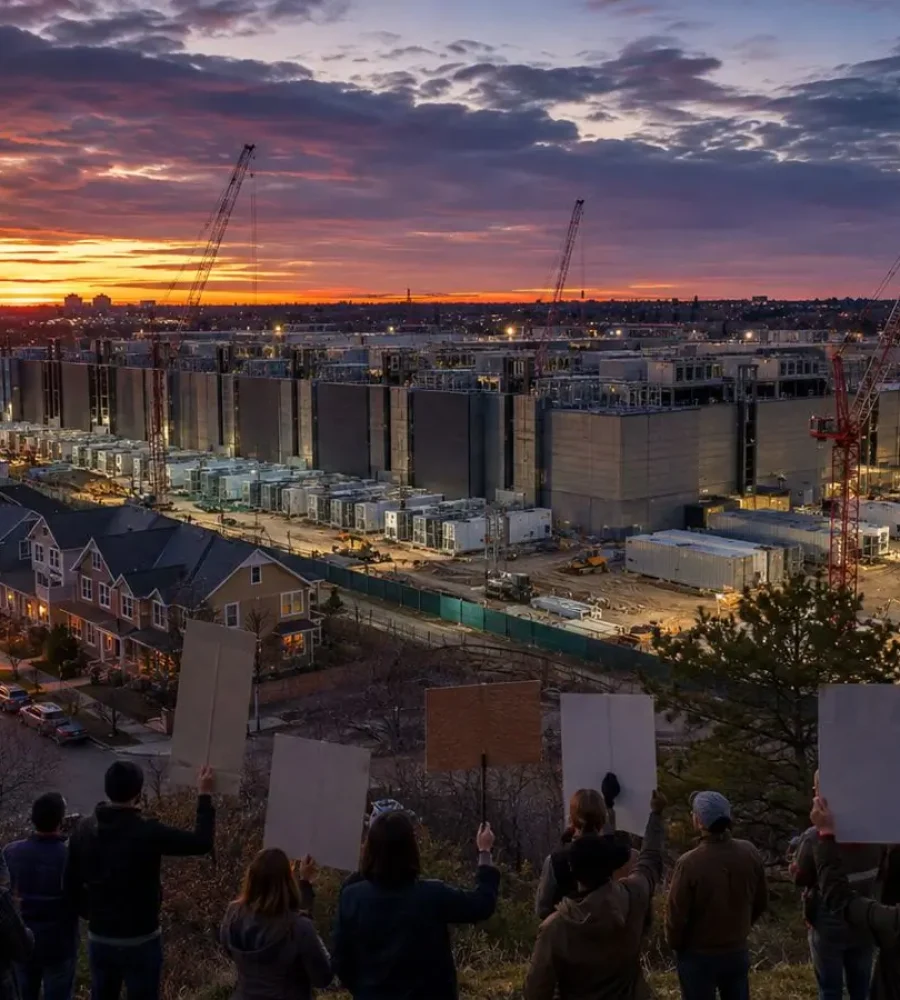
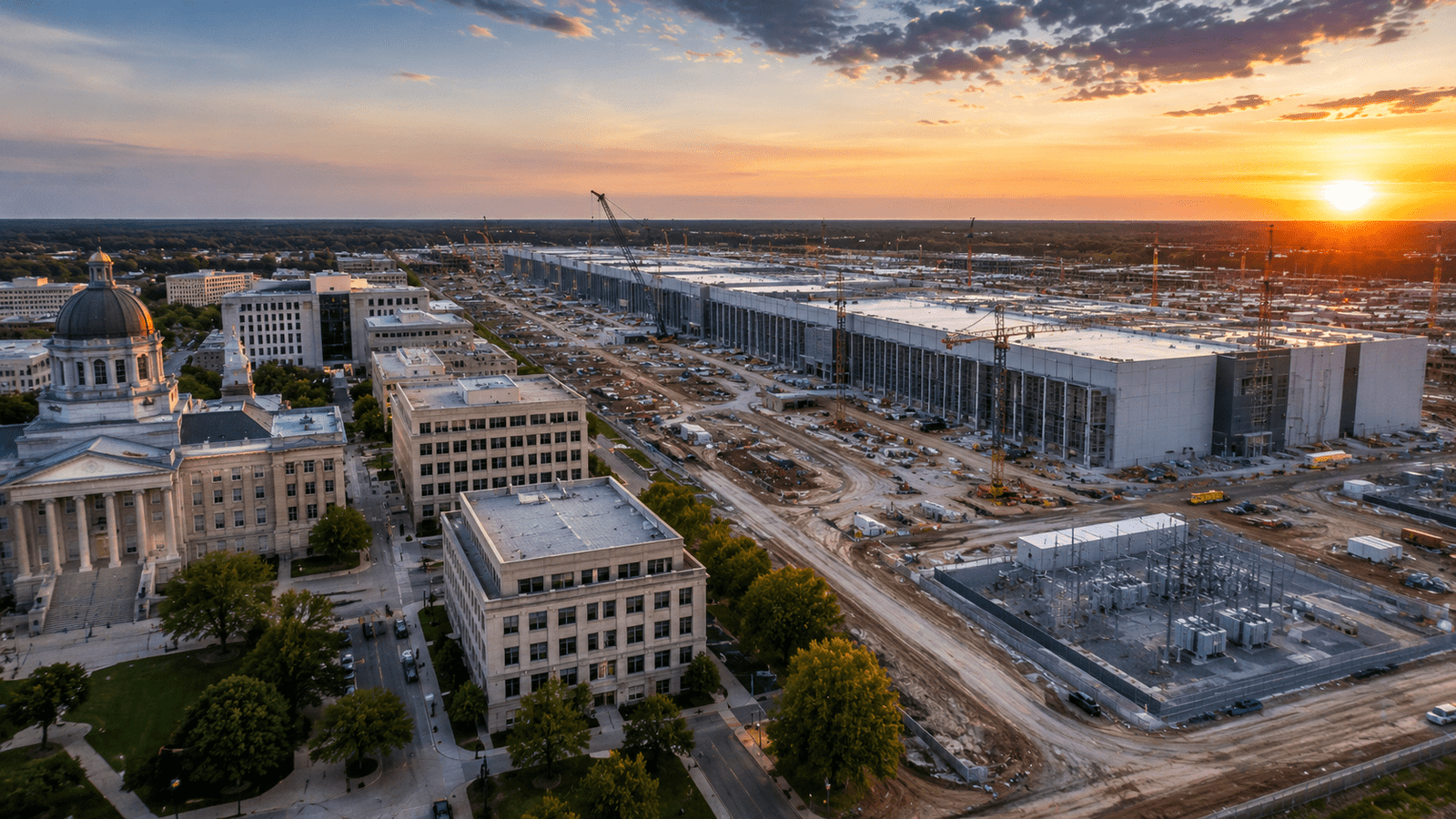
The Trump administration’s executive order streamlines federal Clean Air Act permitting and environmental review for qualifying facilities, but it does not override state authority on land use, zoning, utility regulation, or state-level air quality programs. Twenty-seven states are advancing data center legislation that goes beyond the federal government’s voluntary frameworks, with California, Ohio, and Utah already enacting laws that impose requirements on data center operators regardless of federal streamlining. Maine has passed an 18-month data center moratorium. The federal executive order applies to a narrow category of very large facilities and has not changed the permitting timelines that govern the majority of AI data center development.
Furthermore, interconnection delays, which are the most binding timeline constraint for most data center projects, are regulated by state public utility commissions and FERC processes that the executive order does not reach. Federal permitting streamlining is a real improvement in a narrow category. It is not the structural reform that the broader market requires.
The EU Model That Works and Is Not Being Deployed Fast Enough
The Centre for Future Generations, in its submission to the EU consultation on the Cloud and AI Development Act, proposed a 180-day permitting deadline for AI data center projects in designated Special Compute Zones, explicitly modelled on the EU Renewable Energy Directive’s fast-track permitting framework for renewable energy projects. The RED III Directive demonstrated that EU member states can compress approval timelines for strategic infrastructure from 24 months to as little as six months in the fastest markets when they commit to streamlined permitting processes. Denmark’s energy infrastructure approval processes have shown that governments can achieve 180-day timelines for complex infrastructure when political will and administrative capacity align. The SCZ model would apply the same approach to AI infrastructure, creating pre-designated zones with pre-approved power connections, single-window permitting, and mandatory approval timelines.
The problem with the SCZ proposal is implementation velocity. EU legislative processes take years from proposal to regulation to member state implementation. The Cloud and AI Development Act is still in preparation. Member states whose administrative capacity and political will vary enormously across the EU must then implement the regulation in ways that create the streamlined permitting experience the proposal envisions. The Spanish and Norwegian data center markets, which are already growing rapidly within the current EU framework, demonstrate what is possible when member state conditions are favourable. The markets that most need permitting reform, where grid congestion and administrative complexity are most severe, are also the markets where implementation will be slowest and most contested.
As covered in our analysis of Europe’s AI infrastructure race losing ground market by market, the gap between EU-level permitting reform ambition and member state implementation capacity reflects a structural feature of European AI infrastructure development that no single regulation can resolve.
What Genuine Reform Would Require in the US
In the US, the permitting constraint on AI infrastructure development is not primarily federal. It is state and local. The grid interconnection queues that stretch seven to ten years in primary US markets are governed by state utility commissions and FERC interconnection processes. FERC’s Order 1000, which requires competitive bidding for transmission projects, adds 18 to 24 months to new construction completion. As American Transmission noted in testimony to FERC, “This was an inconvenience in the past, but it is a catastrophe in the race for AI dominance.” State environmental review processes, local zoning requirements, and public utility commission approval processes for new grid connections all operate independently of federal executive orders. Genuine permitting reform in the US context requires action at the state level, coordination between FERC and state utility commissions, and legislative changes to interconnection processes that require Congressional action or FERC rulemaking that takes years to complete.
Interconnection Is the Binding Constraint
The most promising near-term mechanism is the FERC large-load interconnection rulemaking, which the US Department of Energy formally requested in October 2025 and which was expected to reach final action around April 30, 2026. This rulemaking, if it produces standardised interconnection procedures for large loads including AI data centers, could materially reduce the timeline uncertainty that currently makes multi-year infrastructure planning difficult for developers who cannot get binding grid connection commitments on commercially viable timelines. That single regulatory action, if implemented effectively, would do more to accelerate AI infrastructure development in the US than the July 2025 executive order, because interconnection delay rather than environmental review is the binding constraint for the majority of stalled projects.
As covered in our analysis of the time-to-power crisis as AI’s hidden scaling ceiling, grid connection timelines are the infrastructure constraint that no capital commitment can override. Permitting reform that does not address interconnection is permitting reform that does not address the problem.
The State Competition That Is Producing Real Results
The most effective permitting acceleration in the current AI infrastructure cycle has not come from federal or EU-level reform. It has come from state-level competition for AI infrastructure investment. Andhra Pradesh’s single-window permitting for qualifying data center investments, which reduces approval timelines from years to months, is attracting Google’s gigawatt campus and Reliance’s mega-center to Visakhapatnam. Nevada’s data center-friendly permitting environment, combined with competitive power rates and available land, has attracted significant investment that Northern Virginia’s congested market cannot accommodate. Texas’s relatively streamlined permitting for industrial development has made it one of the fastest-growing AI data center markets in the US despite ongoing grid reliability challenges from the ERCOT market structure.
The Limits of Competitive Permitting Reform
State and country-level competition is producing permitting reform faster than federal or supranational regulatory processes can deliver it, because the incentive to attract AI infrastructure investment is immediately visible to state and local governments whose economic development mandates depend on landing large campuses. That competition is imperfect. It produces regulatory arbitrage that concentrates AI infrastructure in markets with the most permitting flexibility rather than markets best suited to serve AI workload demand. It also creates race-to-the-bottom dynamics on environmental review that community opposition movements in Virginia and Utah are actively resisting. However, competitive state permitting reform is delivering results that federal executive orders and EU legislative proposals have not yet achieved.
The structural reform that AI infrastructure permitting actually needs is a national-level framework that establishes minimum fast-track permitting standards for qualifying AI infrastructure projects while preserving legitimate state authority over community impact, utility rate protection, and environmental review. Neither the US executive order nor the EU Cloud and AI Development Act achieves that balance. Both move in the right direction without moving far enough or fast enough to match the pace of the buildout they are trying to support.