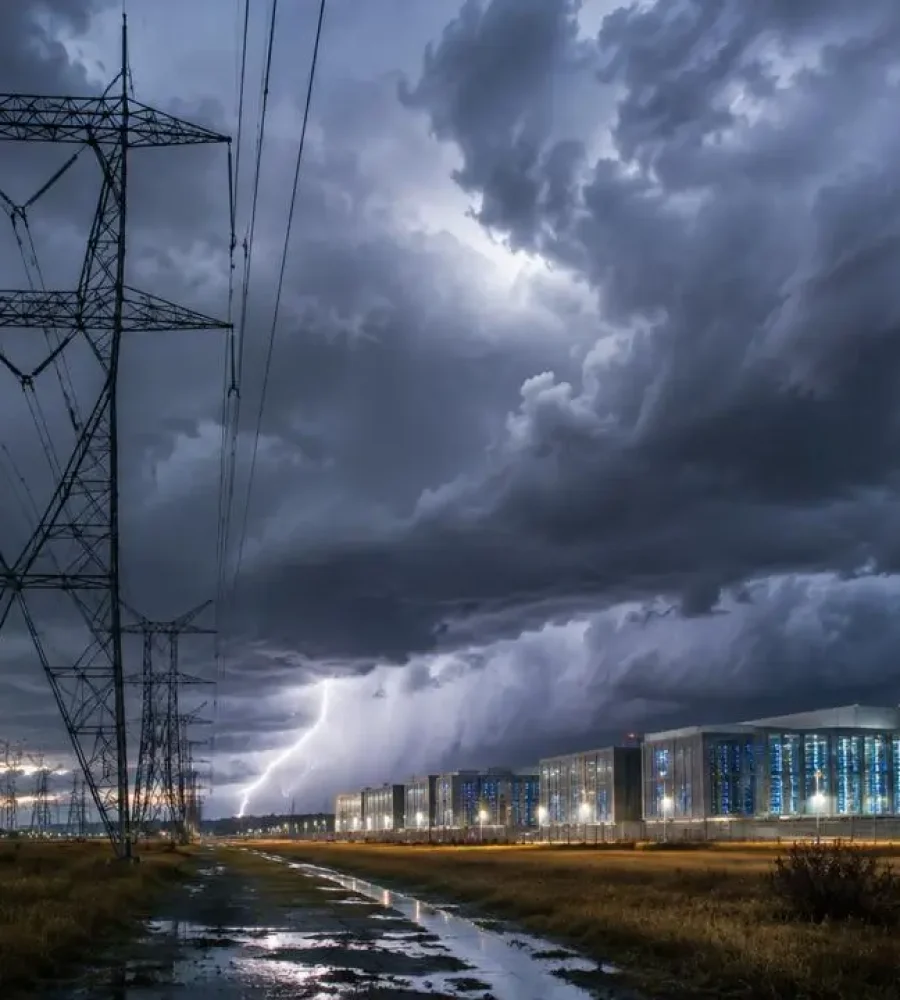
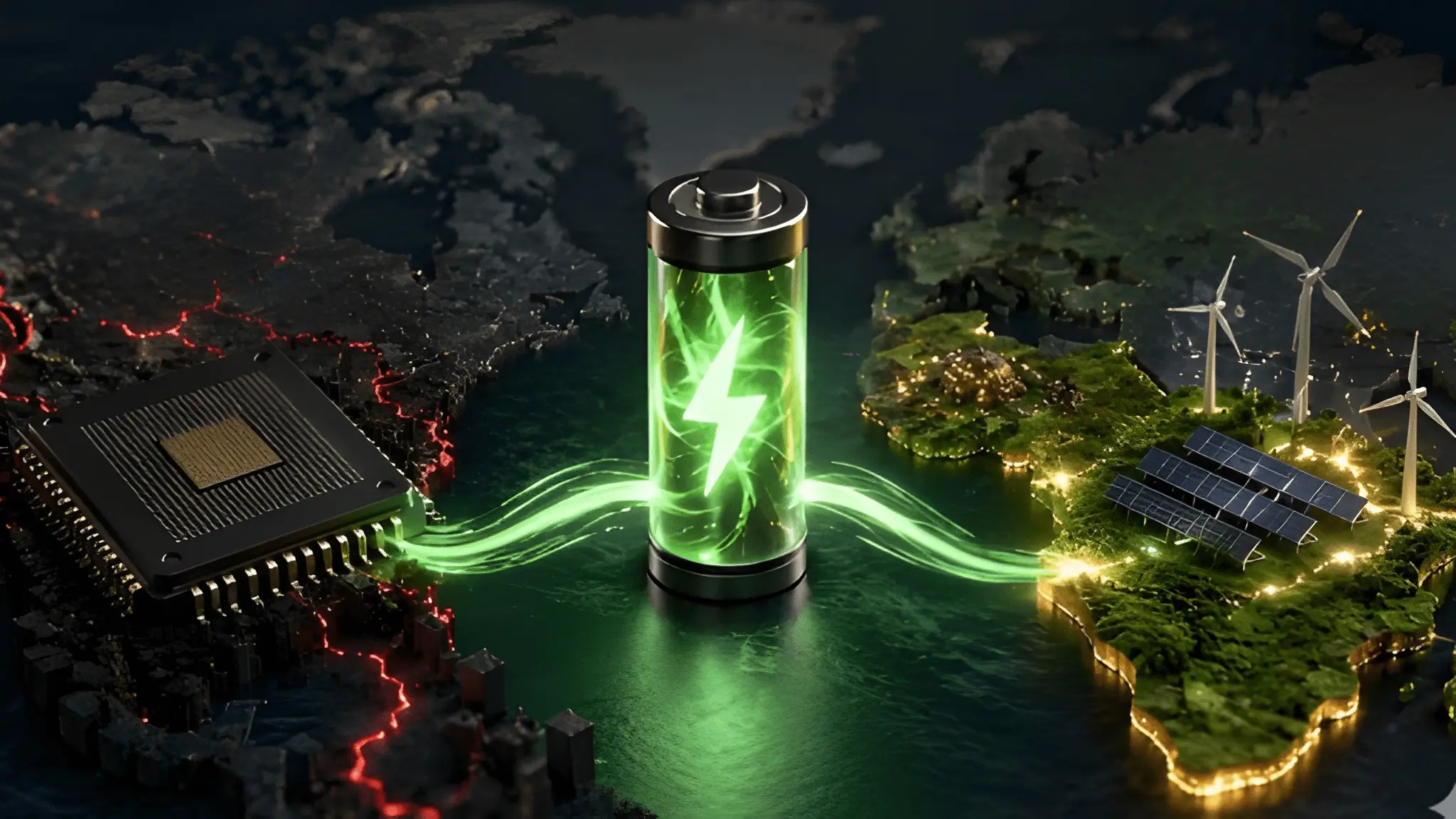
The next phase of artificial intelligence expansion may not emerge from semiconductor fabs in California, Taiwan, or South Korea. A quieter transition has already started inside regions once viewed as peripheral to advanced digital infrastructure, where abundant solar corridors, hydroelectric reserves, expanding transmission networks, and low industrial electricity costs are beginning to attract attention from hyperscale operators and sovereign technology planners. Several developing economies still lack advanced semiconductor ecosystems, yet many possess the one resource that increasingly determines large-scale AI deployment viability: reliable power availability at competitive long-term pricing.
Data infrastructure operators now face rising grid congestion, prolonged interconnection queues, and escalating electricity procurement costs across major Western markets, forcing them to reconsider where future AI facilities can scale sustainably. The International Energy Agency projects global electricity demand from data centers to more than double by 2030, with renewable generation expected to supply nearly half of the additional demand created by this expansion. Across Africa, Latin America, Southeast Asia, and the Middle East, policymakers increasingly view renewable capacity not only as a climate strategy but also as a digital industrial policy capable of attracting long-term infrastructure investment. Large-scale AI facilities now consume power at levels comparable to industrial manufacturing clusters, making energy economics central to deployment decisions rather than secondary operational considerations.
Regions with expanding solar generation, underutilized hydropower, or rapidly growing transmission systems may gain structural advantages as operators search for lower operating costs and fewer infrastructure bottlenecks. Several hyperscale firms already negotiate renewable procurement agreements directly with utilities because traditional grids struggle to absorb rising AI-related electricity demand fast enough. Recent energy market analysis from the International Energy Agency shows that renewables remain the fastest-growing electricity source supporting global data center expansion over the coming decade.
Power-Rich Nations May Skip the Chip War
Semiconductor manufacturing remains concentrated within a handful of technologically advanced economies because fabrication facilities require highly specialized supply chains, extreme precision engineering, and decades of accumulated industrial expertise. Many developing nations cannot realistically replicate those ecosystems within a short timeframe, especially while advanced chip manufacturing becomes increasingly capital intensive and geopolitically sensitive. Energy-rich economies may increasingly participate in AI infrastructure expansion even without advanced domestic semiconductor manufacturing ecosystems.
Nations with abundant renewable resources may become increasingly attractive locations for AI campuses, inference clusters, and digital industrial parks focused on long-term energy stability. Hydroelectric systems in parts of Latin America, geothermal potential in East Africa, solar expansion across the Middle East, and wind generation growth in Southeast Asia collectively create alternative competitive advantages outside semiconductor manufacturing. Several infrastructure analysts now describe energy access as a defining strategic factor in large-scale AI deployment because electricity constraints increasingly slow expansion inside traditional technology hubs.
Renewable Capacity Is Becoming a Strategic Digital Asset
Western markets already face mounting pressure from rising AI electricity demand, especially in regions where grid modernization failed to keep pace with hyperscale infrastructure growth. Energy developers in Texas recently accelerated private behind-the-meter generation projects because operators could not wait for traditional grid connection timelines extending well into the next decade. Similar congestion challenges continue emerging across multiple mature infrastructure markets where transmission upgrades require years of regulatory approval and construction planning before new facilities can operate at scale.
Emerging economies building new industrial corridors today may avoid many of those constraints because planners can integrate renewable generation, fiber connectivity, and high-capacity substations simultaneously during initial development phases. Meanwhile, several governments increasingly recognize that attracting digital infrastructure investment requires stable electricity delivery before advanced semiconductor ambitions become economically realistic. Renewable abundance therefore may allow some countries to bypass the most expensive stages of semiconductor competition while still participating in AI infrastructure expansion.
Cheap Electricity Could Become the New Cloud Strategy
Cloud infrastructure economics increasingly revolve around electricity procurement because modern AI workloads require sustained high-density power consumption across large server environments operating continuously. Operators historically prioritized proximity to enterprise customers and fiber backbones, yet rising energy demand now forces infrastructure planners to reconsider how geography shapes long-term operating costs. Electricity pricing differences between regions can materially alter infrastructure profitability over multi-decade deployment cycles, especially when facilities operate at hyperscale capacity.
Several emerging economies possess renewable generation profiles capable of delivering significantly lower industrial electricity costs than congested North American or European markets struggling with transmission bottlenecks and land scarcity. Several governments in the Gulf region and parts of Southeast Asia increasingly connect digital infrastructure planning with long-term energy development strategies tied to renewable electricity expansion. Large AI operators already negotiate long-term renewable purchase agreements directly with utilities to secure predictable energy pricing as operational intensity continues rising.
Electricity Economics Are Influencing Infrastructure Geography
The economics of inference deployment may accelerate this geographic transition because inference infrastructure requires continuous operational efficiency rather than isolated bursts of training activity. Persistent electricity demand creates stronger incentives to locate facilities where renewable generation remains abundant, scalable, and relatively inexpensive across long time horizons. Data infrastructure operators increasingly evaluate grid resilience, curtailment risks, transmission availability, and renewable integration potential alongside traditional real estate considerations when selecting future sites.
Researchers studying renewable-colocated AI facilities already demonstrate that integrating renewable generation directly with infrastructure operations can significantly reduce electricity costs through optimized energy management systems. Consequently, energy-rich developing regions may attract long-duration infrastructure commitments even without possessing advanced semiconductor ecosystems or mature software industries. The next phase of cloud geography could therefore revolve less around traditional technology clusters and more around regions capable of delivering stable low-cost electricity at industrial scale.
The Global South’s Real AI Opportunity Is Infrastructure Timing
Many mature economies built their electrical grids, industrial zones, and telecommunications systems decades before hyperscale digital infrastructure existed, creating costly modernization challenges today. Transmission systems across North America and parts of Europe often struggle to absorb rapid AI-related electricity demand because planners never anticipated industrial-scale digital facilities requiring hundreds of megawatts each. Retrofitting aging infrastructure introduces long regulatory delays, land acquisition challenges, and escalating upgrade costs that slow deployment timelines for hyperscale operators.
Developing economies currently expanding industrial corridors possess a different advantage because they can integrate energy systems, fiber routes, logistics infrastructure, and digital facilities within unified planning frameworks from the beginning. New transmission investments, renewable generation projects, and industrial parks can therefore align more closely with future AI infrastructure requirements rather than adapting outdated systems after congestion already appears. Several emerging markets now treat digital infrastructure as part of broader industrial modernization strategies tied directly to national energy development plans.
Greenfield Development Allows AI-Ready Planning
This infrastructure timing advantage matters because hyperscale deployment increasingly depends on how quickly operators can secure reliable electricity access and network connectivity rather than merely purchasing advanced hardware. Major infrastructure markets already face transformer shortages, transmission delays, and local resistance to large-scale electricity expansion projects linked to AI facilities. Developers in some regions now explore off-grid or privately generated electricity systems because conventional interconnection timelines extend beyond acceptable commercial deployment schedules.
Emerging economies with expanding renewable programs may therefore provide cleaner deployment pathways if governments coordinate industrial zoning, utility planning, and telecommunications investment effectively. Modern infrastructure design also allows countries to incorporate liquid cooling systems, renewable integration capabilities, modular power distribution, and high-capacity fiber connectivity from inception instead of retrofitting legacy facilities later. Infrastructure timing could emerge as an important strategic advantage for developing economies expanding digital capacity.
Sovereign AI May Depend More on Grids Than GPUs
Conversations surrounding sovereign artificial intelligence traditionally focused on software independence, domestic language models, and national semiconductor ambitions designed to reduce dependence on foreign technology suppliers. Infrastructure realities now push that discussion toward operational sovereignty because nations cannot sustain large-scale AI ecosystems without reliable control over electricity delivery, cooling systems, transmission access, and digital connectivity. Owning advanced hardware matters far less if operators cannot secure long-term energy stability capable of supporting continuously expanding AI facilities.
Several governments increasingly view grid resilience, renewable diversification, and industrial electricity policy as strategic national security considerations linked directly to future technological competitiveness. Sovereign infrastructure therefore extends beyond digital ownership into the physical systems enabling AI operations at scale across national economies. Electricity systems now function as foundational digital infrastructure because modern AI facilities effectively transform energy availability into technological capability.
Infrastructure Sovereignty Is Expanding Beyond Software
Infrastructure sovereignty also creates geopolitical implications because nations capable of delivering reliable renewable-backed digital capacity may gain influence within future global technology supply chains. Countries without domestic semiconductor industries may still gain strategic relevance by supporting stable operational environments for large-scale AI infrastructure deployment. Energy security, renewable deployment speed, transmission expansion, and utility modernization may therefore influence future digital alliances more than previously expected.
Several hyperscale firms already participate directly in renewable financing, nuclear development discussions, and utility partnerships because infrastructure reliability increasingly determines long-term operational viability. Reports from the International Energy Agency indicate that technology companies now help accelerate renewable, nuclear, and alternative electricity development specifically to support rising AI-related demand. Sovereign AI strategies increasingly include grid resilience, energy access, and infrastructure reliability alongside semiconductor policy.
AI Expansion Could Redirect Global Renewable Investment
Renewable investment historically depended heavily on climate policy incentives, emissions targets, and public-sector decarbonization commitments designed to reduce long-term fossil fuel dependence. Artificial intelligence infrastructure growth now introduces an additional commercial driver because hyperscale operators require enormous electricity volumes under increasingly tight deployment timelines. Technology firms cannot sustain long-term expansion without securing dedicated renewable generation capable of stabilizing operational costs and meeting environmental commitments simultaneously.
This demand could become an additional catalyst for renewable deployment across several emerging economies because digital infrastructure creates sustained industrial electricity demand. Solar, hydroelectric, geothermal, and battery storage projects increasingly attract attention not only from utilities but also from technology operators seeking direct energy procurement agreements. AI-related infrastructure demand therefore could reshape renewable investment geography across multiple developing regions over the coming decade.
AI Infrastructure Is Influencing Utility Modernization
Recent market developments already show how rapidly AI expansion influences electricity infrastructure planning and renewable procurement strategies globally. Major operators continue reassessing clean energy commitments because AI-related electricity demand expands faster than many existing renewable deployment schedules anticipated. At the same time, utilities and governments increasingly treat digital infrastructure growth as justification for accelerating grid modernization, battery deployment, and renewable integration programs capable of supporting future industrial demand.
Renewable generation remains the fastest-growing electricity source supporting data center expansion globally, according to International Energy Agency projections covering the next decade. Emerging economies capable of combining renewable deployment speed with supportive infrastructure policy may therefore attract disproportionate investment from hyperscale operators searching for scalable long-term electricity availability. The relationship between AI growth and renewable investment increasingly appears structural rather than temporary because electricity availability now sits at the center of digital infrastructure economics.
The Next AI Superpowers Might Be Energy Economies
Future AI leadership may increasingly depend on countries capable of scaling reliable industrial electricity infrastructure alongside digital capacity. Renewable abundance, transmission capacity, utility modernization, and infrastructure coordination increasingly shape where large-scale AI facilities can operate economically over extended time horizons. Nations across Africa, Latin America, Southeast Asia, and the Middle East possess opportunities to participate in this transformation because many still build core infrastructure systems while global digital demand accelerates rapidly.
Traditional technology leadership models focused heavily on software ecosystems and advanced chip production, yet operational energy availability now exerts growing influence over infrastructure deployment decisions. Global electricity demand from data centers continues rising sharply as artificial intelligence adoption expands across industries, making energy systems central to future digital competitiveness. The countries capable of delivering reliable, scalable, renewable-backed infrastructure at lower operational cost may ultimately define the next phase of global AI expansion.