 Skip to content
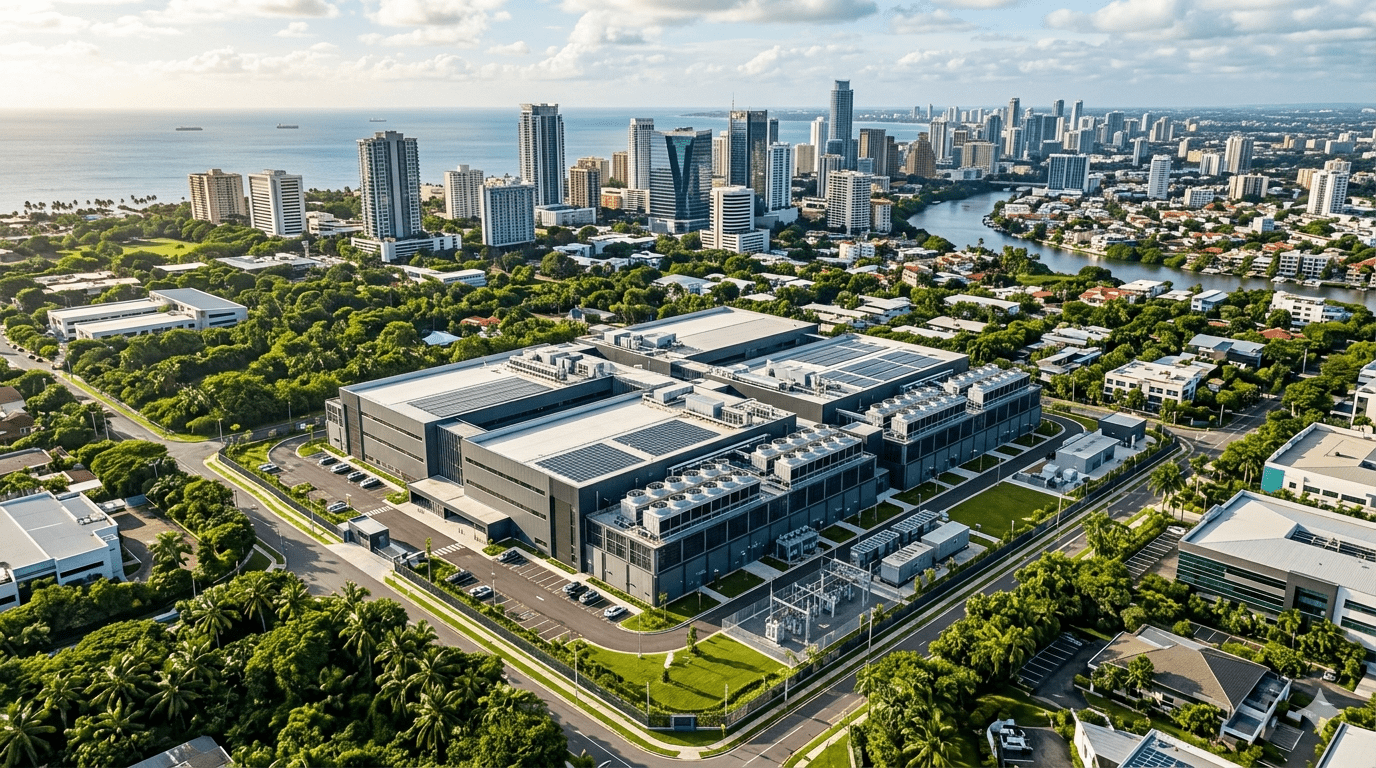
Tecto Data Centers Brazil expansion plans include a $2 billion investment through 2028, targeting the construction of five new data center facilities as demand for cloud computing and artificial intelligence infrastructure accelerates across Latin America. The investment more than doubles the company’s previously announced $1 billion expansion plan and positions Tecto as one of the largest domestic data center developers in the region. The announcement adds to a growing wave of digital infrastructure investment in Brazil as the country works to establish itself as the primary AI and cloud hub for Latin America.

Tecto, which operates as an independent entity following its separation from telecom infrastructure firm V.tal, retains access to V.tal’s extensive network infrastructure. That network spans 26,000 kilometers of submarine optical cables connecting Brazil to Argentina, Chile, Venezuela, Colombia, the United States, and Bermuda, alongside more than 450,000 kilometers of terrestrial fiber. Backed by funds linked to BTG Pactual, the company currently operates seven data centers across Brazil and Colombia, with facilities ranging from Rio de Janeiro to Fortaleza in northeast Brazil and Barranquilla on the Colombian coast.
Tecto Data Centers Brazil Expansion and AI Infrastructure Growth
A central element of Tecto’s expansion strategy involves reaching enterprise customers in regions of Brazil that currently lack access to top-tier data center services. “Today, companies are often forced to go to Sao Paulo or Rio de Janeiro, the country’s main data center hubs, in order to access top-tier services,” said Tito Costa, Chief Revenue Officer at Tecto Data Centers. The company plans to address this gap by developing facilities in underserved markets, bringing AI-ready and cloud infrastructure directly to enterprises that would otherwise face logistical and cost barriers to accessing high-performance compute services.
Brazil’s renewable energy profile adds a competitive dimension to the country’s data center investment case. Tecto operates its facilities entirely on clean energy, with 100 percent of electricity drawn from renewable sources. The company has adopted closed-loop cooling systems that minimize water consumption, addressing sustainability concerns that regulators and enterprise customers increasingly raise when evaluating data center operators. These characteristics align with the environmental commitments that hyperscaler customers demand from infrastructure providers and strengthen Tecto’s positioning in commercial negotiations with global technology companies evaluating Brazil for regional infrastructure deployment.

The Regulatory Backdrop
The Brazilian government has been working to establish the ReData tax framework, a program designed to support data center investments through tax incentives. Costa noted that while the incentives would be helpful, they are not essential to Tecto’s investment plans. The company’s expansion proceeds on the strength of commercial demand rather than regulatory support, though full implementation of ReData would further improve the economics of data center development in Brazil and could accelerate investment from international operators who are currently evaluating the market.
The Tecto Data Centers Brazil expansion reflects broader regional demand for AI-ready infrastructure across Latin America. Brazil’s combination of renewable energy abundance, improving connectivity infrastructure, large domestic digital economy, and growing government commitment to digital infrastructure policy is drawing attention from international hyperscalers and cloud providers. The country hosts more than 50 percent of Latin America’s data center capacity, and the region’s data center market is positioned for substantial growth as AI adoption accelerates across enterprise and government sectors. Tecto’s $2 billion commitment reflects confidence that Brazil’s structural advantages will translate into sustained demand for AI-ready infrastructure across the investment horizon, regardless of the timing and scope of regulatory support programs that remain under development.










