
There are moments in technology when capital stops following innovation and begins attempting to define it. The scale of financing now coalescing around OpenAI appears to mark such a moment.
With a funding round that could push its valuation beyond $850 billion and an initial tranche exceeding $100 billion, OpenAI is not merely raising money. It is constructing a gravitational field. At that scale, capital becomes infrastructure, infrastructure becomes leverage, and leverage becomes dominance.
This is not just another startup funding headline. It is a signal that artificial intelligence has entered a phase where the contest is no longer about model releases alone, but about who owns the rails beneath them.
The Infrastructure Decides the Outcome
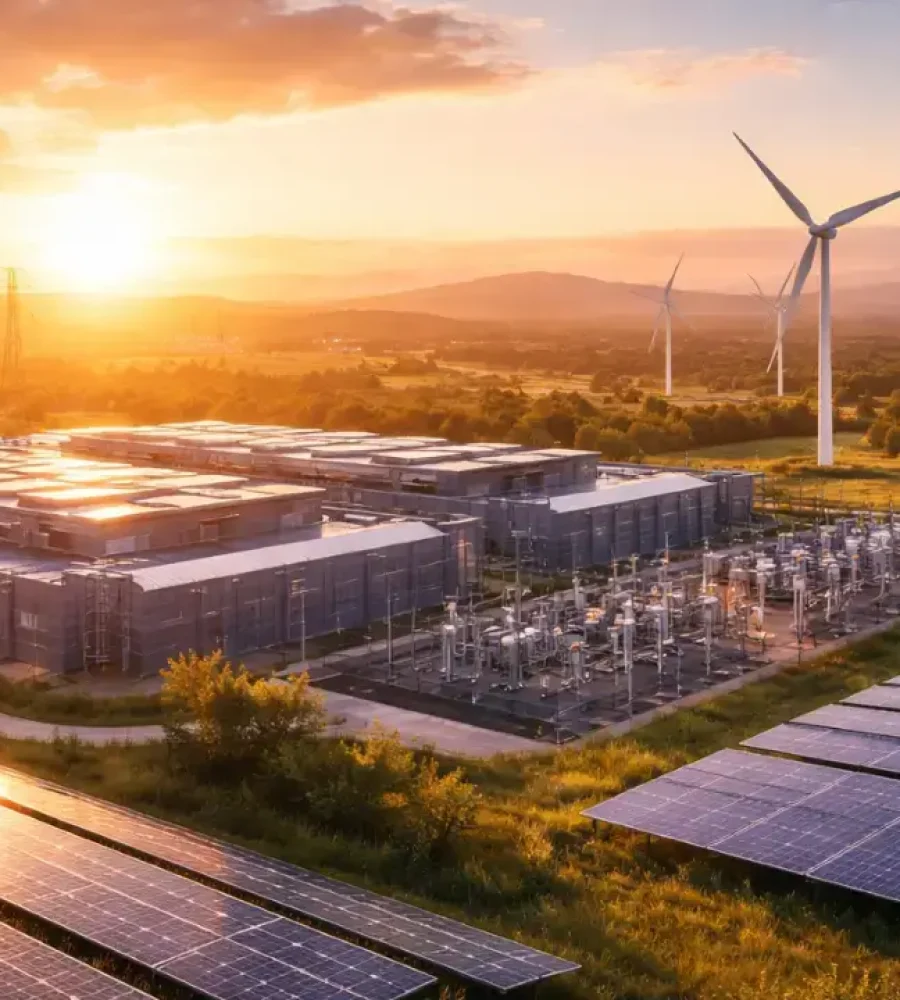
Artificial intelligence has always depended on compute. What has changed is the intensity of that dependence. Training frontier models now requires clusters so vast that the limiting factor is no longer algorithmic creativity but access to power, chips, cooling systems, and cloud architecture.OpenAI’s capital raise appears designed to solve that constraint permanently.
The global AI infrastructure market is projected to expand dramatically over the coming years, growing from roughly $90 billion in 2026 to more than $465 billion by 2033, according to industry forecasts. That trajectory does not merely reflect optimism; it reflects the reality that AI is becoming foundational to nearly every sector, from healthcare to finance to national security. If those projections materialize, then securing infrastructure early is equivalent to securing market share before the market fully forms.
By amassing capital at this scale, OpenAI is positioning itself not just as a model developer but as a structural player in the compute economy. It is staking a claim in the hardware, cloud, and energy ecosystems that will determine how quickly and by whom AI advances. Dominance in AI will not be decided solely by who writes better code. It will be decided by who controls the most resilient, scalable, and cost-efficient compute backbone.
Strategic Capital, Not Passive Money
The identity of OpenAI’s backers matters as much as the numbers.
Amazon is reportedly considering an investment that could reach $50 billion, deepening a seven-year cloud computing partnership worth $38 billion. Access to Amazon Web Services’ infrastructure, including specialized GPU clusters, is not a symbolic alignment, it is a material one. Compute access at that scale becomes a competitive moat.
SoftBank Group Corp., already holding roughly 11%, is said to be preparing an investment as high as $30 billion. AI now represents more than 60% of SoftBank’s net asset value, a stark rise from just three years ago. This is not opportunistic enthusiasm; it is portfolio reorientation around artificial intelligence as a core thesis.
Nvidia, the dominant supplier of AI chips, is discussing a commitment reportedly around $20 billion. Its involvement underscores the tight coupling between model innovation and semiconductor supply chains. When the leading chipmaker and a leading AI developer deepen their financial ties, it signals consolidation in the ecosystem. And then there is Microsoft, whose long-standing partnership with OpenAI has already reshaped enterprise AI integration through Azure and productivity software.
These are not passive investors. They are infrastructure owners, hardware architects, and cloud operators. Their stakes are strategic. OpenAI’s expansion strengthens their platforms; their capital strengthens OpenAI’s dominance. This symbiosis reinforces a central thesis: the AI race is no longer purely competitive — it is increasingly consortium-based.
Valuations in Rarefied Air
An $850 billion valuation places OpenAI in territory few private companies have approached. It towers over competitors such as Anthropic, reportedly valued around $380 billion or more, and Mistral AI, valued at roughly $6 billion.
The numbers invite inevitable historical comparisons. The late 1990s dot-com era saw valuations surge on expectations of transformative technology. Many of those expectations proved correct, the internet did reshape the world but the capital structures built around them did not always survive intact.
Today’s AI surge is different in one crucial respect: the technology is already demonstrably functional and economically relevant. Enterprises are deploying it. Governments are regulating it. Consumers are using it daily. But the question persists: how sustainable are valuations that anticipate years of exponential growth before profitability stabilizes?
Higher interest rates and tighter capital markets present different macroeconomic headwinds than those of 2021’s venture capital exuberance. Yet investor appetite for AI remains unusually resilient. Capital appears willing to absorb risk in exchange for exposure to what many see as a once-in-a-generation platform shift. In that context, OpenAI’s valuation becomes less a measure of present earnings and more a proxy for expected centrality in the AI economy.
Governance Shadows
Dominance in technology is rarely free of controversy, and OpenAI is no exception.Chief Executive Sam Altman has faced scrutiny over leadership style and governance disputes, including a brief ouster in late 2023 following allegations related to board communications. He returned swiftly, underscoring both his influence and the internal tensions that surfaced during that episode.
Additional allegations from former associates and a lawsuit filed by a family member claims that Altman has denied, have added complexity to the company’s narrative. It is important to separate unproven claims from operational reality. But governance matters. In a company commanding hundreds of billions in valuation and influencing global AI trajectories, stability and transparency are not peripheral concerns.
For investors, the question is not only whether OpenAI can build superior models, but whether its leadership structure can withstand the pressures that accompany dominance. As capital concentration intensifies, so does scrutiny. The paradox is clear: the same centralization that fuels scale can magnify governance risk.
The Market Bifurcates
One underappreciated outcome of OpenAI’s rise is the emerging bifurcation of the AI sector. On one side are the model creators and application developers. On the other are the infrastructure providers, chipmakers, cloud operators, energy suppliers, and cybersecurity firms. The latter group may ultimately capture significant value as AI workloads multiply.
By raising capital to secure its own infrastructure pipeline, OpenAI is straddling both worlds. It is not content to be a software layer dependent on others’ compute capacity. It aims to influence if not control, the stack beneath it.
This strategic positioning could reshape competitive dynamics. Smaller AI firms may find themselves increasingly reliant on shared infrastructure ecosystems dominated by a handful of players. Meanwhile, enterprises integrating AI may align more tightly with the platforms that guarantee reliability at scale. The result could be an AI market less fragmented than many expected, with power clustering around a few deeply capitalized hubs.
Dominance as a Declaration
To describe OpenAI’s current trajectory as ambitious would be an understatement. It is a declaration.
Raising over $100 billion in an initial funding phase is not incremental expansion. It is an assertion that the next decade of artificial intelligence will be capital-intensive, infrastructure-heavy, and strategically consolidated. Critics may argue that such concentration risks stifling diversity of innovation. Supporters may counter that only entities with vast resources can responsibly develop and deploy frontier models at global scale. Both views can coexist. What cannot be ignored is the structural shift underway.
If artificial intelligence becomes as foundational as electricity or the internet, then the companies that build its infrastructure will shape economic power in the 21st century. OpenAI’s funding round signals that it intends not merely to participate in that future, but to architect it.
Dominance in technology is never permanent. Markets evolve. Competitors adapt. Regulation intervenes. Yet at this juncture, OpenAI has achieved something rare: it has aligned capital, compute, and strategic partnerships at a scale that makes it the axis around which the AI conversation increasingly turns.
The AI world may still be contested. But the center of gravity is becoming unmistakable.