
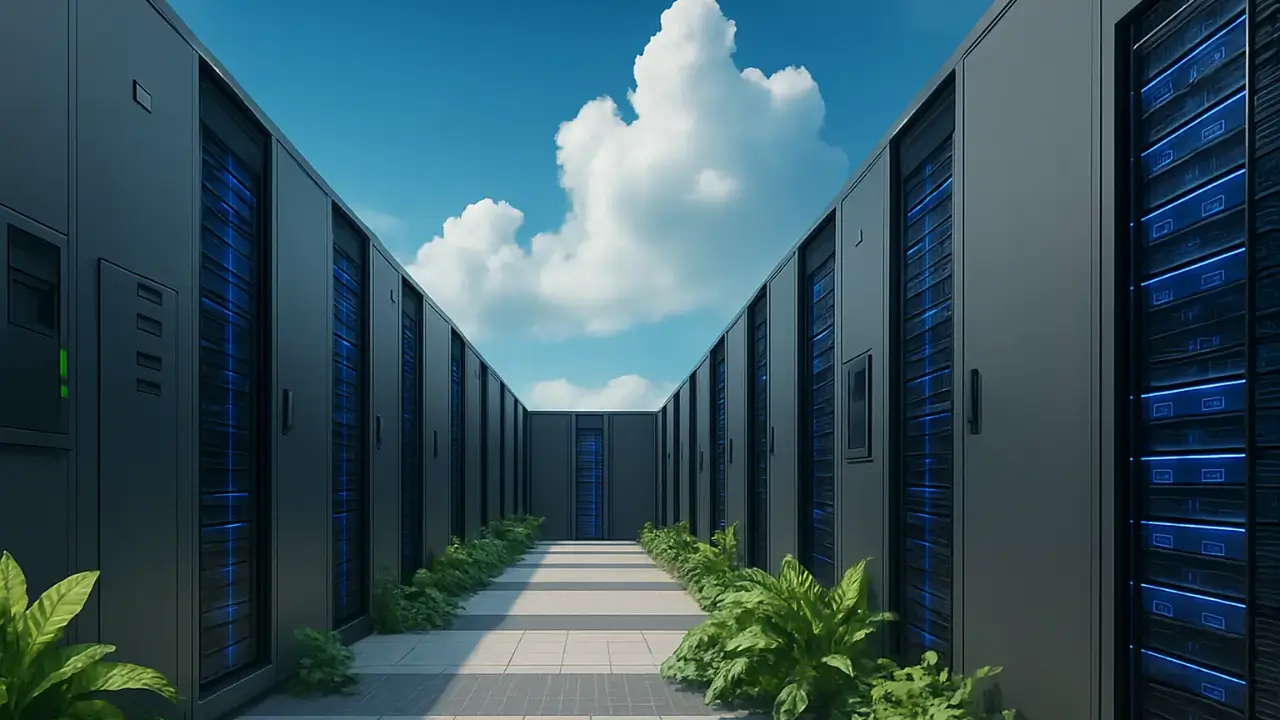
The New AI Data Center Energy Strategy

The rapid expansion of high-density GPU clusters is reshaping how operators plan, manage, and control energy across facilities. As workloads scale, the AI data center energy strategy becomes central to infrastructure design, operational reliability, and sustainability metrics. This shift is driven by the unique characteristics of AI training and inference workloads, which differ significantly from conventional compute patterns.
This article examines how GPU intensive operations are influencing power demands, why the energy paradigm is changing, and what frameworks operators are adopting to align workloads with available power capacity.
Why GPUs Are Reshaping the AI Data Center Energy Strategy
Rising GPU Power Density and Compute Demand
Modern AI accelerators such as the NVIDIA H100/H200 series have significantly higher power envelopes than traditional CPUs. A single GPU node can exceed the power draw of an entire rack built around older architectures. Large-scale training workloads multiply this effect:
- Training foundation models can demand tens of megawatts (MW) of continuous power over extended periods.
- Inference clusters require sustained, latency-sensitive energy supply.
- Power density per rack has risen from traditional 5–10 kW to 40–80 kW in GPU deployments.
These patterns directly influence the AI data center energy strategy, requiring operators to rethink power provisioning, cooling, and load distribution.
Shifting Away from Predictable Utilization Curves
Legacy data centers were designed around stable usage cycles, but AI workloads exhibit variability tied to training schedules, batch processing, and model versioning. This introduces:
- Short-term high-intensity spikes
- Long continuous training phases
- Fluctuations based on dataset size and model iteration frequency
As a result, the historical approach of linear capacity planning is insufficient. Operators now model energy requirements at the workload level, not just at the facility or rack level.

Structural Drivers Behind the Evolving AI Data Center Energy Strategy
Power Supply Constraints and Grid Interdependencies
Many regions face grid congestion where power allocation for hyperscale AI sites is limited. According to the International Energy Agency (IEA), electricity demand from data centers is projected to grow sharply through 2026. AI-specific clusters significantly contribute to this trajectory, prompting operators to:
- Secure long-term power purchase agreements
- Coordinate with local utilities on load timing
- Evaluate multi site AI training strategies
These developments directly influence how organizations formulate an effective AI data center energy strategy.
Sustainability, Regulation, and Reporting Requirements
Regulatory frameworks increasingly require transparent reporting of carbon intensity, power usage effectiveness (PUE), and renewable energy sourcing. The European Union’s Corporate Sustainability Reporting Directive (CSRD) is an example of stricter disclosure standards.
AI workloads accelerate the need for:
- Real-time energy tracking
- Carbon-aware job scheduling
- Integration of renewable generation and storage
This regulatory environment reinforces workload-level approaches in energy planning.
Workload Level Orchestration as the Core of the AI Data Center Energy Strategy
Time-Shifting AI Training Jobs
Training workloads are often flexible in timing. Operators use time shifting to align non-urgent jobs with:
- Off-peak electricity pricing
- Periods of higher renewable availability
- Local grid stability windows
Time shifting is supported by forecasting models that predict energy costs and renewable generation trends. This reduces strain on the power system while optimizing operational efficiency.
Carbon Aware and Price Aware Scheduling
Carbon aware schedulers adjust job execution based on real-time carbon intensity signals. For example, training runs can be automatically deferred when the grid relies on fossil based generation or advanced when renewable penetration increases.
This contributes to a more efficient AI data center energy strategy while meeting sustainability reporting requirements.
Aligning Model Architecture Efficiency With Energy Use
Model design directly affects energy consumption:
- Smaller, pruned, or quantized models reduce GPU hours.
- Techniques such as mixture-of-experts (MoE) limit active parameters.
- Efficient checkpointing minimizes redundant compute cycles.
Operators incorporate energy per training pass and watts per inference request into their evaluation metrics, enabling architecture-optimized energy planning.
Infrastructure Adaptations Supporting the AI Data Center Energy Strategy
Liquid Cooling and Thermal Efficiency
GPU clusters generate concentrated heat that traditional air-cooling cannot manage alone. Liquid cooling enables higher rack densities and stabilizes thermal loads. The American Society of Heating, Refrigerating and Air-Conditioning Engineers (ASHRAE) provides guidelines on allowable temperature ranges that influence cooling architecture decisions.
On-Site Renewable Generation and Battery Integration
Operators increasingly deploy:
- Solar photovoltaic (PV) systems
- Wind micro-generation
- Battery energy storage systems (BESS)
Paired together, these support price arbitrage, backup capacity, and predictable power for extended training windows. Integration of energy storage into the AI data center energy strategy reduces grid dependency during peak hours.
Grid Interactive Data Center Models
Grid interactive operations enable facilities to dynamically adjust load based on grid signals. This may include:
- Load shedding
- Demand response participation
- Flexible ramping programs
These interactions help maintain regional grid stability, especially where GPU power draw is significant.
Key Metrics That Shape an Effective AI Data Center Energy Strategy
kWh per Model Training Cycle
This metric quantifies energy for a complete training run. It allows operators to benchmark workload efficiency over time.
Carbon Intensity per Model Run
Linking workload execution to carbon source data supports compliance with sustainability mandates and internal reporting frameworks.
Peak Power Draw (MW)
Peak demand influences grid interconnection requirements, backup power architecture, and utility coordination.
Battery Storage Availability (MWh)
Storage supports resilience, grid interactions, and workload-time alignment.
Deferred Job Hours and Cost Avoidance
This metric quantifies the effectiveness of time-shifting and energy-aware scheduling strategies.
Strategic Implications for the AI Data Center Energy Ecosystem
Planning Compute Under Energy Constraints
AI deployments increasingly require coordination between workload requirements and available power capacity. Operators evaluate:
- Multi-site training distribution
- Facility-level power envelopes
- Renewable-energy alignment strategies
This creates a more integrated planning environment where both compute and energy models operate in parallel.
Evaluating Facility Readiness for GPU Clusters
Assessing facility readiness now includes:
- Rack-level power density limits
- Cooling system scalability
- Transformer and substation capacity
- Renewable and battery integration pathways
These considerations determine whether a site can support dense AI workloads safely and efficiently.
Conclusion: Building an Adaptive AI Data Center Energy Strategy
The rise of GPU intensive AI workloads marks a structural shift in how data centers are designed and operated. Power availability, workload scheduling, thermal management, and sustainability reporting now intersect directly with compute planning. An effective AI data center energy strategy incorporates workload level orchestration, real time energy intelligence, and infrastructure capable of supporting high density GPU clusters.
This transformation continues to evolve as AI models grow in scale and complexity. Organizations that adopt systematic, data driven energy frameworks will better align capacity, performance, and sustainability outcomes across the compute lifecycle.











