Cooling infrastructure sits at the center of modern data center engineering because servers continuously convert electrical energy into heat during computation cycles. Operators must remove this thermal load through carefully designed cooling systems that preserve hardware reliability and maintain stable operating conditions. Many facilities rely on evaporative cooling towers or indirect heat-exchange loops that depend on steady water supplies to absorb and dissipate heat from high-density compute clusters. Traditional deployments often source this water from municipal drinking supplies because the infrastructure already exists and provides predictable water quality. Municipal wastewater treatment plants, however, produce large volumes of treated effluent that meet industrial standards suitable for non-potable applications such as cooling towers. Engineers increasingly view this treated wastewater stream as an underutilized resource capable of supporting industrial thermal management without competing with local drinking water supplies.
From Sewage to Server Cooling: The Wastewater Opportunity
Municipal treatment systems remove solids, pathogens, and chemical contaminants through multi-stage filtration and biological treatment processes that generate effluent appropriate for industrial reuse. Secondary and tertiary treatment stages produce water that meets regulatory standards for irrigation, industrial cooling, and certain environmental restoration uses. Data center cooling towers require stable water chemistry rather than drinking-water purity, which makes reclaimed effluent technically suitable once operators apply additional filtration and chemical conditioning. Utilities often discharge treated effluent into rivers or coastal waters after processing, which means the resource leaves the urban water cycle without generating additional economic value. Redirecting a portion of this treated wastewater toward industrial cooling systems allows cities to reduce freshwater withdrawals while maintaining essential computing infrastructure. The approach reflects a broader shift toward integrated water management in metropolitan regions where digital infrastructure continues to expand rapidly.
Large computing campuses frequently consume hundreds of thousands of gallons of water per day when evaporative cooling operates during peak temperature periods. Public scrutiny has increased as hyperscale facilities expand into regions that experience water scarcity or seasonal drought conditions. Reclaimed wastewater creates an alternative supply path that allows operators to maintain energy-efficient cooling designs without drawing additional potable water from municipal systems. Industry reports increasingly describe reclaimed water use as a strategic element in site selection because it helps reduce regulatory friction during permitting and environmental review processes. Operators that integrate recycled water into facility design demonstrate measurable reductions in demand for municipal drinking supplies while sustaining high-performance compute environments. This strategy aligns operational reliability with long-term water stewardship objectives for communities hosting large digital infrastructure clusters.
Building the “Purple Pipe” Networks for Data Centers
Urban water systems use color-coded infrastructure to distinguish potable water networks from reclaimed water distribution systems. Reclaimed water pipelines typically appear in purple to prevent accidental connection to drinking water systems and to signal the non-potable status of the water supply. Municipal utilities began deploying these pipelines during the late twentieth century as cities explored ways to reuse treated wastewater for irrigation and industrial processes. Industrial users such as manufacturing plants and large cooling installations soon recognized that reclaimed water could support thermal management systems without requiring potable quality standards. Data center developers now connect facilities to these purple pipe networks to secure reliable non-potable water supplies for cooling towers and evaporative systems. The infrastructure allows municipal utilities to deliver reclaimed water directly from treatment plants to industrial campuses through dedicated distribution lines.
Treated Wastewater as an Industrial Cooling Alternative
Purple pipe systems function as parallel water distribution networks that operate alongside traditional potable water pipelines within urban infrastructure. Treatment plants pump reclaimed water into these systems after disinfection and polishing stages that ensure the water meets regulatory reuse standards. Industrial customers connect through metered service points similar to municipal drinking water connections but with clearly separated plumbing systems. Data center campuses located near wastewater treatment facilities often integrate reclaimed water pipelines into the site planning phase to support long-term cooling demand. Utilities benefit from this arrangement because reclaimed water generates revenue while reducing the environmental burden of discharging treated effluent into natural waterways. Infrastructure planners increasingly view reclaimed water distribution as a strategic asset in regions with growing technology clusters.
Some metropolitan regions with dense digital infrastructure have expanded reclaimed water networks specifically to support hyperscale facilities. Water utilities in technology corridors evaluate projected data center growth when planning upgrades to treatment capacity and reclaimed water pipelines. Reclaimed water often costs significantly less than potable water because utilities already treat the wastewater as part of normal sanitation operations. Data center operators that connect to purple pipe systems can therefore reduce operating costs while meeting sustainability commitments related to water conservation. Municipalities also benefit because reclaimed water demand encourages investment in advanced treatment infrastructure and long-term resource management. The resulting ecosystem links urban sanitation systems with digital infrastructure development in ways that strengthen both sectors.
Industrial Wastewater as a Cooling Resource
Municipal wastewater represents only one source of reclaimed water suitable for industrial cooling applications. Industrial facilities generate effluent streams that often contain process water capable of reuse after advanced filtration and chemical treatment. Treatment technologies such as membrane bioreactors, ultrafiltration systems, and reverse-osmosis polishing units can remove suspended solids and dissolved contaminants from industrial wastewater. Engineers integrate these systems into industrial water-recycling plants that transform waste streams into reusable cooling water supplies. Data center developers increasingly evaluate nearby industrial water sources when selecting sites because these resources can supplement municipal reclaimed water infrastructure. Repurposing industrial effluent reduces environmental discharge while expanding available cooling resources for energy-intensive computing facilities.
Advanced treatment processes enable reclaimed industrial water to meet strict operational requirements for cooling towers and heat-exchange systems. Membrane filtration removes particulates that could otherwise cause fouling or scaling in cooling infrastructure. Biological treatment systems break down organic compounds that might support microbial growth within cooling loops. Chemical conditioning further stabilizes the water chemistry by controlling corrosion, scaling, and biological activity. Operators monitor conductivity, pH, and mineral concentrations continuously to ensure the reclaimed water remains compatible with cooling equipment. These monitoring systems allow reclaimed industrial water to circulate safely through high-performance cooling environments that support dense computing loads.
Designing Closed-Loop Cooling with Recycled Water
Closed-loop cooling architectures play a significant role in reducing water withdrawals in modern compute facilities because they reuse the same water repeatedly across cooling cycles. A typical closed-loop design circulates water between heat exchangers, cooling towers, and server cooling systems while minimizing losses through evaporation and blowdown processes. Engineers design these systems to capture and reuse water that would otherwise leave the facility during thermal management operations. Facilities equipped with closed-loop infrastructure can maintain stable cooling performance while significantly lowering demand for fresh municipal supplies. The approach supports long-term infrastructure planning because water recycling systems allow operators to maintain thermal efficiency even as computing density increases. Data center engineers increasingly integrate reclaimed water inputs with closed-loop circulation systems to strengthen resource efficiency across the entire cooling architecture.
Managing Evaporation, Blowdown, and Water Chemistry
Water reuse within cooling loops depends on a combination of filtration technologies, heat-exchange design, and chemical water management strategies. Cooling towers often evaporate a portion of circulating water to remove heat, which gradually concentrates minerals and dissolved solids within the remaining water supply. Operators manage this concentration through controlled discharge known as blowdown, followed by replacement with treated recycled water that restores balanced chemical conditions. Monitoring systems track conductivity, microbial growth potential, and mineral saturation levels to ensure cooling equipment operates within safe thresholds. Facilities equipped with advanced water treatment infrastructure can recycle large portions of their cooling water before discharge becomes necessary. Industry studies show that optimized reuse strategies within closed-loop cooling architectures can reduce freshwater demand by roughly fifty to seventy percent depending on climate conditions and cooling configuration.
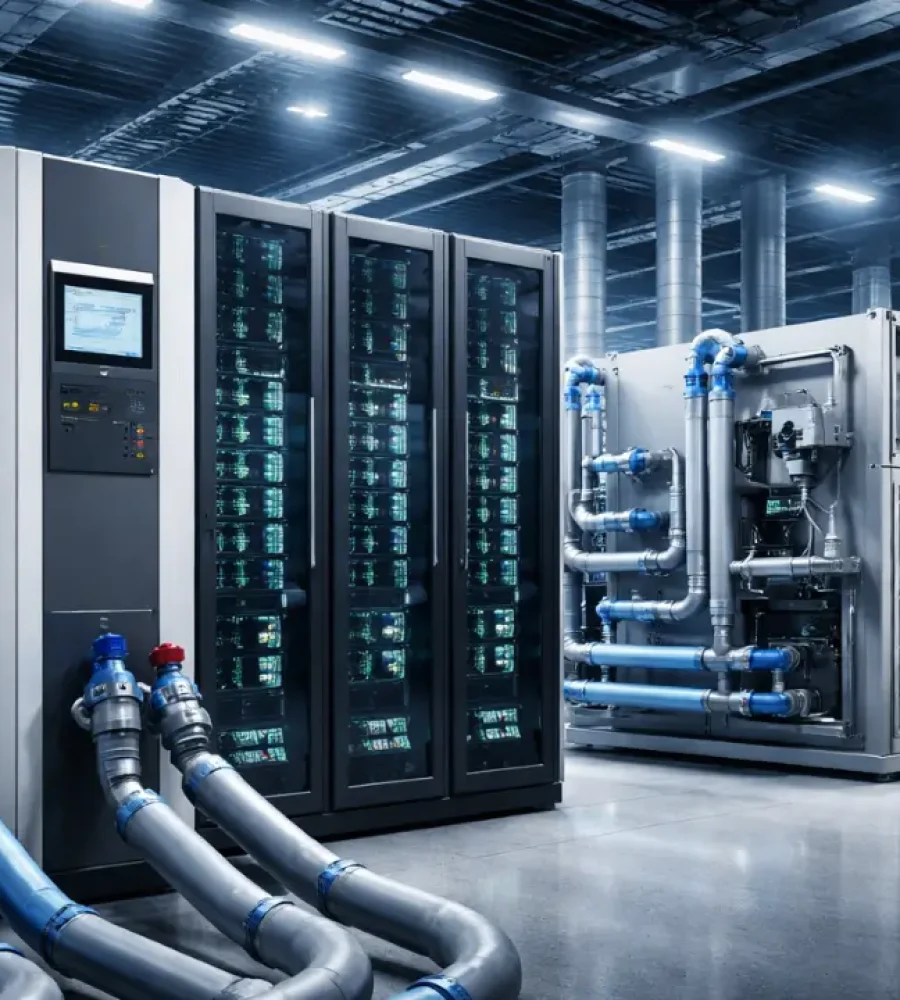
Cooling infrastructure designed for water reuse often incorporates modular treatment units directly within the facility footprint. Filtration skids, ultraviolet sterilization systems, and chemical dosing equipment treat circulating water continuously as it moves through cooling loops. Engineers configure these treatment stages to remove biological growth, suspended solids, and scaling compounds that could degrade cooling efficiency. Digital monitoring systems provide real-time telemetry about water quality, enabling operators to adjust treatment parameters dynamically. Reliable monitoring ensures that reclaimed water maintains the chemical stability required for long-term equipment performance. This integrated design approach allows recycled water sources to function as dependable components of the thermal management system.
Real-World Circular Water Partnerships
Municipal utilities and digital infrastructure companies increasingly collaborate on projects that transform treated wastewater into a reliable resource for cooling large computing campuses. These partnerships often begin during early site development when hyperscale operators evaluate local water availability and long-term infrastructure capacity. Utilities may expand treatment facilities or build reclaimed-water pipelines specifically to support large industrial customers with predictable water demand. Data center developers benefit from these arrangements because reclaimed water access strengthens environmental compliance and reduces dependence on drinking water supplies. Cities gain additional revenue streams from wastewater reuse while demonstrating responsible resource management to local communities. Such collaborations illustrate how digital infrastructure growth can align with broader municipal sustainability planning.
Infrastructure Investments in Water Reclamation
Several metropolitan regions have already implemented large-scale reclaimed water systems that support high-density computing environments. Municipal utilities in parts of the United States have constructed advanced water reclamation facilities that deliver treated wastewater directly to industrial campuses through dedicated pipelines. These projects involve multi-stage treatment technologies designed to produce stable water quality suitable for cooling towers and industrial heat-exchange systems. Data center campuses connected to these networks receive consistent water supplies that remain independent from municipal drinking water infrastructure. Infrastructure planners view these systems as resilient solutions because reclaimed water remains available even during drought restrictions affecting potable water systems. Consequently, reclaimed water partnerships strengthen both operational stability for data centers and water security for surrounding communities.
Collaborative reuse initiatives often include investments in monitoring technology, regulatory oversight, and long-term infrastructure maintenance agreements. Municipal utilities establish water quality standards that industrial users must maintain when circulating reclaimed water within cooling systems. Data center operators install additional treatment stages and monitoring equipment to ensure compliance with environmental regulations governing industrial water discharge. These safeguards allow reclaimed water systems to function safely while protecting nearby ecosystems and public health. Partnerships typically include cost-sharing models where both utilities and industrial users invest in infrastructure upgrades required for large-scale reuse. The result is an integrated water management ecosystem that supports technological growth without placing additional pressure on drinking water resources.
Toward a Circular Water Economy for Data Centers
Digital infrastructure expansion continues to accelerate as artificial intelligence, cloud computing, and high-performance analytics drive demand for large-scale computing environments. Cooling requirements for these facilities create significant water demand because thermal management systems must dissipate large volumes of heat generated by dense server clusters. Wastewater reuse introduces a practical pathway to support this demand without increasing withdrawals from municipal drinking water supplies. Reclaimed water infrastructure allows treated effluent from urban sanitation systems to circulate back into industrial use rather than leaving the local water cycle. Municipal utilities, industrial operators, and infrastructure planners increasingly recognize the strategic value of integrating reclaimed water networks with data center development. The concept positions wastewater treatment systems as key contributors to sustainable digital infrastructure rather than simply as sanitation utilities.
The Future of Circular Water Systems in Data Center Design
Circular water systems also strengthen resilience in regions where climate variability places pressure on freshwater availability. Data centers connected to reclaimed water networks can maintain cooling capacity even when potable water restrictions apply during drought conditions. Closed-loop reuse architectures extend these benefits by maximizing the number of cooling cycles each unit of water can support before discharge occurs. Infrastructure planning that incorporates reclaimed water pipelines, treatment facilities, and advanced monitoring systems helps cities prepare for continued digital expansion. The approach encourages collaboration between technology companies and municipal water agencies while aligning economic development with environmental stewardship. This model reflects an emerging framework in which urban water management and digital infrastructure planning evolve together.
The future of data center cooling will likely depend on a combination of reclaimed water distribution networks, advanced treatment technologies, and optimized reuse architectures. Engineers continue to refine filtration systems and water chemistry controls that allow recycled water to circulate safely through sensitive cooling equipment. Municipalities increasingly evaluate wastewater reuse as a core component of long-term urban infrastructure planning. Industrial customers such as computing campuses provide stable demand that justifies investments in advanced reclamation facilities and purple pipe distribution systems. These developments indicate that wastewater can support a sustainable cooling ecosystem when infrastructure design integrates water reuse from the earliest stages of facility planning. A circular water economy built around reclaimed wastewater therefore offers a credible pathway for scaling digital infrastructure while protecting limited freshwater resources.