Design Intent vs Operational Reality in Liquid-Cooled Environments
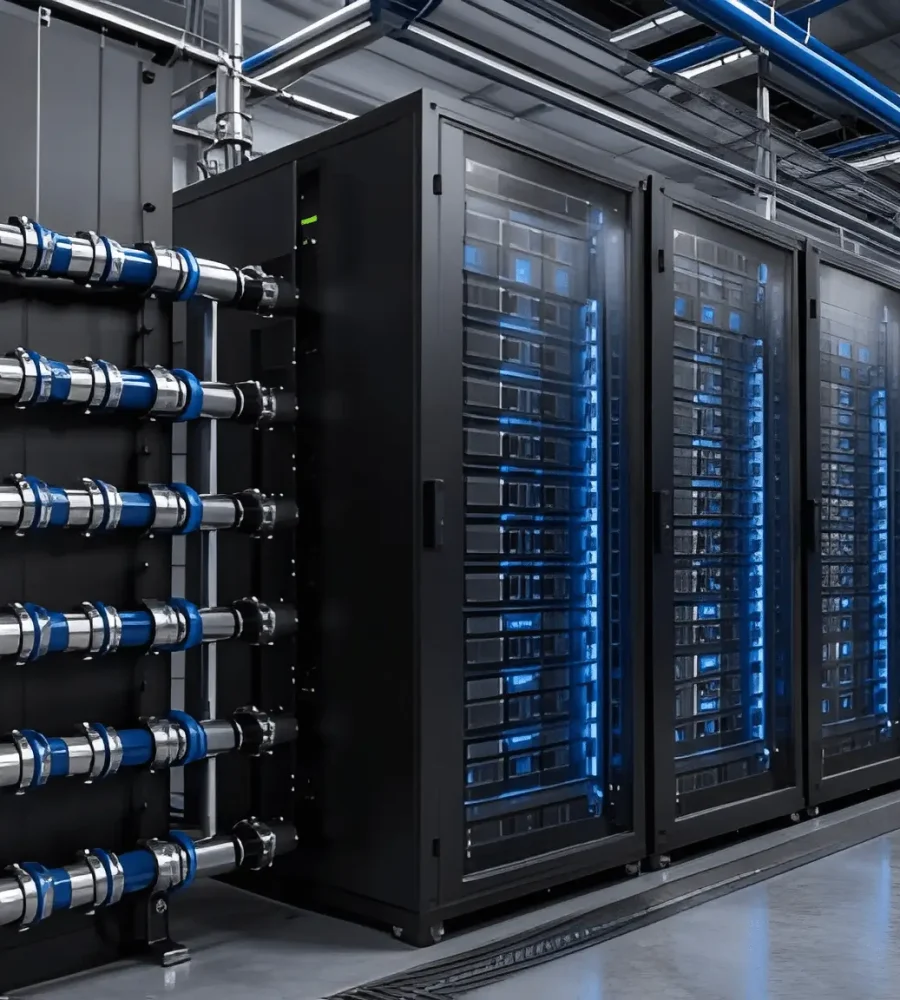
The first diagrams of a liquid-cooled data hall rarely look dramatic. Clean lines show chilled fluid gliding through cold plates, pumps humming at optimal curves, and heat exiting the system with mathematical grace. On paper, everything behaves. In operation, things negotiate. That tension defines design intent vs operational reality in liquid-cooled environments, a phrase that increasingly frames how engineers, operators, and policymakers discuss modern thermal infrastructure. The divergence does not imply failure. Instead, it reflects how real facilities absorb human decisions, regional constraints, and evolving compute loads that no early-stage schematic fully anticipates.
Liquid cooling has moved from experimental promise to operational necessity as high-density computing reshapes global infrastructure. Hyperscale campuses, colocation providers, and enterprise facilities now treat fluid-based heat removal as a baseline option rather than an exotic upgrade. Designs often follow guidance from organizations such as ASHRAE and collaborative frameworks like the Open Compute Project. Those references establish thermal envelopes, redundancy philosophies, and safety margins. Yet facilities rarely operate exactly as those frameworks imagine, especially once economic pressure and uptime demands begin to steer day-to-day decisions.
When Design Intent Meets Liquid-Cooled Operations
During planning, engineers define design intent through assumptions. Rack power densities get fixed. Inlet temperatures sit within recommended bands. Maintenance windows appear predictable. Procurement teams expect component uniformity. Those assumptions hold long enough to approve capital expenditure and begin construction. Operational reality enters once workloads shift faster than refresh cycles. Artificial intelligence training clusters arrive earlier than expected. Legacy air-cooled rows remain online beside liquid-cooled pods. Mixed environments emerge, and the clean boundaries of initial intent soften.
Operators often adjust coolant temperatures upward to reduce chiller reliance, even if early models assumed conservative setpoints. Pump speeds get tuned for energy efficiency rather than theoretical optimum heat transfer. These changes do not signal negligence. They reflect an operational calculus shaped by electricity prices, water availability, and service-level agreements that penalize downtime more than thermal inefficiency.
Engineering Assumptions in Liquid-Cooled Environments Under Pressure
Design documents tend to assume steady-state behavior. In practice, load variability dominates. Training workloads spike unpredictably. Inference clusters idle and surge within hours. Liquid cooling responds quickly, yet supporting systems do not always scale as gracefully. Heat exchangers sized for average loads face stress during synchronized peaks. Operators compensate through manual overrides or revised control logic, sometimes bypassing the original automation philosophy.
Component diversity also complicates intent. Cold plates from different vendors exhibit distinct pressure drops. Dielectric fluids age differently under identical thermal cycles. Pumps sourced during supply-chain disruptions may not match original specifications. Each substitution appears minor, but cumulative deviation reshapes how the system actually behaves. Design intent vs operational reality in liquid-cooled environments often becomes visible through these incremental adaptations rather than dramatic failures.
Control Layers Reveal Design–Reality Gaps
Building management systems and data center infrastructure management platforms represent the nervous system of a liquid-cooled facility. Designers often specify integrated control layers that balance thermal efficiency with redundancy. In operation, those layers must coexist with human intervention. Technicians override alarms during commissioning. Operators silence alerts that trigger too frequently. Over time, the control environment reflects lived experience more than initial logic diagrams.
Feedback loops also differ. Design assumes sensors report accurately and consistently. Field conditions introduce drift, fouling, and calibration gaps. Operators learn which readings matter most for uptime and which tolerate deviation. That experiential knowledge rarely feeds back into design documentation, creating a quiet but persistent divergence.
Maintenance Realities Inside Liquid-Cooled Environments
Maintenance planning represents another fault line. Design intent typically schedules preventative servicing at regular intervals, assuming full access and predictable staffing. Operational reality includes deferred maintenance during peak demand seasons and accelerated servicing after unexpected leaks or pump failures. Liquid systems demand specialized skills, yet global talent shortages complicate staffing assumptions embedded in early designs.
Spill containment and fluid handling further illustrate the gap. Design documents specify procedures and response times. In live environments, drills compete with production priorities. Operators refine informal practices that keep systems running, even if those practices differ from written protocols. Such adaptations rarely appear in public narratives about liquid cooling but shape reliability outcomes daily.
Design Intent vs Operational Reality in Liquid-Cooled Environments and Supply Chains
Global supply chains exert quiet influence over operational behavior. Design intent may specify a particular coolant formulation or connector type. Availability constraints force substitutions. Each substitution introduces subtle changes in viscosity, compatibility, or service life. Operators adapt monitoring practices accordingly, sometimes without revisiting the original risk models.
Spare parts strategies also evolve. Facilities stock what procurement can reliably source, not always what designers preferred. That pragmatic approach supports uptime but further distances daily operations from conceptual purity. The divergence remains manageable, yet it underscores why design intent vs operational reality in liquid-cooled environments resists simplistic evaluation.
Regional Context Shapes Operational Outcomes
Geography amplifies divergence. Facilities in water-stressed regions treat liquid cooling differently from those in cooler climates. Design intent may emphasize heat reuse or closed-loop efficiency. Operational reality reflects regulatory scrutiny, community expectations, and seasonal constraints. Operators adjust flow rates or cooling strategies to align with local conditions, even if those adjustments reduce theoretical efficiency.
Grid stability adds another layer. Regions with volatile electricity supply push operators to prioritize resilience. Liquid cooling systems integrate with backup power in ways that design models often simplify. During real outages, operators choose actions that preserve compute continuity, sometimes at the expense of optimal thermal balance.
Human Factors Inside Liquid-Cooled Operations
Human judgment anchors operational reality. Training programs attempt to translate design philosophy into daily practice. Experience reshapes that translation. Operators develop intuition about how systems respond under stress. That intuition guides decisions faster than any manual. Design intent rarely accounts for such tacit knowledge, yet facilities rely on it during critical moments.
Shift changes, communication gaps, and organizational culture further influence outcomes. A design assumes consistent interpretation of alarms and procedures. Reality introduces variation. Some teams favor conservative responses. Others push limits to maximize utilization. Those behavioral patterns define how liquid-cooled environments truly operate.
Monitoring, Metrics, and Misalignment
Metrics chosen during design shape expectations. Thermal efficiency indicators, pump utilization targets, and coolant temperature bands appear precise. Operational teams often track additional signals that better reflect lived risk, such as leak incident frequency or maintenance response times. That shift in metrics subtly redefines success.
The misalignment matters because external stakeholders increasingly request transparency. Sustainability reporting, regulatory disclosures, and customer audits rely on data. When reported metrics reflect design assumptions more than operational behavior, confusion follows. Aligning those narratives remains an unresolved challenge across the sector.
Rethinking Design Feedback Loops
The industry has begun to acknowledge the need for tighter feedback between design and operations. Post-occupancy evaluations, common in commercial real estate, slowly gain traction in data centers. Lessons learned from live liquid-cooled environments inform subsequent builds. That process remains uneven, yet it signals recognition that divergence carries information rather than blame.
Design intent vs operational reality in liquid-cooled environments thus becomes a learning framework. Instead of treating deviation as error, organizations increasingly treat it as signal. That shift does not eliminate risk, but it improves adaptability.
Why the Gap Persists
The gap persists because liquid cooling sits at the intersection of physics, economics, and human behavior. Designs optimize for known variables. Operations respond to emerging ones. No model captures every contingency. The industry’s challenge lies in acknowledging that truth without eroding confidence in engineering rigor.
As liquid cooling continues to scale, the conversation will likely mature. Designers may embed flexibility rather than precision. Operators may document adaptations more formally. Regulators may recognize operational nuance. Until then, the divergence will remain, not as a flaw, but as an inherent characteristic of complex infrastructure.
In the end, liquid-cooled environments do what all engineered systems do when they meet reality. They adapt. Understanding that adaptation, rather than denying it, defines the next phase of responsible infrastructure development.