
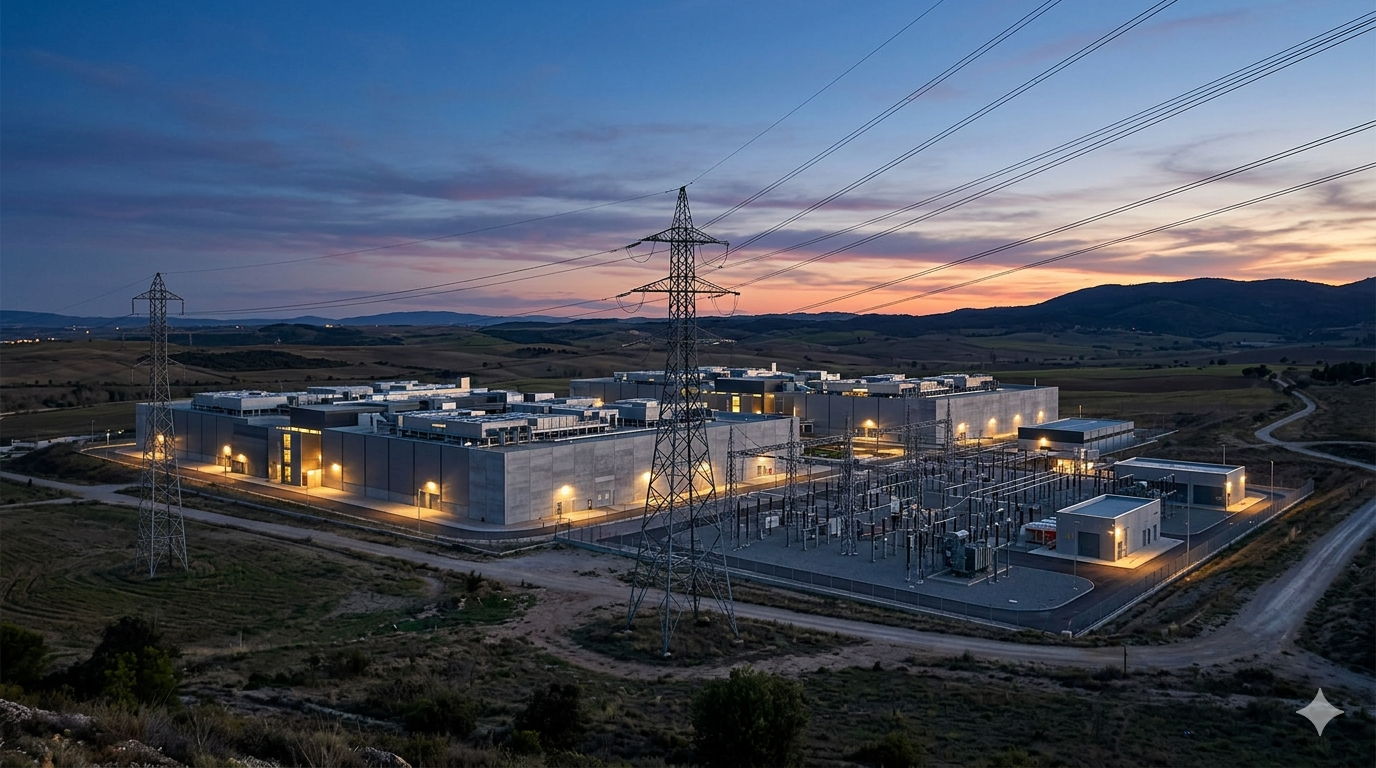
The power procurement strategies that hyperscalers pursued during the first decade of cloud infrastructure buildout treated electricity as a commodity input whose cost needed managing rather than a strategic asset whose availability needed securing. Large-scale power purchase agreements made commercial sense primarily as hedging instruments against utility rate volatility and as mechanisms for achieving renewable energy commitments that corporate sustainability targets required. The underlying assumption was that power would be available in the quantities that development programs required, and that the primary variable worth managing was the price at which operators accessed it. That assumption no longer holds in the markets where AI infrastructure demand concentrates, and the hyperscalers who recognized this shift earliest have restructured their power procurement strategies in ways that are creating durable competitive advantages their smaller competitors cannot easily replicate.

Long-term power agreements in the AI infrastructure context serve a fundamentally different strategic function than their predecessors in conventional cloud development. They do not just manage price risk. They secure capacity access in markets where the interconnection queue process has made new large load connections a multi-year proposition, and they establish relationships with utilities and independent power producers that translate into preferential treatment during transmission planning processes. The hyperscaler that signs a fifteen-year power purchase agreement with a generator that has existing interconnection rights does not just lock in a power price. It effectively removes that capacity from the market and prevents competitors from accessing grid connection opportunities that the interconnection queue would otherwise have made available.
The Mechanics of Capacity Lockout
The capacity lockout effect that long-term power agreements produce operates through several distinct mechanisms that individually appear unremarkable but collectively create substantial barriers to competitor development. Generators with existing interconnection rights represent a finite pool of assets whose development timelines do not depend on navigating the interconnection queue that new load additions face. A hyperscaler that secures offtake agreements with the majority of shovel-ready generators in a target market removes the primary alternative that competitors could have used to accelerate their own development timelines. The remaining development pathways all involve queue processes whose timelines extend development by years relative to what contracted existing generation enables.
Utility relationships that long-term procurement commitments enable also produce preferential access to transmission planning processes where large load additions compete for upgrade prioritization. Utilities that have committed generation capacity to a specific large customer have commercial incentives to prioritize the transmission upgrades that allow that customer to take delivery of contracted power. Competitors who have not established equivalent relationships with utilities in target markets find that transmission upgrade prioritization consistently favors established counterparties whose commercial relationships with the utility predate their own interconnection applications.

Why Smaller Operators Cannot Easily Replicate This Strategy
The long-term power agreement strategy that hyperscalers pursue requires balance sheet depth and revenue visibility that most smaller AI infrastructure operators cannot match. A fifteen-year power purchase agreement commits the signing entity to contracted payments across a period that exceeds the planning horizons of most infrastructure investment theses, and the creditworthiness requirements that generators and utilities impose on counterparties effectively exclude operators whose financial profiles do not meet investment-grade thresholds. The hyperscalers who dominate this strategy bring not just capital but the credit ratings, revenue certainty, and institutional relationships that make them credible counterparties to agreements whose terms extend well beyond what speculative infrastructure development can support.
The technical expertise required to negotiate and manage long-term power agreements also represents a barrier that smaller operators underestimate. Power purchase agreement structures involve complex provisions around delivery obligations, curtailment rights, force majeure definitions, and price adjustment mechanisms that require specialized legal and commercial expertise to negotiate effectively. Hyperscalers who have executed multiple large-scale power agreements across different regulatory jurisdictions have built institutional knowledge that smaller operators negotiating their first major agreements lack, and those operators frequently accept terms that create operational constraints or financial exposures that experienced counterparties anticipated and protected against.
The Renewable Energy Dimension
The renewable energy dimension of hyperscaler long-term power strategies adds a layer of strategic complexity that pure capacity security analysis misses. Corporate renewable energy commitments that hyperscalers have made publicly create demand for power purchase agreements with specific environmental attributes that conventional generation cannot satisfy, which means that hyperscalers compete not just for power capacity but for renewable capacity with the geographic and temporal matching characteristics that their sustainability commitments require. This competition for renewable capacity with specific attributes concentrates demand on a subset of available generation assets that is smaller than the total power market, which amplifies the capacity lockout effects that long-term agreements produce.
The interaction between renewable energy commitments and AI infrastructure power requirements creates a strategic dynamic where hyperscalers must simultaneously secure capacity, manage cost, satisfy sustainability commitments, and maintain the geographic flexibility that their infrastructure development programs require. Long-term power agreements that check all of these boxes simultaneously are rare, which is why the hyperscalers who have secured them treat those agreements as proprietary strategic assets rather than routine procurement transactions. The agreements that lock in renewable capacity with existing interconnection rights in markets with strong AI infrastructure demand represent a combination of attributes whose scarcity value compounds as the buildout continues.
Regulatory Risk and Agreement Durability
The durability of long-term power agreement advantages depends partly on regulatory frameworks remaining stable enough that the terms negotiated today retain their value across the agreement’s life. Utility rate structures, interconnection rules, and renewable energy credit frameworks all evolve through regulatory proceedings that can alter the economics of existing agreements in ways that neither party anticipated at signing. Hyperscalers who participate actively in utility rate cases and transmission planning processes hold better visibility into the direction of regulatory evolution than those who treat regulatory risk as an external variable beyond their influence. That participation also produces relationships with regulators and utility planners that create informal channels for advance notice of regulatory proposals that could affect existing agreement economics.
The long-term power agreement strategy that hyperscalers have developed to secure AI infrastructure advantage is not replicable by most market participants, and its effects on competitive dynamics will compound over time as the pool of available generation assets with existing interconnection rights shrinks. The operators who secured their positions early in markets where power availability now constrains development have built advantages that late entrants will find expensive and time-consuming to overcome, and the window during which equivalent positions remain available in the most attractive markets is narrowing faster than most industry observers currently appreciate.











