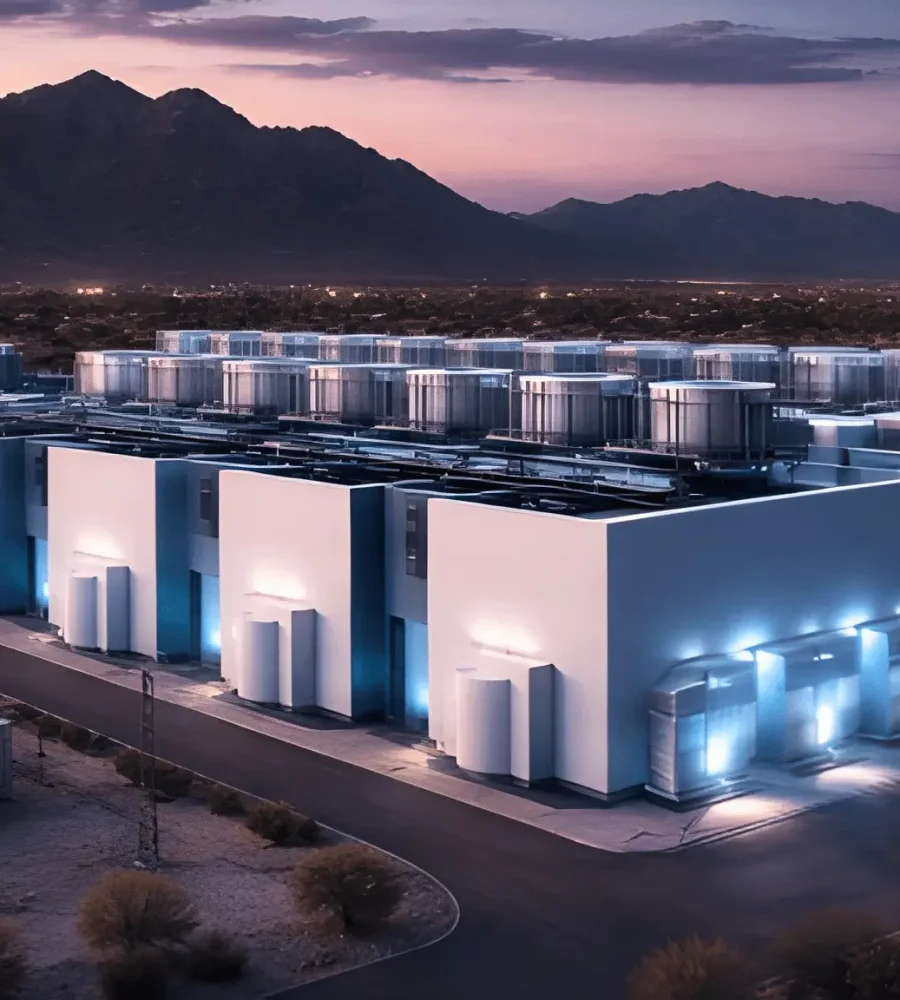
India’s policy framework has accelerated announcements of large-scale data center and AI infrastructure investments across multiple states, yet these declarations do not automatically translate into usable compute capacity. Tax incentives, capital subsidies, and land allotments have improved project viability on paper, but compute density depends on stable and scalable electrical supply. High-performance AI clusters require consistent megawatt-scale power delivery with low latency fluctuations, which only robust grid infrastructure can ensure. Grid expansion, substation densification, and high-capacity feeders remain the actual enablers of compute readiness rather than fiscal mechanisms. Developers frequently face delays in securing adequate grid connectivity and power allocation due to infrastructure constraints in upstream transmission and distribution systems. As a result, infrastructure readiness rather than financial incentives dictates the real pace of AI deployment in India.
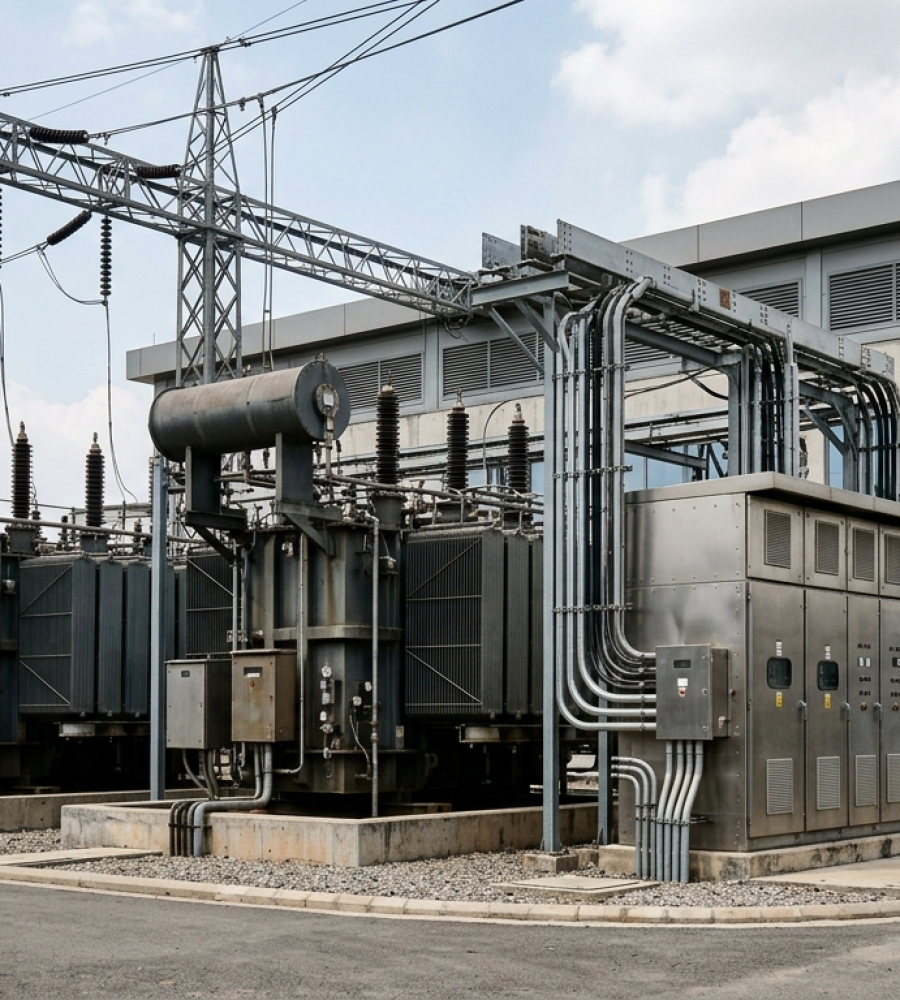
Power infrastructure for AI workloads differs significantly from conventional industrial demand due to its intensity and continuity requirements. GPU clusters operate at high utilization levels and require uninterrupted energy flows, which strain existing transmission and distribution systems. Substations must handle sudden load spikes and maintain voltage stability, which many regional grids currently struggle to support. While incentives attract capital inflows, they do not address systemic grid fragility or capacity constraints. Consequently, developers often invest in captive power solutions or hybrid energy strategies, increasing project complexity and cost. Therefore, compute scaling aligns more closely with grid modernization timelines than with fiscal policy rollouts.
India’s transmission infrastructure presents a critical bottleneck in scaling AI compute capacity despite adequate generation availability in certain regions. Power generation capacity has expanded significantly, but transmission networks have not evolved at the same pace to deliver that power efficiently to data center clusters. Interconnection delays frequently extend project timelines, as developers wait for approvals and physical connectivity to the grid. Transmission line expansion often faces regulatory, land acquisition, and permitting complexities, particularly in densely populated or administratively fragmented regions. Weak transmission corridors limit the ability to move surplus power from generation hubs to emerging data center zones. Consequently, compute deployments slow down even when theoretical power capacity exists within the system.
Transmission inefficiencies also increase operational risks for hyperscale deployments, which depend on predictable and redundant power pathways. AI workloads cannot tolerate instability or prolonged outages, making transmission reliability a non-negotiable requirement. Developers often face fragmented coordination between central and state utilities, which adds layers of procedural complexity. Transmission upgrades require long lead times due to regulatory approvals, land acquisition, and engineering execution. Meanwhile, hyperscale operators plan infrastructure in months rather than years, creating a structural mismatch. As a result, transmission constraints quietly throttle India’s ability to compete in global AI infrastructure expansion.
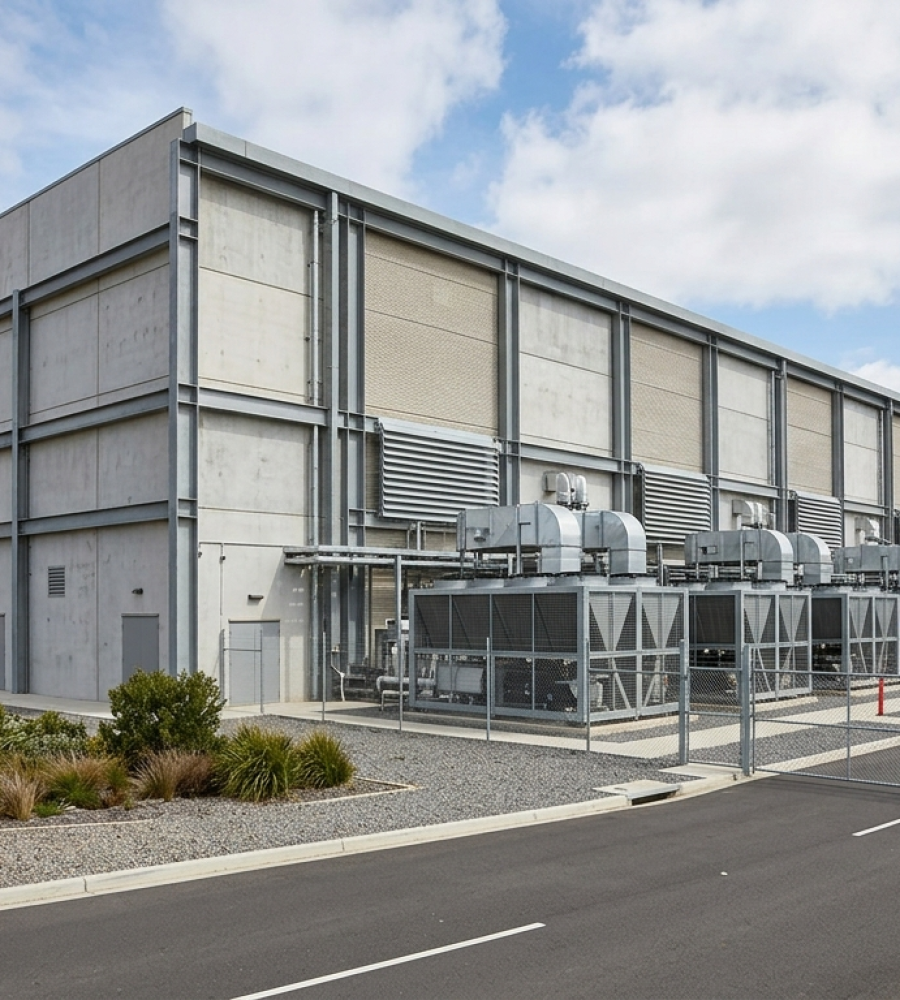
India’s availability of low-cost land has positioned it as an attractive destination for data center investments, but affordability alone does not guarantee deployment success. Land parcels located far from established power infrastructure or fiber backbones often require additional connectivity development, which can extend project execution timelines. Developers often acquire land based on cost advantages without fully accounting for connectivity and permitting timelines. Sites lacking proximity to substations require additional infrastructure buildouts, which extend time-to-compute significantly. Fiber connectivity, essential for data throughput and latency-sensitive workloads, often lags in emerging locations. As a result, inexpensive land frequently transforms into a deployment bottleneck rather than a competitive advantage.
Permitting complexity further exacerbates delays in bringing such sites online for compute operations. Multiple regulatory approvals across environmental, electrical, and municipal domains create a fragmented execution pathway. Each approval stage introduces uncertainty and potential delays that disrupt project timelines. Developers must coordinate with various authorities, which increases administrative overhead and reduces execution efficiency. Meanwhile, global AI infrastructure expansion operates on accelerated timelines that do not accommodate prolonged delays. However, without integrated planning that aligns land with power and connectivity, India risks underutilizing its geographic advantages in data center development.
Hyperscale data center operators design their deployment strategies around rapid scaling cycles, often targeting operational readiness within tight timelines. India’s infrastructure execution pace can vary across regions, which may extend timelines for compute activation compared to initial deployment expectations. Power provisioning, transmission connectivity, and permitting processes frequently extend beyond projected timelines. Such delays can affect infrastructure utilization timelines and influence return on investment and operational efficiency projections.Hyperscalers must recalibrate deployment strategies to accommodate infrastructure uncertainties, which reduces overall agility. Consequently, India’s attractiveness as a hyperscale destination depends not just on cost but on execution reliability.
The mismatch between infrastructure readiness and deployment expectations creates cascading inefficiencies across the compute value chain. Delayed energization affects not only hardware utilization but also software deployment and customer onboarding. AI workloads scheduled for deployment face postponements, which disrupt enterprise planning and innovation cycles. Hyperscale operators typically prioritize regions with more predictable infrastructure timelines when planning workload distribution and deployment strategies. This dynamic reduces India’s share in global AI compute distribution despite strong demand fundamentals. Therefore, aligning infrastructure execution with hyperscale timelines becomes essential for sustained growth in the sector.
India has successfully positioned itself as a favorable destination for data center investments through progressive policy frameworks and incentives. Announcements of large-scale projects reflect strong investor interest and confidence in the market. However, the transition from policy approval to operational infrastructure often encounters significant execution challenges. Energization delays remain one of the most critical issues, as projects await final power connections despite being physically complete. Delays in infrastructure readiness can lead to deferred utilization of deployed assets, affecting overall economic efficiency and project timelines. As a result, the gap between policy success and operational readiness continues to widen.
Execution inefficiencies stem from fragmented coordination among multiple stakeholders involved in infrastructure development. Power utilities, regulatory bodies, and private developers operate within different timelines and priorities. This lack of synchronization can introduce delays across different stages of project execution, affecting overall deployment timelines. Developers must navigate complex administrative processes that reduce speed and increase uncertainty. Meanwhile, global competition for AI infrastructure investment intensifies, requiring faster and more predictable execution environments. Therefore, closing the execution gap becomes critical for translating policy intent into tangible compute capacity.
India’s trajectory in AI infrastructure development will depend on its ability to prioritize physical infrastructure over financial incentives. Grid modernization, transmission expansion, and integrated planning will define the next phase of growth in the sector. Policy frameworks must evolve to address execution challenges rather than focusing solely on investment attraction. Reliable power access, efficient permitting, and coordinated infrastructure development will determine real compute capacity. The shift from incentive-driven strategies to infrastructure-led execution will shape India’s competitiveness in global AI markets. Ultimately, sustained progress will require aligning policy ambition with operational readiness across the entire infrastructure ecosystem.
India’s AI ambitions rest on its capacity to deliver consistent and scalable infrastructure that meets the demands of high-density compute environments. Developers and policymakers must collaborate to streamline execution pathways and reduce systemic inefficiencies. Infrastructure investments must prioritize long-term reliability and scalability rather than short-term cost advantages. Global AI growth presents a significant opportunity, but capturing it requires structural improvements in infrastructure delivery. The focus must shift toward enabling real compute rather than announcing potential capacity. As the sector evolves, infrastructure readiness will define India’s position in the global AI landscape.