
NVIDIA H200 shipments delayed to Q3  · BREAKING: Microsoft confirms 3GW data centre expansion in Asia-Pacific ·  AWS announces new sovereign cloud regions in India and UAE  · Arm-based servers now 24% of hyperscale deployments ·  EU AI Act enforcement enters phase two  · Global data centre investment hits $612B in 2026 ·  TSMC Arizona yields improve to 68% on 3nm process  · OpenAI valuation reaches $400B after latest funding round ·  NVIDIA H200 shipments delayed to Q3  · BREAKING: Microsoft confirms 3GW data centre expansion in Asia-Pacific ·  AWS announces new sovereign cloud regions in India and UAE  · Arm-based servers now 24% of hyperscale deployments ·  EU AI Act enforcement enters phase two  · Global data centre investment hits $612B in 2026

Will ‘Physical AI’ disrupt the workforce or define operational excellence?

For decades, AI has been a disembodied mind: powerful, fast, and utterly confined. But intelligence without a body is a limited thing. Today, that limitation is dissolving. Machines are gaining the ability to see, touch, move, and respond. This is
Share
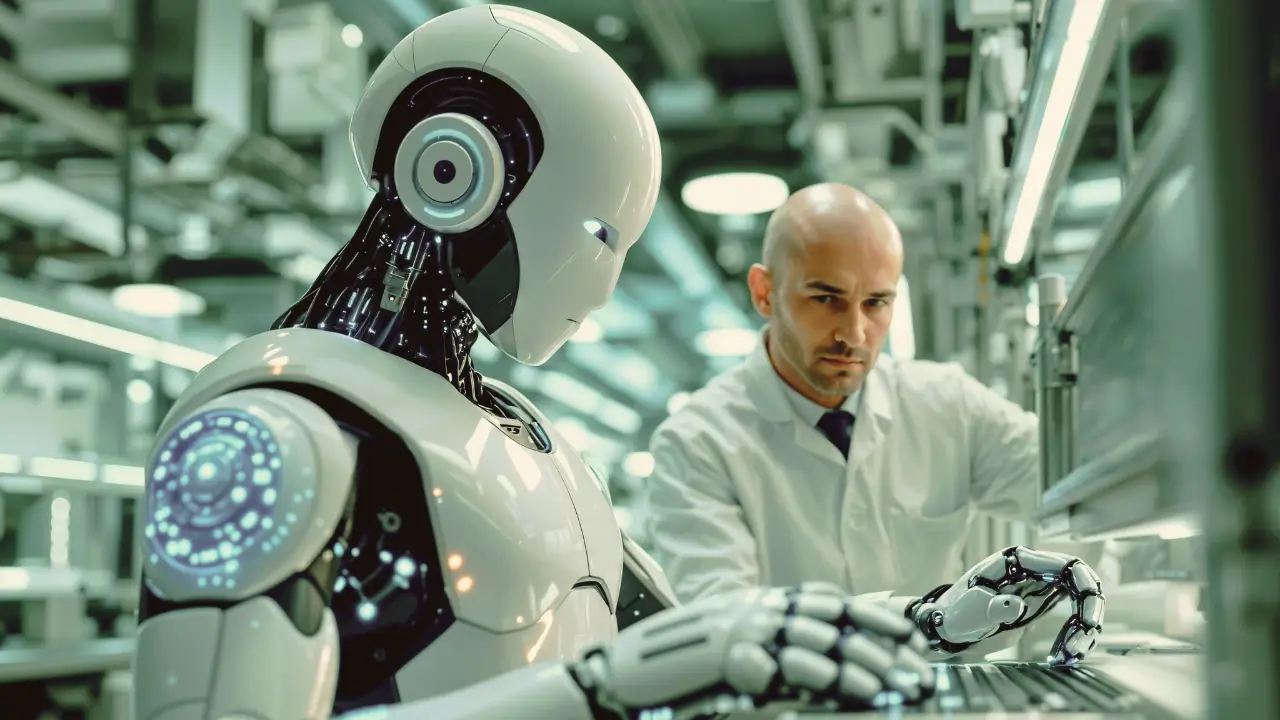
Physical AI innovation

For decades, AI has been a disembodied mind: powerful, fast, and utterly confined. But intelligence without a body is a limited thing.

Today, that limitation is dissolving. Machines are gaining the ability to see, touch, move, and respond. This is Physical AI, and it may redefine what intelligence means.

The transformation is subtle at first- robot dogs inspecting power plants, autonomous forklifts navigating warehouses, drones monitoring crops, exoskeletons assisting workers, surgical robots collaborating with doctors. But if we look beyond, the boundary between digital intelligence and physical capability is narrowing.

AWS calls this the beginning of “intelligence embodied” and the implications stretch far beyond robotics.

From Chatbots to Machine Colleagues

Most people’s idea of AI is still shaped by text-generation tools, image models, voice assistants, and predictive systems. That’s understandable: these are the products we interact with every day. But these forms of AI are still confined within screens.

Physical AI breaks that confinement.

It refers to AI systems integrated into physical machines, enabling them to:

  • perceive the world
  • understand context
  • make decisions
  • move or manipulate objects
  • collaborate with people
  • adapt to changing environments

In other words: robots that don’t just follow instructions, but learn. This is not the “robots will replace us” narrative. 

Physical AI adds judgment to movement, and that changes everything.

Why Now? Three Forces Converging

For decades, robotics struggled because one essential ingredient was missing: intelligence. The hardware existed: robot arms, sensors, drones; but they lacked the ability to understand the world around them.

That’s changed dramatically in the last few years.

1. General-purpose AI models are learning physical reasoning

Models can now interpret video, understand spatial layouts, and make sense of real-world cause-and-effect patterns. They can observe humans performing tasks and imitate them safely.

2. Simulated training is becoming astonishingly realistic

This allows robots to learn millions of variations of a task: assembly, navigation, manipulation, in virtual environments before attempting them in reality, reducing risk and cost.

3. The cost of sensors, cameras, chips, and compute has dropped

This makes it economically viable to deploy intelligent machines at scale, not just in labs.

The Four Faces of Physical AI

The emerging landscape of Physical AI isn’t monolithic. AWS breaks it down into four distinct categories, each with unique capabilities and real-world use cases.

1. Mobile Manipulators

Think of a robot arm on wheels, a machine that can move through a factory, grab objects, open doors, handle tools, restock items, or assist workers.

These systems excel in logistics, retail, and manufacturing.

2. Humanoids

The most ambitious category: robots designed to move like humans, operate in human-centered environments, and learn from human demonstrations.

While still early, companies worldwide are racing toward safe, affordable humanoid systems.

3. Autonomous Mobile Robots (AMRs)

These are robots built primarily for movement: navigating warehouses, hospitals, farms, and industrial sites. Drones fall into this category too.

They specialise in transport, inspection, delivery, and monitoring.

4. Industrial Arms + AI

Industrial arms already power much of modern manufacturing, but with AI, they shift from performing rigid, repetitive motions to learning flexible behaviors.

They can adjust to variations, adapt to new tasks, and recover from errors.

Together, these four categories form the foundation of a new physical workforce.

Why Physical AI Matters Now

Physical AI is about responding to global pressures:

  • A shrinking labor force in many countries
  • Productivity bottlenecks in logistics and manufacturing
  • Safety concerns in hazardous environments
  • The push for sustainability, where intelligent systems can reduce waste, energy use, and emissions
  • Demand for higher precision in areas like healthcare and construction

In short, industries need more hands and more intelligence and Physical AI “is considered” to offer both.

Industries Being Transformed Already

Here are a few early examples showing how Physical AI is quietly entering daily life:

Healthcare

Robotic assistants deliver supplies, manage inventory, disinfect rooms, and help during surgeries. AI arms can handle delicate procedures with precision beyond human capability.

Agriculture

Drones and autonomous bots detect pests, assess soil moisture, and apply treatments with pinpoint accuracy. This reduces chemical usage and improves crop yields.

Manufacturing

Intelligent arms learn assembly tasks from video demonstrations. Robots dynamically rearrange workflows based on changing demand.

Energy & Utilities

AI-driven drones inspect pipelines, wind turbines, and power lines, reducing risk and speeding up maintenance.

Retail & Warehousing

From stocking shelves to moving products to managing inventory, robots complement human workers during peak loads.

The New Human-Machine Relationship

Perhaps the most interesting part of the Physical AI story is not the technology, but the psychology. For the first time, humans will work side-by-side with machines that learn, adapt, and collaborate.

Not machines behind cages.

Not robots running on fixed programming.

But intelligent coworkers.

This will force new questions:

  • What tasks should be delegated to machines?
  • How do we design workflows that leverage both human creativity and machine precision?
  • What new skills will workers need?
  • How do we ensure trust, safety, and transparency?

The rise of Physical AI doesn’t imply a world filled with robot workers or AI taking over physical spaces. Instead, it points to a world where intelligence, digital and mechanical could co-exist.

If the 2010s were about AI learning to think, the next decade will be about AI learning to act.

And that is where the story of Physical AI truly begins.

[simple-author-box]

More from AI Infrastructure

Artificial intelligence has transformed the conversation around digital infrastructure. Most discussions focus on GPUs,

The rapid expansion of artificial intelligence infrastructure has transformed electricity policy into one of

The race to build AI infrastructure is exposing a challenge that extends far beyond

COMPUTE WEEKLY

The briefing that 40,000+ tech leaders read every Monday. Sharp, fast, essential.

Great! We’ve received your information.

We couldn’t process your submission. Please retry

Building an AI Startup Without Owning GPUs

Not owning GPUs has become the default, deliberate strategy for building an AI company — not a compromise founders accept reluctantly. H100 rental rates fell 64-75% in fifteen months, a dense ecosystem of neoclouds and inference-as-a-service providers now lets startups skip infrastructure entirely, and credit programs can fund a company’s first year before a founder writes a check
Most Read

Infrastructure planning discussions often prioritize engineering, construction, and utility considerations before examining how end

AI infrastructure deployment schedules depend on coordinated progress across hardware availability, electrical infrastructure, cooling

Artificial intelligence has transformed the economics of digital infrastructure. Every new AI model requires

Data centers do not visibly smoke. They have no smokestacks, no visible exhaust, and

Artificial intelligence has transformed the economics of digital infrastructure. Companies once competed by acquiring

Disruptor Spotlight

Cerebras Systems

The chip that makes Nvidia nervous. Cerebras’ Wafer Scale Engine is rewriting the rules of AI inference at scale.
Faster
0 x
YoY Revenue
0 x
Transistors
0 T
Market Pulse
NVDA
$924.60
-2.11%
MSFT
$421.30
-2.94%
AMZN
$192.80
-4.87%
AMD
$924.60
-2.40%
TSMC
$924.60
-2.32%
Indicative only · Not financial advice
Upcoming Events
SEP
The AI Infrastructure Race (India)
WEBINAR · ONLINE
The AI Infrastructure Race: Won on Power, Land and Trust — Not Capital
MAY
0
AI Infrastructure Summit
DUBAI · IN PERSON
MEA’s premier AI infrastructure event.
JUN
0 0
Compute Forecast Summit
SINGAPORE · IN PERSON
Our flagship APAC event. Early bird open.
Latest Moves
Live
ecolab
Ecolab Deepens Cooling Strategy With $4.75B CoolIT Acquisition
Ecolab is making one of its biggest moves yet into AI infrastructure after completing its $4.75 billion acquisition of liquid cooling specialist CoolIT Systems
Pure DC AVK Europe data center microgrid Dublin 110MW AI infrastructure Ireland 2026
Pure DC and AVK Deploy Europe’s First 110 MW Data Center Microgrid in Dublin
The Pure DC Dublin microgrid has made history as Europe’s first large-scale on-site data center microgrid, launched in partnership with power solutions provider AVK at Pure DC’s campus in Ireland.
Pace Digitek
Pace Digitek Partners With MEGMEET to Expand AI Data Center Power Business
India’s AI infrastructure ecosystem continues to mature as domestic technology manufacturers move beyond traditional telecommunications and industrial markets toward high-growth digital infrastructure opportunities
Follow Compute Forecast
11K followers
1200 followers
Companies to Watch
CW
CoreWeave
Neo Cloud · $19B · IPO Watch
CB
Cerebras Systems
AI Hardware · $4.25B · Pre-IPO
G42
G42
Sovereign AI · Abu Dhabi
H
Humain
Saudi AI · $40B Fund
Latest Podcast
AI Capex, Cloud Margins & the Nuclear Bet
48 MIN · 25 APR 2026

Will ‘Physical AI’ disrupt the workforce or define operational excellence?

For decades, AI has been a disembodied mind: powerful, fast, and utterly confined. But intelligence without a body is a limited thing. Today, that limitation is dissolving. Machines are gaining the ability to see, touch, move, and respond. This is
Share
Physical AI innovation
22
847 SHARES

0
SHARES

[simple-author-box]

More from AI Infrastructure

Infrastructure planning discussions often prioritize engineering, construction, and utility considerations before examining how end

AI infrastructure deployment schedules depend on coordinated progress across hardware availability, electrical infrastructure, cooling

Artificial intelligence has transformed the economics of digital infrastructure. Every new AI model requires

Data centers do not visibly smoke. They have no smokestacks, no visible exhaust, and

COMPUTE WEEKLY

The briefing that 40,000+ tech leaders read every Monday. Sharp, fast, essential.

Great! We’ve received your information.

We couldn’t process your submission. Please retry

Global AI Infrastructure Outlook 2026

The briefing that 40,000+ tech leaders read every Monday. Sharp, fast, essential.
Download Free
Most Read

Infrastructure planning discussions often prioritize engineering, construction, and utility considerations before examining how end

AI infrastructure deployment schedules depend on coordinated progress across hardware availability, electrical infrastructure, cooling

Artificial intelligence has transformed the economics of digital infrastructure. Every new AI model requires

Data centers do not visibly smoke. They have no smokestacks, no visible exhaust, and

Artificial intelligence has transformed the economics of digital infrastructure. Companies once competed by acquiring

Disruptor Spotlight

Cerebras Systems

The chip that makes Nvidia nervous. Cerebras’ Wafer Scale Engine is rewriting the rules of AI inference at scale.
Faster
0 x
YoY Revenue
0 x
Transistors
0 T
Market Pulse
NVDA
$924.60
+2.4%
MSFT
$421.30
+1.1%
AMZN
$192.80
-0.6%
NVDA
$924.60
+2.4%
NVDA
$924.60
+2.4%
Indicative only · Not financial advice
Upcoming Events
MAY
0 0
DCD Global — London
LONDON · IN PERSON
World’s largest DC event. CF is media partner.
MAY
0
AI Infrastructure Summit
DUBAI · IN PERSON
MEA’s premier AI infrastructure event.
JUN
0 0

Compute Forecast Summit

SINGAPORE · IN PERSON
Our flagship APAC event. Early bird open.
Latest Moves
  • Live
Sam Altman
OpenAI appoints new Chief Infrastructure Officer to lead $100B DC programme
27 APR · OPENAI
Sam Altman
OpenAI appoints new Chief Infrastructure Officer to lead $100B DC programme
27 APR · OPENAI
Sam Altman
OpenAI appoints new Chief Infrastructure Officer to lead $100B DC programme
27 APR · OPENAI
Follow Compute Forecast
18.4K followers
12.1K followers
9.3K subscribers
41 episodes
Companies to Watch
CW
CoreWeave
Neo Cloud · $19B · IPO Watch
CB
Cerebras Systems
AI Hardware · $4.25B · Pre-IPO
G42
G42
Sovereign AI · Abu Dhabi
CW
Humain
Saudi AI · $40B Fund
Latest Podcast
AI Capex, Cloud Margins & the Nuclear Bet
48 MIN · 25 APR 2026
Scroll to Top









