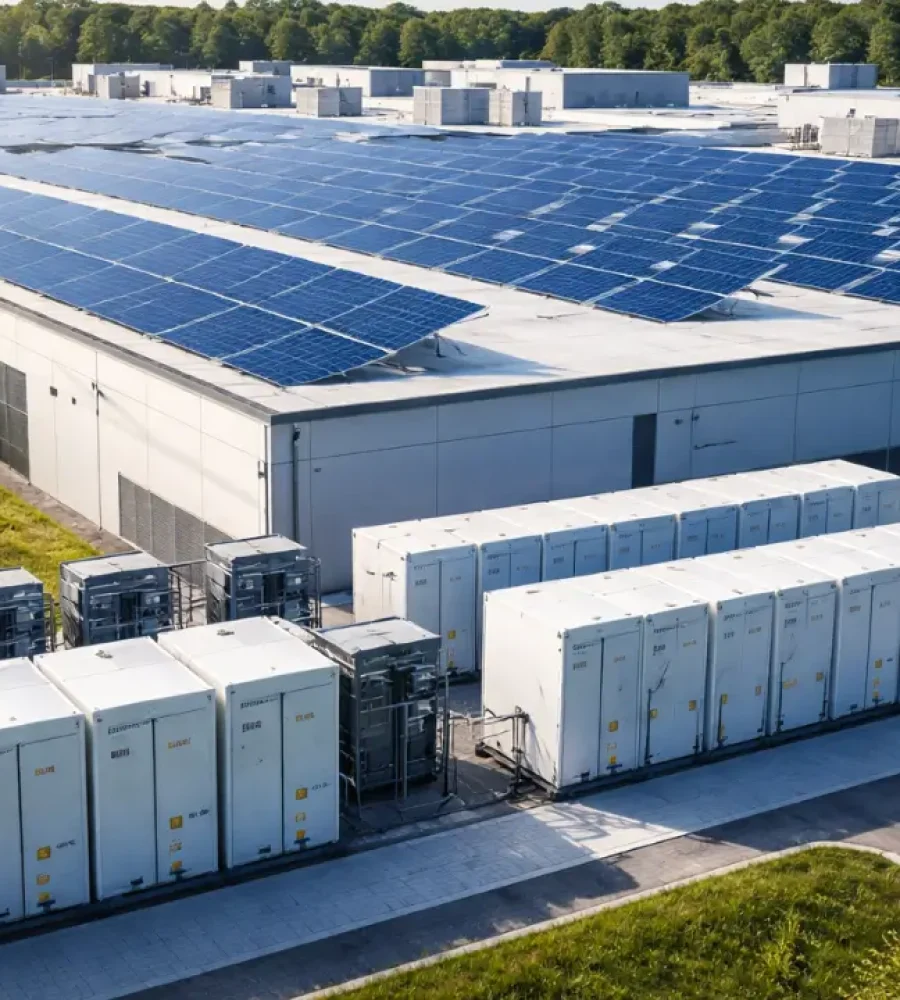

The modern economy operates with quiet intensity, driven not only by factories, ports, and highways, but also by expansive server facilities that seldom feature on national infrastructure maps. Beneath the abstractions of cloud computing and artificial intelligence lies a physical substrate of fiber, silicon, cooling systems, and substations that now shapes geopolitical and economic outcomes. Data centers once occupied the margins of corporate IT strategy, yet today they influence trade policy, industrial competitiveness, and national security frameworks. Governments increasingly recognize that computational capacity determines how effectively societies harness innovation, manage digital services, and secure strategic autonomy. This transition marks a structural shift in how states perceive digital infrastructure, moving it from a technical concern to a central pillar of economic architecture. As nations race to secure their digital futures, the question no longer centers on whether data centers matter, but on how deeply they anchor national power.
From Invisible Infrastructure to Strategic Asset
For decades, enterprises treated data centers as back-office utilities that ensured email servers functioned and databases remained accessible. Over time, however, hyperscale cloud platforms transformed computational facilities into hubs that underpin financial markets, public administration systems, and advanced research environments. As digital services permeated every sector, governments began to recognize that physical compute capacity determines resilience during crises and agility during economic transitions. National security strategies now explicitly reference cloud infrastructure, signaling a decisive break from earlier eras when policymakers overlooked server farms as mere commercial assets. In addition, regional development plans increasingly court data center investments to stimulate innovation clusters and anchor technology ecosystems. Consequently, infrastructure that once operated in obscurity now occupies the foreground of industrial planning and diplomatic dialogue.
Strategic recognition accelerated as cross-border data flows expanded and digital trade became integral to global commerce. Governments realized that the location of compute resources affects latency, compliance, and sovereignty, thereby influencing economic competitiveness. Meanwhile, enterprises demanded proximity to robust digital ecosystems that could support artificial intelligence workloads and advanced analytics. Policymakers therefore began to evaluate server capacity alongside traditional infrastructure indicators such as transport corridors and energy grids. This reclassification reframed data centers as enablers of productivity growth rather than passive cost centers. As a result, investment incentives, zoning adjustments, and regulatory reforms increasingly target computational facilities as strategic assets.
Compute as a Pillar of Industrial Policy
Industrial policy historically revolved around manufacturing capacity, export potential, and technological self-sufficiency in critical sectors. In recent years, however, compute infrastructure has entered policy frameworks as a foundational enabler of advanced manufacturing, life sciences, and semiconductor design. Governments recognize that artificial intelligence development requires not only algorithms and talent, but also sustained access to high-performance computing clusters. Consequently, national innovation strategies increasingly integrate cloud partnerships, sovereign data initiatives, and incentives for large-scale data center campuses. Public funding programs now support digital infrastructure expansion alongside research grants and startup incubation schemes. This integrated approach reflects an understanding that digital capacity shapes industrial outcomes as decisively as physical capital once did.
Digital transformation agendas further reinforce this shift by linking compute infrastructure to productivity gains across traditional industries. Automotive manufacturers rely on data-intensive simulations to accelerate design cycles, while pharmaceutical firms depend on large-scale analytics for drug discovery pipelines. These use cases highlight how server capacity directly influences time-to-market and competitive positioning in global supply chains. As a result, policymakers increasingly treat data center development as a lever for enhancing domestic value creation. Moreover, infrastructure localization strategies aim to ensure that domestic enterprises retain reliable access to computational resources during global disruptions. Through these measures, compute infrastructure evolves into a structural component of long-term economic planning rather than a peripheral technology concern.
Digital Sovereignty and the Control of Critical Infrastructure
Debates around digital sovereignty intensify as states confront the strategic implications of foreign-owned infrastructure within national borders. Control over data storage, processing, and routing now intersects with cybersecurity doctrines and intelligence assessments. Several governments increasingly scrutinize ownership structures, vendor dependencies, and jurisdictional exposure linked to large-scale data facilities, although policy intensity and enforcement mechanisms vary widely across regions. These considerations reflect concerns that geopolitical tensions could disrupt access to essential digital services. In response, several countries have introduced data localization requirements and cloud certification frameworks to safeguard sensitive information. Such measures illustrate how server infrastructure has moved closer to the center of sovereignty debates in some jurisdictions, while remaining primarily market-driven in others.
Beyond ownership questions, governance mechanisms determine how effectively nations manage cyber risks and operational resilience. Regulatory bodies establish standards for redundancy, incident response, and cross-border data transfers to mitigate systemic vulnerabilities. Enterprises must therefore align infrastructure strategies with evolving compliance regimes that reflect national security priorities. At the same time, international trade negotiations increasingly address digital rules, underscoring the geopolitical significance of compute capacity. This convergence of policy, technology, and diplomacy reinforces the perception that data centers constitute critical infrastructure akin to energy grids. As digital ecosystems mature, sovereign control over compute becomes inseparable from broader statecraft considerations.
Energy, Land, and the Politics of Expansion
As demand for computational power accelerates, infrastructure expansion intersects with energy systems and environmental planning. Large-scale data centers require substantial electricity supplies, advanced cooling technologies, and carefully planned land allocations to operate efficiently, although the scale of these requirements varies significantly depending on facility size, workload intensity, and geographic location. Consequently, local communities and regulators scrutinize proposed developments for their impact on grids, water usage, and carbon reduction targets. Policymakers must therefore balance economic incentives with sustainability commitments when approving new campuses. In several regions, energy transition strategies are beginning to integrate digital infrastructure planning to align renewable generation expansion with projected compute demand, although integration levels differ across jurisdictions. This alignment illustrates how large-scale server facilities increasingly feature in policy debates that were traditionally associated with energy-intensive industries, particularly in regions experiencing rapid digital infrastructure expansion
Land use planning further complicates expansion strategies, particularly in urban regions where real estate constraints intensify competition. Authorities evaluate zoning regulations, transport connectivity, and environmental assessments before granting approvals for large-scale facilities. Developers collaborate with utilities to secure long-term power purchase agreements that stabilize operational costs and align with decarbonization objectives. Public discourse often reflects tension between economic development aspirations and environmental stewardship priorities. In certain jurisdictions, large data center projects resemble traditional industrial undertakings in that they require multi-stakeholder coordination involving utilities, regulators, developers, and local communities. The politics of expansion therefore reveal how deeply compute infrastructure intertwines with broader socioeconomic frameworks.
The Enterprise Shift: From IT Support to Core Business Engine
Enterprises increasingly treat compute capacity as a strategic differentiator rather than a background utility that merely supports internal systems. Cloud-native architectures enable organizations to deploy scalable applications that respond dynamically to market conditions and customer demands. Artificial intelligence initiatives depend on robust infrastructure capable of handling vast datasets and iterative model training cycles. Executive leadership teams now discuss infrastructure strategy alongside revenue growth, risk management, and product innovation agendas. This shift reflects recognition that digital capabilities determine competitive agility in nearly every sector. As a result, infrastructure investments increasingly align with core business objectives rather than peripheral IT budgets.
Operational resilience further elevates infrastructure considerations to board-level discussions. Enterprises must ensure uninterrupted access to digital services amid cyber threats, natural disasters, and supply chain disruptions. Hybrid cloud strategies, distributed edge deployments, colocation partnerships, and redundancy planning increasingly form integral components of corporate governance frameworks, reflecting a shift toward diversified and geographically distributed infrastructure models. Investors also evaluate digital maturity as an indicator of long-term value creation potential. Through these dynamics, enterprise compute capacity spanning hyperscale facilities, regional colocation sites, and edge environments evolves into a central engine of strategy rather than a purely technical afterthought. The enterprise shift reinforces the broader narrative that compute infrastructure anchors modern economic architecture.
The Backbone of the Digital State
Industrial revolutions have always depended on foundational infrastructure that enables productivity and connects markets. In the contemporary era, computational capacity performs a similar function by underpinning digital services, innovation ecosystems, and public administration platforms. Governments increasingly integrate infrastructure planning with economic strategy, recognizing that national competitiveness hinges on secure and scalable compute resources. Energy policy, land regulation, and cybersecurity frameworks now converge around the realities of large-scale server deployment. This convergence signals that data centers occupy a structural position comparable to transport networks and power plants in earlier industrial cycles. Therefore, as digital transformation accelerates, compute infrastructure emerges as a defining backbone of the digital state and a central determinant of economic leadership.