
In the annals of technological disruption, few forces have reshaped modern industry and infrastructure as profoundly as artificial intelligence. Its transformative potential is undeniable. So, too, is its appetite for energy. The power demands of large-scale AI systems are not merely high; they are staggering. On that point, there is little room for debate.
Against this backdrop, lawmakers in New York have recently proposed tighter energy pricing accountability for large AI and data center operators. Their concern is straightforward: growing stress on regional power capacity and rising electricity costs for everyday consumers. While the proposal is local, the implications are global.
As a result, a far more urgent question comes into focus. How can AI data centers be powered sustainably, reliably, and at massive scale? Traditional reliance on grid electricity, much of it still derived from fossil fuels, is increasingly incompatible with corporate climate commitments and public expectations. Consequently, while the industry continues to expand its use of conventional renewables like solar and wind, it is also exploring unconventional energy paths. These ideas are not incremental tweaks. Rather, they represent a deeper rethinking of how energy for digital infrastructure is generated, delivered, and reused.
The Scale of the Challenge and the Case for Innovation
AI workloads, particularly the training of large language models, are dramatically more energy-intensive than traditional web services. Some analyses suggest that a single AI query can consume up to ten times more energy than a standard search request.
At the same time, computing power is only part of the equation. Cooling and thermal management now represent a major energy sink. Traditional air-based cooling systems can consume up to 40 percent of a data center’s total energy budget. Moreover, they often rely on vast quantities of water, sometimes millions of gallons per year for a single facility, simply to manage heat rejection.
Given these realities, improving energy supply and improving energy efficiency must happen in tandem. However, the solutions now under consideration go well beyond marginal efficiency gains. Instead, they point toward structural changes in how data centers interact with energy systems.
Renewables and Beyond as the Base Case
To begin with, solar and wind power remain foundational. Large data center operators already sign long-term power purchase agreements tied to renewable generation. Many have also pledged to match their electricity consumption with green energy credits over time.
Nevertheless, these strategies still depend heavily on the existing grid. As a result, data centers remain exposed to regional energy mixes, grid congestion, and reliability risks. To reduce that dependence, companies are increasingly investing in on-site renewable generation paired with energy storage. This approach allows facilities to produce and buffer their own clean power while also supporting grid stability during periods of peak demand.
In this context, advanced battery systems and emerging hydrogen fuel cell technologies are beginning to replace diesel generators as backup power solutions. Yet even with these advances, renewables face a persistent limitation. Intermittency remains a challenge, and large-scale storage is still expensive and spatially demanding.
Nuclear Power as a Controversial but Compelling Option
As a result, some technology companies are looking beyond renewables altogether. Nuclear energy, particularly in advanced and modular forms, is reentering the conversation. Meta, for example, has secured agreements totaling 6.6 gigawatts of nuclear power to support its AI data centers. That amount is roughly equivalent to the electricity needs of millions of homes.
These efforts often focus on small modular reactors and next-generation nuclear designs that promise greater safety, flexibility, and scalability. Proponents argue that nuclear power offers something renewables cannot provide on their own: continuous, carbon-free baseload energy that operates regardless of weather conditions.
Still, the obstacles are real. High upfront costs, lengthy permitting processes, unresolved waste disposal concerns, and public resistance continue to shape the debate. Even so, when viewed through the lens of unprecedented AI-driven energy demand, nuclear power increasingly appears less like a fringe option and more like a pragmatic component of a diversified energy portfolio.
Geothermal Energy and the Ground Beneath Our Feet
Alongside nuclear, geothermal energy represents another unconventional yet promising pathway. Companies such as Switch have entered long-term agreements to source power from geothermal plants, using the Earth’s internal heat to support data center operations.
Unlike solar and wind, geothermal energy offers consistent output and functions effectively as baseload power. However, it comes with its own constraints. Geothermal resources are geographically specific, and accessing them can be technically complex and capital-intensive.
Even so, as drilling technologies improve and enhanced geothermal systems mature, this energy source deserves closer attention. Its small land footprint and continuous output make it particularly well suited for energy-hungry digital infrastructure.
Heat Reuse and the Redefinition of Waste
At the same time, the industry is beginning to rethink a long-standing assumption: that heat generated by data centers is simply waste. In reality, heat is only waste if it is allowed to dissipate unused.
Increasingly, data centers are deploying systems that capture server heat and redirect it for productive purposes. These include district heating networks, industrial processes, greenhouses, and even aquaculture operations. Through thermal exchange systems, some facilities use excess heat to drive chillers or offset fossil fuel consumption elsewhere.
By treating heat as a recoverable resource rather than a byproduct, data centers can create localized energy circularity. In doing so, they not only reduce emissions but also deliver tangible value to surrounding communities.
Next-Generation Cooling and Efficiency Technologies
Of course, energy supply is only half the equation. Reducing waste remains equally important. To that end, emerging cooling technologies are reshaping data center design.
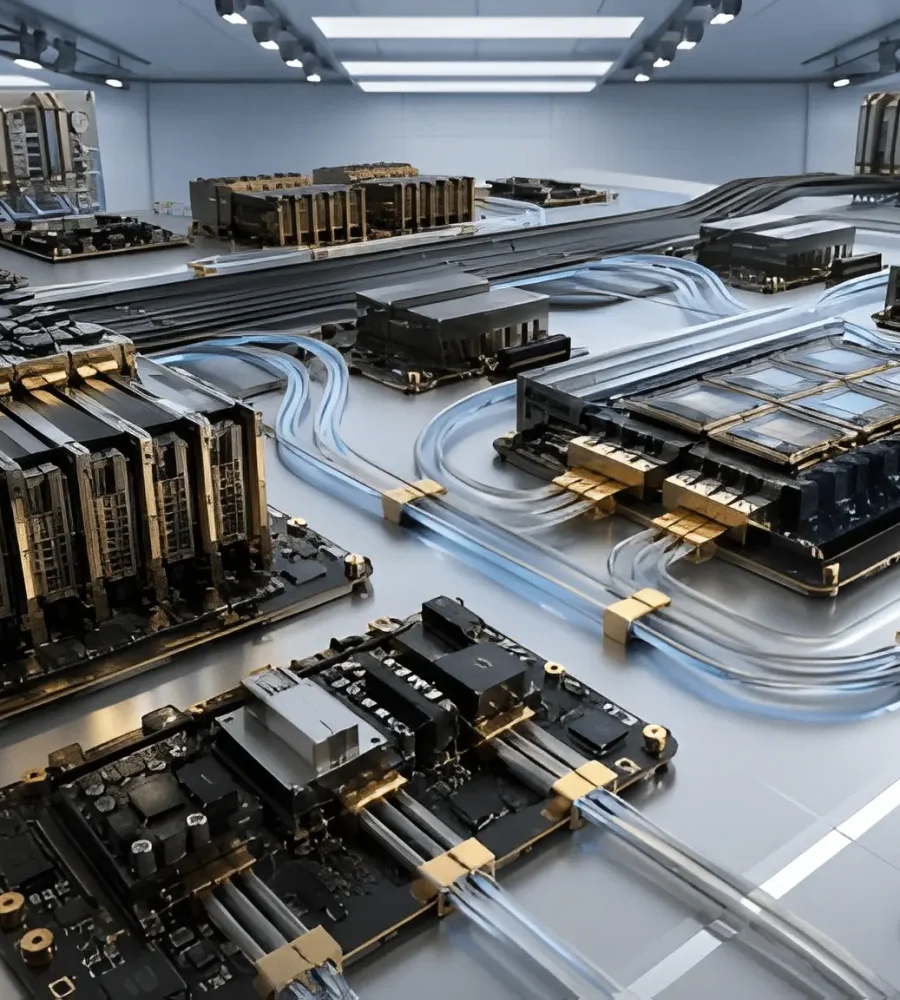
Immersion cooling, which involves submerging servers in dielectric liquids, significantly reduces the need for energy-intensive air conditioning. Similarly, hot-water cooling systems allow servers to operate at higher temperatures while enabling efficient heat recovery.
Research initiatives such as the iDataCool project demonstrate how these approaches can reduce energy loss and even generate chilled water for secondary uses. In parallel, AI-driven monitoring systems and Internet of Things sensors are enabling predictive thermal management. These systems anticipate failures, balance loads dynamically, and minimize inefficiencies before they escalate.
Radical Visions from the Edge of Imagination
Beyond terrestrial solutions, some concepts stretch the boundaries of conventional thinking. Google’s Project Suncatcher, for instance, explores the possibility of space-based data centers powered by near-constant solar energy. By operating above the atmosphere, such systems could bypass terrestrial grid limitations entirely.
Similarly, academic researchers have proposed high-altitude platforms that take advantage of intense solar radiation and cooler stratospheric temperatures. These conditions could dramatically improve energy efficiency compared to ground-based facilities.
While these ideas remain speculative and face formidable engineering and cost challenges, they reflect a growing willingness to rethink the fundamentals of energy sourcing.
Repurposing Industrial Infrastructure for AI Power
At the same time, a more pragmatic trend is gaining momentum. Rather than waiting for entirely new energy systems to come online, companies are repurposing existing industrial assets to meet immediate AI power needs.
This approach is grounded in a simple observation. Vast amounts of high-performance energy hardware already exist, much of it built for defense, aviation, or emergency use. As these systems approach the end of their original life cycles, they are being reimagined as power sources for data centers.
- One striking example involves naval nuclear reactor technology. Designed for compactness, reliability, and long operating cycles, these reactors share many characteristics required by AI infrastructure. New proposals suggest adapting surplus or decommissioned naval reactor designs for stationary use on secure government-owned sites.
The appeal is both technical and operational. By leveraging existing security frameworks and trained nuclear professionals, many of them veterans, developers hope to accelerate deployment while reducing regulatory friction. In this sense, nuclear energy is not being reinvented but recontextualized.
- A similar logic applies to aerospace. Jet engines nearing retirement from aviation service are being converted into stationary gas turbines capable of providing flexible, mid-scale power. These aeroderivative systems benefit from decades of refinement in efficiency and materials science. Once adapted for ground use, they offer rapid ramp-up, precise output control, and compact footprints.
Here, timing is everything. The AI boom has created demand conditions that make these conversions commercially attractive at scale. For aerospace manufacturers, it opens new revenue streams. For data centers, it provides faster access to dispatchable power.
- In parallel, floating power platforms are challenging the assumption that generation must be land-based. Mounted on vessels, these mobile plants can be deployed quickly near coastal data center hubs. In some cases, the concept extends to floating data centers themselves, hinting at a future where compute and energy infrastructure move together in response to regulation, demand, and grid constraints.
Why Repurposing Matters
What unites these approaches is strategic realism. AI data centers cannot wait decades for idealized energy transitions. They require power now.
Repurposing existing systems offers speed, reliability, and capital efficiency. It does not replace renewables, nuclear expansion, or grid modernization. Instead, it bridges the gap while longer-term solutions scale.
A Portfolio Rather Than a Silver Bullet
None of these unconventional paths will solve the AI energy challenge on their own. Some will succeed. Others will falter under economic, regulatory, or technical pressure.
However, taken together, they reveal a profound shift in mindset. Powering AI is no longer seen as the sole responsibility of utilities. It has become a cross-sector challenge involving defense, aerospace, maritime infrastructure, advanced manufacturing, and public-private collaboration.
This shift also extends to community-driven models. Initiatives such as Earth Friendly Computation emphasize decentralized, climate-resilient data centers powered by clean energy on Indigenous lands. These frameworks prioritize not only low-carbon power but also equitable integration into local ecosystems.
Ultimately, the future of AI data center energy is not a single path but a portfolio. Renewables provide the foundation. Nuclear and geothermal offer continuity. Heat reuse and advanced cooling reduce waste. Storage and fuel cells address intermittency. Radical concepts expand the horizon.
In the end, solving AI’s energy puzzle may yield benefits far beyond the technology sector. It may point toward a more resilient, distributed, and equitable energy system for everyone. And if AI truly marks a new industrial era, it is fitting that its power backbone is being built not only from the technologies of tomorrow, but also from the most durable machines of the past.