
NVIDIA H200 shipments delayed to Q3  · BREAKING: Microsoft confirms 3GW data centre expansion in Asia-Pacific ·  AWS announces new sovereign cloud regions in India and UAE  · Arm-based servers now 24% of hyperscale deployments ·  EU AI Act enforcement enters phase two  · Global data centre investment hits $612B in 2026 ·  TSMC Arizona yields improve to 68% on 3nm process  · OpenAI valuation reaches $400B after latest funding round ·  NVIDIA H200 shipments delayed to Q3  · BREAKING: Microsoft confirms 3GW data centre expansion in Asia-Pacific ·  AWS announces new sovereign cloud regions in India and UAE  · Arm-based servers now 24% of hyperscale deployments ·  EU AI Act enforcement enters phase two  · Global data centre investment hits $612B in 2026

Is the robot as you know it obsolete? The shift to smart manufacturing

Why is the automotive industry suddenly poised for a massive financial commitment to robotics, despite their decades-long presence? Roshan Batheri

Share
AI and robotics in manufacturing

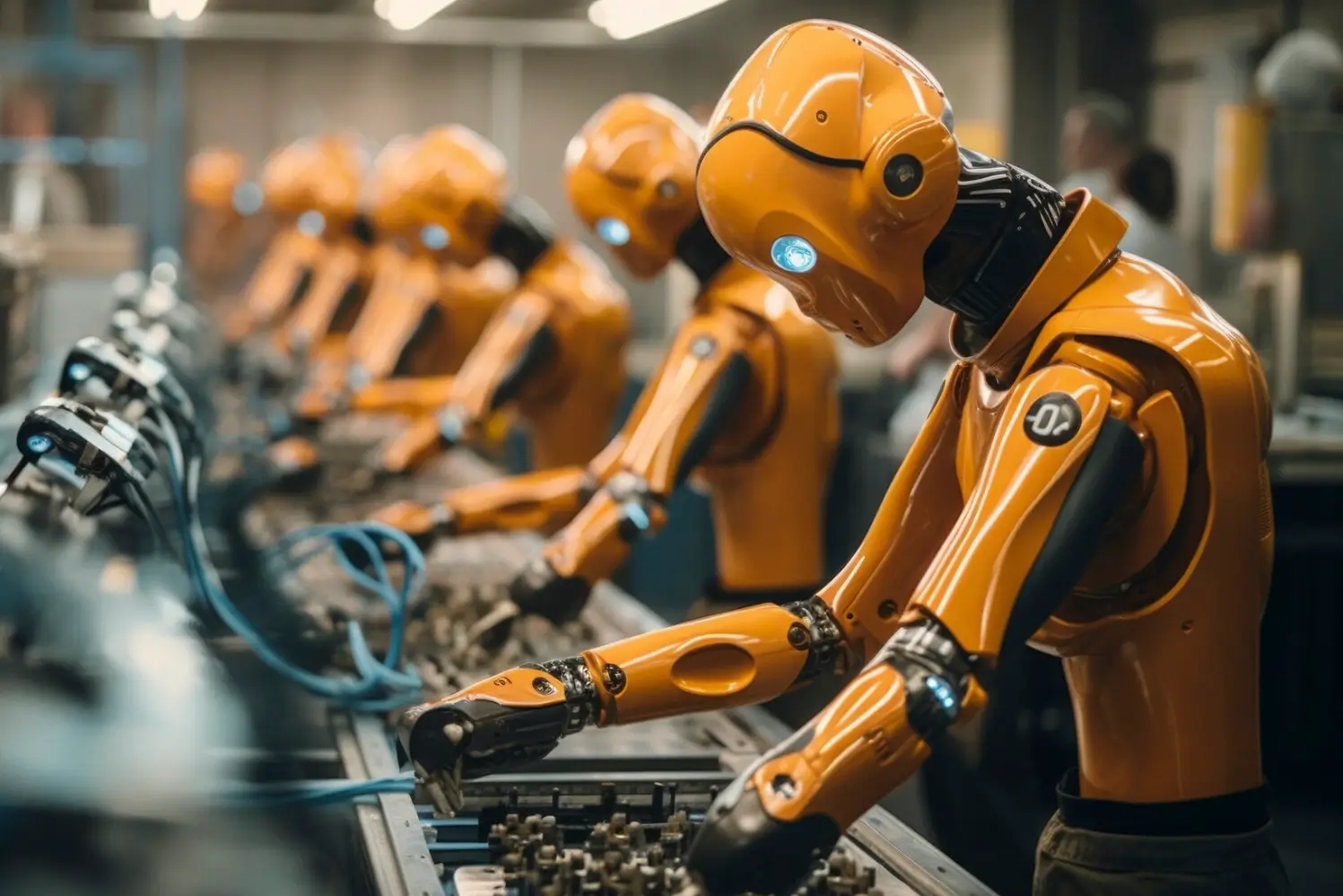
Why is the automotive industry suddenly poised for a massive financial commitment to robotics, despite their decades-long presence? Roshan Batheri & Ramon Antelo, for Capgemini, draws attention to the market dynamics that is projected to more than double, exploding from roughly $9 billion today to $22.5 billion by 2033. This tidal wave of investment isn’t about buying more of the same; it’s about harnessing a new kind of power.

For years, robots were confined to predictable, repetitive tasks. Now, the accelerating application of machine learning (ML) and diverse AI forms to factory floor technology is creating a generation of genuinely smarter machines. The pivotal concept is Physical AI: empowering machines to not only move but to perceive, understand, and interact with the three-dimensional world around them. This shift is the key to unlocking adaptive processes that radically boost a factory’s efficiency, precision, and safety profile.

This evolution is already revolutionizing tasks that were once exclusively human domains, most notably quality control. Imagine an AI-driven vision system using deep learning to scan a vehicle body with better-than-human eyesight, detecting microscopic paint flaws or structural misalignments. By granting robots the ability to perceive and act autonomously, Physical AI becomes the engine driving the intelligent factory.

Layering Intelligence on Existing Machinery

The factory floor is an expensive, long-term asset. Replacing entire fleets of perfectly functional robots just to integrate new AI chips is financially impossible. Furthermore, older robot models often lack the necessary internal architecture to run complex AI programs.

The smart solution lies in edge computing. Instead of embedding the AI, its capabilities are added externally at the network’s edge. This external intelligence interacts with existing robotic hardware, granting them advanced features like context awareness. These specialized edge AI platforms, often working in tandem with cloud systems, are evolving rapidly. Furthermore, the use of digital twins, virtual factory replicas is becoming standard practice for testing and validating these sophisticated new capabilities before they go live.

The New Math of Automation: Productivity and Precision

Integrating AI and ML into robotics allows manufacturers to improve their financials and solidify market leadership. The core value proposition is the ability to automate a host of tasks previously considered too unpredictable or too complex for traditional robots.

These advanced robots, whether new AI-native models or existing hardware enhanced at the edge, deliver tangible operational benefits across four dimensions:

  1. Productivity and Efficiency: Robots offer 24/7 continuous operation, leading to higher output and shorter production cycles. They perform tasks with greater speed than human operators, and by handling tedious or dangerous work, they naturally help lower direct labor costs.
  2. Quality and Consistency: The machines meticulously follow instructions, ensuring every product meets the same high standard. Their precision drastically reduces waste and scrap, thereby improving yields and lowering material costs.
  3. Workplace Safety: Robots are deployed for hazardous tasks (extreme heat, toxic materials) and eliminate the need for humans to perform repetitive, strenuous motions that cause injury and fatigue.
  4. Flexibility and Agility: Unlike fixed automation, these systems can be quickly reprogrammed and redeployed for different products or models. This agility allows the factory to rapidly scale up or switch production lines with minimal disruption, responding instantly to market demand.

Crucially, this shift redefines the human role. By offloading routine operations to smarter systems, human experts can focus on innovation, design, and continuous improvement, work that is more cognitively stimulating, helping companies attract and retain high-level talent while securing their market lead against digital-native competitors.

The Humanoid Challenge and the LNN Opportunity

The ultimate expression of flexible automation is the humanoid robot, which can operate within environments and use tools designed for people. However, they face significant hurdles: high cost, limited battery life (often only a few hours), slower speeds compared to specialized industrial machines, complex safety integration, and difficult programming requirements. For now, they are best suited for multi-purpose roles where their ability to work in human-centric spaces is essential.

To realize this future, auto makers must embrace new concepts. One of the most promising is Hybrid AI, which combines generative models with liquid neural networks (LNNs). Unlike resource-hungry large language models, LNNs are easily trained, require minimal computing power, and critically produce explainable and accurate results. This transparency is vital for factory operations and can significantly simplify the validation of new robotic solutions through digital twins.

Ultimately, the goal is not to automate humans out of the loop, but to augment and complement their capabilities. The organization must carefully decide what tasks are safe for robots and what requires human oversight. Most critical is securing the workforce’s trust. Using transparent technologies like LNNs and engaging in honest discussions about the impact of automation is key to ensuring employees learn to collaborate with Physical AI instead of viewing it as a competitor.


[simple-author-box]

More from AI Infrastructure

Power negotiations often conclude long before operational constraints reveal themselves inside a live facility.

Artificial intelligence infrastructure has compressed deployment timelines to the point where electrical capacity is

Boards increasingly expect organizations to support sustainability reporting with evidence that aligns with governance

COMPUTE WEEKLY

The briefing that 40,000+ tech leaders read every Monday. Sharp, fast, essential.

Great! We’ve received your information.

We couldn’t process your submission. Please retry

Building an AI Startup Without Owning GPUs

Not owning GPUs has become the default, deliberate strategy for building an AI company — not a compromise founders accept reluctantly. H100 rental rates fell 64-75% in fifteen months, a dense ecosystem of neoclouds and inference-as-a-service providers now lets startups skip infrastructure entirely, and credit programs can fund a company’s first year before a founder writes a check
Most Read

Infrastructure planning discussions often prioritize engineering, construction, and utility considerations before examining how end

AI infrastructure deployment schedules depend on coordinated progress across hardware availability, electrical infrastructure, cooling

Artificial intelligence has transformed the economics of digital infrastructure. Every new AI model requires

Data centers do not visibly smoke. They have no smokestacks, no visible exhaust, and

Artificial intelligence has transformed the economics of digital infrastructure. Companies once competed by acquiring

Disruptor Spotlight

Cerebras Systems

The chip that makes Nvidia nervous. Cerebras’ Wafer Scale Engine is rewriting the rules of AI inference at scale.
Faster
0 x
YoY Revenue
0 x
Transistors
0 T
Market Pulse
NVDA
$924.60
-2.11%
MSFT
$421.30
-2.94%
AMZN
$192.80
-4.87%
AMD
$924.60
-2.40%
TSMC
$924.60
-2.32%
Indicative only · Not financial advice
Upcoming Events
SEP
The AI Infrastructure Race (India)
WEBINAR · ONLINE
The AI Infrastructure Race: Won on Power, Land and Trust — Not Capital
MAY
0
AI Infrastructure Summit
DUBAI · IN PERSON
MEA’s premier AI infrastructure event.
JUN
0 0
Compute Forecast Summit
SINGAPORE · IN PERSON
Our flagship APAC event. Early bird open.
Latest Moves
Live
ecolab
Ecolab Deepens Cooling Strategy With $4.75B CoolIT Acquisition
Ecolab is making one of its biggest moves yet into AI infrastructure after completing its $4.75 billion acquisition of liquid cooling specialist CoolIT Systems
Pure DC AVK Europe data center microgrid Dublin 110MW AI infrastructure Ireland 2026
Pure DC and AVK Deploy Europe’s First 110 MW Data Center Microgrid in Dublin
The Pure DC Dublin microgrid has made history as Europe’s first large-scale on-site data center microgrid, launched in partnership with power solutions provider AVK at Pure DC’s campus in Ireland.
Pace Digitek
Pace Digitek Partners With MEGMEET to Expand AI Data Center Power Business
India’s AI infrastructure ecosystem continues to mature as domestic technology manufacturers move beyond traditional telecommunications and industrial markets toward high-growth digital infrastructure opportunities
Follow Compute Forecast
11K followers
1200 followers
Companies to Watch
CW
CoreWeave
Neo Cloud · $19B · IPO Watch
CB
Cerebras Systems
AI Hardware · $4.25B · Pre-IPO
G42
G42
Sovereign AI · Abu Dhabi
H
Humain
Saudi AI · $40B Fund
Latest Podcast
AI Capex, Cloud Margins & the Nuclear Bet
48 MIN · 25 APR 2026

Is the robot as you know it obsolete? The shift to smart manufacturing

Why is the automotive industry suddenly poised for a massive financial commitment to robotics, despite their decades-long presence? Roshan Batheri

Share
AI and robotics in manufacturing
9
847 SHARES

0
SHARES

[simple-author-box]

More from AI Infrastructure

Infrastructure planning discussions often prioritize engineering, construction, and utility considerations before examining how end

AI infrastructure deployment schedules depend on coordinated progress across hardware availability, electrical infrastructure, cooling

Artificial intelligence has transformed the economics of digital infrastructure. Every new AI model requires

Data centers do not visibly smoke. They have no smokestacks, no visible exhaust, and

COMPUTE WEEKLY

The briefing that 40,000+ tech leaders read every Monday. Sharp, fast, essential.

Great! We’ve received your information.

We couldn’t process your submission. Please retry

Global AI Infrastructure Outlook 2026

The briefing that 40,000+ tech leaders read every Monday. Sharp, fast, essential.
Download Free
Most Read

Infrastructure planning discussions often prioritize engineering, construction, and utility considerations before examining how end

AI infrastructure deployment schedules depend on coordinated progress across hardware availability, electrical infrastructure, cooling

Artificial intelligence has transformed the economics of digital infrastructure. Every new AI model requires

Data centers do not visibly smoke. They have no smokestacks, no visible exhaust, and

Artificial intelligence has transformed the economics of digital infrastructure. Companies once competed by acquiring

Disruptor Spotlight

Cerebras Systems

The chip that makes Nvidia nervous. Cerebras’ Wafer Scale Engine is rewriting the rules of AI inference at scale.
Faster
0 x
YoY Revenue
0 x
Transistors
0 T
Market Pulse
NVDA
$924.60
+2.4%
MSFT
$421.30
+1.1%
AMZN
$192.80
-0.6%
NVDA
$924.60
+2.4%
NVDA
$924.60
+2.4%
Indicative only · Not financial advice
Upcoming Events
MAY
0 0
DCD Global — London
LONDON · IN PERSON
World’s largest DC event. CF is media partner.
MAY
0
AI Infrastructure Summit
DUBAI · IN PERSON
MEA’s premier AI infrastructure event.
JUN
0 0

Compute Forecast Summit

SINGAPORE · IN PERSON
Our flagship APAC event. Early bird open.
Latest Moves
  • Live
Sam Altman
OpenAI appoints new Chief Infrastructure Officer to lead $100B DC programme
27 APR · OPENAI
Sam Altman
OpenAI appoints new Chief Infrastructure Officer to lead $100B DC programme
27 APR · OPENAI
Sam Altman
OpenAI appoints new Chief Infrastructure Officer to lead $100B DC programme
27 APR · OPENAI
Follow Compute Forecast
18.4K followers
12.1K followers
9.3K subscribers
41 episodes
Companies to Watch
CW
CoreWeave
Neo Cloud · $19B · IPO Watch
CB
Cerebras Systems
AI Hardware · $4.25B · Pre-IPO
G42
G42
Sovereign AI · Abu Dhabi
CW
Humain
Saudi AI · $40B Fund
Latest Podcast
AI Capex, Cloud Margins & the Nuclear Bet
48 MIN · 25 APR 2026
Scroll to Top








