...
NVIDIA H200 shipments delayed to Q3  · BREAKING: Microsoft confirms 3GW data centre expansion in Asia-Pacific ·  AWS announces new sovereign cloud regions in India and UAE  · Arm-based servers now 24% of hyperscale deployments ·  EU AI Act enforcement enters phase two  · Global data centre investment hits $612B in 2026 ·  TSMC Arizona yields improve to 68% on 3nm process  · OpenAI valuation reaches $400B after latest funding round ·  NVIDIA H200 shipments delayed to Q3  · BREAKING: Microsoft confirms 3GW data centre expansion in Asia-Pacific ·  AWS announces new sovereign cloud regions in India and UAE  · Arm-based servers now 24% of hyperscale deployments ·  EU AI Act enforcement enters phase two  · Global data centre investment hits $612B in 2026

When GPUs Break the Grid: AI and Data Center Energy Strategy

The rapid expansion of high-densityGPU clusters is reshaping how operators plan, manage, and control energy across facilities. As workloads scale, the AI data center energy strategy becomes central to infrastructure design, operational reliability, and sustainability metrics. This shift is driven
Share
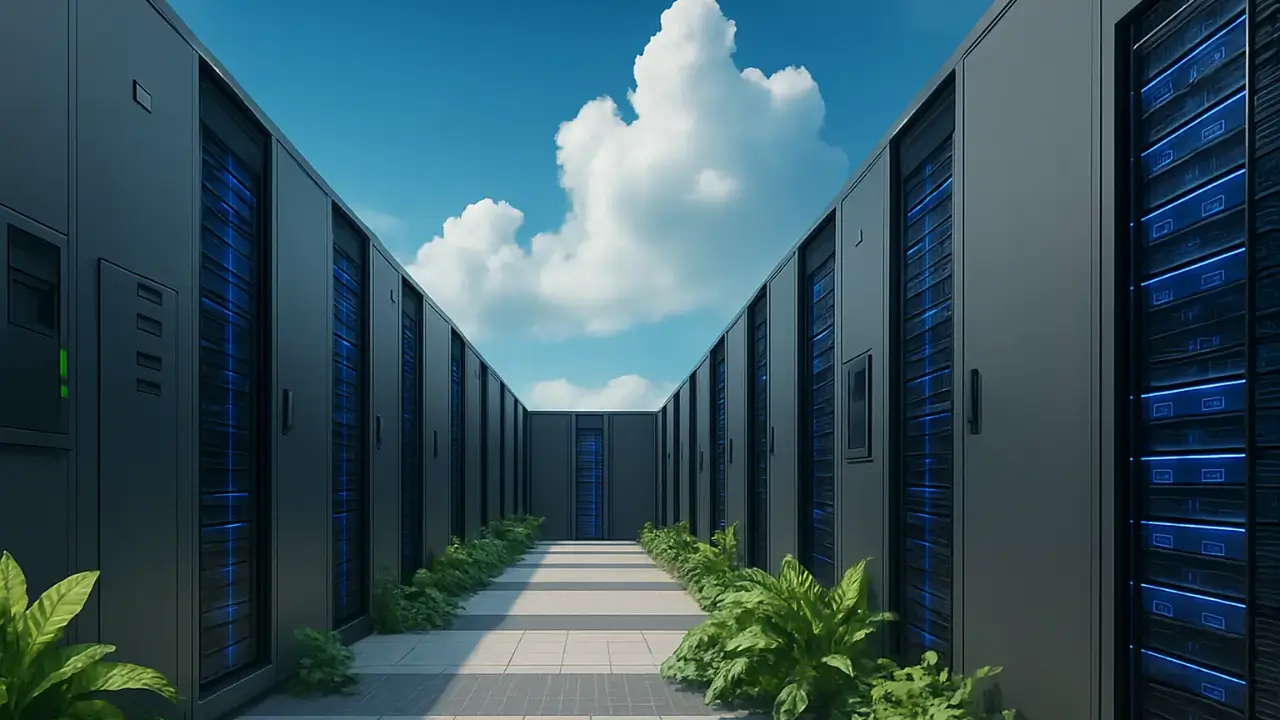
GPU break the grid

The New AI Data Center Energy Strategy

The rapid expansion of high-density GPU clusters is reshaping how operators plan, manage, and control energy across facilities. As workloads scale, the AI data center energy strategy becomes central to infrastructure design, operational reliability, and sustainability metrics. This shift is driven by the unique characteristics of AI training and inference workloads, which differ significantly from conventional compute patterns.
This article examines how GPU intensive operations are influencing power demands, why the energy paradigm is changing, and what frameworks operators are adopting to align workloads with available power capacity.

Why GPUs Are Reshaping the AI Data Center Energy Strategy

Rising GPU Power Density and Compute Demand

Modern AI accelerators such as the NVIDIA H100/H200 series have significantly higher power envelopes than traditional CPUs. A single GPU node can exceed the power draw of an entire rack built around older architectures. Large-scale training workloads multiply this effect:

  • Training foundation models can demand tens of megawatts (MW) of continuous power over extended periods.
  • Inference clusters require sustained, latency-sensitive energy supply.
  • Power density per rack has risen from traditional 5–10 kW to 40–80 kW in GPU deployments.

These patterns directly influence the AI data center energy strategy, requiring operators to rethink power provisioning, cooling, and load distribution.

Shifting Away from Predictable Utilization Curves

Legacy data centers were designed around stable usage cycles, but AI workloads exhibit variability tied to training schedules, batch processing, and model versioning. This introduces:

  • Short-term high-intensity spikes
  • Long continuous training phases
  • Fluctuations based on dataset size and model iteration frequency

As a result, the historical approach of linear capacity planning is insufficient. Operators now model energy requirements at the workload level, not just at the facility or rack level.

Structural Drivers Behind the Evolving AI Data Center Energy Strategy

Power Supply Constraints and Grid Interdependencies

Many regions face grid congestion where power allocation for hyperscale AI sites is limited. According to the International Energy Agency (IEA), electricity demand from data centers is projected to grow sharply through 2026. AI-specific clusters significantly contribute to this trajectory, prompting operators to:

  • Secure long-term power purchase agreements
  • Coordinate with local utilities on load timing
  • Evaluate multi site AI training strategies

These developments directly influence how organizations formulate an effective AI data center energy strategy.

Sustainability, Regulation, and Reporting Requirements

Regulatory frameworks increasingly require transparent reporting of carbon intensity, power usage effectiveness (PUE), and renewable energy sourcing. The European Union’s Corporate Sustainability Reporting Directive (CSRD) is an example of stricter disclosure standards.

AI workloads accelerate the need for:

  • Real-time energy tracking
  • Carbon-aware job scheduling
  • Integration of renewable generation and storage

This regulatory environment reinforces workload-level approaches in energy planning.

Workload Level Orchestration as the Core of the AI Data Center Energy Strategy

Time-Shifting AI Training Jobs

Training workloads are often flexible in timing. Operators use time shifting to align non-urgent jobs with:

  • Off-peak electricity pricing
  • Periods of higher renewable availability
  • Local grid stability windows

Time shifting is supported by forecasting models that predict energy costs and renewable generation trends. This reduces strain on the power system while optimizing operational efficiency.

Carbon Aware and Price Aware Scheduling

Carbon aware schedulers adjust job execution based on real-time carbon intensity signals. For example, training runs can be automatically deferred when the grid relies on fossil based generation or advanced when renewable penetration increases.
This contributes to a more efficient AI data center energy strategy while meeting sustainability reporting requirements.

Aligning Model Architecture Efficiency With Energy Use

Model design directly affects energy consumption:

  • Smaller, pruned, or quantized models reduce GPU hours.
  • Techniques such as mixture-of-experts (MoE) limit active parameters.
  • Efficient checkpointing minimizes redundant compute cycles.

Operators incorporate energy per training pass and watts per inference request into their evaluation metrics, enabling architecture-optimized energy planning.

Infrastructure Adaptations Supporting the AI Data Center Energy Strategy

Liquid Cooling and Thermal Efficiency

GPU clusters generate concentrated heat that traditional air-cooling cannot manage alone. Liquid cooling enables higher rack densities and stabilizes thermal loads. The American Society of Heating, Refrigerating and Air-Conditioning Engineers (ASHRAE) provides guidelines on allowable temperature ranges that influence cooling architecture decisions.

On-Site Renewable Generation and Battery Integration

Operators increasingly deploy:

  • Solar photovoltaic (PV) systems
  • Wind micro-generation
  • Battery energy storage systems (BESS)

Paired together, these support price arbitrage, backup capacity, and predictable power for extended training windows. Integration of energy storage into the AI data center energy strategy reduces grid dependency during peak hours.

Grid Interactive Data Center Models

Grid interactive operations enable facilities to dynamically adjust load based on grid signals. This may include:

  • Load shedding
  • Demand response participation
  • Flexible ramping programs

These interactions help maintain regional grid stability, especially where GPU power draw is significant.

Key Metrics That Shape an Effective AI Data Center Energy Strategy

kWh per Model Training Cycle

This metric quantifies energy for a complete training run. It allows operators to benchmark workload efficiency over time.

Carbon Intensity per Model Run

Linking workload execution to carbon source data supports compliance with sustainability mandates and internal reporting frameworks.

Peak Power Draw (MW)

Peak demand influences grid interconnection requirements, backup power architecture, and utility coordination.

Battery Storage Availability (MWh)

Storage supports resilience, grid interactions, and workload-time alignment.

Deferred Job Hours and Cost Avoidance

This metric quantifies the effectiveness of time-shifting and energy-aware scheduling strategies.

Strategic Implications for the AI Data Center Energy Ecosystem

Planning Compute Under Energy Constraints

AI deployments increasingly require coordination between workload requirements and available power capacity. Operators evaluate:

  • Multi-site training distribution
  • Facility-level power envelopes
  • Renewable-energy alignment strategies

This creates a more integrated planning environment where both compute and energy models operate in parallel.

Evaluating Facility Readiness for GPU Clusters

Assessing facility readiness now includes:

  • Rack-level power density limits
  • Cooling system scalability
  • Transformer and substation capacity
  • Renewable and battery integration pathways

These considerations determine whether a site can support dense AI workloads safely and efficiently.

Conclusion: Building an Adaptive AI Data Center Energy Strategy

The rise of GPU intensive AI workloads marks a structural shift in how data centers are designed and operated. Power availability, workload scheduling, thermal management, and sustainability reporting now intersect directly with compute planning. An effective AI data center energy strategy incorporates workload level orchestration, real time energy intelligence, and infrastructure capable of supporting high density GPU clusters.

This transformation continues to evolve as AI models grow in scale and complexity. Organizations that adopt systematic, data driven energy frameworks will better align capacity, performance, and sustainability outcomes across the compute lifecycle.

[simple-author-box]

More from AI Infrastructure

The procurement challenge behind artificial intelligence infrastructure is becoming more complex. Earlier data center

A 202-acre parcel off President Donald J. Trump Highway in western Palm Beach County

President Donald Trump is asking the artificial intelligence industry to make a stronger public

COMPUTE WEEKLY

The briefing that 40,000+ tech leaders read every Monday. Sharp, fast, essential.

Great! We’ve received your information.

Building an AI Startup Without Owning GPUs

Not owning GPUs has become the default, deliberate strategy for building an AI company — not a compromise founders accept reluctantly. H100 rental rates fell 64-75% in fifteen months, a dense ecosystem of neoclouds and inference-as-a-service providers now lets startups skip infrastructure entirely, and credit programs can fund a company’s first year before a founder writes a check
Most Read

Demand is broadening across enterprise workloads APAC’s infrastructure story is changing in ways that

AI infrastructure decisions increasingly influence what enterprises can build, test, and deliver. They also

Why Infrastructure Planning Now Starts With Availability A data center project can have a

A property can look enormous from the site entrance and still offer almost no

As rack power rises toward the megawatt range, the physical footprint of power-delivery equipment

Disruptor Spotlight

Cerebras Systems

The chip that makes Nvidia nervous. Cerebras’ Wafer Scale Engine is rewriting the rules of AI inference at scale.
Faster
0 x
YoY Revenue
0 x
Transistors
0 T
Market Pulse
MSFT
+1.02%
NVDA
+0.66%
AMZN
-0.078%
AMD
-6.95%
TSMC
-2.98%
Indicative only · Not financial advice
Upcoming Events
SEP
The AI Infrastructure Race (India)
WEBINAR · ONLINE
The AI Infrastructure Race: Won on Power, Land and Trust — Not Capital
MAY
0
AI Infrastructure Summit
DUBAI · IN PERSON
MEA’s premier AI infrastructure event.
JUN
0 0
Compute Forecast Summit
SINGAPORE · IN PERSON
Our flagship APAC event. Early bird open.
Latest Moves
Live
ecolab
Ecolab Deepens Cooling Strategy With $4.75B CoolIT Acquisition
Ecolab is making one of its biggest moves yet into AI infrastructure after completing its $4.75 billion acquisition of liquid cooling specialist CoolIT Systems
Pure DC AVK Europe data center microgrid Dublin 110MW AI infrastructure Ireland 2026
Pure DC and AVK Deploy Europe’s First 110 MW Data Center Microgrid in Dublin
The Pure DC Dublin microgrid has made history as Europe’s first large-scale on-site data center microgrid, launched in partnership with power solutions provider AVK at Pure DC’s campus in Ireland.
Pace Digitek
Pace Digitek Partners With MEGMEET to Expand AI Data Center Power Business
India’s AI infrastructure ecosystem continues to mature as domestic technology manufacturers move beyond traditional telecommunications and industrial markets toward high-growth digital infrastructure opportunities
Follow Compute Forecast
11K followers
1200 followers
Companies to Watch
CW
CoreWeave
Neo Cloud · $19B · IPO Watch
CB
Cerebras Systems
AI Hardware · $4.25B · Pre-IPO
G42
G42
Sovereign AI · Abu Dhabi
H
Humain
Saudi AI · $40B Fund
Latest Podcast
AI Capex, Cloud Margins & the Nuclear Bet
48 MIN · 25 APR 2026

When GPUs Break the Grid: AI and Data Center Energy Strategy

The rapid expansion of high-densityGPU clusters is reshaping how operators plan, manage, and control energy across facilities. As workloads scale, the AI data center energy strategy becomes central to infrastructure design, operational reliability, and sustainability metrics. This shift is driven
Share
GPU break the grid
10
847 SHARES

0
SHARES

[simple-author-box]

More from AI Infrastructure

Demand is broadening across enterprise workloads APAC’s infrastructure story is changing in ways that

AI infrastructure decisions increasingly influence what enterprises can build, test, and deliver. They also

Why Infrastructure Planning Now Starts With Availability A data center project can have a

A property can look enormous from the site entrance and still offer almost no

COMPUTE WEEKLY

The briefing that 40,000+ tech leaders read every Monday. Sharp, fast, essential.

Great! We’ve received your information.

Global AI Infrastructure Outlook 2026

The briefing that 40,000+ tech leaders read every Monday. Sharp, fast, essential.
Download Free
Most Read

Demand is broadening across enterprise workloads APAC’s infrastructure story is changing in ways that

AI infrastructure decisions increasingly influence what enterprises can build, test, and deliver. They also

Why Infrastructure Planning Now Starts With Availability A data center project can have a

A property can look enormous from the site entrance and still offer almost no

As rack power rises toward the megawatt range, the physical footprint of power-delivery equipment

Disruptor Spotlight

Cerebras Systems

The chip that makes Nvidia nervous. Cerebras’ Wafer Scale Engine is rewriting the rules of AI inference at scale.
Faster
0 x
YoY Revenue
0 x
Transistors
0 T
Market Pulse
NVDA
$924.60
+2.4%
MSFT
$421.30
+1.1%
AMZN
$192.80
-0.6%
NVDA
$924.60
+2.4%
NVDA
$924.60
+2.4%
Indicative only · Not financial advice
Upcoming Events
MAY
0 0
DCD Global — London
LONDON · IN PERSON
World’s largest DC event. CF is media partner.
MAY
0
AI Infrastructure Summit
DUBAI · IN PERSON
MEA’s premier AI infrastructure event.
JUN
0 0

Compute Forecast Summit

SINGAPORE · IN PERSON
Our flagship APAC event. Early bird open.
Latest Moves
  • Live
Sam Altman
OpenAI appoints new Chief Infrastructure Officer to lead $100B DC programme
27 APR · OPENAI
Sam Altman
OpenAI appoints new Chief Infrastructure Officer to lead $100B DC programme
27 APR · OPENAI
Sam Altman
OpenAI appoints new Chief Infrastructure Officer to lead $100B DC programme
27 APR · OPENAI
Follow Compute Forecast
18.4K followers
12.1K followers
9.3K subscribers
41 episodes
Companies to Watch
CW
CoreWeave
Neo Cloud · $19B · IPO Watch
CB
Cerebras Systems
AI Hardware · $4.25B · Pre-IPO
G42
G42
Sovereign AI · Abu Dhabi
CW
Humain
Saudi AI · $40B Fund
Latest Podcast
AI Capex, Cloud Margins & the Nuclear Bet
48 MIN · 25 APR 2026
Scroll to Top
Seraphinite AcceleratorOptimized by Seraphinite Accelerator
Turns on site high speed to be attractive for people and search engines.