
NVIDIA H200 shipments delayed to Q3  · BREAKING: Microsoft confirms 3GW data centre expansion in Asia-Pacific ·  AWS announces new sovereign cloud regions in India and UAE  · Arm-based servers now 24% of hyperscale deployments ·  EU AI Act enforcement enters phase two  · Global data centre investment hits $612B in 2026 ·  TSMC Arizona yields improve to 68% on 3nm process  · OpenAI valuation reaches $400B after latest funding round ·  NVIDIA H200 shipments delayed to Q3  · BREAKING: Microsoft confirms 3GW data centre expansion in Asia-Pacific ·  AWS announces new sovereign cloud regions in India and UAE  · Arm-based servers now 24% of hyperscale deployments ·  EU AI Act enforcement enters phase two  · Global data centre investment hits $612B in 2026

Data Center Site Selection Amid Global Location Constraints

Defining the Environment As digital infrastructure expands globally, identifying viable locations for large-scale facilities has become increasingly complex. Data center

Share
Data Center - Regional

Defining the Environment

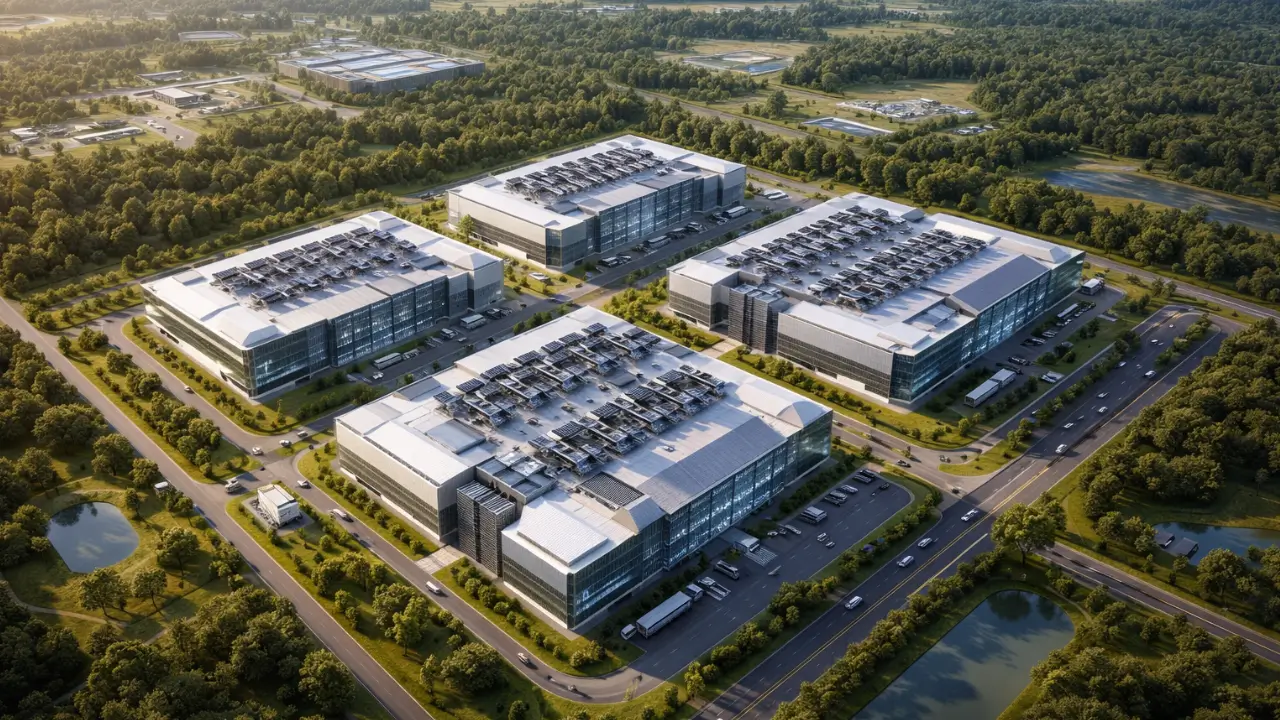
As digital infrastructure expands globally, identifying viable locations for large-scale facilities has become increasingly complex. Data center development now unfolds within tighter physical, regulatory, and geographic limits, reshaping how organizations evaluate where capacity can realistically be built. Constraints unrelated to energy, such as land availability, zoning restrictions, and regional feasibility, are emerging as decisive factors long before power discussions begin.

This shift marks a structural change in how infrastructure planning is approached. Instead of focusing solely on connectivity or scale, organizations must now navigate a layered site selection process influenced by policy frameworks, urban development patterns, and competing land uses.

Understanding Data Center Site Selection Constraints

Data center site selection has traditionally balanced access to power, connectivity, and proximity to users. In a constrained environment, however, non-energy variables increasingly define feasibility. Physical land limits, zoning complexity, and regional suitability now shape project timelines and location viability from the earliest planning stages.

These constraints are not isolated. They interact across jurisdictions, amplifying complexity for organizations operating across multiple regions.

Why Site Selection Has Become Structurally Constrained

Several long-term shifts explain why data center site selection now faces tighter boundaries:

  • Urban land is increasingly allocated to residential, logistics, and mixed-use developments
  • Regional planning authorities impose stricter land-use controls
  • Large contiguous plots suitable for industrial-scale facilities are declining
  • Community scrutiny of industrial development has intensified

Together, these forces narrow the universe of viable locations before technical assessments even begin.

Land Availability as a Primary Limiting Factor

Land availability has become one of the earliest gating factors in data center site selection. Modern facilities require sizable parcels not only for initial buildouts but also for long-term expansion, setbacks, access roads, and buffer zones.

In many mature markets, industrial land that meets these criteria is either scarce or fragmented.

Competition for Industrial and Peripheral Land

Data centers increasingly compete with other land-intensive uses, including:

  • Logistics and fulfillment centers
  • Advanced manufacturing facilities
  • Urban redevelopment projects
  • Transportation-linked infrastructure

This competition drives both scarcity and longer acquisition timelines. In regions with strong industrial demand, data center developers must navigate limited inventory rather than abundant choice.

Geographic Suitability Beyond Parcel Size

Even when large parcels exist, not all land is suitable. Site feasibility often depends on:

  • Topography and soil stability
  • Floodplain classification
  • Seismic zoning
  • Proximity to transport corridors

Land that fails these criteria may be excluded regardless of availability, further tightening supply.

Zoning Complexity and Regulatory Fragmentation

Zoning has emerged as one of the most unpredictable elements of data center site selection. Unlike standardized industrial facilities, data centers often fall into ambiguous regulatory categories that vary by jurisdiction.

This ambiguity introduces procedural complexity rather than outright prohibition.

Inconsistent Classification of Data Centers

Across regions, data centers may be classified as:

  • Industrial facilities
  • Critical infrastructure
  • Utility-adjacent developments
  • Specialized commercial assets

Each classification carries different permitting paths, public consultation requirements, and compliance thresholds. Navigating these differences adds time and uncertainty to site selection processes.

Multi-Layer Approval Environments

Zoning complexity is compounded when approvals span multiple authorities, such as:

  • Municipal planning departments
  • Regional development agencies
  • Environmental review boards
  • Infrastructure or transportation authorities

Coordination across these layers often extends site readiness timelines, even when land is technically zoned for industrial use.

Regional Feasibility Without Energy Considerations

Regional feasibility extends beyond power availability. Even before energy discussions begin, regional characteristics determine whether a location can support sustained data center development.

These factors are often structural rather than negotiable.

Infrastructure Readiness and Accessibility

Regions differ widely in their ability to support large construction projects. Feasibility depends on:

  • Road access for heavy equipment
  • Availability of skilled construction labor
  • Proximity to material supply chains
  • Local permitting capacity

Regions lacking these foundations may struggle to support timely deployment, regardless of strategic intent.

Governance Stability and Planning Transparency

Predictable governance frameworks influence site selection outcomes. Organizations assess regions based on:

  • Clarity of development regulations
  • Consistency of planning enforcement
  • Transparency of approval processes
  • Stability of land-use policies

Regions with opaque or frequently shifting rules introduce additional execution risk.

Urban Versus Peripheral Site Trade-Offs

As urban land becomes constrained, data center site selection increasingly shifts toward peripheral or secondary markets. This transition introduces its own considerations.

Peripheral locations may offer land availability but require deeper evaluation of long-term suitability.

Urban Density and Planning Constraints

Urban environments present challenges such as:

  • Height restrictions
  • Noise and aesthetic regulations
  • Limited expansion options
  • Higher land costs

These constraints often limit facilities to smaller footprints or specialized configurations.

Peripheral Markets and Long-Term Viability

Peripheral regions may provide larger parcels and simpler zoning but introduce questions around:

  • Workforce availability
  • Supporting infrastructure maturity
  • Regional economic resilience

Evaluating these trade-offs is central to modern data center site selection strategies.

Risk Mitigation Through Early Feasibility Screening

Given these constraints, early-stage screening has become critical. Organizations increasingly assess land, zoning, and regional feasibility simultaneously rather than sequentially.

This approach reduces downstream delays and rework.

Integrating Non-Energy Constraints Early

Effective screening typically incorporates:

  • Preliminary zoning assessments
  • Land-use compatibility reviews
  • Regional infrastructure audits
  • Community and planning context analysis

Addressing these factors upfront aligns site expectations with regulatory and physical realities.

Implications for Global Data Center Expansion

As constraints intensify, data center site selection becomes less about identifying optimal locations and more about identifying viable ones. This shift affects how capacity is distributed geographically.

Regions that align land availability, zoning clarity, and regional readiness are positioned to absorb future growth.

Structural Impact on Deployment Timelines

Non-energy constraints increasingly shape:

  • Project lead times
  • Capital deployment sequencing
  • Geographic diversification strategies

Understanding these dynamics is essential for forecasting infrastructure expansion accurately.

The Evolving Framework of Data Center Site Selection

Data center site selection now reflects broader spatial and regulatory realities rather than isolated technical requirements. Land scarcity, zoning complexity, and regional feasibility collectively define where infrastructure can realistically be built.

As these constraints persist, site selection frameworks continue to evolve toward deeper early-stage analysis and region-specific evaluation.


[simple-author-box]

More from AI Infrastructure

Power negotiations often conclude long before operational constraints reveal themselves inside a live facility.

Artificial intelligence infrastructure has compressed deployment timelines to the point where electrical capacity is

Boards increasingly expect organizations to support sustainability reporting with evidence that aligns with governance

COMPUTE WEEKLY

The briefing that 40,000+ tech leaders read every Monday. Sharp, fast, essential.

Great! We’ve received your information.

We couldn’t process your submission. Please retry

Building an AI Startup Without Owning GPUs

Not owning GPUs has become the default, deliberate strategy for building an AI company — not a compromise founders accept reluctantly. H100 rental rates fell 64-75% in fifteen months, a dense ecosystem of neoclouds and inference-as-a-service providers now lets startups skip infrastructure entirely, and credit programs can fund a company’s first year before a founder writes a check
Most Read

Infrastructure planning discussions often prioritize engineering, construction, and utility considerations before examining how end

AI infrastructure deployment schedules depend on coordinated progress across hardware availability, electrical infrastructure, cooling

Artificial intelligence has transformed the economics of digital infrastructure. Every new AI model requires

Data centers do not visibly smoke. They have no smokestacks, no visible exhaust, and

Artificial intelligence has transformed the economics of digital infrastructure. Companies once competed by acquiring

Disruptor Spotlight

Cerebras Systems

The chip that makes Nvidia nervous. Cerebras’ Wafer Scale Engine is rewriting the rules of AI inference at scale.
Faster
0 x
YoY Revenue
0 x
Transistors
0 T
Market Pulse
NVDA
$924.60
-2.11%
MSFT
$421.30
-2.94%
AMZN
$192.80
-4.87%
AMD
$924.60
-2.40%
TSMC
$924.60
-2.32%
Indicative only · Not financial advice
Upcoming Events
SEP
The AI Infrastructure Race (India)
WEBINAR · ONLINE
The AI Infrastructure Race: Won on Power, Land and Trust — Not Capital
MAY
0
AI Infrastructure Summit
DUBAI · IN PERSON
MEA’s premier AI infrastructure event.
JUN
0 0
Compute Forecast Summit
SINGAPORE · IN PERSON
Our flagship APAC event. Early bird open.
Latest Moves
Live
ecolab
Ecolab Deepens Cooling Strategy With $4.75B CoolIT Acquisition
Ecolab is making one of its biggest moves yet into AI infrastructure after completing its $4.75 billion acquisition of liquid cooling specialist CoolIT Systems
Pure DC AVK Europe data center microgrid Dublin 110MW AI infrastructure Ireland 2026
Pure DC and AVK Deploy Europe’s First 110 MW Data Center Microgrid in Dublin
The Pure DC Dublin microgrid has made history as Europe’s first large-scale on-site data center microgrid, launched in partnership with power solutions provider AVK at Pure DC’s campus in Ireland.
Pace Digitek
Pace Digitek Partners With MEGMEET to Expand AI Data Center Power Business
India’s AI infrastructure ecosystem continues to mature as domestic technology manufacturers move beyond traditional telecommunications and industrial markets toward high-growth digital infrastructure opportunities
Follow Compute Forecast
11K followers
1200 followers
Companies to Watch
CW
CoreWeave
Neo Cloud · $19B · IPO Watch
CB
Cerebras Systems
AI Hardware · $4.25B · Pre-IPO
G42
G42
Sovereign AI · Abu Dhabi
H
Humain
Saudi AI · $40B Fund
Latest Podcast
AI Capex, Cloud Margins & the Nuclear Bet
48 MIN · 25 APR 2026

Data Center Site Selection Amid Global Location Constraints

Defining the Environment As digital infrastructure expands globally, identifying viable locations for large-scale facilities has become increasingly complex. Data center

Share
Data Center - Regional
12
847 SHARES

0
SHARES

[simple-author-box]

More from AI Infrastructure

Infrastructure planning discussions often prioritize engineering, construction, and utility considerations before examining how end

AI infrastructure deployment schedules depend on coordinated progress across hardware availability, electrical infrastructure, cooling

Artificial intelligence has transformed the economics of digital infrastructure. Every new AI model requires

Data centers do not visibly smoke. They have no smokestacks, no visible exhaust, and

COMPUTE WEEKLY

The briefing that 40,000+ tech leaders read every Monday. Sharp, fast, essential.

Great! We’ve received your information.

We couldn’t process your submission. Please retry

Global AI Infrastructure Outlook 2026

The briefing that 40,000+ tech leaders read every Monday. Sharp, fast, essential.
Download Free
Most Read

Infrastructure planning discussions often prioritize engineering, construction, and utility considerations before examining how end

AI infrastructure deployment schedules depend on coordinated progress across hardware availability, electrical infrastructure, cooling

Artificial intelligence has transformed the economics of digital infrastructure. Every new AI model requires

Data centers do not visibly smoke. They have no smokestacks, no visible exhaust, and

Artificial intelligence has transformed the economics of digital infrastructure. Companies once competed by acquiring

Disruptor Spotlight

Cerebras Systems

The chip that makes Nvidia nervous. Cerebras’ Wafer Scale Engine is rewriting the rules of AI inference at scale.
Faster
0 x
YoY Revenue
0 x
Transistors
0 T
Market Pulse
NVDA
$924.60
+2.4%
MSFT
$421.30
+1.1%
AMZN
$192.80
-0.6%
NVDA
$924.60
+2.4%
NVDA
$924.60
+2.4%
Indicative only · Not financial advice
Upcoming Events
MAY
0 0
DCD Global — London
LONDON · IN PERSON
World’s largest DC event. CF is media partner.
MAY
0
AI Infrastructure Summit
DUBAI · IN PERSON
MEA’s premier AI infrastructure event.
JUN
0 0

Compute Forecast Summit

SINGAPORE · IN PERSON
Our flagship APAC event. Early bird open.
Latest Moves
  • Live
Sam Altman
OpenAI appoints new Chief Infrastructure Officer to lead $100B DC programme
27 APR · OPENAI
Sam Altman
OpenAI appoints new Chief Infrastructure Officer to lead $100B DC programme
27 APR · OPENAI
Sam Altman
OpenAI appoints new Chief Infrastructure Officer to lead $100B DC programme
27 APR · OPENAI
Follow Compute Forecast
18.4K followers
12.1K followers
9.3K subscribers
41 episodes
Companies to Watch
CW
CoreWeave
Neo Cloud · $19B · IPO Watch
CB
Cerebras Systems
AI Hardware · $4.25B · Pre-IPO
G42
G42
Sovereign AI · Abu Dhabi
CW
Humain
Saudi AI · $40B Fund
Latest Podcast
AI Capex, Cloud Margins & the Nuclear Bet
48 MIN · 25 APR 2026
Scroll to Top








