
NVIDIA H200 shipments delayed to Q3  · BREAKING: Microsoft confirms 3GW data centre expansion in Asia-Pacific ·  AWS announces new sovereign cloud regions in India and UAE  · Arm-based servers now 24% of hyperscale deployments ·  EU AI Act enforcement enters phase two  · Global data centre investment hits $612B in 2026 ·  TSMC Arizona yields improve to 68% on 3nm process  · OpenAI valuation reaches $400B after latest funding round ·  NVIDIA H200 shipments delayed to Q3  · BREAKING: Microsoft confirms 3GW data centre expansion in Asia-Pacific ·  AWS announces new sovereign cloud regions in India and UAE  · Arm-based servers now 24% of hyperscale deployments ·  EU AI Act enforcement enters phase two  · Global data centre investment hits $612B in 2026

Why Nuclear Power Is Re-Entering the AI Infrastructure Conversation

Artificial intelligence, particularly large-scale model training and inference, does not behave like traditional industrial demand. It does not peak in

Share
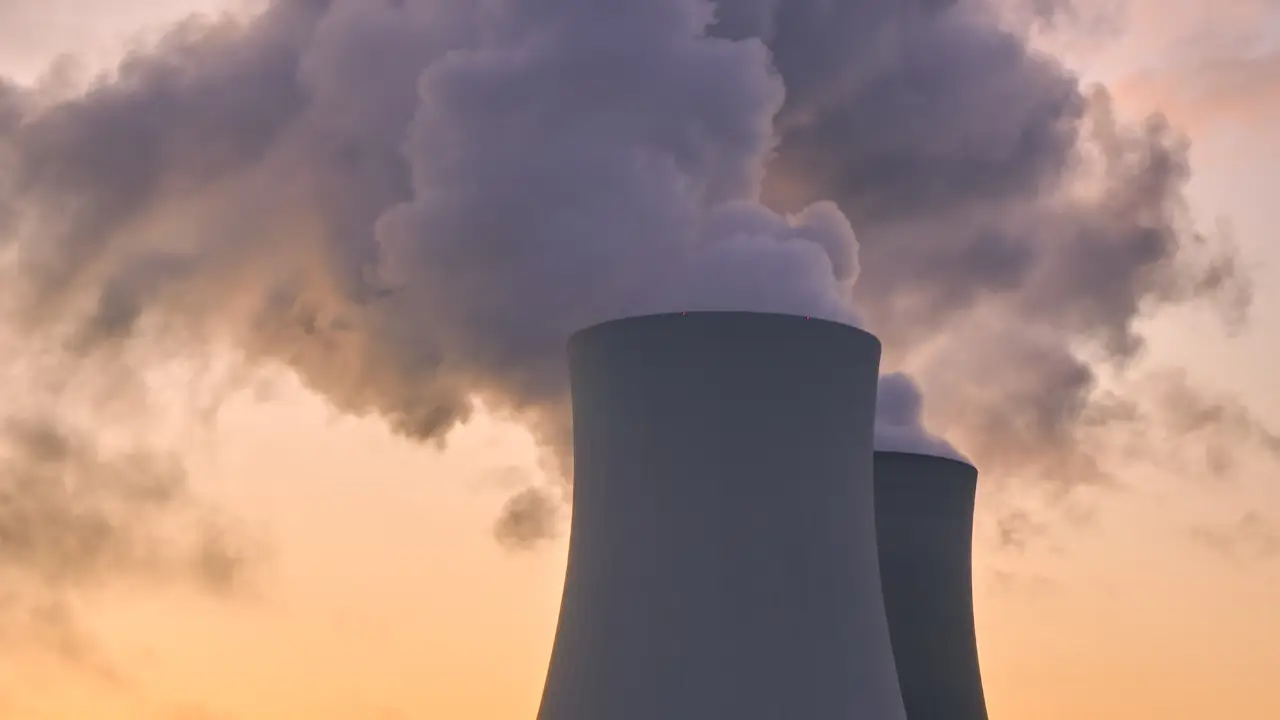
Nuclear energy for AI infrastructure

Artificial intelligence, particularly large-scale model training and inference, does not behave like traditional industrial demand. It does not peak in the morning or soften overnight. It consumes electricity relentlessly, mathematically, and without tolerance for interruption. In that reality, training models and running inference pipelines require near-perfect uptime; even brief outages translate into disproportionate financial and operational losses.

This is where nuclear power re-enters the strategic conversation.

Unlike wind or solar, which are constrained by weather and daylight, nuclear plants operate with availability rates exceeding 90%. Renewables, by comparison, often deliver less than half of their theoretical capacity over time. For AI workloads that cannot pause or downscale, that difference is decisive.

Increasingly, the most important variable in data center siting is no longer land cost or fiber access, but proximity to uninterrupted power.

For more than a decade, major technology firms publicly anchored their energy strategies around renewables. That approach satisfied sustainability targets when computing demand was elastic. Now, AI has changed that completely.

Forecasts now suggest data center electricity consumption could rise by 165% by 2030. This surge is not merely about scale; it reflects escalating model complexity and continuous operation. As a result, companies such as Microsoft, Google, Amazon, and Meta are expanding their energy procurement frameworks to include nuclear power, not as a symbolic gesture, but as a reliability hedge.

Gas still dominates U.S. data center supply today, but projections indicate that nuclear and other clean baseload sources will claim a larger share after 2030, as new capacity comes online and policy constraints ease.

Washington’s Strategic Reawakening

The policy response has been unusually explicit. The United States has set a target to quadruple nuclear capacity by mid-century, recognizing that AI leadership is inseparable from energy security. Regulatory barriers to co-locating data centers with nuclear facilities are being dismantled, including on federally controlled land.

Federal financing is also back on the table. Hundreds of millions of dollars have been committed to advancing small modular reactor (SMR) projects through public–private partnerships.

Diverging Global Playbooks: The U.S. and China

The international nuclear landscape reveals two distinct models.

In the United States, momentum is building around extending the life of existing assets and even reviving facilities once considered permanently retired. The planned restart of Michigan’s Palisades plant, backed by substantial federal loans, marks a symbolic and practical shift. Beyond that, former coal sites represent a vast, underutilized opportunity: they already have grid connections, workforces, and local acceptance, dramatically shortening development timelines.

China, by contrast, is pursuing expansion at scale. It continues to approve new reactors at a pace unmatched globally, relying entirely on domestically developed designs. Its upcoming deployment of the Linglong One marks the first commercial onshore SMR anywhere in the world, positioning China as the frontrunner in next-generation nuclear technology. With roughly half of all reactors under construction located within its borders, China is on track to become the world’s largest nuclear power market before the decade ends.

Why Small Modular Reactors Matter

SMRs sit at the center of the nuclear-AI convergence for practical reasons. Traditional reactors are monumental projects with long lead times and immense capital requirements. SMRs invert that logic.

They can be deployed incrementally, scaled to demand, and located closer to consumption centers. Their modularity lowers financial risk, allows for standardized manufacturing, and aligns more naturally with the phased expansion of AI infrastructure. Importantly, many SMR designs also support load-following, enabling them to adjust output as computational demand fluctuates, something legacy nuclear plants were never built to do.

A New Nuclear Business Model

AI is quietly reshaping nuclear economics. Instead of selling electricity into volatile wholesale markets, nuclear operators increasingly see opportunities for long-term, premium-priced contracts with AI companies desperate for reliability. These agreements can span decades, offering revenue certainty rare in modern energy markets.

At the same time, AI is feeding back into nuclear operations themselves. Machine learning tools are improving predictive maintenance, optimizing fuel use, and enhancing safety monitoring. The relationship is reciprocal: AI needs nuclear power, and nuclear plants are becoming more efficient through AI.

The Hard Problems Haven’t Disappeared

None of this removes the sector’s persistent challenges. Waste disposal, regulatory complexity, cybersecurity, and public trust remain unresolved at scale. Integrating nuclear facilities with data centers also introduces new security and grid-management risks, particularly as digital systems become more tightly coupled with physical infrastructure.

Advanced simulation tools and digital twins are helping operators model these risks before deployment, but governance frameworks will need to evolve just as quickly as technology.

Three Futures for Nuclear and AI

By 2030, the market could plausibly settle into one of three trajectories. In a high-growth scenario, SMRs achieve commercial scale, nuclear capacity expands aggressively, and nuclear-AI partnerships become standard practice. In a more restrained outcome, nuclear serves only the most critical AI workloads, competing with improved storage and renewables. A conservative path would see delays, regulatory friction, and incremental change rather than transformation.

The convergence of artificial intelligence and nuclear power is not a niche energy story. It is a signal that the digital economy is forcing a rethink of how societies provision electricity itself. AI does not adapt to energy systems; energy systems must adapt to AI.

Nations that succeed in delivering reliable, carbon-free power to support advanced computation will gain more than stable grids. They will secure a structural advantage in technological competitiveness, economic growth, and strategic autonomy.


[simple-author-box]

More from AI Infrastructure

Power negotiations often conclude long before operational constraints reveal themselves inside a live facility.

Artificial intelligence infrastructure has compressed deployment timelines to the point where electrical capacity is

Boards increasingly expect organizations to support sustainability reporting with evidence that aligns with governance

COMPUTE WEEKLY

The briefing that 40,000+ tech leaders read every Monday. Sharp, fast, essential.

Great! We’ve received your information.

We couldn’t process your submission. Please retry

Building an AI Startup Without Owning GPUs

Not owning GPUs has become the default, deliberate strategy for building an AI company — not a compromise founders accept reluctantly. H100 rental rates fell 64-75% in fifteen months, a dense ecosystem of neoclouds and inference-as-a-service providers now lets startups skip infrastructure entirely, and credit programs can fund a company’s first year before a founder writes a check
Most Read

Infrastructure planning discussions often prioritize engineering, construction, and utility considerations before examining how end

AI infrastructure deployment schedules depend on coordinated progress across hardware availability, electrical infrastructure, cooling

Artificial intelligence has transformed the economics of digital infrastructure. Every new AI model requires

Data centers do not visibly smoke. They have no smokestacks, no visible exhaust, and

Artificial intelligence has transformed the economics of digital infrastructure. Companies once competed by acquiring

Disruptor Spotlight

Cerebras Systems

The chip that makes Nvidia nervous. Cerebras’ Wafer Scale Engine is rewriting the rules of AI inference at scale.
Faster
0 x
YoY Revenue
0 x
Transistors
0 T
Market Pulse
NVDA
$924.60
-2.11%
MSFT
$421.30
-2.94%
AMZN
$192.80
-4.87%
AMD
$924.60
-2.40%
TSMC
$924.60
-2.32%
Indicative only · Not financial advice
Upcoming Events
SEP
The AI Infrastructure Race (India)
WEBINAR · ONLINE
The AI Infrastructure Race: Won on Power, Land and Trust — Not Capital
MAY
0
AI Infrastructure Summit
DUBAI · IN PERSON
MEA’s premier AI infrastructure event.
JUN
0 0
Compute Forecast Summit
SINGAPORE · IN PERSON
Our flagship APAC event. Early bird open.
Latest Moves
Live
ecolab
Ecolab Deepens Cooling Strategy With $4.75B CoolIT Acquisition
Ecolab is making one of its biggest moves yet into AI infrastructure after completing its $4.75 billion acquisition of liquid cooling specialist CoolIT Systems
Pure DC AVK Europe data center microgrid Dublin 110MW AI infrastructure Ireland 2026
Pure DC and AVK Deploy Europe’s First 110 MW Data Center Microgrid in Dublin
The Pure DC Dublin microgrid has made history as Europe’s first large-scale on-site data center microgrid, launched in partnership with power solutions provider AVK at Pure DC’s campus in Ireland.
Pace Digitek
Pace Digitek Partners With MEGMEET to Expand AI Data Center Power Business
India’s AI infrastructure ecosystem continues to mature as domestic technology manufacturers move beyond traditional telecommunications and industrial markets toward high-growth digital infrastructure opportunities
Follow Compute Forecast
11K followers
1200 followers
Companies to Watch
CW
CoreWeave
Neo Cloud · $19B · IPO Watch
CB
Cerebras Systems
AI Hardware · $4.25B · Pre-IPO
G42
G42
Sovereign AI · Abu Dhabi
H
Humain
Saudi AI · $40B Fund
Latest Podcast
AI Capex, Cloud Margins & the Nuclear Bet
48 MIN · 25 APR 2026

Why Nuclear Power Is Re-Entering the AI Infrastructure Conversation

Artificial intelligence, particularly large-scale model training and inference, does not behave like traditional industrial demand. It does not peak in

Share
Nuclear energy for AI infrastructure
7
847 SHARES

0
SHARES

[simple-author-box]

More from AI Infrastructure

Infrastructure planning discussions often prioritize engineering, construction, and utility considerations before examining how end

AI infrastructure deployment schedules depend on coordinated progress across hardware availability, electrical infrastructure, cooling

Artificial intelligence has transformed the economics of digital infrastructure. Every new AI model requires

Data centers do not visibly smoke. They have no smokestacks, no visible exhaust, and

COMPUTE WEEKLY

The briefing that 40,000+ tech leaders read every Monday. Sharp, fast, essential.

Great! We’ve received your information.

We couldn’t process your submission. Please retry

Global AI Infrastructure Outlook 2026

The briefing that 40,000+ tech leaders read every Monday. Sharp, fast, essential.
Download Free
Most Read

Infrastructure planning discussions often prioritize engineering, construction, and utility considerations before examining how end

AI infrastructure deployment schedules depend on coordinated progress across hardware availability, electrical infrastructure, cooling

Artificial intelligence has transformed the economics of digital infrastructure. Every new AI model requires

Data centers do not visibly smoke. They have no smokestacks, no visible exhaust, and

Artificial intelligence has transformed the economics of digital infrastructure. Companies once competed by acquiring

Disruptor Spotlight

Cerebras Systems

The chip that makes Nvidia nervous. Cerebras’ Wafer Scale Engine is rewriting the rules of AI inference at scale.
Faster
0 x
YoY Revenue
0 x
Transistors
0 T
Market Pulse
NVDA
$924.60
+2.4%
MSFT
$421.30
+1.1%
AMZN
$192.80
-0.6%
NVDA
$924.60
+2.4%
NVDA
$924.60
+2.4%
Indicative only · Not financial advice
Upcoming Events
MAY
0 0
DCD Global — London
LONDON · IN PERSON
World’s largest DC event. CF is media partner.
MAY
0
AI Infrastructure Summit
DUBAI · IN PERSON
MEA’s premier AI infrastructure event.
JUN
0 0

Compute Forecast Summit

SINGAPORE · IN PERSON
Our flagship APAC event. Early bird open.
Latest Moves
  • Live
Sam Altman
OpenAI appoints new Chief Infrastructure Officer to lead $100B DC programme
27 APR · OPENAI
Sam Altman
OpenAI appoints new Chief Infrastructure Officer to lead $100B DC programme
27 APR · OPENAI
Sam Altman
OpenAI appoints new Chief Infrastructure Officer to lead $100B DC programme
27 APR · OPENAI
Follow Compute Forecast
18.4K followers
12.1K followers
9.3K subscribers
41 episodes
Companies to Watch
CW
CoreWeave
Neo Cloud · $19B · IPO Watch
CB
Cerebras Systems
AI Hardware · $4.25B · Pre-IPO
G42
G42
Sovereign AI · Abu Dhabi
CW
Humain
Saudi AI · $40B Fund
Latest Podcast
AI Capex, Cloud Margins & the Nuclear Bet
48 MIN · 25 APR 2026
Scroll to Top








