 Skip to content

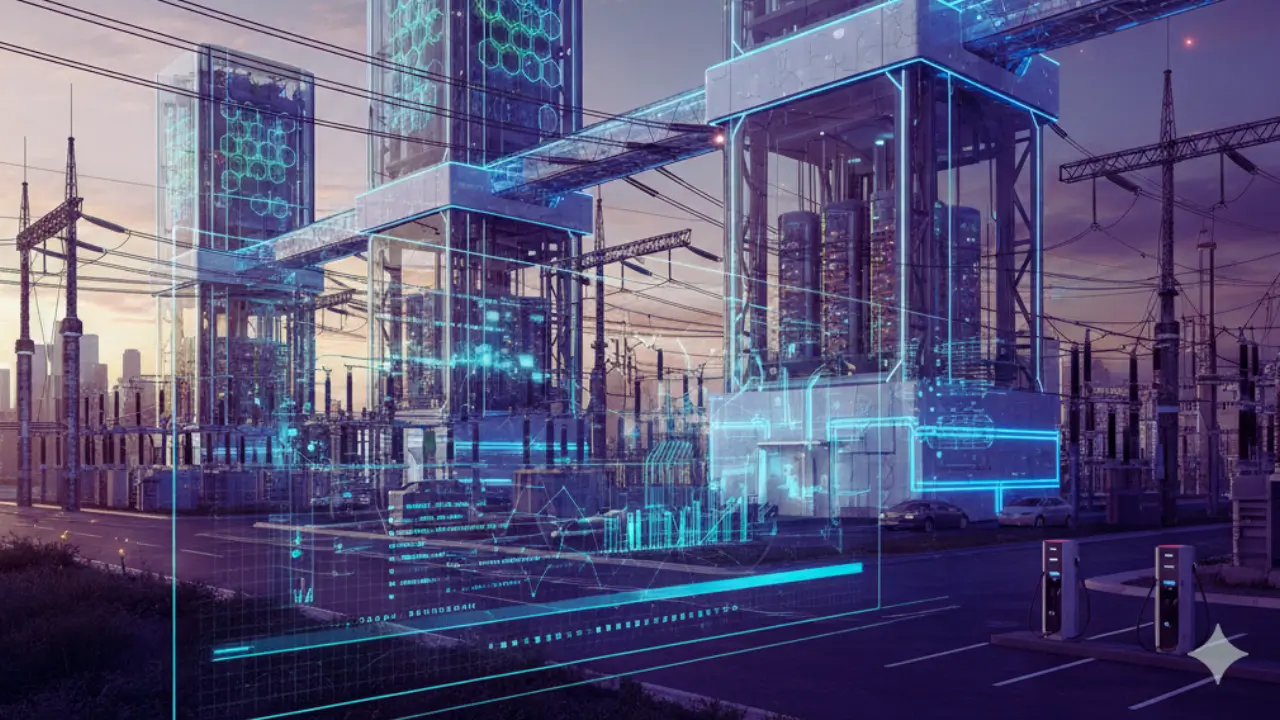
Why AI-driven energy storage systems are moving to the center of grid planning has become increasingly clear as renewable energy scales faster than legacy infrastructure can adapt. Wind and solar capacity continue to grow, yet variability, forecasting errors, and rigid operating models persist across power systems. Under these conditions, energy storage guided by artificial intelligence has been relied upon to stabilize supply, manage risk, and unlock higher efficiency across both centralized and distributed grids.

Until recently, storage assets were operated using predefined rules and conservative thresholds. However, grid behavior has become too dynamic for static controls. As AI-driven energy storage systems are deployed more widely, operational decisions are being shaped by real-time data, predictive analytics, and continuous feedback loops. This shift is now influencing how reliability is maintained across modern energy networks.
Off-Grid Deployments- Practical Value of AI-Driven Energy Storage Systems
Clear signals of how AI-driven energy storage systems function under pressure can be found in off-grid and weak-grid environments. In industries such as mining, oil extraction, and remote infrastructure, power instability has historically forced reliance on diesel generators. These solutions carried high fuel costs and heavy emissions burdens.
That model has started to shift. AI-managed storage platforms have been introduced to balance fluctuating renewable generation at industrial sites. In China’s Changqing Oilfield, electric fracturing operations have transitioned away from diesel equipment through the use of AI-controlled storage. Power reliability has been maintained while greenhouse gas emissions have been reduced, offering a pathway for cleaner industrial operations.

Comparable outcomes have been reported in coal mining regions where biogas generation remains intermittent. AI systems have been used to smooth unstable output and convert it into steady electricity. By responding dynamically to load demand and electricity price fluctuations, storage assets have generated additional revenue while lowering energy costs. In these environments, operational stability and economic value have been achieved simultaneously.
Market Integration Highlights the Role of AI-Driven Energy Storage Systems
As renewable generation becomes fully exposed to power markets, grid-connected storage has taken on a more complex role. Price volatility, weather uncertainty, and regulatory constraints have tightened the margin for error faced by operators. Under these conditions, AI-driven energy storage systems have been positioned as adaptive market participants.
Advanced AI models now integrate meteorological data, real-time electricity prices, grid congestion signals, and policy frameworks. Envision Energy’s EN 8 Pro agent system illustrates this trend. Its dedicated AI model has improved node-level electricity price forecasting accuracy to more than 90%, exceeding typical industry benchmarks. Automated bidding and strategy optimization have followed, reducing reliance on manual intervention.
Further validation has come from virtual power plant projects across Europe and North America. When distributed storage assets have been aggregated and coordinated using AI-based trading strategies, returns have increased by approximately 20%. These results have reinforced the view that intelligent orchestration, rather than raw capacity alone, determines commercial performance.
Lifecycle Intelligence Strengthens the Case for AI-Driven Energy Storage Systems
Operational safety has emerged as another defining factor. Traditional storage maintenance depends heavily on periodic inspections and reactive responses. This approach leaves limited room to anticipate failures such as thermal runaway or accelerated battery degradation.
AI-driven energy storage systems have altered that dynamic. Digital twin models and predictive maintenance tools have enabled early detection of risk patterns. Research led by Academician Ouyang Minggao at Tsinghua University has produced AI models capable of forecasting battery thermal runaway across temperature ranges exceeding 500 degrees Celsius. These capabilities have allowed preventive measures to be taken before failures escalate.
Commercial platforms have delivered measurable benefits as well. Haibo Sichuang’s lifecycle management system has reduced operation and maintenance costs by more than 30% while improving system efficiency by 3 to 5%. Equipment lifespan has been extended, and reliability has improved. Storage assets have therefore been repositioned as dependable grid components rather than vulnerable hardware.
Cross-Sector Integration Expands the Reach of AI-Driven Energy Storage Systems
As intelligence is embedded more deeply, storage systems have been integrated across sectors. Data centers, electric vehicle charging networks, and hybrid solar-storage facilities have increasingly been coordinated through unified AI platforms. Power flows have been optimized across multiple applications rather than being managed independently.
Jiangsu’s first AI-regulated solar-storage-charging-swapping station offers a strong example. Through large-model microgrid coordination, solar absorption rates rose from 96.0% to 99.7%, while arbitrage capacity improved by 25.1%. These gains have demonstrated how distributed energy assets can be synchronized when AI replaces manual scheduling.
This integration has coincided with rapid industry growth. During China’s 14th Five-Year Plan period, the new energy storage sector expanded at a compound annual growth rate exceeding 120%. Within that growth, AI has accelerated the shift from policy-driven deployment toward market-led optimization.
A Structural Shift in How Grids Are Managed
Taken together, these developments explain why AI-driven energy storage systems are now treated as essential grid infrastructure. From stabilizing off-grid operations to enabling precision market participation, AI has reshaped how energy is stored, dispatched, and valued. Decision-making has moved away from fixed rules toward continuous adaptation informed by data.
As storage assets evolve into intelligent energy agents, grid management itself is being restructured. Coordination is becoming system-wide rather than fragmented, and resilience is increasingly being built through software intelligence instead of excess capacity. Under long-term decarbonization targets, AI-driven energy storage systems are positioning themselves as a foundational pillar of future power networks.










