
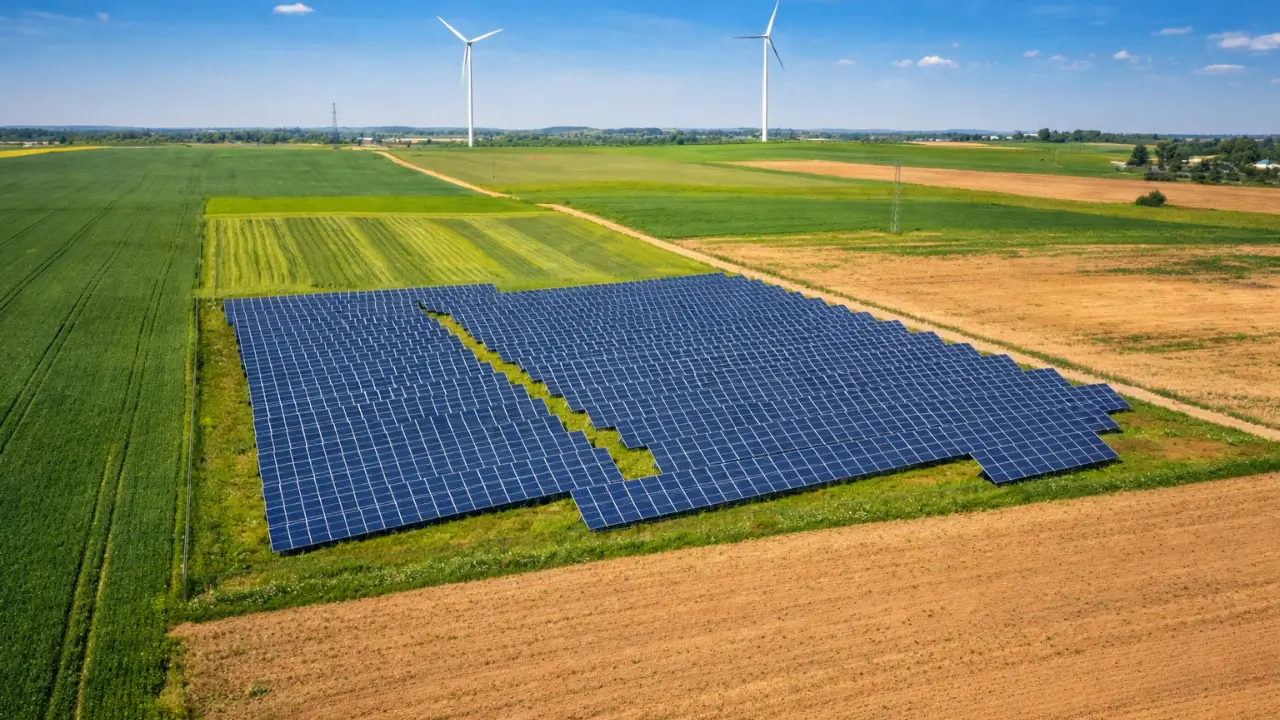
What once flowed from conventional grids now comes from renewable sources. As a result, Schneider Electric’s Cavite manufacturing facilities now run on 100% clean electricity. The shift shows how government-supported energy choice programs are changing how large manufacturers power high-demand operations.

The transition began in December 2025 and moved forward through a partnership with ACEN RES, the retail electricity arm of the Ayala group. In addition, the agreement operates under the Green Energy Option Program. This program allows large power users to directly buy renewable electricity instead of relying only on traditional utilities.
The Cavite facilities mainly support semiconductor manufacturing and related processes. With the transition completed, all sites now operate fully on renewable power. As a result, the change shows how high-demand manufacturing can use clean electricity without disrupting production or scale.
Policy-Enabled Procurement Drives Industrial Adoption
The Green Energy Option Program has become a key driver of corporate renewable power use in the Philippines. Specifically, the framework allows electricity users with large demand to choose approved renewable suppliers. Therefore, it helps expand market participation beyond utility-scale power generation.

Meanwhile, ACEN RES holds the largest share of customers under the program. Its renewable supply supports commercial and industrial users across the country. In turn, this supports the government’s wider emissions-reduction goals. The partnership with Schneider Electric shows how government-supported retail models are changing how industries source electricity across Southeast Asia.
By joining the program, Schneider Electric gained direct access to clean electricity. At the same time, the move increased demand for renewable power on the national grid. In addition, the structure supports the long-term cost sustainability of new renewable projects, helping supply grow alongside demand.
Emissions Impact and Regional Significance
The renewable transition is expected to prevent nearly 11,600 metric tons of carbon dioxide emissions each year. Therefore, the reduction reflects the impact of replacing fossil-based electricity across ongoing manufacturing operations.
Within Schneider Electric’s global network, the Cavite Smart Factory now ranks among the earliest sites in Luzon’s economic zones to operate fully on renewable power. Moreover, it stands as the first site in East Asia within the company’s manufacturing portfolio to complete a full renewable shift.
As a result, the milestone positions the Philippines as a growing reference point for industrial emissions reduction in the region. It also shows that renewable power sourcing can scale across export-focused manufacturing hubs.
Market Signals from Renewable Energy Retailers
ACEN RES has stated that the partnership shows how large manufacturers can take a leading role in the energy transition by choosing renewable power options. In addition, the company has pointed to growing awareness among industrial users that clean electricity remains reliable and practical for daily operations.
Meanwhile, as more companies join the Green Energy Option Program, renewable power is becoming part of routine industrial planning. Rather than staying a side initiative, clean electricity now plays a central role in operations. Retail supply models have also lowered barriers for manufacturers seeking stable, long-term renewable power contracts.
Certification and Visibility of Clean Operations
To mark the completed transition, ACEN RES awarded Schneider Electric its “Powered by Renewable Energy” badge. The designation applies to facilities that operate fully on clean electricity. Currently, close to 100 facilities nationwide display the seal.
Schneider Electric has stated that the badge serves as a clear signal of its environmental commitments to partners, employees, and supply-chain stakeholders. Moreover, the certification aligns with the company’s wider global climate goals and improves transparency around energy sourcing.
Industrial Role in National Energy Transition
The Cavite transition adds momentum to the Philippines’ renewable energy push, especially within export manufacturing zones. At the same time, industrial participation remains vital to meeting national emissions targets due to the sector’s high electricity demand.
As renewable buying programs continue to develop, similar transitions are expected across other economic zones. Consequently, the Schneider Electric–ACEN RES agreement offers a working example of how policy, retail markets, and industrial demand can align to cut emissions without disrupting production.
Together, these developments place renewable electricity as a normal operating standard rather than an exception across Southeast Asia’s changing industrial landscape.











