 Skip to content
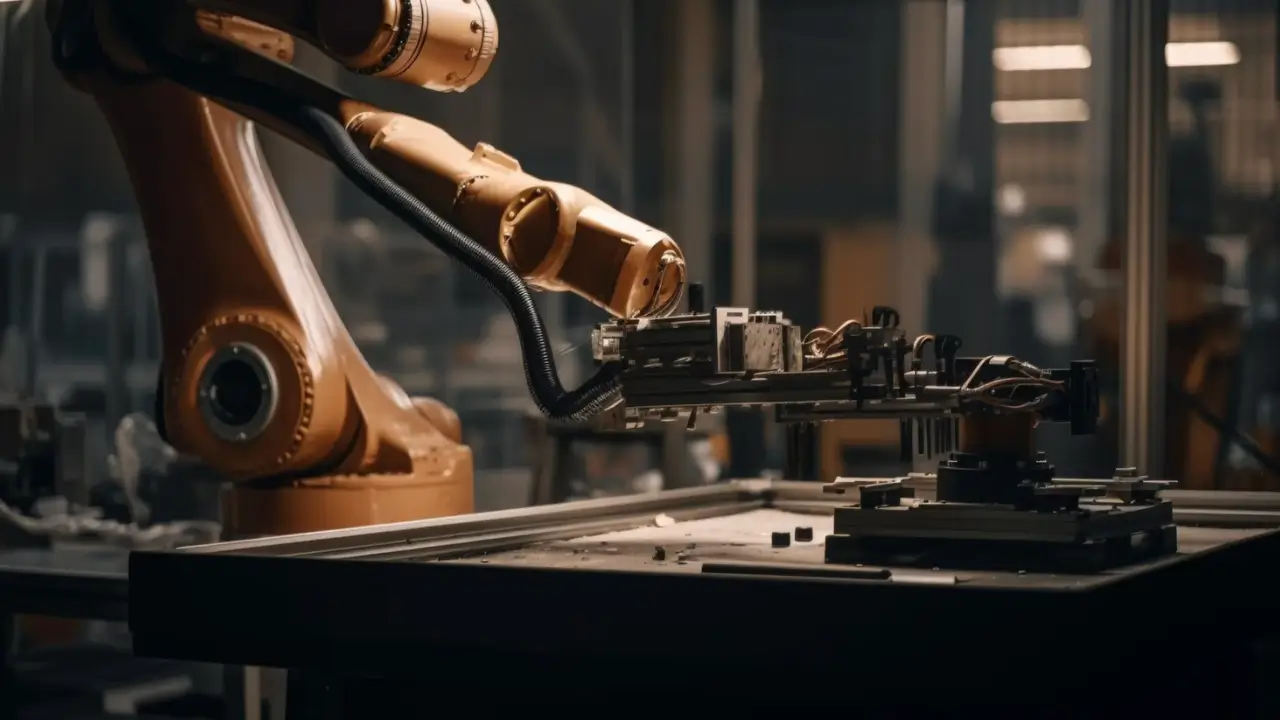
Shanghai is positioning itself as China’s command center for AI-driven manufacturing. Capital, policy, and talent now flow into the city as leaders reshape industrial power for the AI era. Once a regional technology hub, Shanghai now anchors China’s industrial artificial intelligence strategy. Factories, supply chains, and heavy manufacturing sit at the core of this shift.

Both market forces and state direction reinforce this transformation. A recent white paper on AI manufacturing describes Shanghai as a national highland for industrial AI. In parallel, a $10 billion government-backed investment plan for the Pudong district signals an even larger role ahead for the city.
Talent concentration accelerates Shanghai’s takeover of AI-driven manufacturing
Talent sits at the center of Shanghai’s takeover of AI-driven manufacturing. Nearly 300,000 AI professionals now work in the city. That figure represents roughly one-third of China’s total AI talent pool.
This concentration enables rapid development and deployment of industrial AI systems. Engineers test and refine these tools directly inside complex manufacturing environments. As a result, companies move from experimentation to scaled deployment faster than rivals.
By the end of 2025, regulators had registered more than 130 large AI models in Shanghai. Manufacturers now embed many of these models into production workflows. Engineers use them to simulate lines, optimize processes, and adjust output in real time. Companies increasingly treat industrial AI as core infrastructure rather than optional technology.
Industrial growth reflects AI’s expanding role
Economic data shows early returns. During the first nine months of 2025, nearly 400 major AI companies in Shanghai generated more than 435 billion yuan, or about $62 billion, in output. Revenue grew nearly 40 percent year over year.

Profit growth moved more slowly but stayed positive. This pattern suggests a shift from explosive expansion toward sustainable scale. Industry executives credit faster design cycles, shorter delivery timelines, and higher production success rates for these gains.
Policy coordination deepens industrial transformation
Local policy plays a decisive role. Shanghai’s authorities actively integrate AI manufacturing into the city’s modern industrial system. Officials use targeted policies and ecosystem programs to push AI adoption across key sectors.
Automobiles, aerospace, high-end equipment, and construction now sit at the front of this effort. Since 2022, regulators have certified dozens of firms as industrial internet pioneers. The designation helps companies accelerate digital and intelligent upgrades.
These programs have connected hundreds of thousands of enterprises. They have also strengthened thousands of core firms. Officials report lower operating costs and reduced energy use across equipment fleets.
Capital investment amplifies the strategy
Capital now accelerates what policy and talent established. A $10 billion investment initiative will fund more than 50 technology projects in Pudong starting in 2026. Policymakers frame the plan as part of China’s push to secure technological leadership amid intensifying global competition.
The initiative offers AI startups full policy backing. Regulators aim to shape rules that support rapid growth rather than slow it. Artificial intelligence sits at the center of the funding strategy, but officials also prioritize adjacent sectors. These include semiconductors, smart vehicles, biopharmaceuticals, and aviation.
Shanghai’s industrial base strengthens this push. The city already hosts major players in chips, AI software, advanced equipment, and commercial aviation. New investment can build on existing supply chains instead of starting from zero.
From experimentation to long-term industrial strategy
AI adoption remains uneven across factory floors, especially in traditional industries. Even so, industrial leaders increasingly see early integration as essential. While AI still plays a limited role in daily operations for some firms, executives no longer view it as optional.
Looking ahead, China plans to accelerate AI manufacturing deployment during its next five-year planning cycle. National guidelines already set targets for resilient AI supply chains and globally competitive industrial scale by 2027.
Shanghai aims to lead that effort.












