Skip to content
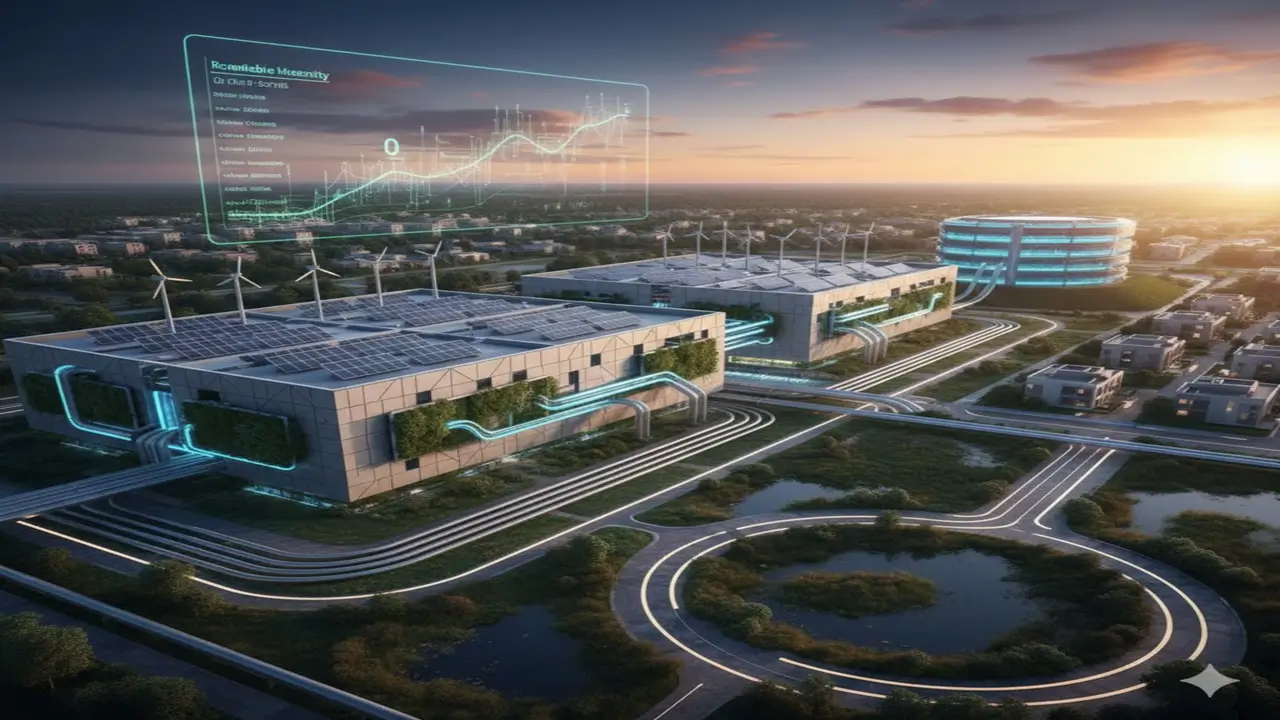
The rapid expansion of artificial intelligence infrastructure necessitates a fundamental shift toward carbon-aware data center design. Global technology firms must move beyond traditional efficiency to prioritize environmental intent in their physical construction and operational logic. Industry leaders now recognize a major flaw in legacy optimization metrics like Power Usage Effectiveness (PUE). These old standards reduce localized energy waste but often ignore the broader carbon intensity of the electrical grid. This realization has birthed a new movement that treats the local energy mix as a primary architectural constraint. This strategy ensures that facilities do not merely use less power; they use the cleanest power available at any given moment.
It focuses on carbon-aware data center design as a primary goal. This strategy elevates environmental intent above simple power usage effectiveness. These facilities do not merely seek to use less power. Instead, they aim to use power at the right time. They also prioritize the cleanest available energy sources.

Architectural frameworks for these next-generation facilities prioritize carbon intensity. Engineers now treat the local energy mix as a primary constraint. They are moving away from static uptime requirements. These old models often ignore regional grid stress.
New dynamic systems respond to real-time signals from renewable providers. This transition represents a pivot toward intentionality. Sustainability serves as an ethical and operational imperative here. High-premium subscribers understand that AI depends on this integration. Long-term viability requires a shift in foundational thinking. Every design choice must reflect a commitment to the climate.
The Failure of Traditional Optimization
Modern infrastructure reporting indicates that historical metrics are becoming insufficient. The industry previously relied heavily on Power Usage Effectiveness (PUE). This metric measures the ratio of total power to IT power.
However, PUE remains blind to the source of electricity. A facility could achieve a world-class score using coal power. This outcome negates the core environmental objectives of the firm. Consequently, the industry is witnessing a surge in new principles. These focus on Carbon Usage Effectiveness (CUE) as a benchmark. This transition acknowledges a hard truth about infrastructure. A leaner facility is not necessarily a cleaner facility. Global climate targets require a more sophisticated approach.
Designers now integrate sophisticated software layers into their facilities. These tools communicate directly with regional grid operators. They monitor the shifting carbon intensity of electricity constantly.
Such systems allow data centers to function as flexible loads. They shift non-critical AI tasks to specific peak periods. This happens when solar or wind production is at maximum. This flexibility requires a departure from traditional “always-on” architectures. Those old models prioritize maximum utilization at all costs. Operators can now align physical assets with net-zero mandates. They build for intentionality rather than just simple optimization.

Strategic Siting and Green Corridors
The shift toward carbon awareness influences geographical selection. Developers no longer prioritize the cheapest power or tax incentives. Instead, they seek locations with high renewable energy concentrations. These “green corridors” provide necessary infrastructure for AI. They support high-density workloads without relying on peaking plants. This strategic siting is a core component of the new design. It looks beyond the four walls of the server room. Engineers evaluate the health of the local ecosystem first. They consider the long-term availability of wind and solar. This foresight reduces the risk of future carbon penalties.
Active Grid Participation and Buffering
Traditional engineering treats the grid as an infinite resource. It focuses on exploiting this resource with maximum efficiency. In contrast, a carbon-aware philosophy views the grid differently. It sees a shared and fluctuating ecosystem. This perspective requires careful management and active participation. Designers now implement on-site energy storage systems.
Large-scale lithium-ion batteries serve as vital buffers. Hydrogen fuel cells also provide clean backup options. These assets allow the facility to store renewable energy. They discharge this energy when the grid becomes heavy. This logic transforms the data center into a grid partner.
Decoupling Footprints from Consumption
This decoupling requires high coordination between various stakeholders. Hardware manufacturers and software developers must work together. They align with energy providers to create a holistic model. Every watt is accounted for by its environmental provenance. This level of detail defines a carbon-aware data center design. Furthermore, physical cooling systems are undergoing a radical redesign. Liquid cooling and direct-to-chip technologies are now standard. Designers do not just value their thermal efficiency. They value their ability to integrate with heating networks. Capturing waste heat benefits the surrounding local communities.
Circular Energy and Externalities
This transformation creates positive externalities within the local environment. The data center moves away from being a drain. Instead, it becomes a vital circular energy asset. This change is a hallmark of the modern strategy. It prioritizes the community as much as the compute. Software stacks manage this complexity with high precision. They utilize machine learning to predict energy availability. Operators schedule intensive workloads during these “green” windows. This approach turns the concept of uptime on its head. It suggests that “green-time” is a more valuable metric. Intentionality is baked into the very operational logic.
Temporal Shifting Logic
Digital infrastructure experts advocate for temporal shifting as a standard. This methodology moves beyond simple load balancing. It aligns compute cycles with renewable energy production peaks. Artificial intelligence training is the primary candidate here.
These tasks consume significant megawatt-hours but have flexible deadlines. Workloads are essentially paused during periods of grid stress. They resume when the local energy mix reaches cleanliness. This strategy transforms the data center into a flexible participant. Flexibility proves essential for maintaining a low-impact profile. It allows for responsible scaling in a volatile market.
Advanced scheduling software serves as the central brain. It utilizes weather forecasting and grid telemetry daily. This maps out the most efficient compute windows. Engineering teams ensure that interruptions do not harm models. Maintaining state during a pause requires specialized protocols. These stores progress without high standby power consumption.
Such protocols represent a departure from legacy configurations. Transitioning to this model requires deep technical understanding. High-premium providers offer these capabilities as a standard feature. They cater to enterprise clients with strict climate goals. Every cycle is optimized for its carbon impact.
Networked Mobility and Global Integration
Infrastructure leaders no longer view data centers as isolated silos. Workloads now travel globally at the speed of light to reach green energy. This capability facilitates a strategy known as geo-spatial load distribution. Operators move compute tasks across continents to find clean power. If a wind farm in the North Sea peaks, tasks migrate there.
This global orchestration allows for near-constant renewable utilization. It effectively decouples the carbon cost from the user’s location. A carbon-aware data center design treats the global network as one entity. This virtual engine breathes with the natural cycles of the planet. It represents a sophisticated evolution of traditional cloud computing.
Executing these migrations requires a unified software management plane. This layer monitors both compute capacity and grid health simultaneously. Network engineers work to minimize the energy used during transfers. They prioritize fiber paths powered by renewable sources themselves. This creates a truly green transit layer for digital information. Clients receive verifiable reports on the energy used for their tasks.
Transparency is now a non-negotiable requirement for premium enterprise services. Organizations with public net-zero commitments rely on this level of detail. They need to prove their environmental claims with hard data. Every byte of transit is scrutinized for its climate impact.
The Evolution of Thermal Management
The byproduct of all computation is heat, which legacy sites wasted. Modern engineering standards shift toward a circular recovery model. This heat becomes a valuable commodity for local urban areas. Capturing this energy requires a move to specialized liquid cooling. These systems maintain the high temperatures needed for district heating.
They interface directly with municipal water and energy networks. Warm water flows to nearby homes and industrial complexes. This reduces the need for local fossil-fuel boilers. It effectively lowers the carbon footprint of the entire neighborhood. The data center becomes a primary heating source for the city.
Implementing these circular systems requires high-level planning during construction. Developers coordinate with local governments and utility providers early. The initial investment in heat exchange technology is quite substantial. However, the long-term environmental dividends justify the cost.
This approach allows the facility to operate at higher efficiencies. It reduces the energy required for mechanical refrigeration units. By rejecting less heat into the atmosphere, the site helps the city. It avoids contributing to the urban heat island effect significantly. Every watt used for AI training gets a second life. This doubles the utility of the energy consumed by the racks.
Sustainable Materials and Embodied Carbon
Focusing on daily operations is only half of the challenge. The construction phase carries a massive initial carbon debt. Architects now specify low-carbon concrete for all new structures. They use recycled steel to mitigate the groundbreaking impact. These materials often come from regional suppliers to save fuel. This focus on embodied impact ensures a clean start for the site. High-premium subscribers demand this level of transparency from developers. They want to know the physical origin of the building. Standard construction methods no longer meet these rigorous expectations. Every beam and slab reflects a commitment to the ecosystem.
The link between water and energy is a complex trade-off. Conventional systems use evaporation to cool down hot server racks. This process places a massive strain on local watersheds. Infrastructure leaders now prioritize water neutrality alongside carbon goals.
This transition involves the adoption of dry cooling technologies. Closed-loop systems eliminate the need for constant water makeup. Operators accept a slightly higher energy draw for zero water use. This choice demonstrates a clear intent to protect local health. It prioritizes long-term regional stability over short-term savings. Water is becoming as precious as electricity in many areas.
Waterless Cooling Innovations
Two-phase immersion cooling is becoming standard in premium builds. These systems operate effectively in high-ambient-temperature environments. They do not rely on the evaporative properties of water. This design choice is critical as AI hardware densities increase. These chips generate more heat than traditional cloud processors. A carbon-aware data center design excludes water-intensive cooling methods. This ensures the facility remains viable during severe droughts. It avoids competing with local populations for life-sustaining resources. This foresight is a key component of risk management. The resulting facility operates in harmony with the local climate.
Industrial and Reclaimed Water Use
Some facilities utilize reclaimed or industrial-grade water for cooling. This involves building dedicated treatment infrastructure on the site. Operators process gray water before it enters the cooling loops. This commitment mirrors the circular energy strategies mentioned earlier.
It reinforces the facility’s role as a responsible community neighbor. Combined with intentional architecture, these strategies provide a framework. They address multiple planetary boundaries at the same time. The resulting infrastructure is fundamentally aligned with regenerative needs. Every drop of water is tracked within a closed system. This ensures that no resource is wasted during the process.
Energy Autonomy through Microgrids
Transitioning to an intentional profile requires on-site microgrids. These grids operate independently of the primary utility provider. They integrate solar arrays, wind turbines, and energy storage. Using these microgrids shields the facility from grid fluctuations. It provides a stable power baseline during extreme weather events. By generating their own green energy, sites maintain operations.
They avoid relying on carbon-heavy peaking plants during high demand. This autonomy provides a level of reliability that legacy sites lack. It allows the operator to control energy provenance perfectly. The facility becomes its own source of truth for sustainability.
On-site power generation reduces the strain on public infrastructure. Aging grids often struggle with the massive loads of AI. By acting as its own power plant, the site helps. It shaves the peaks of its demand during the day. This bidirectional relationship is a hallmark of the new strategy. Premium facilities are now viewed as prosumers in the market. They provide ancillary services like frequency regulation to the utility. This active participation turns the data center into a grid asset. It acts as an anchor for regional energy stability. The facility supports the green transition of the entire area.
Hardware Longevity and Lifecycle Audits
The pursuit of environmental intent requires a re-evaluation of hardware. Legacy infrastructure leaders followed aggressive three-year refresh cycles for years. This practice contributes to global electronic waste and high emissions. Modern firms now prioritize hardware longevity and modularity instead. They repair or upgrade individual components rather than replacing units.
This approach reduces the total carbon intensity of the facility. It encourages deep transparency within the entire supply chain. Every component must meet strict environmental standards before installation. Maintaining hardware for longer periods lowers the embodied footprint significantly. This shift reflects a move toward true material responsibility.
Premium operators now demand detailed life cycle assessments for equipment. They track everything from processors to industrial cooling pumps. This data allows for accurate calculations of total environmental impact. It enables informed decision-making regarding future hardware procurement.
Better thermal management and modular design extend server life cycles. This strategy aligns with the broader goals of intentional infrastructure. It focuses on long-term impact rather than short-term gains. Accountability between providers and hardware vendors becomes a priority. The relationship shifts from simple purchasing to shared stewardship. Both parties work together to manage the end-of-life process.
Energy-Efficient Code and Software Synergy
Intentionality regarding hardware affects how developers write software. Engineering teams now create code that requires fewer compute cycles. This reduces the electricity needed to execute complex AI models. Software-hardware synergy is essential for a truly responsible facility. When hardware lasts longer and software runs lighter, emissions drop. This integration is a key differentiator for premium data services. High-end clients value this holistic approach to sustainable computing. The focus remains on the utility of the existing hardware. Developers avoid the constant urge for next-generation hardware upgrades. This preserves resources and reduces the demand for new manufacturing.
Governance and Verifiable Carbon Accounting
Governance models dictate how physical assets interact with climate policy. Frameworks move beyond voluntary reporting to incorporate real-time accounting. These systems often utilize distributed ledger technology for transparency. Specialized sensors provide an immutable record of carbon intensity.
Every megawatt consumed is tracked with extreme precision. This level of detail is essential for high-premium subscribers. They must report indirect emissions to regulatory bodies accurately. Embedding accountability into the design guarantees verifiable environmental intent. Data integrity serves as a shield against greenwashing accusations. Stakeholders can trust the numbers behind the sustainability claims.
These governance structures influence modern service level agreements (SLAs). Traditional agreements guarantee constant uptime without mentioning energy sources. High-premium infrastructure allows for the creation of Carbon-Adjusted SLAs.
Clients and operators agree on performance windows based on energy. This collaborative approach ensures that sustainability goals come first. Performance metrics now include the “greenness” of the energy used. These agreements represent a major shift in the infrastructure business. Environmental performance is now a core contractual obligation for firms. Clients purchase a commitment to planetary health alongside compute. They become active partners in the decarbonization journey.
Automating Regulatory Compliance
Compliance tools integrate directly into the facility management software. These tools ensure the building stays ahead of shifting laws. They automatically adjust operational parameters to comply with mandates. This reduces the risk of costly penalties for the operator. A proactive stance is a defining feature of modern strategy. Leaders view regulation as a baseline rather than a ceiling. Automating compliance allows operators to focus on higher innovations. They can spend more time on energy recovery projects. This strategic alignment between policy and technology is vital. It creates a legally resilient asset in a volatile landscape.
The Economics of Intentional Design
Initial capital expenditure for specialized infrastructure is often higher. However, the long-term economic benefits are becoming very clear. A focus on environmental intent mitigates various financial risks.
It protects operators from volatile fossil fuel price spikes. Carbon pricing schemes also pose a threat to legacy data centers. Diversifying energy sources and on-site generation locks in costs. Predictable operational costs over twenty years attract long-term investors. They seek to avoid stranded asset risks in their portfolios. The shift toward intentionality is a prudent financial strategy. Stability in energy pricing allows for accurate long-term budgeting.
Premium facilities command higher lease rates for their green services. They provide value-added features like certified carbon-free compute. Enterprise clients use these services to meet their ESG targets.
They avoid building their own expensive specialized infrastructure. Consequently, prioritizing environmental intent creates a massive competitive advantage. It leads to higher margins and lower client churn rates. The market rewards those who view sustainability as a constraint. Economic reality is accelerating the adoption of these design principles. Success is now defined by decoupling growth from degradation. Firms that ignore this trend face rising costs and risks.
Insurance Resilience and Risk Profiles
Insurance providers offer lower premiums for resilient and self-sufficient sites. They recognize that on-site microgrids reduce the risk of failure. These facilities are less susceptible to cascading public grid blackouts. Implementing a total resilience strategy proves a lower risk profile. Underwriters offer significant savings over the life of the building. This synergy between resilience and performance improves the bottom line. The clean choice is also the most profitable choice. Industry leaders reach a tipping point where green equals quality. Financial markets shift capital toward projects with long-term viability. They value assets that can survive a warming world.
Societal Impact and Community Synergy
The ultimate success of a facility depends on its local impact. Modern projects foster a positive relationship with their neighbors. They minimize resource extraction while maximizing community benefits. This includes providing waste heat for local homes and schools.
Developers also restore local biodiversity through thoughtful site landscaping. They integrate green roofs and permeable surfaces into the structure. These features ensure the building becomes a contributor to health. This holistic approach ensures the community welcomes the new facility. Regional planning becomes a collaborative process for all involved parties. The data center stops being an industrial burden to residents.
Education and workforce development are core operational philosophies here. Operators partner with local universities to create specialized research hubs. These centers focus on renewable energy and advanced cooling tech. This creates a pipeline of local talent for the facility.
Students learn the nuances of a carbon-aware data center design early. Investing in human capital ensures long-term operational success for everyone. It strengthens the local economy by providing high-tech employment opportunities. This commitment to social responsibility defines the high-premium brand identity. The facility acts as a beacon of stewardship for the region. It proves that technology and nature can thrive together.
Strategic Flexibility as a Resilience Tool
Grid stress is an increasing reality for many global regions. Data centers that ignore this stress face significant operational risks. A carbon-aware data center design provides the flexibility to adapt. Operators can throttle power consumption during extreme heat waves or storms.
This protects the local grid from total failure or blackouts. This responsiveness is a form of civic duty for large consumers. It also ensures the facility remains operational on its own reserves. Strategic flexibility creates a more resilient foundation for the digital economy. It allows for steady growth without compromising the local power supply. Reliability is achieved through intelligence rather than raw consumption.
This flexibility also enables participation in demand response programs. Utilities pay large consumers to reduce their load during peaks. This provides a new revenue stream for the infrastructure operator. It offsets the costs of building advanced storage and control systems. The data center becomes a stabilizing force for the entire utility. It helps balance the inherent intermittency of wind and solar power. This active role is essential for a successful energy transition globally. High-premium subscribers value being part of a solution, not a problem. They recognize that flexibility is the hallmark of modern excellence. The facility operates as a smart, breathing component of the grid.
Global Policy Alignment and Future-Proofing
International climate accords are driving stricter environmental regulations every year. Infrastructure built today must remain compliant for several decades. A carbon-aware data center design provides built-in future-proofing for owners. It anticipates the shift toward absolute zero-carbon energy requirements.
Systems are ready to integrate with next-generation green hydrogen or fusion. This adaptability protects the asset from becoming a stranded liability. Investors favor projects that align with the Paris Agreement goals. They see these facilities as low-risk, high-reward foundations for AI. Policy alignment is no longer a luxury for technology firms. It is a fundamental requirement for global market access.
Transparency and the New ESG Standard
Transparency is the foundation of the new ESG standard. Customers demand to see exactly where their energy comes from. Legacy reporting relies on annual averages and vague offsets.
Carbon-aware systems provide hourly data on energy provenance and emissions. This granularity allows clients to claim 24/7 carbon-free energy use. It sets a new benchmark for corporate sustainability reporting globally.
High-premium subscribers use this data to gain a competitive edge. They prove their environmental claims with immutable, real-time records. This builds deep trust between the provider and the end-user. The facility becomes a verified engine for sustainable business growth.
Redefining Digital Foundations
The evolution of digital infrastructure has reached a major juncture. Efficiency alone is no longer a sufficient metric for success. High-premium subscribers demand a carbon-aware data center design today. They prioritize environmental intent across every facet of the operation. Every choice is scrutinized for its impact on the global climate.
This transition marks the end of the opaque, inefficient data center. It signals the beginning of a transparent and regenerative era. Building for the future requires a total commitment to the biosphere. Success depends on the ability to compute without causing harm.As artificial intelligence reshapes the economy, foundations must be innovative. Intentional infrastructure ensures that the benefits of AI remain positive. Technological progress must align with the natural boundaries of the planet. This is the new standard for excellence in our digital age.
Every byte of data should be powered by a commitment to balance. Industry leaders are now builders of a more sustainable world. They recognize that the most advanced facilities are those that care. The path forward is clear, intentional, and fundamentally carbon-aware. We are building a future where intelligence serves both humanity and nature.