
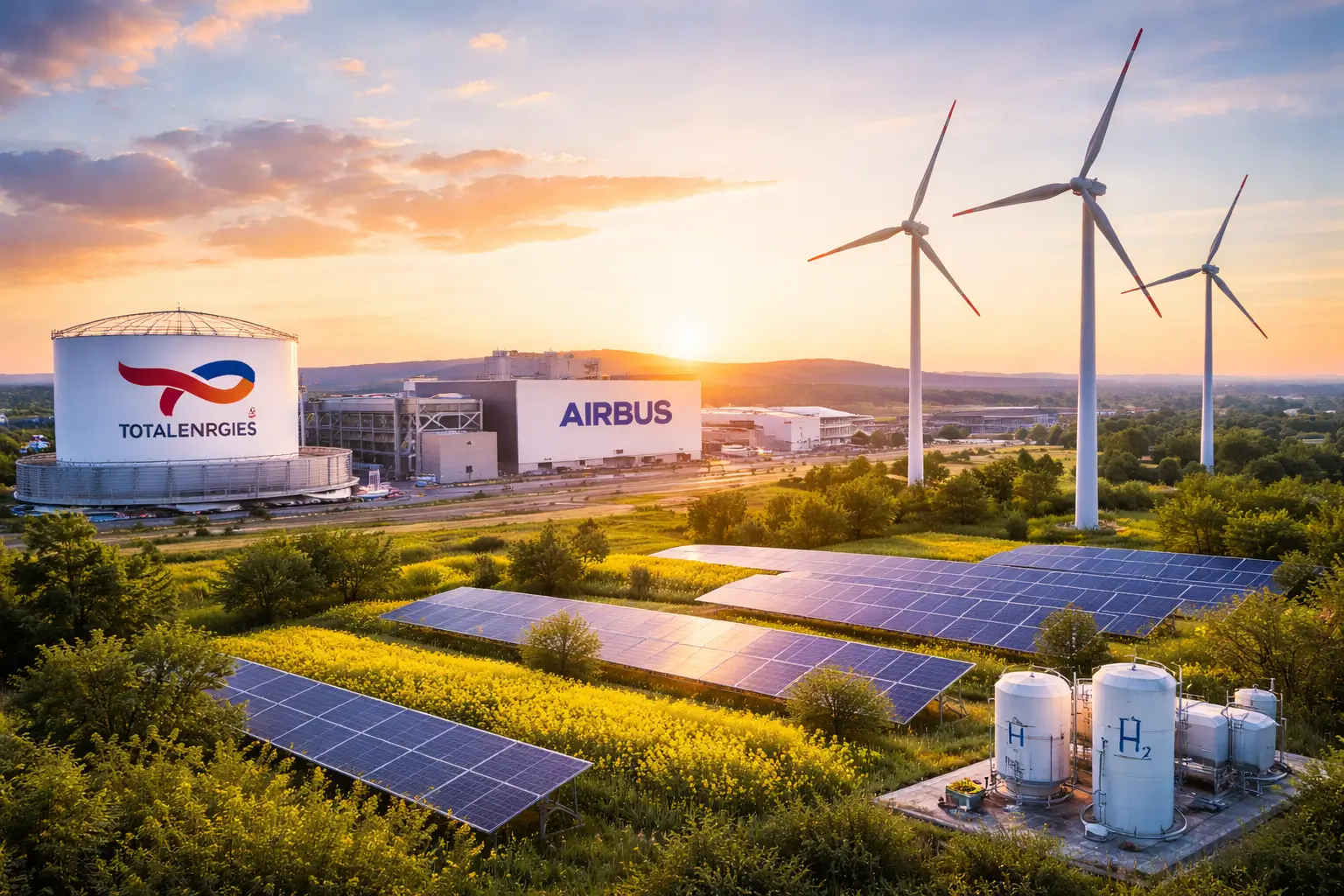
TotalEnergies has secured a major clean power partnership with Airbus, reinforcing its role as a strategic energy partner for large-scale industrial operations across Europe. Under two long-term clean firm power contracts, TotalEnergies will supply renewable electricity to Airbus sites in Germany and the UK, with delivery extending into the next decade.

The agreements will deliver 3.3TWh of electricity, anchored by new renewable capacity totalling 200MW. From 2027, the contracts will provide baseload power covering half of the electricity needs of Airbus’ targeted sites. The structure reflects a shift in corporate energy procurement from transactional sourcing to integrated, long-term energy architecture.
Stéphane Michel, President of gas, renewables and power at TotalEnergies, framed the deal as a continuation of a broader strategic collaboration.
“The agreements follow last year’s sustainable aviation fuel partnership and illustrate the company’s ability to deliver turnkey solutions across multiple geographies.” Michel highlighted the operational logic behind the contracts.

“He added that the contracts rely on an integrated portfolio of renewable and flexible assets and will contribute positively to the profitability of TotalEnergies’ electricity business.”
The partnership extends beyond power supply. It reflects how energy companies and industrial giants now co-design infrastructure to align decarbonisation with operational resilience and long-term competitiveness.
From Power Procurement to Strategic Infrastructure
For Airbus, the agreements represent more than a sustainability milestone. They embed renewable electricity into the core of operational strategy, reducing exposure to volatility while strengthening long-term energy security.
Florent Massou dit Labaquère, EVP of operations for the commercial aircraft business of Airbus, emphasised the strategic intent behind the contracts.
“The PPAs demonstrate a long-term commitment to decarbonising its sites.” He also underscored the operational value of reliable low-carbon energy. “These agreements will help Airbus secure reliable low-carbon energy, supporting our goal to increase renewable electricity across our sites,” he said. The partnership also aligns with Airbus’ broader decarbonisation framework, which integrates fuel innovation, power procurement, and operational resilience.
“Complementing our existing collaboration with TotalEnergies to scale SAF production capabilities, these PPAs are part of our holistic approach to build resilience in our operations.”
The structure of the contracts signals a growing trend: industrial leaders now treat energy not as a cost centre but as a strategic asset that shapes manufacturing stability, capital planning, and competitive positioning.
TotalEnergies Strengthens Its Position in Corporate Clean Power
TotalEnergies described the Airbus agreements as part of a broader global portfolio of corporate power supply contracts. The company continues to expand its presence across technology and industrial sectors, where demand for clean, firm, and geographically diversified energy is accelerating. The company has more than 32GW of installed renewable capacity and aims to reach 35GW by the end of 2025.
This trajectory reflects a structural shift in the energy market. Traditional utilities once dominated industrial power supply. Today, integrated energy players like TotalEnergies position themselves as infrastructure partners that combine renewables, flexibility, and long-term risk management.
Why This Deal Matters for the Future of Industrial Energy
The TotalEnergies & Airbus partnership illustrates a deeper transformation in how corporations approach decarbonisation. Rather than relying on fragmented renewable purchases, companies now pursue integrated power strategies that balance sustainability, reliability, and financial performance.
For TotalEnergies, the deal strengthens its credibility as a provider of clean firm power at industrial scale. For Airbus, it reinforces a long-term pathway toward operational decarbonisation without compromising energy security.
More broadly, the agreement signals how Europe’s industrial ecosystem is evolving. Clean power is no longer a symbolic commitment. It has become a foundational layer of corporate strategy, infrastructure design, and competitive advantage.
In that sense, the TotalEnergies and Airbus deal does not merely add renewable capacity. It marks a shift in how industrial power is conceived, negotiated, and deployed across the continent.











