 Skip to content
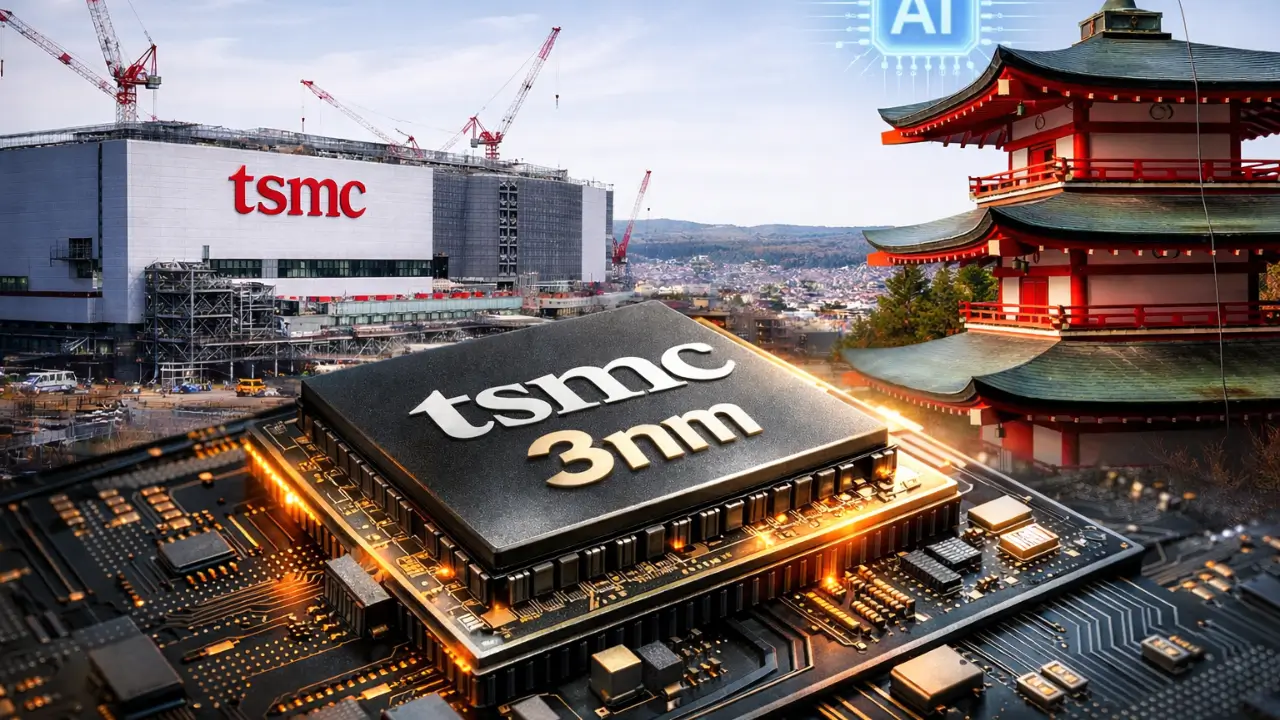
Taiwan Semiconductor Manufacturing Company is accelerating Japan’s transition from a semiconductor support hub to a front-line producer of advanced AI chips. TSMC plans to mass produce advanced 3-nanometre chips in Kumamoto in southern Japan, CEO C.C. Wei said on Thursday. Local media reported the investment at $17 billion, highlighting the scale of the expansion as demand for AI chips continues to surge.

The move places Japan among the limited number of global locations capable of producing cutting-edge 3-nanometre chips, which are widely used in high-performance computing and AI servers. TSMC also plans to begin producing these chips at its second fab in Arizona in 2027, strengthening its distributed manufacturing strategy across Asia and North America.
AI Demand Redefines TSMC’s Global Manufacturing Map
The boom in AI has helped TSMC, Asia’s most valuable listed company, outshine its rivals. Yet the decision to bring 3-nanometre production to Japan reflects a deeper shift in how the company balances technology leadership, geopolitical risk, and customer demand.
Rather than concentrating advanced manufacturing in a single geography, TSMC is expanding high-end production across multiple strategic regions. Japan’s inclusion in that network signals a recalibration of global semiconductor supply chains driven by AI workloads.

“We believe this fab will further contribute to the local economic growth and, most importantly, form a foundation for Japan’s AI business,” said Wei in Tokyo at a meeting with Japan’s Prime Minister Sanae Takaichi. Wei added that the company was also in discussions with Japanese customers and partners on further collaboration across multiple areas important to the AI industry.
Economic Security and National Strategy
Japan’s leadership framed the development as a matter of national resilience as much as industrial growth. Takaichi said 3-nanometre chips hold great significance for economic security. TSMC told Reuters in an email that the company is now planning to use 3nm process technology for production at its second fab in Japan to meet strong demand driven by AI.
Japanese newspaper Yomiuri reported earlier on Thursday that the investment will be $17 billion. TSMC declined to comment on the reported investment figure. Japan’s government, which has subsidised Taiwan’s leading chipmaker to build out capacity in Kyushu, is considering additional support for the new investment plan, Yomiuri reported.
Shift From Mid-Range to Leading-Edge Technology
TSMC had planned to invest $12.2 billion on 6–12 nanometre chipmaking capacity at its second fab in Kyushu but will discuss changes to the plan with Japan’s government, Yomiuri reported. The shift toward 3-nanometre production signals how quickly AI demand is reshaping earlier technology assumptions.
TSMC, the world’s largest contract chipmaker and a key supplier of AI chips to companies such as Nvidia, currently produces its most advanced chips in Taiwan. Previous plans for Japan had focused on less advanced technologies, making the move to 3-nanometre manufacturing a decisive upgrade in Japan’s role within the global semiconductor ecosystem.
On an earnings call in January, TSMC said the construction of its second fab in Japan has started, and “the technologies and ramp schedule will be based on our customers’ need and market conditions.”
Japan’s Dual-Track Semiconductor Strategy
Japan is also heavily subsidising homegrown foundry venture Rapidus, which will produce cutting-edge chips on the northern island of Hokkaido. The government has determined the two companies’ chips will have different uses and will not be in competition, Yomiuri reported.
This dual-track strategy allows Japan to anchor itself in global semiconductor supply chains through TSMC while nurturing domestic capabilities through Rapidus. The approach reflects a long-term ambition to reduce reliance on foreign chipmakers without undermining partnerships with global leaders.
The Global Stakes of Advanced Semiconductor Production
Securing access to chips, which are critical for electronics, automotive and defence industries, has become a priority for governments around the world. Semiconductor manufacturing now shapes economic power, technological leadership, and geopolitical leverage.
For TSMC, Japan’s 3-nanometre expansion represents a strategic response to the accelerating AI economy. The company is diversifying production locations while preserving Taiwan as its core advanced manufacturing base.
For Japan, the move marks a structural shift in industrial positioning. The country is no longer limited to supplying materials and equipment. It is emerging as a direct producer of advanced logic chips, with implications that extend across the AI value chain.
For the global technology industry, the message is clear. The geography of advanced chipmaking is expanding, and the race to control AI infrastructure is intensifying. TSMC’s move into 3-nanometre production in Japan signals that the next phase of the AI era will be defined not only by software innovation but by where the world’s most advanced chips are built and who controls their production.












