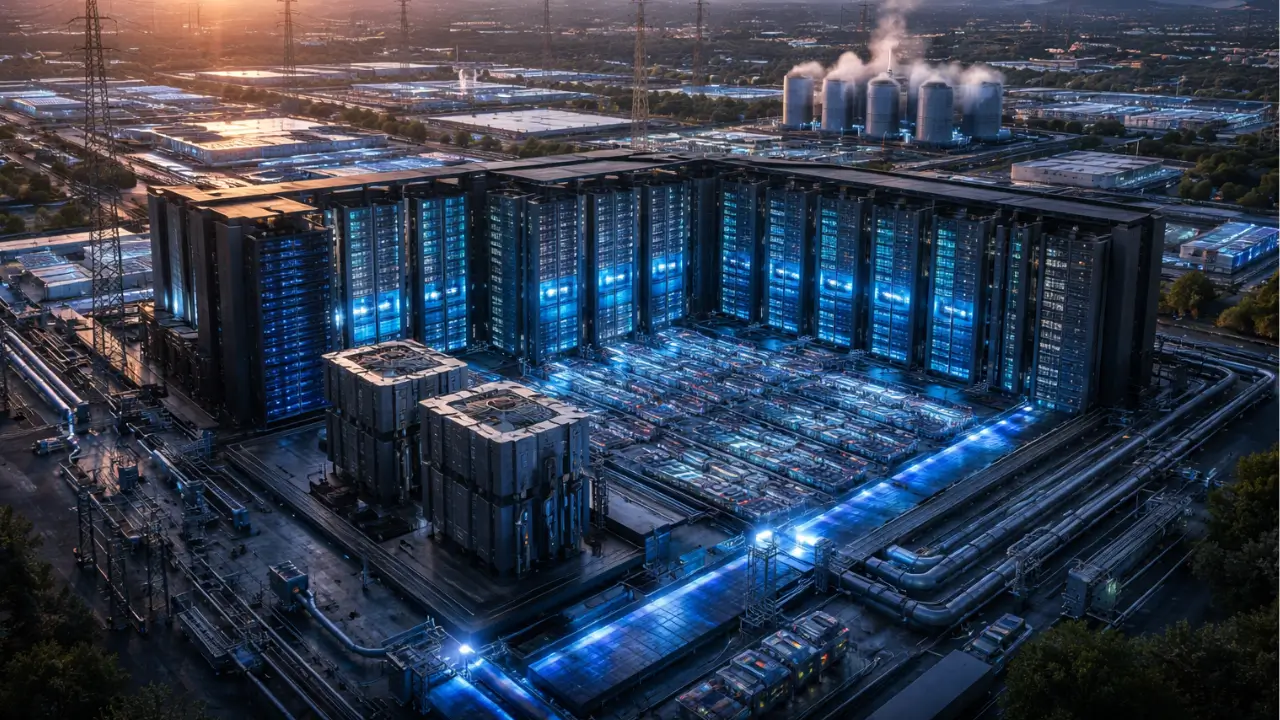
Modern data centers no longer expand according to digital demand alone. Physical limits of data center growth increasingly shape decisions across infrastructure, policy, and capital allocation. Industry leaders now confront constraints rooted in power delivery, land availability, grid stability, and thermal physics. Strategic planning therefore shifts from abstract capacity forecasts toward tangible environmental and infrastructural realities. Architectural ambition often collides with physical boundaries that engineering cannot easily overcome. Global expansion thus reflects not only technological progress but also the immutable conditions governing physical systems.
The acceleration of artificial intelligence workloads has intensified pressure on digital infrastructure ecosystems. Hyperscale developers increasingly treat power access as the primary determinant of site feasibility. Land acquisition strategies have also evolved as zoning conflicts and community resistance reshape development pathways. Cooling design has emerged as a central factor influencing both operational efficiency and spatial layout. Grid interconnection processes now determine project timelines more decisively than construction schedules. Industry narratives therefore increasingly frame data centers as physical megastructures rather than virtual platforms.
Power Density as a Structural Constraint
Power density has become a defining variable in contemporary data center design. Operators confront escalating computational intensity that concentrates energy demand within limited spatial footprints. Engineering teams must therefore reconcile performance expectations with electrical and thermal realities. Infrastructure planning increasingly prioritizes electrical architecture before architectural aesthetics or site layout. Design philosophies have shifted toward vertical stacking of compute resources rather than horizontal sprawl. Operational resilience now depends on balancing density ambitions with systemic stability.
The rise of accelerated computing architectures has transformed the relationship between hardware and facility design. Graphics processing units and specialized accelerators generate heat profiles that traditional systems cannot dissipate efficiently.Thermal management thus becomes a foundational design principle rather than an auxiliary consideration.Facility planners increasingly integrate cooling strategies into early-stage electrical planning.
Infrastructure investment decisions now reflect a recognition that density growth cannot proceed without parallel mechanical innovation.Industry discourse consequently emphasizes physical feasibility alongside computational ambition.Power density also reshapes the economic logic of data center development.Higher-density environments reduce spatial requirements but amplify engineering complexity and capital intensity.Developers must weigh the benefits of compact compute clusters against the risks of thermal bottlenecks.Operational margins narrow when density approaches the limits of cooling and power distribution systems.Strategic trade-offs therefore define modern facility planning more than purely technological considerations. Market competition increasingly favors organizations capable of navigating these trade-offs with precision.
Land Constraints and the Geography of Digital Infrastructure
Land availability has emerged as a critical determinant of data center expansion.Urban and suburban regions often offer proximity to users but impose regulatory and spatial limitations. Rural regions provide larger parcels yet frequently lack sufficient grid infrastructure or connectivity.Developers must therefore negotiate a complex matrix of geographic, regulatory, and infrastructural factors.Real estate considerations increasingly influence digital infrastructure strategies at a global scale.Physical geography thus becomes inseparable from digital architecture in contemporary planning.
Zoning regulations frequently complicate large-scale infrastructure projects.Local governments and communities often resist facilities perceived as resource-intensive and socially detached.Political negotiations therefore shape project timelines and site selection decisions. Environmental concerns also affect permitting processes and land-use approvals.Developers must balance community engagement with technical requirements to secure viable locations. Industry stakeholders consequently treat land acquisition as a strategic discipline rather than a logistical step.
Geospatial analysis increasingly reveals that suitable land for hyperscale development is more limited than assumed.Infrastructure feasibility depends on proximity to power grids, favorable climate conditions, and permissive land-use policies.Urban saturation further constrains expansion in established digital corridors.Emerging research suggests that physical feasibility envelopes may contract as infrastructure demand intensifies.Strategic planning thus increasingly acknowledges that digital growth must align with finite geographic resources. Spatial constraints therefore redefine long-term expansion narratives across the industry.
Grid Saturation and the Politics of Electricity
Electricity grids have become a central arena of competition among data center operators. Grid saturation increasingly determines whether projects proceed, stall, or relocate.Utilities often struggle to accommodate rapid growth in demand from hyperscale facilities.Interconnection queues and regulatory processes therefore shape development timelines.Power availability now functions as a strategic asset rather than a basic utility.Industry participants increasingly engage directly with utilities and policymakers to secure capacity.
Developers increasingly adopt a power-first approach to site selection.Electrical infrastructure commitments often precede land acquisition and architectural design.This inversion of traditional development logic reflects the scarcity of grid capacity in key markets.Private substations and dedicated transmission partnerships have become common strategic tools. Energy infrastructure investment thus blurs the boundary between digital and utility sectors. Market competition increasingly rewards organizations capable of integrating power strategy with facility design.
Grid saturation also introduces geopolitical dimensions into data center planning.National energy policies influence where digital infrastructure can expand.Regional disparities in power generation shape global distribution of compute capacity.Strategic competition among regions therefore reflects underlying differences in energy systems.Infrastructure decisions increasingly intersect with national economic and security priorities.The digital economy consequently becomes inseparable from the physical architecture of electricity networks.
Cooling Ceilings and the Physics of Heat
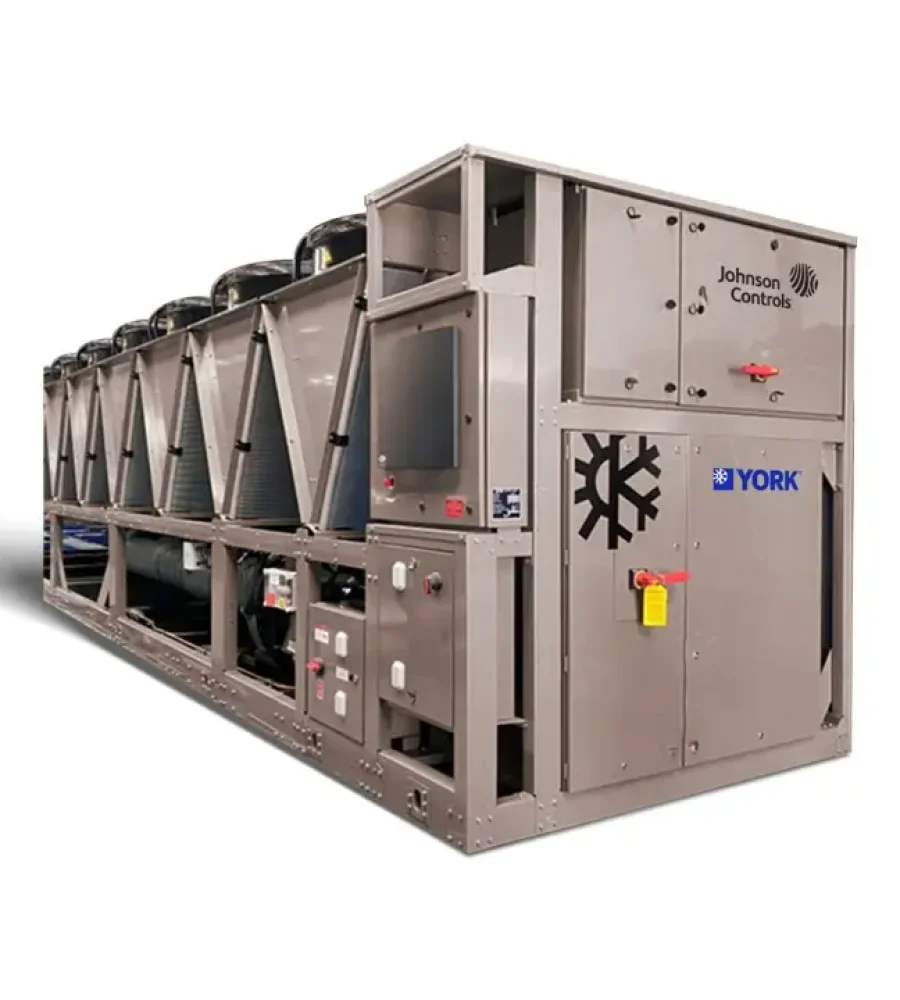
Cooling systems represent one of the most intractable constraints facing modern data centers. Heat dissipation challenges intensify as computational density increases. Traditional air-cooling architectures struggle to manage thermal loads associated with advanced workloads. Engineering teams increasingly explore liquid-based solutions to address these limitations. Thermal physics therefore shapes facility design more profoundly than aesthetic or organizational considerations. Industry discourse increasingly frames cooling as a strategic capability rather than an operational necessity.
Cooling limitations also influence spatial design and equipment layout. Facilities often require expanded footprints or distributed architectures to manage heat effectively. These spatial adjustments increase land requirements and complicate site planning. Mechanical infrastructure increasingly occupies a significant portion of facility volume. Design trade-offs therefore emerge between compute density and thermal manageability. Operational strategies increasingly prioritize thermal resilience alongside computational performance.
The relationship between cooling and power consumption further complicates infrastructure planning. Cooling systems draw substantial energy from the same grids that power compute workloads. Efficiency gains in cooling therefore directly affect overall power availability. Engineering innovations attempt to treat cooling as an integrated component of energy systems rather than a separate layer. This conceptual shift reflects recognition that heat management defines the boundaries of digital expansion. Physical laws thus impose ceilings that technological ambition cannot easily transcend.
Vertical Scaling and Architectural Innovation
As horizontal expansion encounters limits, vertical scaling emerges as a key strategy.Stacked server architectures allow facilities to increase computational capacity without enlarging the site footprint.Engineering teams must integrate power distribution, cooling, and structural load considerations into vertical designs.Structural ceilings, seismic codes, and mechanical support frameworks often dictate the maximum achievable height.Design trade-offs therefore involve a balance between capacity ambitions and safety constraints.Industry leaders increasingly treat vertical scaling as a specialized engineering discipline rather than a routine architectural choice.
Vertical scaling also drives innovation in modular infrastructure.Prefabricated racks and containerized compute units streamline deployment while mitigating thermal and electrical bottlenecks.This approach allows operators to optimize energy efficiency at the module level. Integration of liquid cooling within modular units further improves heat dissipation in high-density environments.Operational flexibility is enhanced because individual modules can be upgraded without affecting the larger facility.The market increasingly rewards companies capable of implementing modular vertical solutions at scale.
Environmental and Regulatory Pressures
Data center growth faces mounting environmental scrutiny across multiple jurisdictions. Regulators increasingly require rigorous assessments of water use, energy sourcing, and emissions.Thermal pollution from cooling processes has attracted attention in regions with limited water resources.Sustainability initiatives have led operators to invest in renewable energy partnerships and carbon mitigation measures.
Compliance now shapes not only site selection but also architectural and mechanical engineering decisions.Industry stakeholders must navigate a complex landscape of environmental regulations alongside traditional operational priorities.
Environmental pressures also influence operational flexibility.Utility limitations and emissions caps often dictate the intensity of workloads that a facility can sustain.This dynamic encourages distributed computing models that alleviate local environmental stress.Developers increasingly explore hybrid solutions that combine on-premises, colocation, and hyperscale facilities. Operational planning now integrates environmental risk as a core factor rather than a peripheral concern. Sustainability considerations therefore function as both regulatory requirement and strategic differentiator.
Supply Chain Dependencies and Material Constraints
Material availability has emerged as a subtle but critical growth constraint. High-specification electrical components, advanced cooling systems, and structural materials are subject to global supply pressures. Lead times and sourcing complexity influence project feasibility and timelines. Operators increasingly engage in proactive supply chain management to mitigate risks of delays or shortages. Engineering teams must adapt designs to reflect both availability and reliability of critical components. Infrastructure planning thus extends beyond the physical site to encompass global procurement networks.
Material constraints also intersect with technological evolution. Rapid iteration in server and accelerator technology necessitates adaptable mechanical and electrical designs. Facilities must be capable of integrating emerging components without extensive retrofitting. This adaptability requires foresight in structural design, modular integration, and power distribution. Failure to plan for supply chain variability can compromise both operational efficiency and expansion timelines. Industry leaders increasingly recognize procurement strategy as inseparable from long-term facility resilience.
Network Connectivity as a Limiting Factor
Connectivity infrastructure directly influences where and how data centers can expand. High-bandwidth fiber availability, low-latency routing, and interconnection points shape digital ecosystem strategy. Proximity to existing network hubs often supersedes other site selection criteria. Operators must consider both terrestrial and subsea fiber infrastructure in long-term planning.
Redundancy requirements also impose physical and financial constraints on network architecture. Strategic decisions in networking thus define both operational capability and geographic feasibility.
Network dependency interacts with power and cooling limits to create compound constraints. A high-density facility near robust energy and fiber infrastructure offers maximum operational flexibility. Conversely, isolated locations even with available land, often cannot support modern workloads due to connectivity limitations. Interconnection strategies increasingly involve multi-operator collaboration to access critical bandwidth. Network strategy therefore emerges as a coequal consideration alongside physical and environmental factors. Connectivity constraints influence both market competitiveness and long-term scalability.
Operational Risk and Resilience Considerations
Operational risk now defines limits as much as physical infrastructure. Facilities must accommodate redundancy in power, cooling, and network connectivity to maintain uptime. The margin for error shrinks as density and operational complexity increase. Designs often incorporate multiple independent feeds, backup generators, and advanced monitoring systems. Planning must consider both probabilistic failure scenarios and deterministic constraints imposed by physics. Industry discourse increasingly frames resilience as a governing principle rather than an auxiliary objective.
Risk assessment extends to supply chains, environmental factors, and regulatory compliance. Operators implement predictive maintenance, real-time monitoring, and automated control systems to mitigate threats. Failure to integrate these systems can limit effective growth and operational scalability. Decision-making now balances growth ambition against the probability and impact of operational disruption.Strategic advantage derives from both technical innovation and comprehensive risk management.
Advanced Cooling Architectures and Innovations
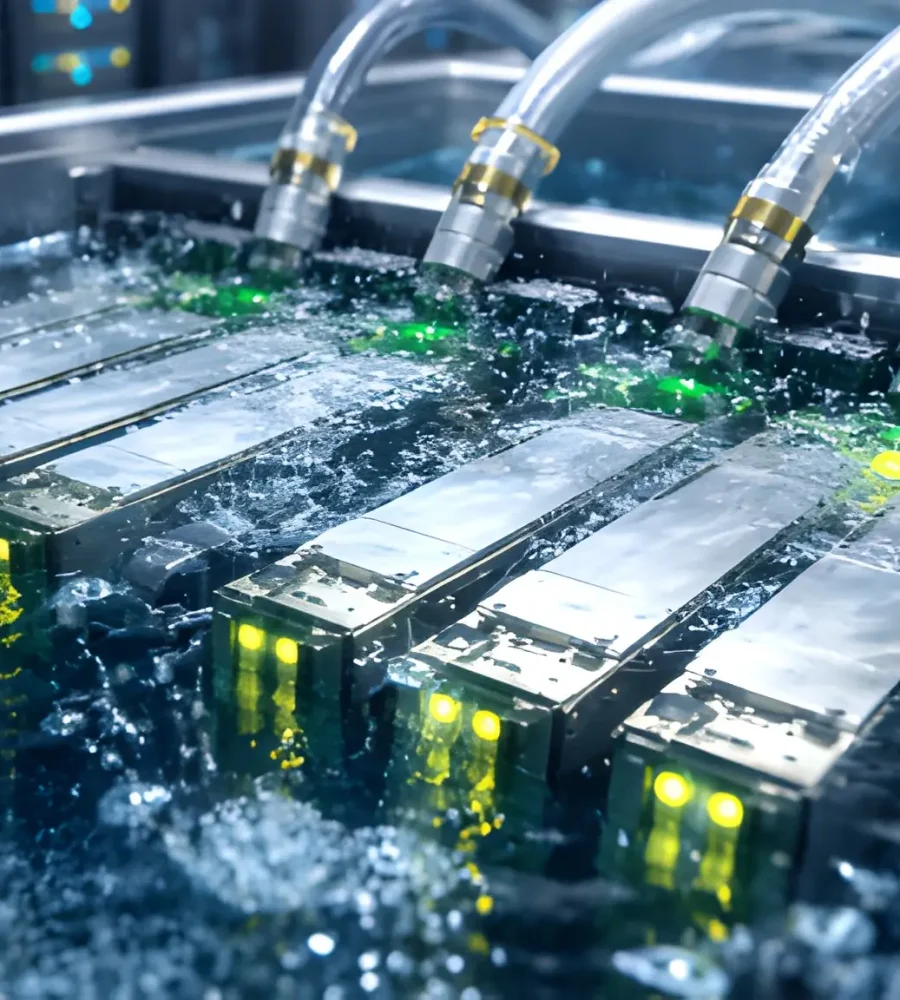
Emerging cooling technologies increasingly define the frontier of physical growth limits. Direct-to-chip liquid cooling and immersion cooling techniques allow facilities to manage unprecedented thermal loads. Engineering teams integrate these systems during early-stage design to optimize both efficiency and scalability. Adoption requires rethinking rack layouts, fluid dynamics, and heat exchange pathways. Operational procedures must incorporate maintenance protocols specific to liquid-based solutions. Industry adoption reflects recognition that traditional air-cooling cannot sustain next-generation compute densities.
Innovations also include closed-loop and hybrid cooling approaches that leverage environmental conditions. Ambient air and water-side economization reduce energy consumption while enhancing reliability. Facility location influences the effectiveness of these techniques due to climate and seasonal variation. Integration requires cross-disciplinary collaboration between mechanical, electrical, and architectural engineers.Strategic planning considers cooling innovation as a differentiator in operational efficiency and long-term scalability. Market leaders increasingly view thermal management as a competitive capability rather than a technical necessity.
Interdependencies Among Growth Constraints
Physical limits of data center growth rarely exist in isolation. Power, land, cooling, and grid capacity interact to create complex interdependencies.Increasing power density without sufficient cooling creates operational risk. Limited land availability can hinder redundancy strategies or vertical expansion plans.Grid saturation often dictates where additional capacity can realistically be deployed.Strategic decisions must therefore account for the multidimensional interplay of these constraints.
Operational and environmental factors further compound these interdependencies.Regulatory frameworks may restrict energy sourcing, cooling water access, or emissions, affecting both density and location.Supply chain limitations can prevent timely integration of critical components.Connectivity infrastructure must support high-density workloads to avoid performance bottlenecks.Facilities increasingly adopt integrated planning tools to simulate the combined effects of these variables.Industry discourse emphasizes that long-term scalability depends on balancing these interrelated physical and operational factors.
Future-Proofing Against Physical and Technological Limits
Operators are actively exploring strategies to future-proof facilities against both physical and technological constraints.Modular architectures allow incremental expansion without exceeding land, power, or cooling thresholds.Redundant power and advanced monitoring systems mitigate risk while preserving operational flexibility.Facility designs increasingly incorporate adaptability for emerging compute workloads and accelerated hardware.Collaboration with utilities and regulators ensures capacity planning aligns with evolving energy infrastructure.Strategic foresight now defines competitive advantage in a constrained growth environment.
Emerging predictive tools leverage AI and simulation to anticipate thermal, electrical, and operational stress.Scenario modeling informs site selection, density planning, and cooling integration.Developers also evaluate renewable energy partnerships to decouple growth from grid limitations.Design teams balance the demands of computational performance with resilience and regulatory compliance.Long-term planning incorporates modularity, redundancy, and environmental risk to maintain strategic flexibility.Industry leaders increasingly regard physical limits as parameters for innovation rather than obstacles to growth.
Strategic Implications for C-Level Decision-Making
Physical limits of data center growth increasingly influence boardroom strategy.Executive teams must weigh trade-offs between compute density, energy sourcing, and site feasibility.Investment decisions now incorporate thermal, electrical, and regulatory constraints as primary factors.
Long-term capacity planning requires integration across engineering, operations, and finance functions.C-level leaders are engaging with utility providers, regulators, and community stakeholders early in the development cycle.Operational scalability now hinges on strategic management of physical boundaries rather than solely technological advances.
Decisions regarding vertical expansion, modular deployment, and advanced cooling carry financial and operational consequences.Resilience and redundancy strategies must align with growth objectives without exceeding physical thresholds.Data center portfolios are increasingly diversified across geographies and infrastructure models to mitigate localized constraints.
Strategic planning also accounts for emerging computational workloads, particularly AI and high-performance computing.Physical realities now define competitive differentiation as much as software or hardware capabilities.Executives increasingly frame growth within the context of interconnected operational, environmental, and technological factors.
Market Dynamics Shaped by Physical Boundaries
Physical constraints influence broader market competition among hyperscalers, colocation providers, and enterprise operators.Regions with abundant power, favorable climate, and permissive land-use policies attract disproportionate investment.Grid saturation and land scarcity create competitive pressure to innovate in cooling, modularity, and density management.
Supply chain limitations further affect which operators can scale efficiently and reliably. Financial and operational agility increasingly determines which companies capitalize on constrained expansion environments.Industry analysis emphasizes that physical realities now structure market opportunity as much as demand forecasts.
Investors and policymakers also consider the interplay of physical and regulatory limits when evaluating projects.High-density, energy-intensive facilities may be feasible in one jurisdiction but restricted in another.This divergence creates geospatial disparities in capacity and strategic opportunity.Operators therefore adopt multi-site, multi-regional strategies to balance risk and performance.Market success increasingly depends on integrated management of power, land, grid, and cooling limitations.Strategic foresight now guides capital allocation as much as demand-side forecasting.
Emerging Mitigation Strategies
Operators increasingly adopt hybrid cooling, renewable power integration, and modular deployment to overcome physical constraints. Adaptive energy management allows facilities to dynamically adjust compute workloads based on available power and cooling capacity. Developers also employ predictive maintenance tools to prevent thermal or electrical bottlenecks before they affect operations. Integration of AI-driven resource orchestration enables fine-tuned load balancing across multiple sites.This holistic approach ensures that physical limits do not stifle computational growth or service reliability. Market leaders treat mitigation strategies as essential components of long-term scalability planning.
Supply chain resilience forms a complementary layer of mitigation.Operators maintain diversified sourcing for critical components, including power equipment, cooling systems, and structural materials. Proactive inventory management and strategic vendor partnerships reduce the risk of delays in construction or expansion.Facilities are designed to accommodate both standard and specialized equipment without extensive retrofitting.These approaches provide operational flexibility and ensure that physical or logistical constraints do not derail strategic initiatives. Industry consensus increasingly frames supply chain planning as integral to infrastructure resilience.
Global Comparisons and Regional Constraints
Data center growth patterns vary significantly across regions due to physical and regulatory differences.North America and Northern Europe offer favorable energy infrastructure and cooler climates, supporting high-density deployments.Asia-Pacific markets face land scarcity and grid limitations, prompting innovation in vertical scaling and modular solutions.
Emerging markets encounter both opportunity and constraint, balancing growing demand with limited infrastructure maturity.Regulatory frameworks further influence expansion strategies, particularly in regions with strict environmental or zoning regulations. Global operators increasingly tailor strategies to local physical and policy conditions to maximize efficiency and growth potential.
Regional climate also affects cooling strategy and energy consumption.Cold climates reduce the need for mechanical cooling, allowing higher density without proportional energy increases. Conversely, hot or humid regions require more complex thermal management systems to maintain reliability.Energy sourcing considerations further intersect with local grid stability and renewable availability.Operators balance these variables to optimize capacity while respecting environmental and regulatory constraints.Physical limits therefore vary by geography, shaping investment and operational decisions on a global scale.
Technological Horizons
Emerging technologies promise incremental relief from physical ceilings, though constraints remain substantial.Liquid immersion, photonic interconnects, and advanced chip packaging may reduce heat and power demands per unit of computation.AI-driven energy orchestration and predictive analytics can improve utilization efficiency across dense facilities.
However, no innovation fully eliminates the underlying physics of energy, cooling, or material limitations.Operators must integrate emerging technologies carefully, balancing innovation with proven operational reliability.Strategic adoption defines competitive advantage in markets constrained by physical realities and resource scarcity.
Quantum computing and next-generation accelerators may reshape facility requirements, but they also intensify density and energy challenges.Specialized architectures demand unique cooling, electrical, and structural considerations.Integration of these technologies requires redesigning traditional infrastructure rather than incremental upgrades.Consequently, even advanced compute models remain subject to the same overarching physical constraints. Operators are therefore adopting flexible, modular architectures capable of accommodating future innovations.The strategic alignment of technology adoption with physical realities is now central to long-term planning.
Strategic Foresight and Long-Term Planning
Executives increasingly incorporate physical limits into multi-year infrastructure strategies.
Decisions around site selection, density planning, and technology deployment now involve simulations of energy, cooling, and spatial constraints.Boards assess risk in terms of operational resilience, regulatory compliance, and supply chain reliability.Strategic foresight also integrates geopolitical, environmental, and market dynamics to ensure sustainable expansion.Leadership teams recognize that unchecked ambition may encounter insurmountable physical barriers. Strategic growth therefore prioritizes adaptability, redundancy, and modularity alongside computational performance.
Scenario modeling informs expansion timelines and risk management.Operators test hypothetical conditions to determine optimal density, cooling approaches, and interconnection strategies.Simulations consider grid capacity, ambient conditions, and regulatory limits to guide realistic growth plans.Predictive modeling also helps prioritize investment in emerging technologies without compromising operational integrity. Long-term competitiveness depends on understanding limits as opportunities for strategic design rather than barriers.
The Physical Reality of Growth Limits
Ultimately, the physical limits of data center growth define the contours of modern infrastructure. Power, land, cooling, and grid availability impose non-negotiable constraints that shape strategy, architecture, and operations. Operational resilience, modularity, and technology adoption provide partial mitigation but cannot eliminate foundational restrictions.Executive decision-making now balances ambition with realism, integrating technical, environmental, and policy factors.Global competition rewards operators capable of navigating these limits while maintaining operational efficiency and innovation.The trajectory of digital infrastructure growth will increasingly reflect the physics and geography of available resources.
Physical ceilings also reinforce the importance of integrated planning.Infrastructure teams, executives, and regulators must collaborate to align site design, energy sourcing, and thermal management.Long-term resilience depends on understanding the interplay of interdependent constraints across multiple layers of operations.Even as technologies evolve, the immutable laws of physics define the boundaries within which data centers expand.Strategic foresight, adaptability, and engineering innovation determine which operators can thrive within these limits.Ultimately, modern data center growth is a careful negotiation between ambition and physical reality.