 Skip to content
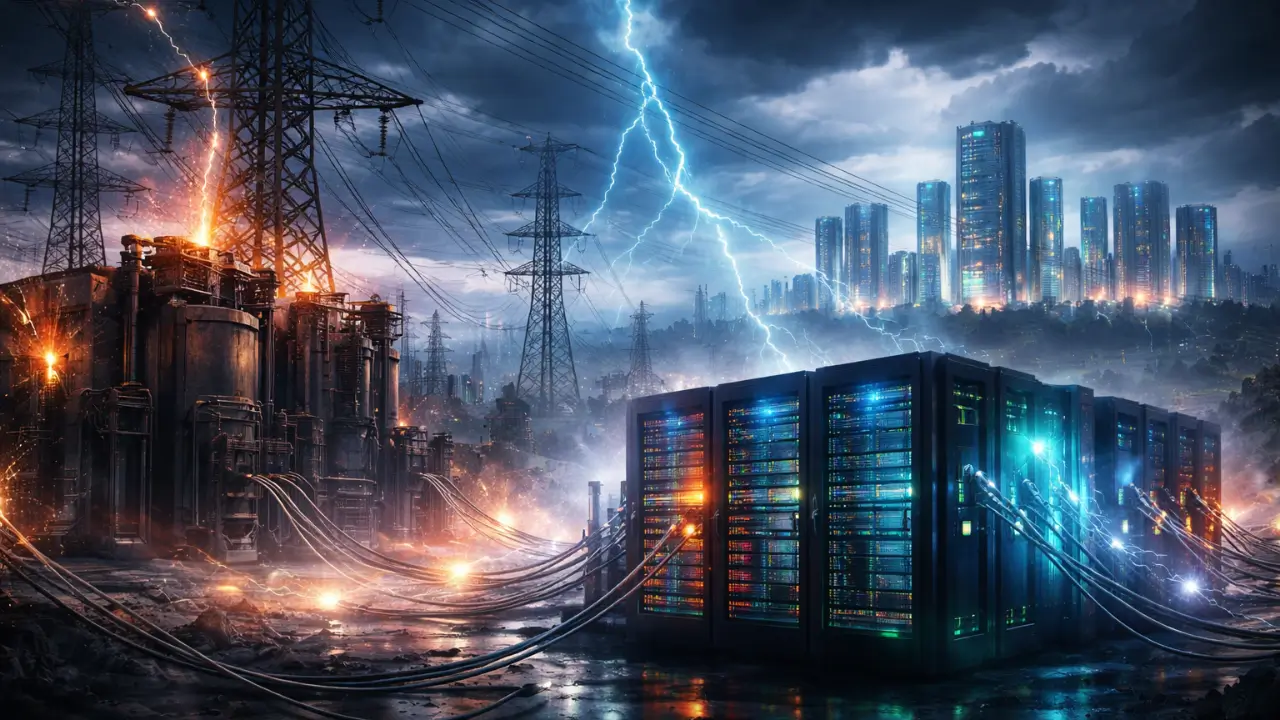
The first time an AI workload failed because of power instability, the incident looked like a technical anomaly rather than a structural warning. Engineers traced the disruption to a localized grid fluctuation that should not have impacted a facility designed for redundancy and uptime. Decision-makers initially treated the event as an isolated operational issue rather than a symptom of deeper infrastructural stress. Over time, similar incidents began to surface across regions that had previously marketed themselves as energy-secure digital hubs. Each disruption carried financial consequences, reputational risk, and strategic uncertainty that exceeded the scale of traditional IT outages. Slowly, a realization emerged that AI systems were not merely consuming electricity but testing the limits of aging power grids and AI infrastructure built decades earlier. The story of AI expansion has therefore become inseparable from the story of these networks struggling to keep pace with unprecedented computational demand.

Legacy Grid Architecture Under AI Pressure
Modern power grids were designed around predictable industrial cycles that followed stable production schedules and seasonal demand patterns. Engineers optimized transmission and distribution networks for factories, residential clusters, and commercial zones that consumed electricity in relatively linear and forecastable ways. AI infrastructure disrupts this logic because compute-intensive workloads generate highly concentrated and continuous power demand that rarely aligns with historical grid assumptions. Traditional grid architecture prioritizes reliability within known load boundaries, whereas AI workloads constantly push those boundaries outward without warning. Legacy systems also depend on incremental upgrades that occur through regulatory approvals and multi-year investment cycles rather than rapid technological shifts. As AI deployments accelerate, they connect to a grid that never anticipated such dense and elastic consumption, which creates a structural mismatch between design intent and operational reality.
AI Demand Exposes Structural Grid Limits
AI workloads amplify every inefficiency within the grid because they operate at extreme density and demand uninterrupted power delivery. Unlike manufacturing or commercial sectors, AI systems cannot tolerate voltage instability or micro-interruptions without risking cascading computational failures. The load profile of AI infrastructure often resembles a vertical spike rather than a gradual curve, which challenges the balancing mechanisms that grid operators rely on for stability. When power networks face even minor bottlenecks, AI facilities magnify the impact because they aggregate consumption within tightly concentrated geographic zones. Grid operators historically optimized for diversity of load across sectors, but AI infrastructure concentrates demand in ways that reduce that diversity. As a result, AI deployments function as stress tests that reveal weaknesses which remained hidden under traditional consumption patterns.
Deferred Upgrades, Deferred Ambitions
For decades, many regions postponed grid modernization because existing systems appeared adequate for incremental growth in electricity consumption. Policymakers prioritized short-term cost control over long-term infrastructure renewal, which created a widening gap between grid capability and emerging technological requirements. Utilities often delayed large-scale upgrades because regulatory frameworks discouraged aggressive capital expenditure without guaranteed returns. Meanwhile, digital infrastructure expanded faster than physical infrastructure, which produced an imbalance that remained invisible until AI workloads began to scale aggressively. Each postponed investment now translates into constrained capacity, longer upgrade timelines, and rising costs for integrating new power-intensive facilities. AI ambitions therefore collide with historical decisions that treated grid modernization as optional rather than strategic, which reframes infrastructure planning as a core determinant of technological competitiveness.

The process of connecting large power consumers to the grid has become one of the most critical bottlenecks in AI infrastructure deployment. Interconnection queues have expanded dramatically because transmission networks lack spare capacity and regulatory processes move slower than technological innovation. Developers often secure land, capital, and equipment long before they receive permission to draw power at scale, which disrupts project timelines and financial models. Power may exist within regional generation portfolios, yet physical and regulatory barriers prevent AI facilities from accessing it efficiently. Grid operators must evaluate system stability, transmission constraints, and upgrade requirements before approving connections, which creates multi-year delays in many markets. AI growth therefore depends not only on electricity generation but also on the ability of grid institutions to accelerate interconnection frameworks without compromising system stability.
The Resilience Deficit in Power Networks
Grid reliability metrics traditionally measure outage frequency and duration across broad consumer categories rather than high-density digital infrastructure. AI systems require a level of resilience that extends beyond conventional reliability benchmarks because even brief disruptions can derail large-scale computational processes. Aging grids struggle to provide this level of resilience because their architecture prioritizes redundancy within legacy operational models rather than dynamic adaptation to concentrated loads. Climate volatility, cyber threats, and equipment degradation further amplify the gap between expected reliability and actual resilience. Operators increasingly recognize that meeting historical reliability standards does not ensure the operational continuity that AI infrastructure demands. This divergence forces stakeholders to rethink how resilience should be defined, measured, and engineered in an era where digital systems depend on uninterrupted power flows.
Who Bears the Cost of Grid Aging?
The financial burden of modernizing aging grids has become a contested issue among utilities, digital infrastructure operators, and public institutions. Utilities argue that accelerated upgrades require regulatory approval and rate adjustments that must balance consumer affordability with infrastructure investment. Digital infrastructure operators expect reliable power access as a foundational service, yet they resist absorbing the full cost of systemic grid upgrades that extend beyond their facilities. Governments face political pressure to support modernization without inflating public debt or electricity tariffs, which complicates funding strategies. Each stakeholder approaches the problem from a different economic logic, which slows consensus on financing mechanisms and implementation priorities. The resulting tension shapes the pace of grid modernization and influences where AI infrastructure can realistically expand within existing political and economic constraints.
AI infrastructure developers increasingly deploy on-site generation, microgrids, and private transmission solutions to bypass grid limitations. These measures initially served as temporary workarounds designed to bridge the gap between project timelines and grid readiness. Over time, stopgap solutions have evolved into permanent components of AI infrastructure architecture because grid upgrades fail to keep pace with demand. On-site power systems introduce operational complexity and capital intensity, yet they provide predictability in an uncertain energy landscape. The proliferation of private energy solutions signals that confidence in public grid expansion has weakened among infrastructure planners. AI ecosystems therefore evolve toward hybrid power models that blur the boundary between public utilities and private energy networks.
Grid Constraints Are Reshaping AI Geography
The spatial distribution of AI infrastructure increasingly reflects grid capacity rather than traditional economic or geographic advantages. Regions with abundant fiber connectivity and skilled talent often fail to attract AI projects because their power networks cannot support sustained high-density loads. Conversely, areas with surplus generation capacity gain strategic relevance even when they lack mature digital ecosystems or logistical advantages. This shift alters long-standing assumptions about digital infrastructure clustering and regional competitiveness. Grid readiness now functions as a gating factor that determines whether ambitious AI projects move from planning to execution. The geography of AI therefore evolves according to electrical feasibility rather than digital ambition, which marks a structural transformation in how infrastructure strategy is formulated.
Historically, limitations in compute hardware constrained AI development more than physical infrastructure limitations. Advances in semiconductor design, packaging, and cooling have gradually alleviated compute bottlenecks, enabling unprecedented performance scaling. Transmission networks, however, have not experienced equivalent acceleration because their expansion depends on regulatory approvals, land acquisition, and long-term capital planning. When AI facilities request multi-hundred-megawatt connections, transmission lines often lack the capacity to deliver power without extensive upgrades. These constraints shift the locus of innovation barriers from silicon engineering to grid engineering, which fundamentally alters the risk profile of AI investments. Transmission bottlenecks therefore emerge as the new frontier where technological progress collides with physical infrastructure limits.
Asynchronous AI and Grid Evolution
AI innovation follows exponential trajectories driven by rapid algorithmic improvements, hardware iteration cycles, and market competition. Grid development, by contrast, follows linear timelines shaped by regulatory processes, engineering complexity, and capital allocation cycles. This temporal mismatch creates a widening gap between what AI systems can achieve and what power infrastructure can support. Organizations planning AI expansion must therefore operate across two fundamentally different time horizons, which complicates strategic forecasting and investment decisions. Delays in grid upgrades propagate uncertainty across the AI value chain because power availability influences site selection, deployment schedules, and financial modeling. The acceleration of AI thus exposes the structural rigidity of grid development processes that evolved under slower technological paradigms.
Grid Aging in a Climate-Constrained World
Aging grids interact with environmental policies in ways that complicate AI infrastructure expansion. Many regions pursue aggressive decarbonization targets that prioritize renewable integration, which introduces variability into power supply dynamics. Legacy grids often lack the flexibility to accommodate both renewable intermittency and AI’s constant high-load demand without substantial upgrades. Environmental permitting processes further extend timelines for transmission expansion and new generation capacity, which compounds interconnection delays. AI infrastructure planners must therefore navigate a multi-layered constraint landscape where environmental goals and grid limitations intersect. The resulting complexity reshapes the strategic calculus of AI deployment, making sustainability and grid modernization inseparable dimensions of infrastructure planning.
National AI strategies increasingly depend on power infrastructure resilience rather than purely technological capability. Countries that invested early in grid modernization now possess structural advantages in hosting large-scale AI ecosystems. Power infrastructure capacity and grid modernization levels increasingly influence where large-scale AI infrastructure can be deployed, as documented by energy agencies and industry research showing that transmission constraints, interconnection delays, and grid congestion already affect data center site selection, project timelines, and regional investment flows. While AI competitiveness depends on multiple factors including talent, capital, and semiconductor supply chains, empirical evidence indicates that electricity availability has become a measurable operational constraint in several advanced and emerging economies, thereby shaping the geographic distribution and pace of AI infrastructure expansion rather than directly determining national AI leadership outcomes.
Power Volatility Drives Strategic Shifts
Organizations planning AI deployments increasingly integrate power availability into core decision-making processes rather than treating it as an operational detail. Strategic teams evaluate potential sites through multidimensional frameworks that include grid capacity, upgrade timelines, regulatory risk, and resilience metrics. This shift alters organizational hierarchies because energy strategy becomes a central component of digital transformation planning. Technical teams collaborate more closely with energy specialists, policymakers, and financial analysts to navigate complex infrastructure constraints. Power uncertainty therefore transforms organizational structures and decision-making cultures within enterprises pursuing AI-driven growth. The internal dynamics of AI adoption increasingly reflect the realities of energy infrastructure rather than purely technological considerations.
Grid technology innovation exists, yet it encounters structural barriers that slow its deployment at scale. Advanced transmission systems, digital grid management tools, and flexible storage solutions offer technical pathways to address aging infrastructure. However, these innovations require coordinated investment, regulatory adaptation, and institutional alignment that often progress slower than technological breakthroughs. The fragmentation of ownership across utilities, regulators, and private stakeholders complicates the implementation of systemic upgrades. Innovation therefore remains unevenly distributed across regions, which exacerbates disparities in AI infrastructure readiness. The gap between available grid technologies and their real-world deployment underscores the systemic nature of the challenge facing AI expansion.
AI Infrastructure Is Becoming a Catalyst for Grid Transformation
AI infrastructure does not merely consume electricity but also catalyzes broader transformation within power systems. Large-scale AI deployments force utilities to rethink capacity planning, load forecasting, and investment priorities in ways that traditional demand growth never required. The presence of AI facilities accelerates conversations about transmission expansion, distributed energy resources, and digital grid management. Utilities increasingly view AI-driven demand as both a risk and an opportunity that could justify long-overdue modernization initiatives. This catalytic effect reframes AI infrastructure as an agent of structural change within the energy sector rather than a passive consumer of power. The evolution of power grids therefore becomes intertwined with the evolution of AI ecosystems across economic and technological domains.
The Economic Cost of Grid Friction in AI Expansion
Grid friction introduces economic costs that extend far beyond delayed project timelines and higher capital expenditure. AI infrastructure projects must account for opportunity costs when delayed deployments postpone revenue generation and strategic market positioning. Supply chains experience inefficiencies because equipment procurement often precedes power availability, which creates idle assets and logistical complexity. Regional economies lose potential investment inflows when power constraints force AI projects to relocate or scale down their ambitions. Financial forecasting becomes less reliable because grid uncertainty disrupts long-term planning assumptions that underpin large-scale digital investments. The economic impact of grid friction therefore ripples across corporate balance sheets, regional development strategies, and national innovation ecosystems in ways that traditional infrastructure analysis often underestimates.
Infrastructure Culture Evolves
Engineering communities increasingly recognize that AI infrastructure requires a fundamentally different approach to power system design and management. Traditional engineering cultures emphasize incremental optimization within stable operating parameters, whereas AI-driven demand demands continuous adaptation and proactive capacity planning. Collaboration between electrical engineers, data center architects, and AI system designers has intensified because power constraints now shape technical architecture decisions. Educational institutions and professional organizations respond by integrating digital infrastructure considerations into power engineering curricula and research agendas. This cultural shift reflects a broader recognition that power systems and digital systems can no longer evolve independently in modern technological ecosystems. The convergence of engineering disciplines therefore becomes both a necessity and a catalyst for innovation in infrastructure design.
Emerging markets occupy a complex position in the relationship between aging grids and AI expansion. Many developing regions possess younger grids than advanced economies, yet they often lack the scale, resilience, and regulatory sophistication required to support high-density AI infrastructure. At the same time, these regions attract interest because they offer opportunities to build AI-ready infrastructure without legacy constraints that burden older systems. Governments in emerging markets face strategic decisions about whether to prioritize grid modernization as a foundation for digital competitiveness. International investors evaluate these markets through dual lenses of growth potential and infrastructure risk, which creates uneven patterns of AI investment. The evolving role of emerging markets therefore illustrates how grid readiness shapes global inequality in AI development and technological capacity.
Data Center Architecture Is Adapting to Grid Realities
Data center architecture increasingly reflects the realities of constrained and aging power grids rather than purely computational optimization goals. Designers integrate advanced energy management systems, modular power architectures, and flexible load distribution mechanisms to mitigate grid volatility. Facility layouts incorporate redundancy strategies that account for grid instability, which reshapes spatial planning and equipment placement within AI facilities. Cooling systems, power distribution units, and backup mechanisms now align with energy availability constraints rather than standardized design templates. Architectural innovation therefore emerges as a response to infrastructural limitations rather than a purely technological ambition. The evolution of data center design demonstrates how grid conditions exert tangible influence on the physical manifestation of AI infrastructure.
Infrastructure uncertainty introduces psychological effects that influence strategic decision-making within organizations pursuing AI initiatives. Leaders must navigate ambiguity regarding power availability, regulatory approvals, and upgrade timelines, which complicates risk assessment and strategic prioritization. Teams often experience tension between technological ambition and infrastructural feasibility, which shapes organizational narratives around innovation and constraint. This psychological dimension influences how organizations communicate internally and externally about AI projects, investment commitments, and long-term visions. Decision-makers increasingly frame power infrastructure as a strategic variable rather than a technical dependency, which alters organizational perception of risk and opportunity. The psychological impact of grid uncertainty therefore becomes an underexplored factor in the broader discourse on AI expansion and infrastructure planning.
Grid Aging: Long-Term Implications
Ignoring grid aging produces long-term structural consequences that extend beyond immediate operational challenges in AI infrastructure. Persistent underinvestment in grid modernization entrenches regional disparities in digital capability because power constraints limit technological adoption and innovation. Infrastructure gaps compound over time because delayed upgrades increase the cost and complexity of future interventions. Societies risk creating a dual-speed digital economy where regions with modern grids accelerate technologically while others stagnate under infrastructural limitations. This divergence undermines national cohesion and global competitiveness because digital infrastructure increasingly underpins economic productivity and strategic influence. The long-term consequences of grid neglect therefore reshape not only AI ecosystems but also broader patterns of economic development and technological inequality.
AI’s Growth Curve Is Now Tied to Grid Reinvention
AI expansion no longer depends solely on breakthroughs in algorithms, hardware, or cooling technologies because power infrastructure now defines the boundaries of feasible growth. Aging grids have transitioned from background utilities to strategic determinants that influence where AI systems operate and how they scale. The mismatch between exponential AI innovation and linear grid development timelines creates systemic tension that reshapes investment decisions, regulatory frameworks, and national strategies.
Organizations, governments, and utilities must therefore confront the reality that grid modernization represents a prerequisite for sustainable AI growth rather than an optional infrastructure upgrade. The future trajectory of AI infrastructure will increasingly reflect the pace, scale, and ambition of grid reinvention across regions and institutions. Until power systems evolve with the same urgency as AI ambition, aging grids will continue to function as the silent force that shapes the limits of digital transformation and technological progress.












