 Skip to content
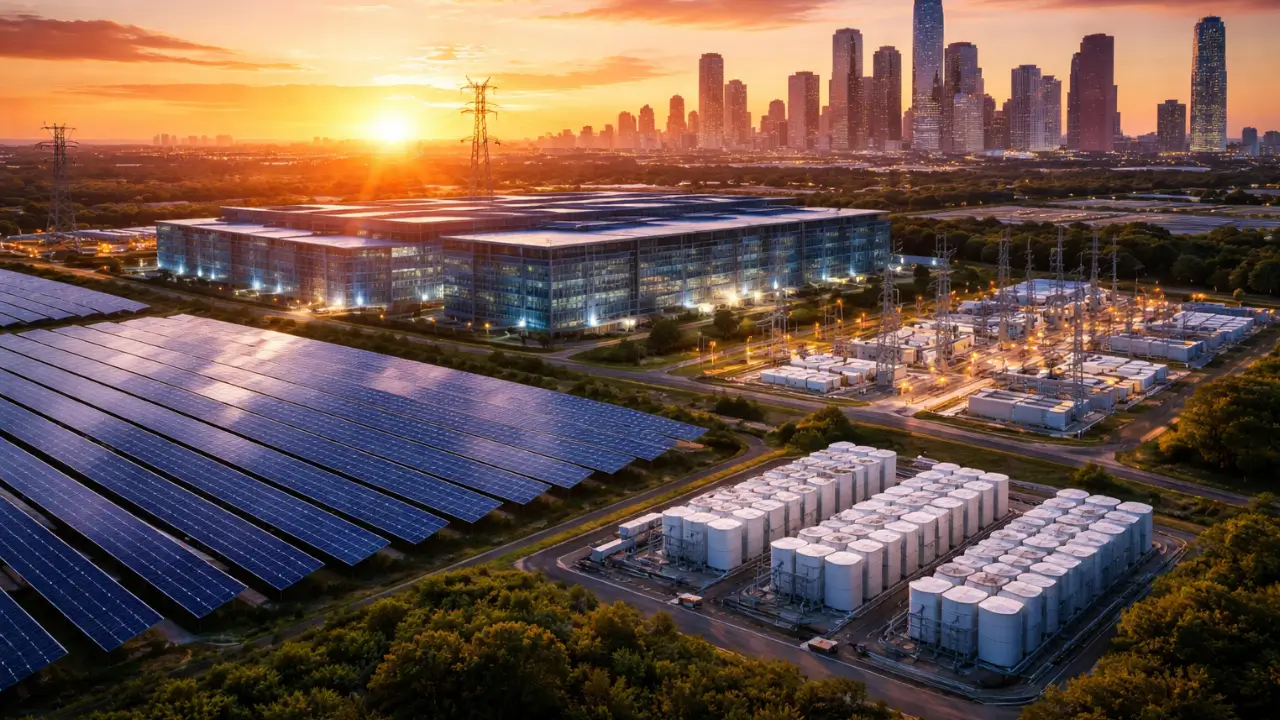
The digital world did not stall because of algorithms, silicon shortages, or real estate scarcity. It slowed because electrons could not arrive fast enough. Across the United States, data center expansion has entered a phase where energy availability dictates growth trajectories more than land acquisition, capital expenditure, or architectural innovation. This shift marks a fundamental change in how digital infrastructure interacts with physical systems, because compute demand now collides directly with grid limitations rather than market opportunities. The story of data center growth therefore unfolds not as a tale of technological ambition but as a narrative of power economics reshaping industrial geography. Every megawatt secured today represents not just operational capacity but strategic leverage in an increasingly constrained energy environment. The grid has become the silent arbiter of digital expansion, determining which regions accelerate and which stagnate under structural limits.

When Power Replaced Land as the Primary Constraint
For decades, land availability determined where data centers emerged, because real estate prices and zoning approvals shaped development decisions. Today, energy access defines feasibility, because grid interconnection queues extend years beyond construction timelines and transmission upgrades face regulatory friction. Developers once evaluated parcels based on proximity to fiber routes and urban markets, yet they now assess grid topology, substation capacity, and transmission congestion before considering geography. This transformation reflects a deeper shift in infrastructure logic, because digital workloads require stable, scalable power that traditional grids cannot deliver at hyperscale speed. The result has been a widening gap between compute ambition and electrical reality, where data center projects exist on paper long before electrons reach the site. Land remains abundant in many regions, but usable power has become scarce, expensive, and politically negotiated.
The interconnection process itself has become a bottleneck that reshapes timelines and capital allocation decisions across the industry. Grid operators must evaluate thousands of megawatts of proposed load while balancing reliability standards, environmental mandates, and regional planning constraints. Each interconnection request triggers complex studies that assess voltage stability, thermal limits, and contingency scenarios across interconnected networks. These studies often reveal that accommodating new data center load requires transmission upgrades costing hundreds of millions of dollars, which delays projects and alters site selection strategies. As a result, power access now functions as a gating mechanism that filters which digital infrastructure projects proceed and which remain aspirational. The shift from land scarcity to power scarcity therefore signals a structural transformation rather than a temporary market cycle.
The Shift from Infrastructure Engineering to Energy Strategy
Data center expansion once revolved around engineering efficiency, where cooling systems, rack density, and building design drove competitive advantage. Today, energy strategy defines success, because long-term power contracts, grid partnerships, and generation portfolios determine whether facilities can operate at scale. Organizations increasingly treat energy procurement as a strategic discipline rather than a procurement function, because power decisions influence risk exposure, cost stability, and geographic flexibility. This evolution reflects the reality that compute demand grows exponentially while grid expansion progresses incrementally under regulatory oversight. Energy strategy therefore becomes a form of infrastructure architecture, shaping not only operational performance but also regional development patterns. Digital infrastructure no longer sits atop the energy system as a passive consumer but interacts with it as a co-evolving force.

Long-term power planning now requires engagement with multiple layers of the energy ecosystem, including transmission authorities, renewable developers, storage providers, and regulatory agencies. Each layer introduces uncertainties related to permitting timelines, policy shifts, and market volatility, which data center stakeholders must integrate into their expansion models. Traditional engineering metrics such as power usage effectiveness no longer capture the full complexity of infrastructure decisions, because energy availability depends on macroeconomic, political, and environmental variables. The industry therefore faces a new planning horizon where power economics dictate architectural decisions long before ground-breaking begins. This shift marks a departure from purely technical optimization toward systemic coordination between digital and energy infrastructure. As compute demand accelerates, energy strategy becomes not a supporting function but the core determinant of scalability.
Hyperscalers vs. the Grid: A Structural Mismatch
The pace of AI-driven compute growth far exceeds the expansion rate of electricity grids, creating structural friction between digital demand and physical supply. Hyperscale workloads require rapid capacity additions measured in gigawatts, yet grid expansion unfolds through decade-long planning cycles governed by regulatory approval and public consultation. This mismatch arises because electricity grids evolved to serve predictable industrial and residential loads, not the volatile, concentrated demand patterns of modern data centers. As AI models scale in size and complexity, compute demand surges unpredictably, forcing grids to confront load profiles they were never designed to support. The resulting tension manifests in delayed projects, escalating interconnection costs, and regional power constraints that reshape digital infrastructure geography.
Grid fragmentation further amplifies this mismatch, because the United States operates through multiple regional transmission organizations with distinct rules, market structures, and planning methodologies. Each region interprets reliability standards differently, which leads to uneven capacity availability and inconsistent interconnection timelines. Data center expansion therefore becomes a negotiation with multiple regulatory regimes rather than a uniform national strategy. The fragmentation also limits the ability to shift load across regions, because transmission corridors lack the capacity to redistribute power at hyperscale levels. Consequently, digital infrastructure growth increasingly clusters around regions with favorable grid conditions rather than purely economic or demographic factors. This structural mismatch thus transforms grid governance into a central variable in digital infrastructure planning.
Energy Certainty as the New Competitive Advantage
In an environment where power availability determines feasibility, energy certainty emerges as the most valuable asset in data center strategy. Predictable access to electricity reduces exposure to interconnection delays, price volatility, and regulatory uncertainty, which collectively threaten project viability. Organizations therefore prioritize long-term power agreements, diversified generation portfolios, and grid resilience over traditional metrics such as location proximity or construction speed. Energy certainty also enables strategic forecasting, because stable power supply allows planners to align compute expansion with market demand rather than grid constraints. This shift reflects a broader transformation in infrastructure economics, where reliability and control outweigh speed and scale as determinants of competitive advantage.
Energy certainty also influences financial modeling, because investors increasingly evaluate data center projects through the lens of power risk rather than real estate risk. Projects with secured power agreements attract capital more easily, while those dependent on uncertain interconnection timelines face higher financing costs and delayed approvals. The market thus assigns value not only to physical infrastructure but also to energy governance structures that guarantee long-term supply. This dynamic reshapes the valuation of digital infrastructure assets, because power security becomes a proxy for operational stability. As a result, energy certainty functions as both a technical requirement and a financial instrument in the evolving data center ecosystem.
The Rise of Power-Centric Site Selection
Traditional site selection frameworks prioritized proximity to urban centers, fiber connectivity, and real estate economics. Today, power-centric criteria dominate decision-making, because grid capacity, transmission access, and regulatory environments determine whether projects can proceed at scale. Regions with surplus generation capacity attract data center investment even if they lack traditional advantages, while historically favored markets face stagnation due to grid congestion. This reversal illustrates how energy infrastructure reshapes digital geography, because power availability overrides conventional economic logic. Data center expansion therefore follows energy corridors rather than population centers, creating new clusters in regions once considered peripheral.
Power-centric site selection also reflects the growing importance of transmission infrastructure, because access to high-voltage lines determines scalability more than local generation. Regions with robust transmission networks can integrate new load more efficiently, while areas with limited transmission capacity struggle to accommodate even modest expansion. Regulatory environments further influence site selection, because permitting timelines and market structures affect the feasibility of long-term power procurement. The interplay between grid topology and policy frameworks thus shapes the spatial distribution of digital infrastructure. As a result, data center geography increasingly mirrors the architecture of the energy system rather than the contours of the digital economy.
From Digital Infrastructure to Energy Infrastructure
Data centers have evolved from passive electricity consumers into active participants in energy ecosystems, because their scale influences grid stability, generation investment, and transmission planning. Large-scale facilities now anchor regional energy strategies, prompting utilities to expand generation capacity and upgrade transmission networks to accommodate concentrated load. This transformation blurs the boundary between digital and energy infrastructure, because data centers shape the evolution of power systems rather than merely adapting to them. As compute demand accelerates, data centers increasingly function as catalysts for energy innovation, driving investment in renewables, storage, and grid modernization. The relationship between technology and power therefore shifts from dependency to co-evolution, where digital growth and energy development reinforce each other.
This evolution also alters the political economy of energy, because data centers influence regulatory priorities and infrastructure funding decisions at regional and national levels. Governments recognize that digital infrastructure underpins economic competitiveness, which motivates policy frameworks that support grid expansion and energy diversification. At the same time, concentrated data center load raises concerns about grid resilience, environmental impact, and equitable resource allocation, which complicates policy responses. The resulting tension illustrates how digital infrastructure now occupies a strategic position within national energy systems. Data centers no longer exist at the periphery of power planning but occupy a central role in shaping the future of electricity networks.
Power Economics in Motion: The NextEra Storyline
Across North America, the intersection of data center expansion and energy infrastructure has found one of its most visible expressions in the trajectory of NextEra Energy. The company has built its position through large-scale renewable generation, transmission investments, and long-term power market participation, which collectively shape regional electricity supply dynamics. Its footprint extends across wind, solar, natural gas, and storage assets, creating a diversified energy portfolio capable of supporting large industrial loads. This positioning has made NextEra a structural participant in the power landscape that increasingly underpins data center expansion. The company’s scale allows it to influence how power flows across regions, which indirectly affects where digital infrastructure can grow. In this context, NextEra’s strategy illustrates how energy firms become silent architects of digital infrastructure geography.
NextEra’s leadership has publicly emphasized the accelerating demand for electricity driven by AI, electrification, and industrial growth, highlighting the need for unprecedented grid investment. John Ketchum, Chief Executive Officer of NextEra Energy, addressed the United States faces a historic surge in power demand that requires rapid expansion of generation and transmission capacity to maintain reliability and economic competitiveness.
When Energy Strategy Shapes Digital Geography
His remarks reflect an emerging consensus that the energy system must scale faster than in any previous era to support digital infrastructure growth. The company’s planning strategy therefore focuses on expanding renewable generation while reinforcing transmission networks to accommodate new load centers. This approach demonstrates how energy firms respond to digital demand not as a market anomaly but as a structural shift in electricity consumption patterns.
The impact of NextEra’s strategy extends beyond corporate growth, because its investments influence regional power availability and price stability. Large-scale renewable projects reduce marginal generation costs while increasing supply flexibility, which indirectly benefits regions hosting data centers. Transmission investments enhance grid resilience and expand capacity corridors, enabling new load centers to connect without destabilizing existing networks. These dynamics illustrate how energy firms shape the conditions under which digital infrastructure expands, even without direct involvement in data center development. The NextEra case therefore reveals a deeper layer of infrastructure interdependence, where energy strategy becomes a foundational determinant of digital growth trajectories.
The Emerging Geometry of Power and Compute
As power economics reshape data center expansion, the spatial relationship between compute and energy evolves into a complex geometry defined by grid capacity, regulatory regimes, and generation portfolios. Regions with abundant renewable resources attract infrastructure investment, while those with aging grids face stagnation despite strong digital demand. This divergence reflects the growing importance of energy system architecture in determining digital competitiveness, because compute growth depends on the physical pathways through which electricity flows. The geometry of power and compute therefore becomes a strategic map that guides infrastructure planning across sectors. Understanding this map requires integrating insights from energy economics, regulatory policy, and digital architecture rather than treating them as separate domains.
The interplay between power and compute also reshapes risk distribution across the digital economy, because grid constraints introduce systemic vulnerabilities that extend beyond individual projects. Delays in transmission upgrades can ripple across entire regions, affecting multiple data center clusters and downstream digital services. Energy price volatility can alter operational economics, influencing decisions about workload distribution and infrastructure investment. These dynamics reveal that power constraints represent not just technical challenges but systemic risks embedded within the digital ecosystem. As data center expansion accelerates, the ability to navigate this emerging geometry becomes a critical determinant of long-term digital resilience.
Regional Power Markets as Digital Infrastructure Engines
Houston has emerged as a concentrated theatre where power economics and digital infrastructure intersect with visible momentum and strategic intent. TotalEnergies signed a 1 GW solar power purchase agreement to support Google’s Texas data center footprint within the ERCOT market, with construction expected to begin in the second quarter of 2026, signaling how hyperscale demand now anchors large-scale renewable deployment in deregulated power regions. Serverfarm simultaneously advanced its expansion trajectory by topping out a 60 MW, 100+ acre data center campus in Houston, illustrating how site selection increasingly follows energy availability rather than traditional digital infrastructure logic. Skeleton Technologies further reinforced this convergence by opening its first US engineering facility in Houston, highlighting the growing role of energy storage innovation in stabilizing power supply for compute-intensive environments.
These parallel developments reveal a coordinated evolution where renewable generation, hyperscale infrastructure, and storage ecosystems coalesce within a single regional power architecture. The Houston corridor therefore illustrates how energy markets, digital infrastructure, and industrial innovation now evolve as interdependent systems rather than isolated sectors within the modern power economy.
Power Economics as the Hidden Architecture of Digital Growth
The transformation of data center expansion from a real estate problem into a power economics challenge signals a profound shift in the foundations of digital infrastructure. Grid capacity, energy strategy, and regulatory frameworks now define the boundaries of compute growth more decisively than technological innovation or capital availability. This shift reveals that the future of digital infrastructure depends not only on advances in silicon and software but also on the evolution of electricity systems that sustain them. As data centers integrate more deeply into energy ecosystems, they reshape the political, economic, and spatial logic of power systems while simultaneously depending on their resilience. The grid therefore emerges not as a background utility but as the hidden architecture that governs the trajectory of digital expansion. Understanding this architecture becomes essential for interpreting the future of AI, cloud computing, and digital economies in an era where power economics defines possibility.












