 Skip to content
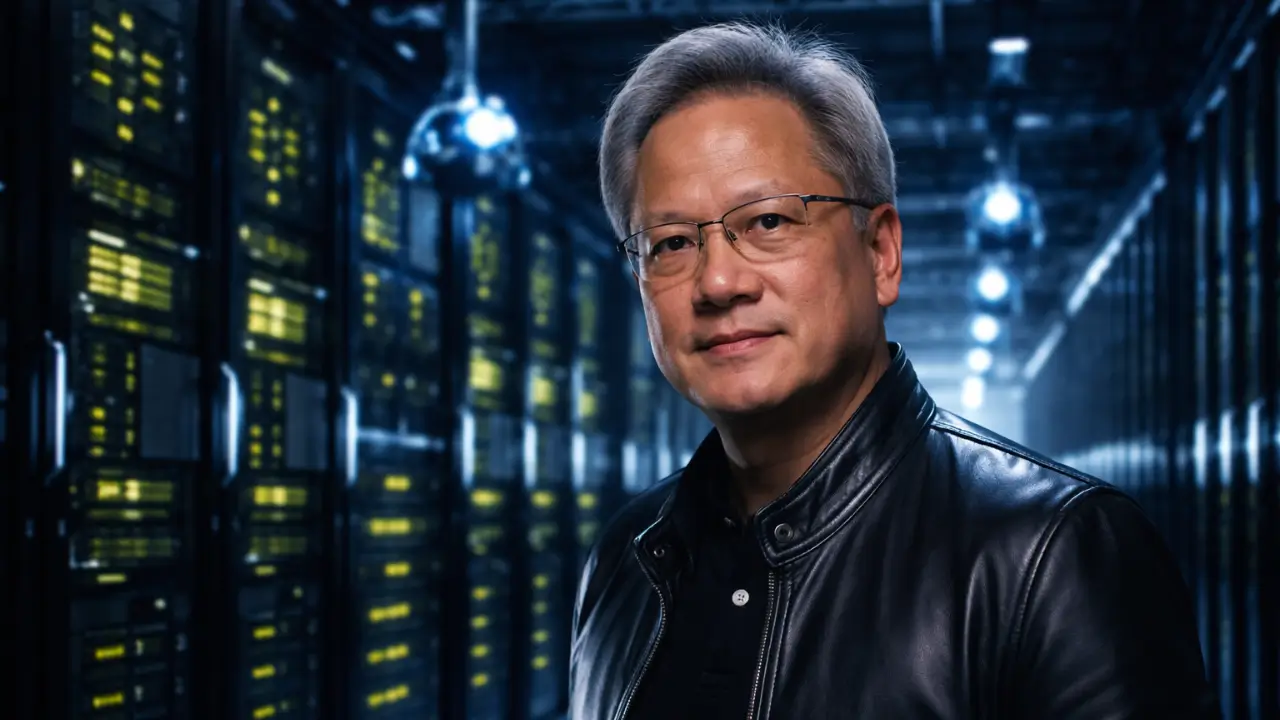
When Jensen Huang speaks about accelerated computing, he frames it as a generational platform shift. Under his leadership, Nvidia has moved from graphics pioneer to the defining supplier of AI infrastructure. That transformation, however, now places Huang at the center of a broader reckoning, not of scandal or failure, but of scale.
AI no longer lives in research labs. It operates inside hyperscale data centers, enterprise campuses and sovereign cloud projects. Consequently, the infrastructure required to support large-scale model training and inference has grown into a national conversation. Utilities and grid operators in several regions have publicly acknowledged that large data center projects require long-term load planning and transmission upgrades, according to utility filings and energy market disclosures. Municipal authorities have also reviewed permitting and infrastructure requirements tied to large-scale data facilities. In this environment, Nvidia’s strategic position ensures that its chief executive remains central to the discussion.
This reckoning does not question Nvidia’s technological leadership. Instead, it reflects the reality that AI has crossed from software ambition into physical constraint.
Nvidia’s ascent under Huang rests on more than GPU performance. The company built a full-stack strategy that integrates hardware, networking and software ecosystems. CUDA, high-bandwidth memory integration and advanced interconnects have strengthened Nvidia’s lock on AI workloads. More recently, systems such as DGX platforms and AI supercomputing clusters have demonstrated that Nvidia no longer sells components alone; it shapes entire compute architectures.
Nvidia’s high-performance GPU systems operate at higher power densities than many traditional enterprise servers, and data center operators have publicly discussed adapting cooling and rack configurations to accommodate next-generation AI hardware.
Therefore, facility design increasingly begins with Nvidia’s roadmap in mind. That structural influence elevates Huang’s role beyond product cycles. He now stands at the intersection of chip design, energy planning and capital deployment.
Power, policy and public scrutiny
AI acceleration depends on electricity at scale. Training frontier models demands dense clusters of GPUs operating continuously. Even inference workloads, once distributed and modest, now require sustained high-performance compute.
Communities hosting large data centers have begun examining energy commitments more closely. Utilities assess transmission upgrades. State governments evaluate tax structures and incentive frameworks tied to digital infrastructure. Although Nvidia does not build or operate most data centers directly, its technology anchors many of them. Consequently, debates about energy consumption often trace back to AI demand and, by extension, to Nvidia’s hardware leadership.
Huang therefore finds himself navigating a dual narrative. On one hand, Nvidia enables productivity, scientific discovery and industrial modernization. On the other, AI’s physical footprint demands careful integration into regional energy systems. This tension does not imply wrongdoing. Rather, it signals maturity. Every foundational infrastructure from railways to telecommunications has faced similar scrutiny during expansion phases.
Capital intensity and market expectations
Nvidia’s financial performance has reflected extraordinary demand for AI accelerators. Markets have rewarded the company accordingly. Yet elevated expectations create their own pressures. Hyperscale cloud providers commit billions to AI buildouts. Sovereign AI initiatives announce national compute ambitions. Enterprises explore private model training. All these commitments assume sustained access to advanced GPUs and networking equipment.
Capital expenditure levels in the technology sector historically fluctuate across economic cycles, as reflected in publicly reported earnings from major cloud providers. Nvidia’s long-term planning therefore operates within broader macroeconomic conditions that influence infrastructure investment timing. Nvidia has publicly stated in earnings calls that supply availability and production timelines remain key operational considerations as demand for AI accelerators increases. Scale introduces additional operational complexity across semiconductor manufacturing and system integration.
AI hardware also sits within an evolving geopolitical framework. Governments increasingly view advanced semiconductors as strategic assets. Export controls, licensing regimes and regional manufacturing incentives influence how companies distribute technology. Nvidia has complied with applicable regulations and adjusted product offerings where required. Even so, geopolitical developments shape addressable markets and supply strategies. Huang must balance innovation leadership with regulatory adherence across multiple jurisdictions.
In this context, Nvidia’s reckoning involves strategic diplomacy as much as engineering excellence. The company operates at the frontier of both compute performance and policy sensitivity.
The physical limits of acceleration
For years, the technology sector described the cloud as abstract and elastic. AI, however, has reintroduced material realities. Compute clusters require land, substations, cooling systems and fiber connectivity. They also demand skilled labor and long-term planning. Nvidia’s roadmap continues to push performance boundaries with each generation of GPUs. Yet higher performance often coincides with greater power density. Data center operators respond with liquid cooling, advanced airflow management and redesigned racks.
Huang frequently argues that accelerated computing improves energy efficiency per unit of work. That claim reflects architectural realities: parallel processing can reduce total compute time for complex workloads. Still, aggregate energy demand grows as adoption expands. Efficiency gains at the chip level coexist with rising total system consumption. Therefore, Nvidia’s reckoning centers on harmonizing performance ambition with infrastructural sustainability.
Unlike utilities or real estate developers, Nvidia does not control grid infrastructure. It does not determine zoning approvals or tax abatements. Nevertheless, its technology catalyzes investment decisions. This indirect influence carries reputational implications. Public discourse surrounding large-scale data infrastructure frequently includes questions about energy sourcing and long-term resilience. Nvidia’s public communications have emphasized AI’s applications in scientific research, climate modeling and industrial optimization.
However, as AI infrastructure multiplies, observers seek clarity on how innovation intersects with community impact. Transparent communication and ecosystem collaboration will remain essential.
Strategic recalibration or sustained acceleration?
Does this moment require recalibration? Not necessarily. Demand for AI compute continues across sectors including healthcare, manufacturing, financial services and national research laboratories. Nvidia’s technological lead remains widely acknowledged. Yet sustainable leadership demands more than product velocity. It requires integration with power grids, policy frameworks and capital markets. Huang must therefore operate as both technologist and statesman.
Nvidia’s competitive position depends on continued innovation in GPU architecture, disciplined supply management, and compliance with evolving regulatory frameworks that govern semiconductor exports and technology deployment.
Huang’s leadership transformed Nvidia into the backbone of modern AI compute. That success naturally invites scrutiny. Energy planners, regulators and investors all analyze the downstream effects of accelerated computing. Such scrutiny reflects importance rather than fragility. Nvidia’s technologies underpin transformative research, from drug discovery to climate simulation. They also enable enterprise automation and digital transformation at global scale.
Therefore, the central question is not whether Nvidia should slow down. Instead, it concerns how the AI ecosystem can expand responsibly while preserving reliability and public trust.
Leadership at the fulcrum of AI infrastructure
Jensen Huang stands at a strategic fulcrum. Nvidia’s innovations drive the AI era, yet those innovations now intersect with energy systems, public policy and capital allocation in unprecedented ways. This reckoning does not undermine Nvidia’s trajectory. It clarifies its significance. The company’s future will unfold not only in silicon design labs but also in conversations about grids, governance and long-term resilience.
If Huang successfully integrates these dimensions, Nvidia will remain more than a chipmaker. It will define how societies operationalize artificial intelligence at industrial scale. That outcome demands foresight, discipline and sustained engagement.
The AI infrastructure reckoning has begun. At its center stands Jensen Huang, not in defense of past decisions, but in stewardship of what comes next.












