
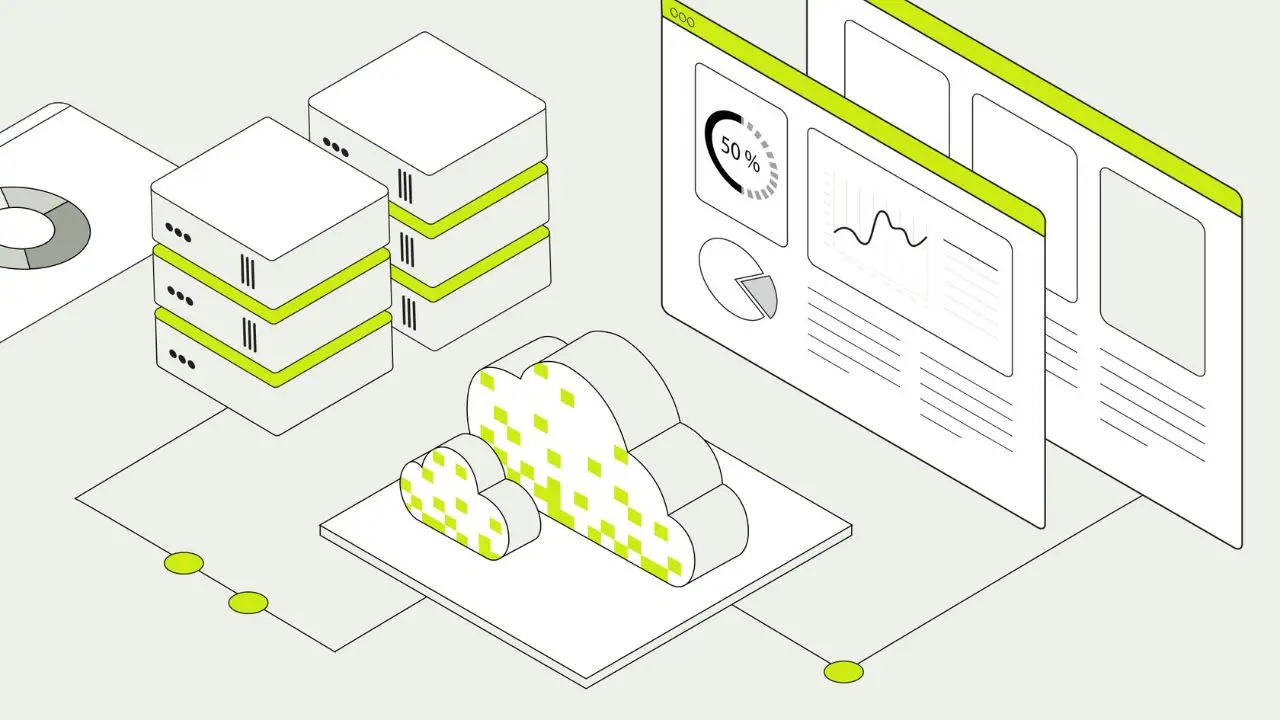
New platform provides orchestration, deep observability, and collaborative support to maximize GPU uptime and accelerate AI development.
San Francisco-based Crusoe is tightening its grip on the AI infrastructure stack with the launch of Command Center, a unified operations platform designed to bring orchestration, deep observability and embedded support into a single control plane.
The move reflects a broader shift in AI infrastructure: as training clusters scale into thousands of GPUs, visibility gaps and fragmented tooling increasingly throttle performance. Infrastructure teams often juggle telemetry dashboards, Kubernetes logs, cluster schedulers and external monitoring stacks. Consequently, operational drag creeps in — and GPU hours go dark.
Command Center aims to collapse that complexity into a single source of truth.
Crusoe positions the platform as a high-fidelity data foundation for large-scale AI workloads, integrating deep observability directly with its orchestration layer, including Crusoe Managed Kubernetes (CMK), AutoClusters and Crusoe Managed Slurm. Rather than forcing engineers to swivel between tools, the company embeds diagnostics, telemetry and remediation visibility into one operational surface.
“For AI builders, every hour spent manually triaging a stalled GPU or hunting through fragmented logs is an hour lost on model innovation,” said Nadav Eiron, Senior Vice President of Engineering for Crusoe Cloud. “Command Center changes the game by providing a single source of truth for their entire stack, removing the operational tax of high-performance computing and allowing engineers to spend less time acting as mechanics and more time as architects of the AI future.”
Observability as a Strategic Advantage
AI clusters no longer operate as static compute pools. They behave like dynamic factories, where storage throughput, network congestion and GPU thermals directly shape model training efficiency. Therefore, the margin for blind spots continues to shrink.
Command Center introduces out-of-the-box GPU telemetry, offering real-time insight into GPU health, storage and network metrics. Every accelerator in a cluster becomes visible and accountable, which reduces inefficiencies caused by resource opacity.
In addition, out-of-the-box logging for CMK consolidates node logs and Kubernetes logs into a unified interface. Engineers can correlate hardware metrics with system logs instantly, accelerating root-cause analysis across large-scale environments.
The platform also supports custom metrics via the Crusoe Watch Agent. Teams can ingest application-level telemetry and correlate workload behavior with GPU vitals. As a result, infrastructure teams gain end-to-end visibility into how code-level adjustments influence hardware utilization.
To prevent data silos, Telemetry Relay — currently in preview — streams infrastructure metrics into established observability stacks such as Datadog and Splunk. This approach preserves existing workflows while extending insight into Crusoe’s infrastructure layer.
Meanwhile, Topology View adds spatial intelligence to diagnostics. Engineers can visualize failures within the physical or logical cluster architecture, reducing mean time to resolution in multi-rack or multi-zone deployments.
Orchestration Meets Control Loop Intelligence
Crusoe embeds Command Center directly into its managed orchestration services. The integration turns infrastructure health into an active control loop rather than a passive reporting layer.
The platform monitors CMK and Crusoe Managed Slurm workloads in real time, enabling customers to run multi-week training jobs across hundreds of GPUs with full transparency into utilization patterns from day one.
For high fault-tolerance scenarios, Command Center surfaces remediation events triggered by AutoClusters. When the system detects and replaces failing nodes, the platform displays a clear audit trail. Teams can observe automated recovery in motion, reinforcing trust in the orchestration layer.
Furthermore, a new Notification Center pushes critical alerts and remediation updates into Slack and other webhook integrations. Engineers receive actionable signals inside their existing collaboration environments, eliminating lag between detection and response.
From SLA to Embedded Engineering
Crusoe extends the platform beyond monitoring. Instead of relying solely on ticket-driven SLAs, the company integrates expert support directly within Command Center. Its engineers collaborate with customers to architect clusters tailored to specific model architectures, effectively operating as an extension of in-house AI infrastructure teams.
That positioning aligns with Crusoe’s broader strategy as a vertically integrated AI infrastructure provider. The company controls energy sourcing, builds AI-optimized data centers and delivers a cloud platform purpose-built for high-performance AI workloads.
Command Center reinforces that vertical thesis. By merging telemetry, orchestration and human expertise into a unified operational fabric, Crusoe shifts the conversation from raw GPU count to sustained GPU productivity.
In an AI economy defined by training velocity and uptime economics, infrastructure transparency now equals competitive advantage.
Command Center is available immediately.











