Skip to content
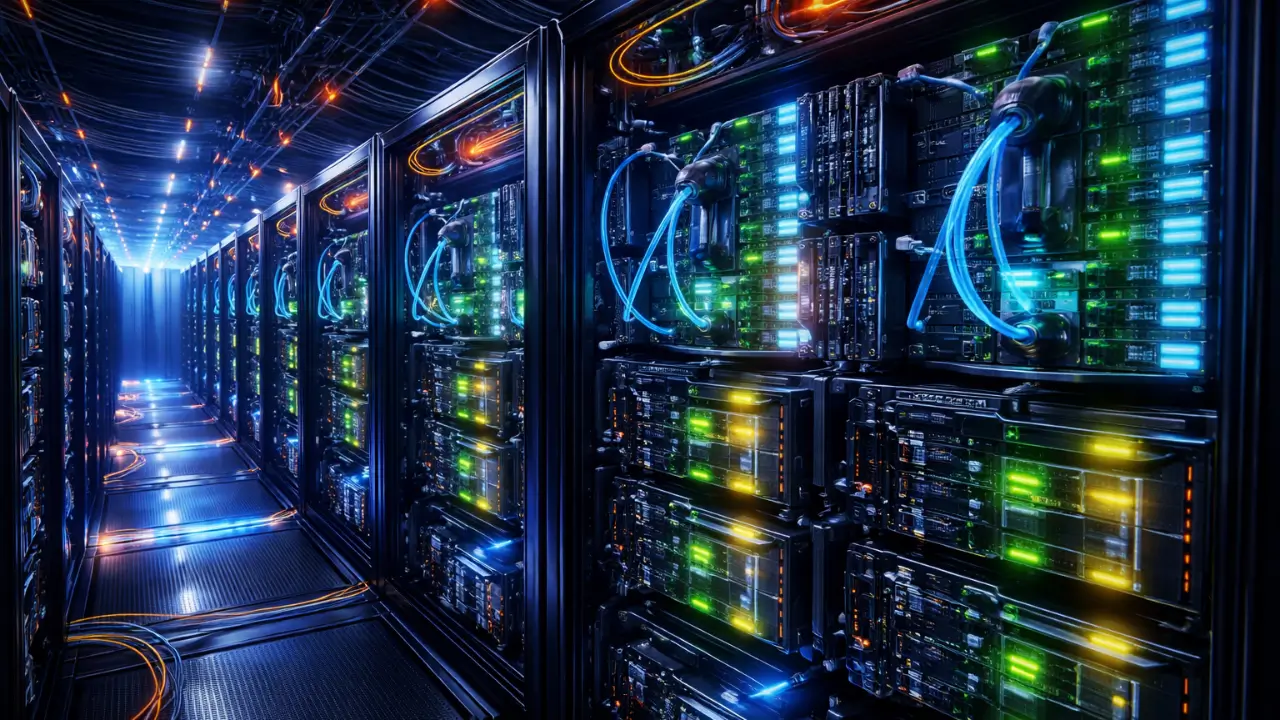
Artificial intelligence training and inference workloads are reshaping infrastructure priorities across modern cloud environments. Large language models, recommendation systems, and generative applications demand massive parallel compute resources that traditional enterprise infrastructure rarely anticipated. GPU clusters now dominate AI deployments because they accelerate matrix operations required for neural network training and inference pipelines. High-performance CPUs still coordinate orchestration tasks, but GPUs execute most computational workloads in modern AI systems. This shift has dramatically increased the density of accelerators inside a single rack unit within hyperscale and NeoCloud environments. As a result, infrastructure architects increasingly treat the rack itself as a fundamental compute building block rather than a passive container for servers.

AI workloads concentrate compute power at unprecedented levels, creating physical constraints inside racks that once hosted relatively modest server configurations. Training clusters for modern models frequently include eight or more GPUs per node, with multiple nodes installed within a single rack enclosure. Such concentration dramatically increases both electrical load and thermal output in a confined physical space. Data center operators must also accommodate high-speed networking fabrics that enable distributed training across hundreds or thousands of GPUs simultaneously. Rack infrastructure originally optimized for CPU-based enterprise workloads often lacks the structural capacity to support these dense accelerator configurations. Engineering teams now redesign rack layouts to ensure mechanical stability and efficient cable management for high-bandwidth interconnects.
Power consumption represents one of the most immediate pressures created by dense AI clusters. A modern GPU accelerator may draw between 400 and 700 watts depending on architecture and workload intensity. Multi-GPU nodes therefore require several kilowatts of power, and racks containing numerous nodes in advanced AI facilities can approach or exceed 80 kilowatts of power demand. Legacy racks designed around 10–15 kilowatt envelopes cannot sustain such consumption levels without major upgrades to electrical distribution systems. Operators must introduce high-capacity power distribution units, redundant circuits, and advanced monitoring systems to maintain operational reliability. Engineers increasingly treat power delivery as an architectural constraint that shapes the entire rack design process.
Thermal management challenges emerge immediately once high-density accelerators enter rack deployments. GPUs generate intense heat under sustained training workloads, especially when models run continuously across distributed clusters. Air-based cooling systems designed for traditional servers often struggle to remove heat efficiently from tightly packed accelerator nodes. Hot spots develop near the center of racks where airflow becomes restricted by densely arranged hardware. Persistent heat accumulation can lead to thermal throttling that reduces GPU performance and increases training time. Architects therefore investigate alternative cooling methods capable of dissipating heat from densely populated racks without sacrificing reliability.

Space utilization introduces another dimension to the rack design problem created by AI infrastructure growth. GPU servers require larger form factors to accommodate accelerators, high-capacity power supplies, and advanced networking interfaces. Storage devices and networking switches also compete for rack space as AI pipelines scale to support larger datasets and distributed model training. Engineers must balance component density against serviceability requirements so technicians can maintain systems without disrupting adjacent hardware. Mechanical design choices such as rail systems, cable channels, and airflow partitions therefore play a crucial role in sustaining large accelerator deployments. Infrastructure teams increasingly recognize that rack-level engineering directly influences the stability and scalability of AI clusters.
NeoCloud Approaches to Rack Redesign
NeoCloud platforms have emerged as specialized infrastructure providers focused on serving artificial intelligence workloads at scale. These environments prioritize accelerator density, high-speed networking, and optimized thermal management rather than general-purpose enterprise computing. Rack architecture therefore evolves to accommodate specialized hardware configurations required by AI training clusters. Modular rack frameworks inspired by hyperscale infrastructure models and initiatives such as the Open Compute Project allow operators to install accelerator nodes, networking equipment, and cooling systems in tightly coordinated layouts. Engineers treat the rack as a modular compute module that can scale horizontally across entire data center halls. This design philosophy enables cloud providers to deploy AI clusters quickly while maintaining consistent infrastructure standards.
Modular GPU pods represent one of the most visible innovations in rack design within specialized AI infrastructure environments, with examples including architectures used in platforms such as NVIDIA DGX SuperPOD deployments and large GPU clusters operated by providers like Lambda. These pods group several GPU servers together with dedicated networking switches and power distribution components inside a defined rack segment. Such arrangements reduce latency between nodes because networking equipment sits physically closer to compute resources. Modular pods also simplify maintenance procedures since technicians can replace entire units rather than individual components. Infrastructure teams benefit from predictable thermal and electrical profiles because each pod follows a standardized design template. Operators increasingly deploy racks composed of several pods that function as independent compute clusters.
Liquid cooling integration has become a central feature of rack-level design in modern AI infrastructure deployments. Engineers route coolant directly through cold plates attached to GPUs and CPUs, removing heat at the source before it accumulates inside the rack enclosure. Direct liquid cooling dramatically increases the amount of thermal energy that racks can dissipate compared with traditional air cooling systems. Data centers can therefore operate accelerator clusters at higher power densities without risking thermal instability. Cooling loops connect racks to facility-level heat exchange systems that transfer thermal energy away from compute halls. Liquid cooling designs also reduce the need for high-speed fans that consume additional power.
Airflow optimization continues to play an important role even in facilities that deploy liquid cooling technologies. Engineers design rack enclosures with carefully directed airflow channels that guide cool air toward sensitive components and remove residual heat efficiently. Baffles, ducting systems, and sealed rack compartments prevent recirculation of hot exhaust air back into intake pathways. Such airflow engineering ensures that supporting components such as networking switches and memory modules remain within safe temperature ranges. Operators combine airflow management with liquid cooling to maintain stable operating environments for dense accelerator clusters. This integrated approach allows racks to sustain consistent performance during continuous training workloads.
Maintainability considerations strongly influence rack redesign efforts in AI-focused cloud infrastructure. Technicians must access servers, replace GPUs, and service networking equipment without interrupting surrounding hardware or disrupting cluster operations. Modular layouts enable quick removal of entire server trays or GPU modules while minimizing downtime. Cable management frameworks guide high-speed fiber connections in structured pathways that reduce the risk of accidental disconnections. Structured maintenance access ensures that large-scale accelerator clusters remain operational even during hardware upgrades. Rack engineering therefore supports both operational stability and long-term infrastructure scalability.
Evolving Server Topologies for AI-Heavy Workloads
Server topology plays a central role in enabling large-scale machine learning workloads across distributed infrastructure. AI training pipelines often require massive parallelism because neural networks process billions of parameters simultaneously. Multi-GPU nodes allow several accelerators to work together inside a single server through high-bandwidth interconnect technologies. These nodes reduce communication overhead compared with clusters that distribute workloads across separate machines. Engineers configure racks with numerous multi-GPU servers to build tightly integrated training environments. The resulting architecture enables large models to process massive datasets efficiently across coordinated compute resources.
CPU-GPU co-location within server nodes has become a widely adopted design principle for accelerator-driven computing. CPUs coordinate data preparation, input pipelines, and system orchestration tasks that support GPU computation. Placing CPUs close to GPUs reduces latency between host processors and accelerators during model training workflows. Memory subsystems also benefit from this proximity because data transfers occur over high-bandwidth internal buses. Hardware designers carefully balance CPU and GPU capabilities to ensure that host processors do not become performance bottlenecks. Such integration allows compute nodes to sustain consistent throughput during extended training runs.
High-speed interconnect technologies allow GPUs inside a server to exchange data with minimal latency. NVLink and NVSwitch architectures create direct communication pathways between accelerators within a node. These connections provide significantly higher bandwidth than traditional PCIe links used in earlier server designs. Distributed training frameworks rely on these high-speed connections to synchronize model parameters across multiple GPUs. Rack layouts often cluster servers with similar interconnect configurations to support efficient communication patterns across nodes. Such topology design decisions directly influence the scalability of large machine learning workloads.
NeoCloud environments deploy these advanced server architectures to support large-scale AI training infrastructure. Operators assemble clusters containing hundreds of multi-GPU servers connected through high-performance networking fabrics. Each rack functions as a dense compute segment within a broader distributed training cluster. Infrastructure software orchestrates workloads across nodes while ensuring balanced utilization of compute resources. Engineers monitor communication latency and throughput to maintain stable performance across the cluster. These operational practices demonstrate how server topology and rack design intersect within modern AI infrastructure environments.
Server topology decisions also affect inference workloads that power real-time artificial intelligence applications. Large inference clusters serve requests from recommendation systems, conversational AI services, and autonomous systems. Infrastructure teams configure racks to balance compute throughput with latency requirements for these workloads. GPU partitioning technologies allow operators to allocate accelerator resources efficiently across multiple inference tasks. Such arrangements ensure that inference clusters deliver consistent performance even under fluctuating demand. Rack-level design therefore supports both large-scale training environments and latency-sensitive inference infrastructure.
Overcoming Performance Bottlenecks
High-density accelerator clusters introduce several performance constraints that infrastructure engineers must address at the rack level. Communication overhead between GPUs frequently becomes a limiting factor when distributed training tasks span multiple nodes within a rack. Large neural networks require constant synchronization of parameters, gradients, and intermediate data across compute devices. High-bandwidth networking fabrics therefore become critical infrastructure components for modern AI deployments. Engineers deploy advanced interconnect technologies that enable GPUs to exchange data rapidly without overwhelming network switches. These communication pathways help maintain consistent training performance as model sizes continue to increase.
Inter-GPU bandwidth constraints often arise when clusters attempt to coordinate computation across large accelerator groups. Training frameworks must constantly exchange tensors between devices during backpropagation and gradient synchronization processes. Bottlenecks appear when networking infrastructure cannot match the communication speed required by GPUs operating at full capacity. Engineers respond by integrating high-speed fabrics such as InfiniBand and specialized AI networking architectures into rack deployments. These technologies deliver extremely low latency and high throughput across distributed training environments. Strong network fabrics allow AI clusters to scale without sacrificing computational efficiency.
Memory capacity and bandwidth also influence the performance of AI clusters deployed in modern data centers. Large models frequently require vast amounts of memory to store parameters, intermediate activations, and training datasets. Individual GPUs contain high-bandwidth memory designed to process data rapidly, yet extremely large models often exceed the memory capacity of a single device. Engineers mitigate this constraint by distributing workloads across multiple GPUs that share data through high-speed communication links. Memory pooling strategies allow clusters to treat multiple accelerators as a unified memory environment during training. This architecture enables researchers to train models that would otherwise exceed the limits of individual GPUs.
Thermal throttling represents another obstacle that can reduce performance inside dense AI racks. GPUs operate at extremely high power levels during intensive machine learning workloads, which generates large amounts of heat. When cooling systems fail to remove this heat efficiently, hardware components automatically reduce clock speeds to prevent damage. Lower clock speeds directly affect the time required to complete model training cycles. Data center architects therefore prioritize thermal stability as a fundamental requirement for accelerator clusters. Efficient cooling and airflow management allow hardware to operate consistently at peak performance levels.
GPU mesh networks, often enabled through high-bandwidth interconnect architectures such as NVLink and NVSwitch, have emerged as a practical method for reducing communication overhead inside high-density clusters.Mesh architectures allow GPUs to exchange data directly with multiple neighboring accelerators without routing traffic through a central hub. This configuration reduces congestion in networking infrastructure and improves communication efficiency across distributed workloads. Engineers design rack layouts that support these mesh connections through optimized cable routing and switch placement. Mesh networks also increase fault tolerance because workloads can reroute traffic through alternate communication pathways. These network structures support scalable AI infrastructure capable of handling complex distributed computations.
Cooling and Power Strategies for AI-Dense Racks
Cooling technologies have become one of the most critical design considerations in modern AI infrastructure deployments. Dense accelerator clusters generate significantly more heat than conventional enterprise servers. Operators therefore experiment with advanced thermal management strategies that remove heat efficiently without increasing operational complexity. Liquid cooling systems have gained strong adoption across facilities that host large-scale AI clusters. Coolant absorbs heat directly from processors and transfers it to external heat exchange systems. This approach supports significantly higher power densities than traditional air-based cooling methods.
Immersion cooling represents another strategy that some operators adopt for extremely dense accelerator deployments. In this configuration, servers operate while submerged in specialized dielectric fluids that absorb heat directly from electronic components. The fluid transfers thermal energy away from processors and releases it through heat exchangers connected to facility cooling infrastructure. Immersion environments reduce the need for high-speed fans and eliminate many airflow constraints present in traditional rack systems. Engineers can therefore deploy hardware at higher density levels while maintaining stable operating temperatures. Several research facilities and AI-focused cloud providers have begun experimenting with immersion technologies for next-generation clusters.
Rear-door heat exchangers offer another practical solution for managing heat output from AI-dense racks. These systems attach directly to the rear of rack enclosures and remove hot exhaust air before it reenters the data center environment. Cooling coils inside the door circulate chilled water that absorbs heat from the outgoing airflow. Operators can therefore improve cooling performance without redesigning the entire facility infrastructure. Rear-door systems provide an incremental upgrade path for facilities transitioning toward higher rack power densities. This technology allows operators to support accelerator clusters within existing data center spaces.
Power delivery infrastructure must evolve alongside cooling technologies to support modern AI workloads. High-density accelerator racks require significantly greater electrical capacity than conventional enterprise infrastructure. Operators install high-capacity power distribution units capable of delivering stable electricity to numerous GPU servers simultaneously. Redundant power pathways ensure that workloads continue running even if one electrical circuit fails. Monitoring systems track voltage stability and energy consumption across rack environments in real time. These upgrades ensure reliable power delivery for clusters operating at extremely high computational intensity.
Energy efficiency also plays a critical role in the long-term sustainability of AI infrastructure deployments. Dense accelerator clusters consume large amounts of electricity during extended training workloads. Data center operators therefore explore ways to reduce energy waste while maintaining high performance levels. Efficient cooling systems lower power consumption because pumps and heat exchangers require less energy than high-speed fans. Hardware utilization strategies also ensure that accelerators remain productive during operational cycles. These efficiency improvements help organizations maintain sustainable infrastructure while supporting large-scale AI development.
Designing the Rack for Today’s AI Workloads
Artificial intelligence infrastructure continues to reshape the physical architecture of modern data centers. Accelerator clusters require racks that support unprecedented levels of compute density, networking bandwidth, and thermal management capability. Engineers therefore approach rack design as a foundational component of AI infrastructure strategy rather than a secondary mechanical structure. Rack layouts now integrate power delivery, cooling systems, networking fabrics, and server topology into a cohesive architecture. This transformation reflects the growing importance of physical infrastructure in enabling large-scale machine learning development. Data centers increasingly function as specialized environments designed around the needs of accelerator-driven computing.
NeoCloud infrastructure providers demonstrate how specialized design strategies can address the challenges created by modern AI workloads. Their deployments emphasize modular rack architectures, integrated cooling systems, and optimized networking topologies that support distributed training clusters. These environments treat racks as standardized building blocks that scale across entire facilities. Operators maintain consistent performance and reliability by aligning server design, cooling strategies, and power delivery systems within unified infrastructure frameworks. Large accelerator clusters therefore operate with greater stability and efficiency than earlier generations of cloud infrastructure. These developments illustrate how infrastructure specialization supports the rapid expansion of artificial intelligence workloads.
Future infrastructure design will likely continue evolving as AI models grow in size and complexity. Engineers must anticipate increasing demand for accelerator density, networking throughput, and memory capacity across training clusters. Rack-level innovation will remain essential because physical infrastructure determines the limits of compute scalability. Organizations that invest in flexible rack architectures will adapt more easily to emerging hardware technologies. AI infrastructure will therefore continue to evolve alongside advances in processor design and distributed computing frameworks. The rack will remain a central engineering element that enables reliable and scalable artificial intelligence systems.