
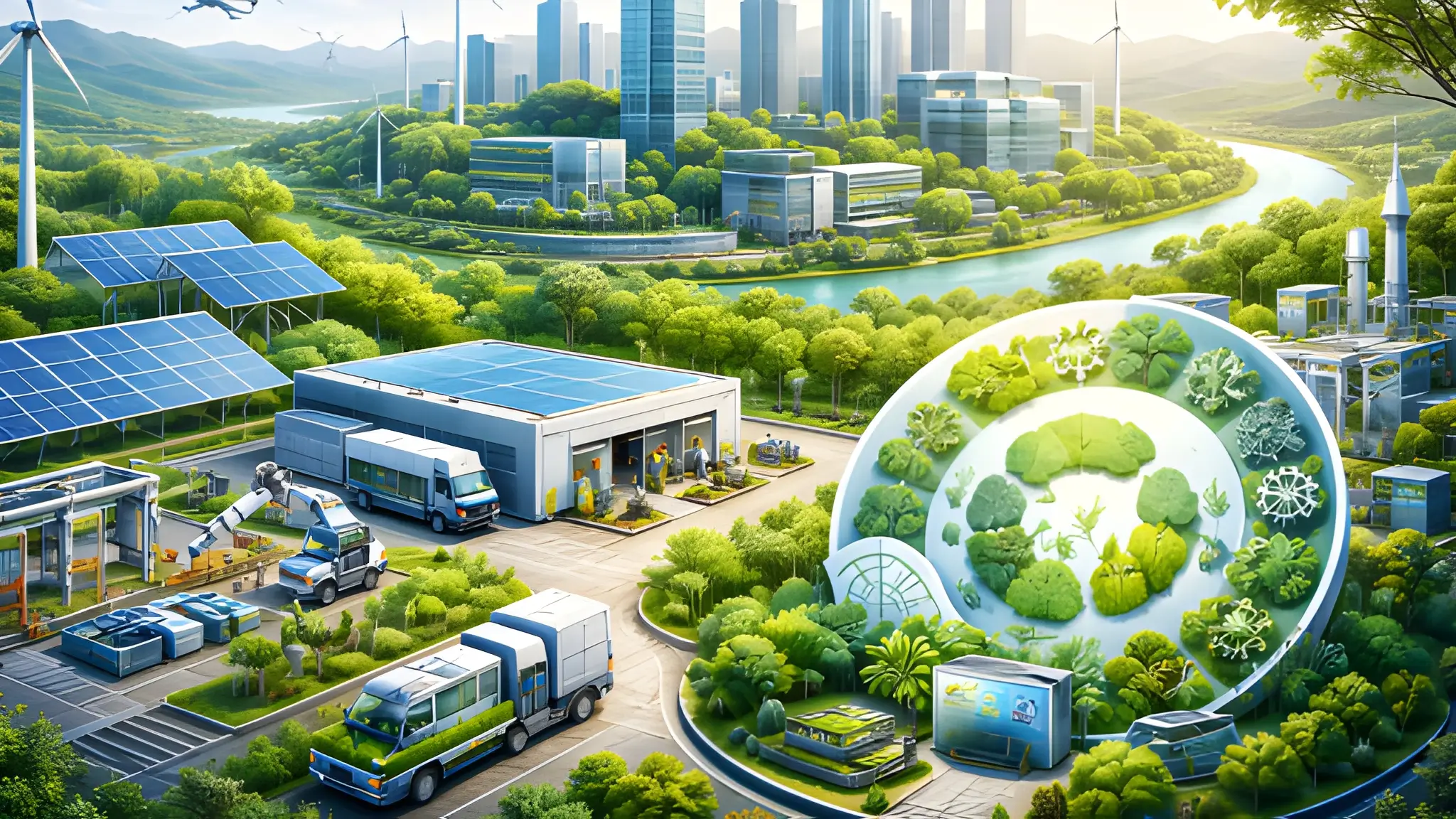
Environmental pressures increasingly influence how enterprises define competitiveness and long-term viability across global markets. Climate policies, regulatory mandates, and investor scrutiny have reshaped the decision frameworks used by corporate leadership teams. Organizations now evaluate environmental impact alongside financial performance during product development, infrastructure expansion, and procurement strategies. Resource scarcity across energy, water, and raw materials also intensifies operational uncertainty for many industries. Enterprises therefore redesign processes and technologies to operate under tighter environmental limits while maintaining productivity. Companies that respond with structured innovation programs often discover opportunities that extend far beyond compliance requirements. These shifts increasingly shape how organizations approach enterprise innovation through sustainability-driven strategies and operational transformation.

Corporate governance structures in many large enterprises now incorporate sustainability or ESG metrics into strategic planning and performance measurement frameworks. Board oversight committees frequently review climate exposure, supply chain resilience, and environmental reporting standards. These governance mechanisms push organizations to integrate environmental objectives directly into innovation roadmaps and capital allocation models. Investment priorities shift toward technologies that reduce emissions, increase resource productivity, and support long-term regulatory alignment. Executives treat environmental challenges as signals that existing operating assumptions require revision rather than incremental adjustment. Enterprises that embed sustainability metrics into innovation governance often improve risk management and unlock new operational efficiencies.
Financial markets reinforce this shift by linking capital access to environmental performance indicators. Asset managers increasingly evaluate corporate climate strategies, disclosure transparency, and decarbonization pathways before committing long-term investment. Environmental performance therefore influences valuations, financing costs, and partnership opportunities across sectors. Investors also encourage companies to pursue innovation that aligns environmental outcomes with commercial growth. Businesses respond by funding research initiatives focused on cleaner materials, energy efficiency, and circular manufacturing processes. Innovation teams often translate regulatory constraints into design parameters that guide the development of new technologies and services.
Enterprise strategy teams now incorporate scenario analysis to understand environmental risks across multiple time horizons. Climate models, resource availability forecasts, and policy outlooks provide data that guides strategic innovation investments. Decision makers evaluate how supply disruptions, extreme weather, and carbon pricing could influence production and logistics networks. These insights support the development of resilient operating models capable of adapting to evolving environmental constraints. Companies frequently establish dedicated sustainability innovation units to accelerate experimentation and pilot programs. Structured experimentation enables organizations to test new approaches without disrupting core operations.

Industrial sectors often experience the strongest pressure to innovate under environmental constraints due to their material and energy intensity. Manufacturing firms explore new production methods that reduce waste streams and energy consumption while preserving output quality. Energy-intensive industries invest in electrification technologies, alternative fuels, and advanced process controls. Product development teams simultaneously examine material substitutions that lower environmental impact without compromising performance standards. Environmental design considerations gradually become embedded into engineering workflows and lifecycle analysis tools. This shift encourages innovation across product architecture, industrial processes, and supply chain coordination.
Companies that approach environmental challenges strategically often generate competitive differentiation within their markets. Innovation initiatives built around sustainability goals can reveal operational inefficiencies in areas such as energy use, material consumption, and logistics planning.Organizations discover new product categories, service offerings, and partnerships while addressing environmental objectives. Market demand for responsible products also creates opportunities for companies that can demonstrate measurable environmental improvements. Businesses therefore treat sustainability-related innovation as a strategic capability rather than a regulatory obligation. Leadership teams increasingly view environmental constraints as a catalyst for technological and organizational transformation.
Designing Products for a Low-Impact Economy
Product development strategies increasingly incorporate lifecycle thinking that evaluates environmental impact from material sourcing to end-of-life disposal. Design teams examine raw material extraction, manufacturing emissions, transportation logistics, and recycling potential during early development stages. Lifecycle assessment tools quantify environmental impact across each phase of a product’s existence. Engineers then adjust design parameters to minimize waste, energy consumption, and material intensity. These practices support more responsible manufacturing without reducing performance standards or durability expectations. Enterprises that integrate lifecycle assessment into product engineering frequently achieve measurable reductions in environmental footprint.
Material efficiency plays a critical role in lowering environmental impact while maintaining product functionality. Engineers redesign components to reduce weight, simplify assembly, and eliminate unnecessary material use. Advanced manufacturing techniques such as additive manufacturing can reduce material waste in certain applications by enabling more precise material placement during production. Lightweight structures also reduce transportation energy requirements across global supply chains. Material substitution strategies introduce recycled or bio-based inputs where performance standards allow. These engineering approaches allow companies to reduce environmental impact without compromising product reliability or customer expectations.
Modular product architectures increasingly appear across sectors that seek to extend product lifecycles and reduce waste generation. Modular design allows individual components to be replaced, upgraded, or repaired without discarding entire systems. Electronics manufacturers, industrial equipment providers, and mobility companies explore modular platforms that simplify maintenance and refurbishment. This approach reduces material consumption while improving serviceability and operational flexibility. Customers benefit from longer product lifetimes and improved upgrade options as technology evolves. Enterprises also gain opportunities to introduce service-based revenue streams tied to maintenance and component upgrades.
Design for recyclability represents another important strategy in reducing environmental impact at the product level. Engineers evaluate material compatibility, adhesive use, and disassembly complexity during early design phases. Simplified material combinations make recycling processes more efficient and economically viable. Manufacturers also label materials clearly to assist recycling facilities during sorting operations. Companies collaborate with waste management partners to ensure products enter appropriate recycling streams at the end of their lifecycle. Design decisions therefore influence not only manufacturing efficiency but also the feasibility of circular resource recovery systems.
Digital simulation tools increasingly support environmentally informed product design decisions. Engineers simulate energy consumption, material flows, and environmental impact before building physical prototypes. Digital models help identify design improvements that reduce emissions or resource usage during manufacturing and operation. These simulations also accelerate experimentation by allowing multiple design alternatives to be evaluated quickly. Product development cycles therefore become both faster and more environmentally optimized. Enterprises integrate environmental data directly into engineering workflows through these digital design environments.
Consumer expectations further influence product design decisions across many industries. Consumer surveys indicate growing interest in environmental impact, product longevity, and repairability when evaluating purchasing decisions.Companies respond by communicating lifecycle transparency and environmental certifications through product labeling and marketing strategies. Design teams collaborate closely with sustainability specialists to ensure product claims reflect measurable environmental improvements. Product innovation therefore evolves in response to both regulatory pressures and shifting customer expectations. Enterprises that align product design with environmental priorities often strengthen brand credibility and long-term customer relationships.
Reinventing Supply Chains Through Sustainable Thinking
Supply chains represent one of the largest sources of environmental impact for global enterprises. Raw material extraction, manufacturing processes, logistics networks, and packaging systems collectively generate substantial emissions and resource consumption. Organizations increasingly map supply chain emissions to understand where environmental improvements can deliver the greatest impact. Supply chain transparency therefore becomes an essential capability for companies pursuing environmental objectives. Data collection across suppliers and logistics partners enables more accurate measurement of environmental performance. Businesses can then prioritize improvement initiatives based on verified environmental impact data.
Supplier collaboration plays an essential role in reducing environmental impact across distributed production networks. Large enterprises often establish environmental standards that suppliers must meet to remain within procurement programs. Suppliers receive guidance on emissions reduction strategies, energy efficiency improvements, and responsible sourcing practices. Collaborative programs also encourage suppliers to share environmental data through standardized reporting frameworks. These partnerships allow enterprises to address environmental challenges beyond their direct operational boundaries. Supply chain sustainability initiatives therefore require coordinated engagement across multiple tiers of suppliers and partners.
Circular economy principles increasingly influence supply chain design decisions across manufacturing sectors. Companies develop systems that recover materials from end-of-life products and reintroduce them into production cycles. Reverse logistics networks collect used products, components, and materials for refurbishment or recycling. These recovery systems reduce reliance on virgin materials and lower overall environmental impact. Manufacturers also explore closed-loop supply chains where materials circulate continuously within production ecosystems. Circular supply chains require new logistics capabilities, partnerships, and digital tracking systems.
Logistics networks also undergo transformation as enterprises seek to reduce transportation-related emissions. Companies optimize shipping routes, consolidate freight loads, and explore low-emission transportation options. Electric vehicles, rail freight, and alternative fuels gradually enter logistics operations where infrastructure permits their deployment. Data analytics platforms assist logistics planners in evaluating environmental performance alongside cost and delivery timelines. Improved route planning reduces fuel consumption and operational inefficiencies. Logistics innovation therefore contributes directly to environmental performance improvements within global supply chains.
Digital traceability systems such as blockchain tracking and digital product passports are being explored to improve environmental transparency across complex supply chains. Blockchain platforms, product passports, and supplier data platforms track materials and emissions across production networks. These systems help enterprises verify environmental claims and ensure regulatory compliance. Traceability also assists in identifying supply chain disruptions related to environmental events or resource constraints. Companies therefore gain improved visibility into operational risks and environmental performance metrics. Digital infrastructure plays a growing role in managing sustainability within global supply chains.
Operational resilience also improves when supply chains integrate environmental considerations into their design. Climate-related disruptions such as extreme weather events increasingly affect transportation routes and production facilities. Companies respond by diversifying sourcing locations and strengthening supplier risk assessment processes. Environmental data helps organizations identify regions vulnerable to climate-related disruptions. Resilient supply chains therefore combine environmental intelligence with logistics planning and procurement strategies. Sustainable supply chain management ultimately supports both environmental objectives and operational stability.
Technology as the Enabler of Sustainable Innovation
Digital technologies increasingly support environmental decision-making across complex enterprise operations. Organizations deploy advanced analytics platforms to monitor resource consumption, emissions levels, and operational efficiency across facilities and supply chains. Data collected from production lines, energy systems, and logistics networks provides detailed insight into environmental performance metrics. Managers use this information to identify inefficiencies and implement targeted improvements that reduce environmental impact. Data visibility also allows organizations to track progress against sustainability targets with greater accuracy. Technology infrastructure therefore becomes an essential component of environmental strategy implementation.
Artificial intelligence is being applied in several industrial environments to optimize processes that involve high resource consumption.Machine learning algorithms analyze operational data to identify patterns that influence energy usage, equipment performance, and waste generation. Predictive models recommend operational adjustments that reduce energy demand while maintaining production output. Industrial facilities often deploy AI systems to improve equipment scheduling and process control. These systems enable operators to maintain efficiency across complex manufacturing environments. As a result, operational optimization supports measurable reductions in environmental impact across many industries.
Internet of Things infrastructure enables continuous monitoring of environmental performance across distributed operations. Sensors embedded in industrial equipment measure temperature, energy consumption, emissions levels, and operational performance in real time. This constant data stream allows organizations to detect inefficiencies quickly and respond before they escalate into larger environmental issues. Facilities management teams also use sensor data to optimize building systems such as heating, cooling, and lighting. Real-time monitoring strengthens the ability of companies to manage environmental performance consistently across locations. IoT therefore supports a data-driven approach to environmental operations management.
Digital twins provide a modeling approach that allows engineers to simulate industrial systems and evaluate potential efficiency improvements.These virtual models replicate the behavior of physical systems such as factories, logistics networks, or energy infrastructure. Engineers simulate operational scenarios to evaluate how design or operational changes influence resource consumption and emissions. Simulation enables organizations to test improvements without disrupting production environments. Companies often use digital twins to explore efficiency improvements before implementing large infrastructure investments. These modeling tools therefore support informed decisions about environmental optimization strategies.
Cloud computing platforms also support sustainability-focused innovation by enabling scalable data processing and collaboration. Enterprises integrate environmental monitoring systems with centralized data platforms that analyze performance across global operations. Cloud infrastructure allows sustainability teams, engineers, and operations managers to access consistent data regardless of geographic location. Organizations frequently build environmental dashboards that track energy use, emissions, and resource efficiency across facilities. Centralized analytics improves coordination between sustainability programs and operational teams. Cloud technologies therefore strengthen the integration of environmental objectives with enterprise decision-making processes.
Advanced modeling tools support resource planning and environmental scenario analysis across large enterprises. Companies combine operational data with climate projections and energy market information to anticipate future environmental risks. These predictive models help organizations prepare for regulatory changes, resource shortages, or energy price fluctuations. Strategic planning teams use these insights to guide infrastructure investments and operational redesign initiatives. Predictive modeling strengthens the capacity of enterprises to align innovation strategies with environmental realities. Technology-driven forecasting therefore contributes to long-term sustainability planning across industries.
New Business Models Emerging from Sustainability Goals
Sustainability priorities increasingly influence how enterprises structure revenue models and customer relationships. Many companies explore alternatives to traditional ownership-based consumption patterns in order to reduce material use and extend product lifecycles. Service-oriented models allow customers to access functionality without purchasing physical assets outright. Businesses maintain responsibility for product maintenance, upgrades, and end-of-life recovery under these arrangements. This approach improves resource efficiency because companies retain control over product durability and refurbishment processes. Product lifecycle management therefore becomes integrated into the overall business model.
Product-as-a-service models illustrate how companies in sectors such as industrial equipment and mobility are experimenting with alternative value creation strategies.Industrial equipment providers increasingly offer performance-based contracts that charge customers for usage rather than equipment ownership. Manufacturers retain responsibility for maintenance, component replacement, and equipment optimization. These arrangements encourage companies to design durable systems that require fewer material inputs over time. The model also creates continuous relationships between manufacturers and customers that support long-term operational optimization. Enterprises therefore align environmental efficiency with recurring revenue streams.
Circular production systems represent another emerging business model shaped by sustainability priorities. Companies design manufacturing processes that recover materials from used products and reintegrate them into new production cycles. Material recovery programs often involve partnerships with recycling firms, logistics providers, and technology platforms. Manufacturers also establish refurbishment operations that restore used equipment for secondary markets. Circular production models reduce dependence on raw material extraction while creating additional economic value from existing resources. These systems therefore transform waste streams into productive inputs within industrial ecosystems.
Resource-sharing platforms also illustrate how sustainability concerns influence new economic structures. Digital platforms allow organizations to share underutilized assets such as transportation capacity, manufacturing equipment, or storage facilities. Shared resource models can increase utilization rates of existing assets, which may reduce the need for additional infrastructure investment in certain contexts.Companies benefit from improved operational efficiency and lower environmental impact through reduced duplication of assets. Platform technologies coordinate access, scheduling, and payment across multiple participants. Collaborative resource models therefore contribute to more efficient economic activity.
Collaborative ecosystems increasingly form around sustainability initiatives that require industry-wide participation. Companies work with technology providers, logistics firms, and environmental organizations to develop shared solutions for emissions reduction or material recovery. Industry alliances often establish standards that guide environmental reporting and sustainable sourcing practices. These collaborations enable innovation that individual firms could not achieve independently. Shared knowledge and infrastructure accelerate the adoption of environmentally responsible technologies across sectors. Partnerships therefore play a critical role in scaling sustainability-driven business models.
Financial innovation also supports the emergence of sustainability-focused business models. Green bonds, sustainability-linked loans, and impact investment funds provide capital specifically directed toward environmental initiatives. These financial instruments reward companies that meet measurable sustainability targets or invest in environmentally responsible infrastructure. Access to dedicated sustainability financing enables enterprises to pursue ambitious transformation projects. Financial markets therefore contribute to the expansion of business models that prioritize environmental outcomes alongside profitability. Sustainable finance frameworks continue to evolve as organizations adopt new innovation strategies.
Sustainability as the Next Engine of Enterprise Innovation
Environmental challenges increasingly shape how enterprises approach innovation, strategy, and operational transformation. Climate pressures, regulatory expectations, and resource constraints require organizations to reconsider traditional assumptions about production and consumption. Companies integrate environmental priorities into product development, supply chain management, and infrastructure planning. Innovation efforts therefore focus on improving efficiency while reducing environmental impact across operations. Strategic planning now treats sustainability as a structural factor influencing long-term competitiveness. Enterprises that respond effectively often gain operational resilience and market credibility.
Product design practices demonstrate how environmental priorities translate into practical engineering and manufacturing decisions. Lifecycle analysis, material efficiency, modular architectures, and recyclability strategies guide the development of lower-impact products. These design approaches extend product lifetimes while reducing waste generation across industries. Manufacturers also collaborate with recycling systems and service providers to support responsible product recovery. Environmental considerations therefore influence the entire lifecycle of modern products. Enterprises integrate these practices into broader innovation frameworks that support sustainable industrial development.
Supply chains have also undergone significant transformation as companies pursue environmentally responsible operations. Transparent supplier networks, circular material flows, and low-emission logistics strategies reshape how global production systems operate. Digital traceability technologies strengthen accountability across complex supplier ecosystems. Organizations increasingly recognize that environmental performance depends on collaboration throughout the entire value chain. Supply chain innovation therefore becomes central to corporate sustainability strategies. Businesses continue to redesign procurement and logistics systems to align operational efficiency with environmental objectives.
Technology development further accelerates sustainability-focused innovation across modern enterprises. Artificial intelligence, sensor networks, and digital modeling platforms provide insight into operational efficiency and environmental performance. These technologies enable companies to measure environmental impact precisely and implement targeted improvements. Data-driven decision making supports long-term planning for resource management and emissions reduction. Technology infrastructure therefore strengthens the connection between environmental goals and operational execution. Enterprises increasingly rely on digital innovation to guide sustainability initiatives across complex global operations.
Business model innovation also demonstrates how sustainability priorities reshape economic relationships between companies and customers. Service-oriented models, circular production initiatives, and collaborative platforms represent emerging approaches to value creation that some industries are beginning to adopt. Enterprises discover opportunities to align environmental efficiency with long-term profitability through these models. Industry partnerships and financial innovation further support the expansion of sustainable economic structures. Companies that adopt these approaches often strengthen resilience against regulatory and resource challenges. Sustainability therefore continues to influence how organizations design future growth strategies.
Enterprises increasingly recognize that environmental constraints will remain a defining factor in economic development for decades. Strategic innovation initiatives must therefore address environmental realities alongside technological advancement and market competition. Companies that integrate sustainability into innovation frameworks often improve efficiency, resilience, and stakeholder trust. Environmental objectives now influence research investment, operational design, and long-term strategic planning. Corporate leadership teams treat sustainability not as a temporary initiative but as a permanent component of business transformation. The future of enterprise innovation will continue to evolve through this alignment between environmental responsibility and technological progress.











