
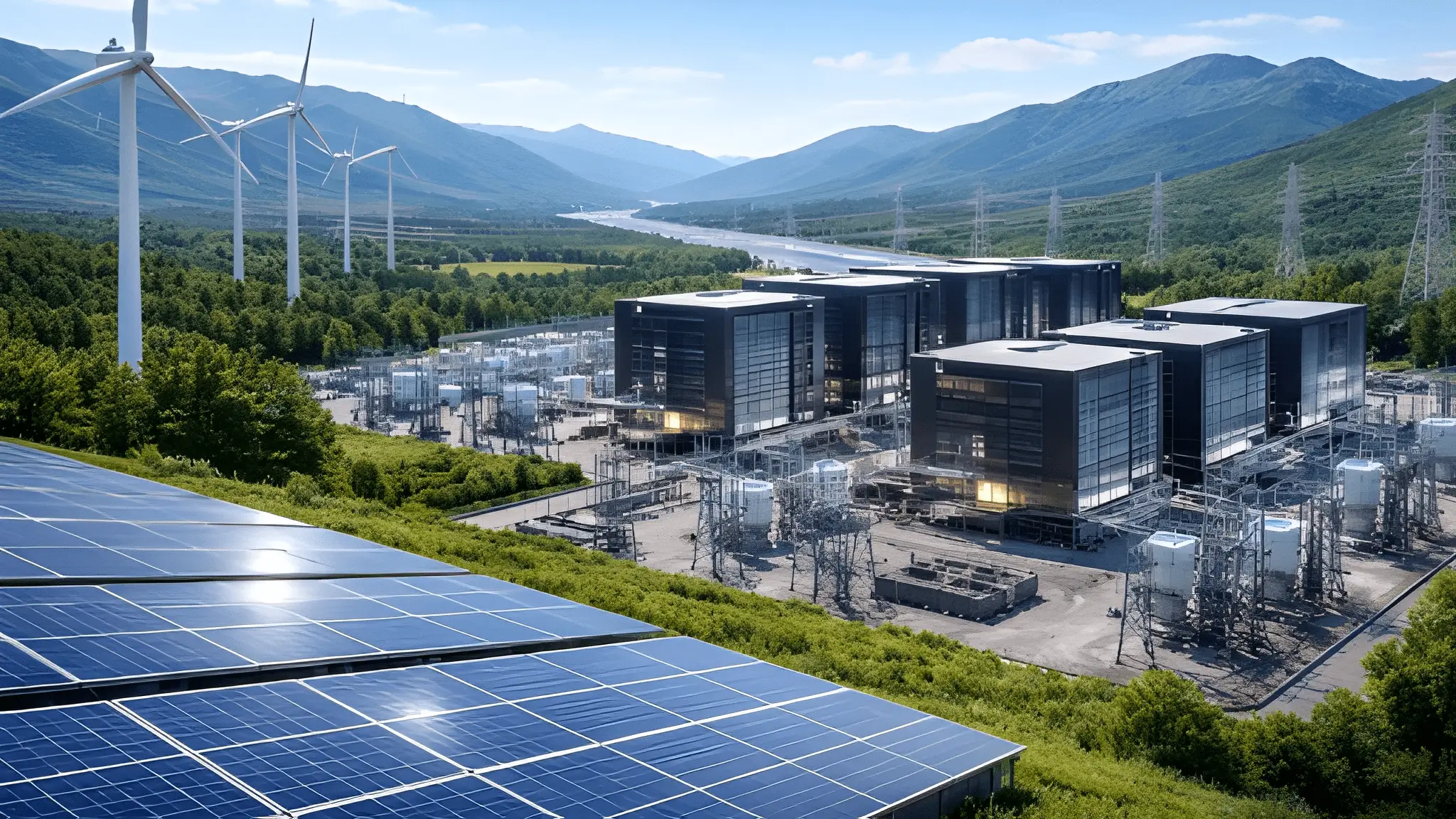
Energy availability has moved from a supporting variable to the primary gating condition in modern data center site selection strategies. Developers no longer begin with land scouting before validating electrical feasibility, as grid access now determines whether a project can even enter consideration. This shift reflects the growing mismatch between compute demand and grid expansion timelines, which increasingly constrain deployment schedules. Energy capacity, interconnection timelines, and substation proximity now filter viable sites before environmental or zoning factors receive attention. As a result, site evaluation frameworks now start with transmission-level mapping instead of geographic desirability metrics. This inversion signals a structural change in how infrastructure planning aligns with power system realities.

The rising intensity of AI workloads has amplified the importance of immediate and scalable power access across hyperscale deployments. Clusters built on advanced accelerators require not just large quantities of power but also predictable delivery within compressed timelines. Developers therefore prioritize sites where utilities can commit capacity with minimal delay, even if those locations lack traditional real estate advantages. Interconnection queues in several regions have extended to multiple years, forcing planners to discard otherwise attractive land parcels. Grid access now plays a decisive role in determining whether a project can advance beyond early-stage evaluation, though developers may still assess land in parallel.This evolution reflects a broader alignment between digital infrastructure growth and energy system constraints.
The concept of ‘powered land’ has emerged as a critical consideration in site qualification frameworks across major infrastructure investors.Land without secured or near-term electricity access has effectively lost its strategic value for large-scale compute deployments. Investment models increasingly price electrical proximity and capacity higher than acreage or location aesthetics. This recalibration also influences how developers engage with utilities during early-stage planning. Energy feasibility studies now precede land acquisition rather than following it as a downstream validation step. The result is a front-loaded approach where energy determines the starting point of development pipelines.
Traditional development workflows once followed a largely linear progression from land acquisition to permitting, followed by power procurement and eventual construction, though this model is increasingly being supplemented by parallel approaches. That sequence has broken down under the pressure of accelerated compute demand driven by artificial intelligence deployments. Developers now pursue parallel workflows where power negotiations, permitting, and design occur simultaneously to compress delivery timelines. This approach reduces latency between site identification and operational readiness, which has become critical in competitive compute markets. Sequential planning models fail to accommodate the urgency required for scaling high-density infrastructure. The collapse of this linear model reflects a broader shift toward concurrency in infrastructure development.

Utilities are increasingly participating earlier in the planning lifecycle, often helping shape project feasibility before land deals fully finalize. Developers engage grid operators during the earliest stages to assess capacity availability and interconnection feasibility. This early engagement allows projects to align with transmission constraints and avoid delays associated with late-stage power negotiations. It also introduces a level of coordination that did not exist in traditional development pipelines. Permitting processes increasingly run in parallel with grid studies, creating a synchronized workflow across stakeholders. As a result, infrastructure planning now operates within a multi-threaded execution model.
The urgency of AI infrastructure deployment has forced organizations to rethink risk allocation across development phases. Instead of deferring energy-related uncertainties to later stages, developers now confront these constraints upfront. This approach reduces the likelihood of stranded investments tied to unviable power scenarios. Financial models also adapt to account for parallel execution risks, including upfront commitments without full regulatory clarity. However, this shift enables faster deployment cycles and improves alignment with market demand. The transition away from sequential planning marks a fundamental reconfiguration of project execution logic.
A new classification perspective has begun to take shape in which sites are increasingly evaluated based on electrical viability alongside geographic suitability. Electrically viable sites offer immediate or near-term access to sufficient grid capacity, robust transmission infrastructure, and favorable interconnection timelines. Geographically viable sites, by contrast, may provide ideal land conditions but lack the electrical backbone required for high-density compute operations. This distinction has introduced a new taxonomy that reshapes how developers evaluate potential locations. Electrically viable sites often attract stronger investor interest due to their ability to support rapid deployment. The emergence of this classification reflects a deeper integration between digital infrastructure and energy systems.
Geographic advantages such as proximity to urban centers or favorable climate conditions no longer guarantee site attractiveness. Developers increasingly accept trade-offs in location if electrical readiness meets deployment requirements. Remote or industrial zones with strong grid connectivity have gained prominence as preferred sites for large-scale facilities. This shift challenges long-standing assumptions about optimal data center placement. Electrically driven decision-making introduces a new hierarchy where power access outweighs traditional real estate metrics. Consequently, site selection strategies now prioritize energy corridors over geographic convenience.
This evolving taxonomy also influences how governments and regions position themselves to attract infrastructure investment. Regions with underutilized grid capacity or proactive energy planning gain competitive advantage in attracting hyperscale projects. Policymakers now focus on strengthening transmission networks and streamlining interconnection processes to enhance site attractiveness. Electrically viable regions often align with industrial zones or areas with legacy energy infrastructure. This alignment creates new clusters of digital infrastructure development that differ from historical patterns. The shift toward electrical viability redefines regional competitiveness in the data center economy.
Power Density Readiness: The New Benchmark for Site Qualification
Power density has emerged as a critical metric that defines whether a site can support next-generation compute workloads. Traditional metrics focused on total megawatt capacity, but modern deployments require high-density delivery within confined physical footprints. GPU-based systems demand significantly higher power per rack, which reshapes how infrastructure planners assess readiness. Sites must now demonstrate the ability to deliver concentrated power loads without compromising reliability or thermal stability. This requirement introduces new engineering challenges at both the facility and grid interface levels. Power density readiness has therefore become a defining benchmark in site qualification.
The shift toward high-density compute environments has exposed limitations in legacy infrastructure designed for lower load profiles. Substations, transformers, and distribution systems must adapt to handle concentrated demand patterns associated with AI workloads. Developers increasingly evaluate whether existing infrastructure can support these density requirements without extensive retrofitting. Sites that can deliver high-density power with minimal modification gain a significant advantage in deployment timelines. This evaluation extends beyond capacity to include factors such as redundancy, load balancing, and cooling integration. Power density readiness now encapsulates a multidimensional assessment of infrastructure capability.
Thermal management considerations further reinforce the importance of power density in site selection processes. High-density loads generate substantial heat, requiring integrated solutions that align with electrical delivery systems. Facilities must coordinate power distribution with advanced cooling technologies to maintain operational efficiency. This interdependence creates a feedback loop where electrical and thermal design decisions influence each other. Developers therefore assess sites based on their ability to support this integrated approach. Power density readiness ultimately defines the operational viability of modern data center environments.
Infrastructure planning is increasingly incorporating scenarios where building design adapts to existing electrical constraints rather than fully dictating them. Developers now shape facility layouts, orientations, and modular configurations based on available power infrastructure. This inversion reflects the growing dominance of energy considerations in determining project feasibility. Architectural flexibility has become essential to align with predefined electrical parameters. Facilities increasingly adopt modular designs that can integrate with existing substations and transmission lines. This approach allows developers to maximize utilization of available power resources.
Design decisions increasingly incorporate grid topology as a foundational element rather than treating it solely as an external constraint. Engineers analyze transmission pathways, substation configurations, and load distribution patterns before finalizing building layouts. This integration ensures that facilities operate efficiently within the limitations of existing infrastructure. It also reduces the need for extensive grid upgrades that can delay project timelines. Buildings effectively become extensions of the power network rather than independent structures. This paradigm shift highlights the convergence of architectural and electrical engineering disciplines.
The concept of infrastructure inversion also influences how developers approach scalability and expansion. Instead of expanding based on land availability, projects scale in alignment with incremental power availability. This model creates phased development strategies that correspond with grid capacity growth. Developers design facilities that can adapt to evolving energy conditions without significant structural changes. This flexibility enables more responsive infrastructure deployment in dynamic market environments. Infrastructure inversion ultimately redefines the relationship between physical assets and energy systems.
The Emergence of Energy-Defined Infrastructure Markets
The data center industry now operates within a framework where energy availability defines market boundaries and growth trajectories. Land-driven expansion models have given way to energy-defined ecosystems that prioritize grid connectivity and capacity. This transition reshapes investment strategies, site selection processes, and regional competitiveness. Developers increasingly compete for access to existing power networks alongside land parcels, reflecting the growing importance of energy availability. Energy infrastructure has become the primary determinant of scalability in digital infrastructure markets. This shift signals a fundamental realignment between compute growth and energy systems.
Energy-defined markets introduce new dynamics that influence how stakeholders collaborate across the value chain. Utilities, developers, and policymakers must coordinate more closely to align infrastructure development with energy availability. This collaboration extends to planning transmission upgrades, optimizing interconnection processes, and managing demand growth. Regions that successfully integrate these elements position themselves as hubs for future infrastructure investment. The competitive landscape increasingly reflects the distribution of energy resources rather than geographic advantages. Energy availability now shapes the contours of digital infrastructure ecosystems.
The emergence of this paradigm reflects a broader transformation in how infrastructure aligns with resource constraints and technological demand. Data centers no longer expand into available land but instead anchor themselves to available power. This anchoring creates a new logic for growth that prioritizes sustainability, efficiency, and scalability. The industry’s evolution toward energy-first models underscores the central role of electricity in enabling digital economies. As this transition continues, infrastructure markets will increasingly organize around energy access rather than physical geography. The result is a redefined landscape where power availability dictates the pace and location of future development.











