 Skip to content
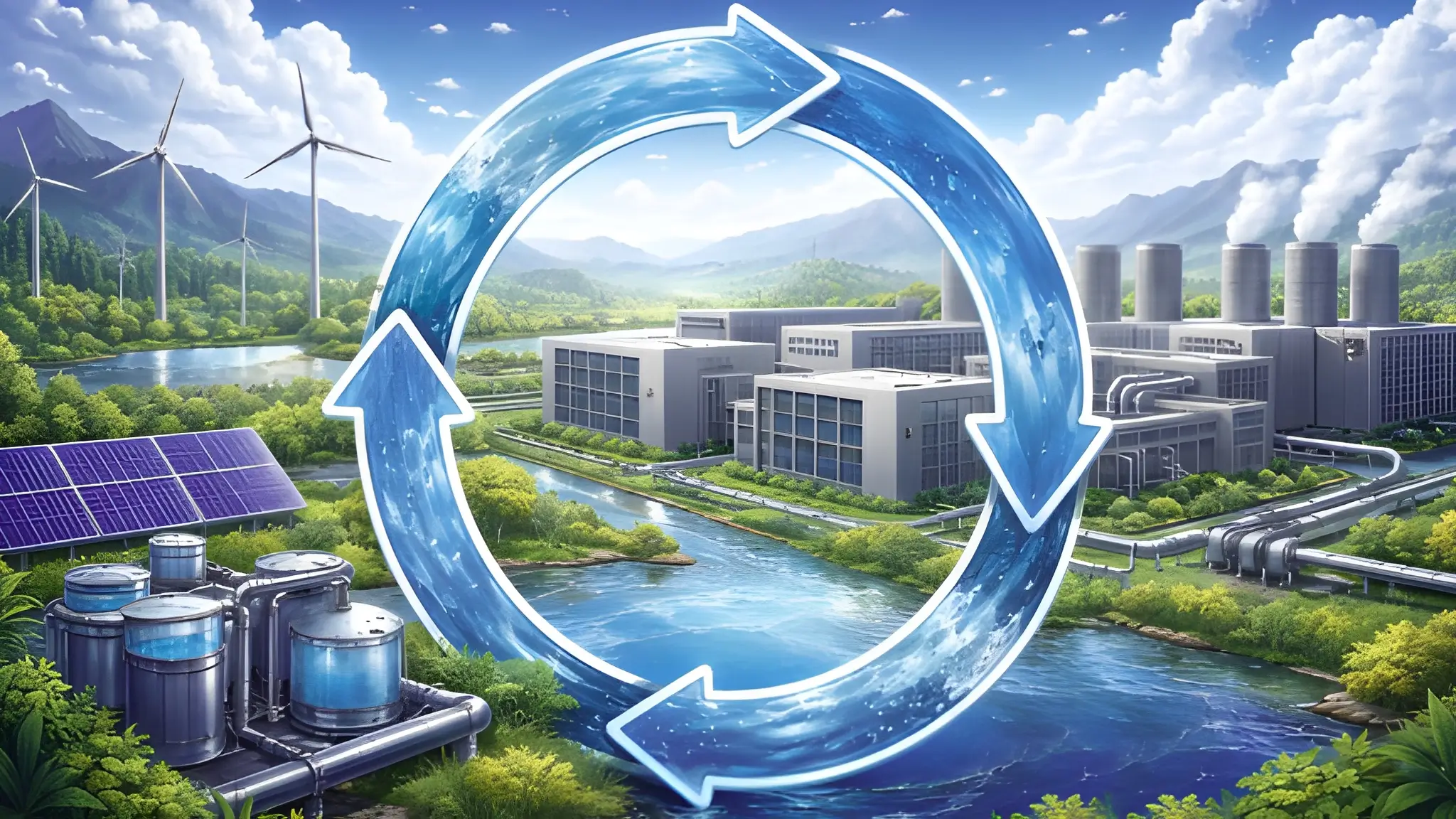
Operators have moved beyond once-through cooling toward recirculation systems that promise reduced withdrawal and improved efficiency. Yet the idea of a fully closed loop remains technically elusive because physical processes impose unavoidable losses across the system. Evaporation in cooling towers continues to act as the primary mechanism of heat rejection, inherently releasing water vapor into the atmosphere. Blowdown processes, required to manage mineral concentration and prevent scaling, further remove water from circulation at regular intervals. These factors ensure that even advanced systems labeled as “closed-loop” still depend on external heat rejection methods such as evaporative or dry cooling, which require either water loss or increased energy input, preventing complete system closure in practical operation.

Cooling infrastructure at hyperscale magnifies these inefficiencies because of the sheer volume of water cycling through thermal exchange systems. Large campuses operate multiple cooling loops with cumulative evaporation and blowdown losses, which, when aggregated across scale, make complete water retention impractical under standard cooling tower operation. Operators often compensate for these losses through continuous makeup water supply, which contradicts the strict definition of circularity. Design innovations such as hybrid cooling and dry cooling aim to reduce dependency, but they introduce trade-offs in energy consumption and thermal performance. Environmental variability, including humidity and temperature fluctuations, further complicates attempts to stabilize water balance. These realities highlight that circularity at scale must contend with physical limits rather than purely engineering ambition.
The Quality Challenge: When Reuse Depends on Water Purity
Water reuse in data centers depends not only on availability but also on maintaining strict quality parameters that protect infrastructure integrity. Cooling systems require water with controlled levels of dissolved solids, biological content, and chemical composition to prevent corrosion and fouling. Recycled or reclaimed water often demands extensive treatment before it can meet these specifications, increasing operational complexity. Membrane filtration, reverse osmosis, and chemical dosing systems become essential components in maintaining usable water quality. Each treatment step introduces additional energy consumption and operational maintenance requirements, as documented in industrial water treatment systems, while also increasing system complexity through added process stages.These constraints shift circular water strategies from simple reuse models into highly engineered chemical management systems.
The relationship between water purity and equipment longevity creates a delicate balance that operators must continuously manage. High-performance cooling systems rely on predictable thermal conductivity and flow characteristics, both of which degrade when water quality fluctuates. Impurities can lead to scaling on heat exchangers, reducing efficiency and increasing the risk of downtime. Biological growth within water systems also poses a risk to both equipment and regulatory compliance, particularly in regions with strict environmental standards. Consequently, operators may supplement recycled streams with higher-quality source water to maintain required chemical and operational thresholds for cooling system performance.This decision underscores how circularity can conflict with performance optimization in mission-critical environments.
Circularity vs Complexity: The Infrastructure Burden of Closing the Loop
Efforts to approach circular water systems introduce a significant increase in infrastructure requirements within data center environments. Advanced treatment facilities, storage reservoirs, and monitoring systems must integrate seamlessly with existing cooling architectures. These additions require increased capital investment relative to baseline cooling systems due to the integration of treatment, storage, and monitoring infrastructure. Operators must design redundancy into water treatment systems to maintain uptime, which further increases system complexity. Maintenance demands also rise as more components require regular inspection, calibration, and replacement. As a result, the pursuit of circularity transforms water management into a parallel operational domain rather than a supporting function.
Complex systems create operational risks that can affect both efficiency and reliability in high-density computing environments. Each additional subsystem introduces potential points of failure that must be mitigated through monitoring and control mechanisms. Skilled personnel become essential for managing these systems, increasing operational costs and resource requirements. Integration challenges can also arise when retrofitting existing facilities with advanced water recycling technologies. However, site-specific constraints such as land availability, water access, and permitting requirements can limit the feasibility of deploying expanded water treatment and storage infrastructure. These factors indicate that the path toward circular water systems involves trade-offs that extend beyond sustainability metrics into operational feasibility.

The Illusion of Zero: Can “Water-Neutral” Claims Achieve True Circularity?
Water-neutral and water-positive claims have gained traction as organizations seek to align with broader sustainability goals. These frameworks often rely on offsetting strategies such as watershed restoration, community water projects, or replenishment initiatives. While such efforts contribute to regional water balance, they do not directly close the loop within the data center itself. The distinction between operational water use and external replenishment remains critical in evaluating true circularity. Sustainability reporting frameworks and corporate disclosures can present indirect replenishment alongside operational efficiency metrics, which may reduce clarity in distinguishing on-site water use from external offset measures. This creates an impression of closure that does not fully reflect the physical realities of water consumption.
Offset-based approaches introduce additional layers of complexity in measuring and verifying water impact. Quantifying the effectiveness of replenishment projects requires long-term monitoring and region-specific analysis. Variability in hydrological conditions can influence whether such projects deliver the intended benefits. Moreover, water-neutral claims often depend on accounting frameworks that aggregate replenishment and consumption across regions, which may not fully reflect localized water stress conditions.Stakeholders increasingly demand transparency in how these claims are substantiated and reported. This scrutiny suggests that true circularity requires direct system-level efficiency rather than reliance on external balancing mechanisms.
Indirect Water Footprint: The Loop That Extends Beyond the Facility
Water consumption associated with data centers extends beyond on-site cooling systems into broader supply chain and energy ecosystems. Electricity generation remains one of the largest indirect contributors to water usage, particularly in thermoelectric power plants. The production of semiconductors and hardware components also involves water-intensive manufacturing processes. These upstream activities form an extended water footprint that challenges the boundaries of circularity within a single facility. Even if on-site systems achieve high levels of reuse, external dependencies continue to draw on global water resources. Therefore, circularity must account for both direct and indirect water flows across the entire lifecycle.
Supply chain considerations introduce additional complexity in measuring and managing water impact at scale. Data center operators often rely on global manufacturing networks that operate under varying environmental standards and water availability conditions. Tracking water usage across these networks requires robust data collection and reporting frameworks. Industry initiatives have begun to address these challenges through standardized metrics and disclosure practices. However, achieving full transparency remains difficult due to the fragmented nature of supply chains. This broader perspective reveals that circularity cannot remain confined to facility boundaries if it aims to reflect true environmental impact.
Circular by Design or Circular by Constraint?
The pursuit of circular water systems in data centers reflects a broader shift toward resource efficiency and environmental accountability. Engineering advancements have enabled significant reductions in water withdrawal and improved reuse within operational systems. Nevertheless, physical constraints, quality requirements, and infrastructure complexity continue to limit the feasibility of fully closed loops. Circularity in water systems is increasingly framed in industry and policy discussions as a progressive reduction of external water dependency rather than the achievement of fully closed-loop operation. Design strategies increasingly focus on minimizing external dependency rather than eliminating it entirely. This approach aligns more closely with the realities of large-scale infrastructure systems that operate within dynamic ecosystems.
Future developments in cooling technology, water treatment, and system integration may further narrow the gap between aspiration and reality. Innovations such as liquid cooling and alternative heat rejection methods could reduce reliance on evaporative processes. Policy frameworks and regulatory pressures may also drive more efficient water use practices across the industry. However, achieving perfect circularity remains unlikely due to the inherent thermodynamic and operational limits involved. Instead, progress will likely manifest through incremental improvements and context-specific solutions tailored to local conditions. This perspective positions circular water systems as a guiding principle rather than a definitive endpoint in data center sustainability.












