
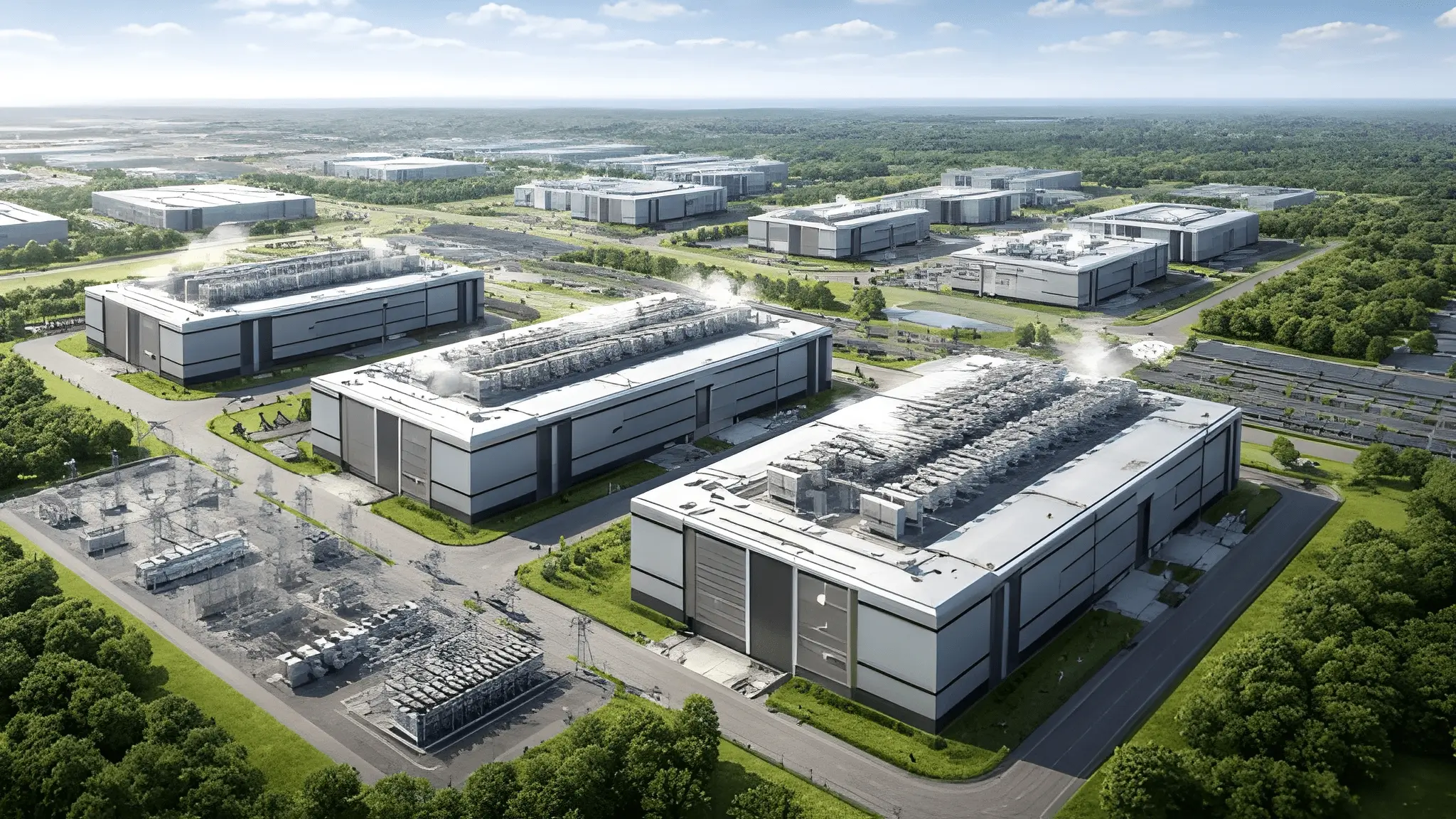
The emergence of ultra-large AI campuses has shifted infrastructure planning toward modular expansion strategies that prioritize adaptability over immediate scale. Operators now design megacampuses as a sequence of deployable capacity blocks, with expansion sizes varying based on site strategy and demand signals rather than adhering to a standardized megawatt range, which allows infrastructure growth to track verified demand rather than projections. This approach reduces financial exposure while maintaining the ability to accelerate deployment when utilization signals strengthen across compute clusters. Developers increasingly align electrical substations, cooling systems, and network topology with these predefined increments to ensure seamless scalability. As a result, each phase operates as an independent yet interoperable unit within a larger ecosystem, preserving both resilience and operational continuity. This design philosophy reflects broader trends in infrastructure modularization observed across hyperscale environments and large-scale industrial systems.

Phased deployment also introduces a disciplined feedback loop between capacity planning and real-time workload demand, which enhances forecasting accuracy across multi-year investment cycles. Infrastructure teams can assess performance metrics, power density trends, and workload characteristics from earlier phases before committing capital to subsequent expansions. This iterative process enables more precise calibration of rack density, cooling efficiency, and power distribution configurations across future builds. In contrast to legacy megaprojects that required full upfront commitment, modular megacampuses allow stakeholders to preserve optionality while maintaining long-term scalability. The strategy supports capital efficiency by reducing idle infrastructure while still enabling rapid scaling when demand materializes. Moreover, it aligns closely with financial models that prioritize return on invested capital over speculative capacity accumulation.
Designing for Idle Efficiency, Not Peak Utilization
Infrastructure design within modular megacampuses increasingly accounts for periods of partial utilization, with efficiency and performance considerations extending beyond peak load conditions even though formal design standards remain anchored to full-capacity optimization. Engineers now optimize systems to maintain energy efficiency even when large portions of infrastructure remain underutilized during ramp-up cycles. This shift requires careful calibration of cooling systems, power distribution units, and airflow management to ensure performance does not degrade at lower load conditions. Variable-speed cooling technologies and advanced power management systems support operational efficiency across fluctuating utilization levels, particularly in high-density environments where load variability is common. Consequently, operators can avoid the cost penalties traditionally associated with idle infrastructure while preserving readiness for rapid scaling. The emphasis on idle efficiency reflects a deeper understanding of real-world deployment timelines in hyperscale environments.
Designing for suboptimal utilization also requires rethinking redundancy models, which historically assumed consistent high load across facilities. Instead of overprovisioning for peak demand, operators now implement flexible redundancy architectures that scale alongside deployed capacity. This approach reduces unnecessary capital expenditure while maintaining resilience standards required for mission-critical workloads. Additionally, dynamic load balancing across active and inactive modules helps distribute operational stress more evenly, extending equipment lifespan. Energy optimization software further enhances efficiency by adjusting cooling and power delivery in real time based on workload distribution. However, maintaining performance consistency under these conditions demands advanced monitoring and control systems that integrate across all infrastructure layers. These innovations collectively redefine how efficiency metrics apply within partially utilized megacampus environments.

Pre-Integrated Infrastructure vs Just-in-Time Deployment
A critical strategic decision in modular megacampus development involves determining how much infrastructure to pre-integrate before demand materializes. Pre-laying backbone systems such as high-voltage transmission lines, chilled water loops, and fiber connectivity can significantly accelerate deployment timelines for future phases. This approach reduces lead times for expansion and ensures that new capacity integrates seamlessly with existing systems. However, it also introduces trade-offs related to upfront capital allocation, as portions of pre-deployed infrastructure may remain underutilized until subsequent phases come online. Developers must therefore balance speed-to-market advantages against the financial implications of underutilized assets. This trade-off shapes the overall economic model of large-scale AI campuses and influences long-term investment strategies.
Conversely, just-in-time deployment strategies emphasize incremental installation of infrastructure components in alignment with immediate demand signals. This model minimizes upfront capital expenditure and allows operators to incorporate newer technologies in later phases, improving adaptability in rapidly evolving technology environments. Operators can incorporate the latest advancements in cooling, power efficiency, and hardware compatibility into each new phase, thereby avoiding technological obsolescence. However, this approach may introduce delays in scaling if supply chain constraints or permitting processes slow down deployment timelines. In addition, repeated construction cycles can increase operational complexity and disrupt ongoing activities within active campus zones. Therefore, many operators adopt hybrid strategies that combine pre-integrated backbone systems with phased deployment of higher-level infrastructure components. This blended model provides both flexibility and readiness, enabling more resilient scaling pathways.
Workload Sequencing Across Build Phases
Effective utilization of modular megacampuses depends heavily on how operators sequence workloads across different deployment phases. Early-stage capacity is typically allocated based on immediate workload demand and infrastructure readiness, with operators prioritizing efficient utilization rather than adhering to fixed workload-to-phase assignments. As additional phases come online, operators redistribute workloads to optimize performance, efficiency, and resource allocation across the campus. Fine-tuning and inference workloads typically migrate to newer phases that offer improved energy efficiency and updated hardware configurations. This sequencing strategy ensures that each phase operates at optimal efficiency while supporting evolving computational requirements. Moreover, it allows operators to maintain high utilization rates even during transitional periods between expansion stages.
Workload orchestration also requires close coordination between infrastructure teams and software platforms that manage compute distribution across clusters. Advanced scheduling systems analyze workload characteristics, latency requirements, and energy consumption patterns to determine optimal placement within the campus. This integration enables dynamic reallocation of workloads as new capacity becomes available, thereby minimizing idle resources. In addition, operators can leverage workload diversity to stabilize power consumption and thermal loads across different phases. For instance, combining training workloads with inference tasks can create more balanced utilization profiles across infrastructure modules. However, achieving this level of coordination demands sophisticated orchestration frameworks and deep visibility into system performance metrics. These capabilities increasingly define competitive advantage in large-scale AI infrastructure operations.
Avoiding Stranded Capacity Through Software-Orchestrated Scaling
Software orchestration layers have become central to preventing stranded capacity in modular megacampuses, as they enable real-time alignment between infrastructure availability and workload demand. These systems integrate with resource schedulers, cluster managers, and predictive analytics tools to dynamically allocate compute resources across the campus. By continuously analyzing utilization patterns, orchestration platforms can identify underused capacity and redirect workloads to maximize efficiency. This capability reduces the likelihood of idle infrastructure persisting across newly deployed phases. In addition, predictive analytics and modeling tools help operators anticipate demand patterns and inform capacity planning decisions across deployment cycles. Therefore, software control mechanisms serve as a critical bridge between physical infrastructure and operational efficiency.
The integration of orchestration platforms with energy management systems further enhances the ability to optimize infrastructure utilization. Operators are increasingly exploring alignment between workload distribution and energy availability, particularly in regions where renewable energy supply fluctuates throughout the day, although large-scale implementation remains in early stages.This alignment not only improves sustainability metrics but also reduces operational costs associated with peak energy consumption. Predictive maintenance capabilities embedded within orchestration systems also contribute to minimizing downtime and preserving infrastructure performance. However, implementing these systems at scale requires robust data pipelines and high levels of interoperability across hardware and software layers. As a result, orchestration has evolved from a supporting function into a foundational component of megacampus design. These developments highlight the increasing convergence of software intelligence and physical infrastructure in modern data center ecosystems.
From Megaprojects to Living Infrastructure Systems
The evolution of megacampuses into modular, software-driven systems reflects a broader transformation in how infrastructure supports AI-driven workloads. Instead of static builds designed for peak capacity, operators now treat these campuses as living systems that evolve continuously in response to demand signals. Phased deployment strategies allow infrastructure to scale with precision while minimizing financial and operational risks associated with overbuilding. Integration of software orchestration ensures that each increment of capacity contributes effectively to overall utilization. Meanwhile, energy alignment and workload sequencing enhance both efficiency and sustainability across the campus lifecycle. This shift represents a fundamental redefinition of scale in the context of modern data infrastructure.
Looking ahead, the success of multi-gigawatt megacampuses will depend less on their absolute size and more on their ability to adapt dynamically to changing technological and market conditions, as deployments at the 10 GW scale remain largely conceptual.Operators must continue refining modular design principles, orchestration capabilities, and energy strategies to maintain competitiveness in a rapidly evolving landscape. The convergence of these elements creates infrastructure ecosystems that can respond to both immediate and long-term demands with equal effectiveness. Furthermore, this model supports more sustainable growth by aligning resource deployment with actual usage patterns. As AI workloads continue to expand in scale and complexity, modular megacampuses will play a central role in enabling efficient and resilient infrastructure growth. Ultimately, the transition from megaprojects to living systems defines the next phase of data center evolution.











