 Skip to content
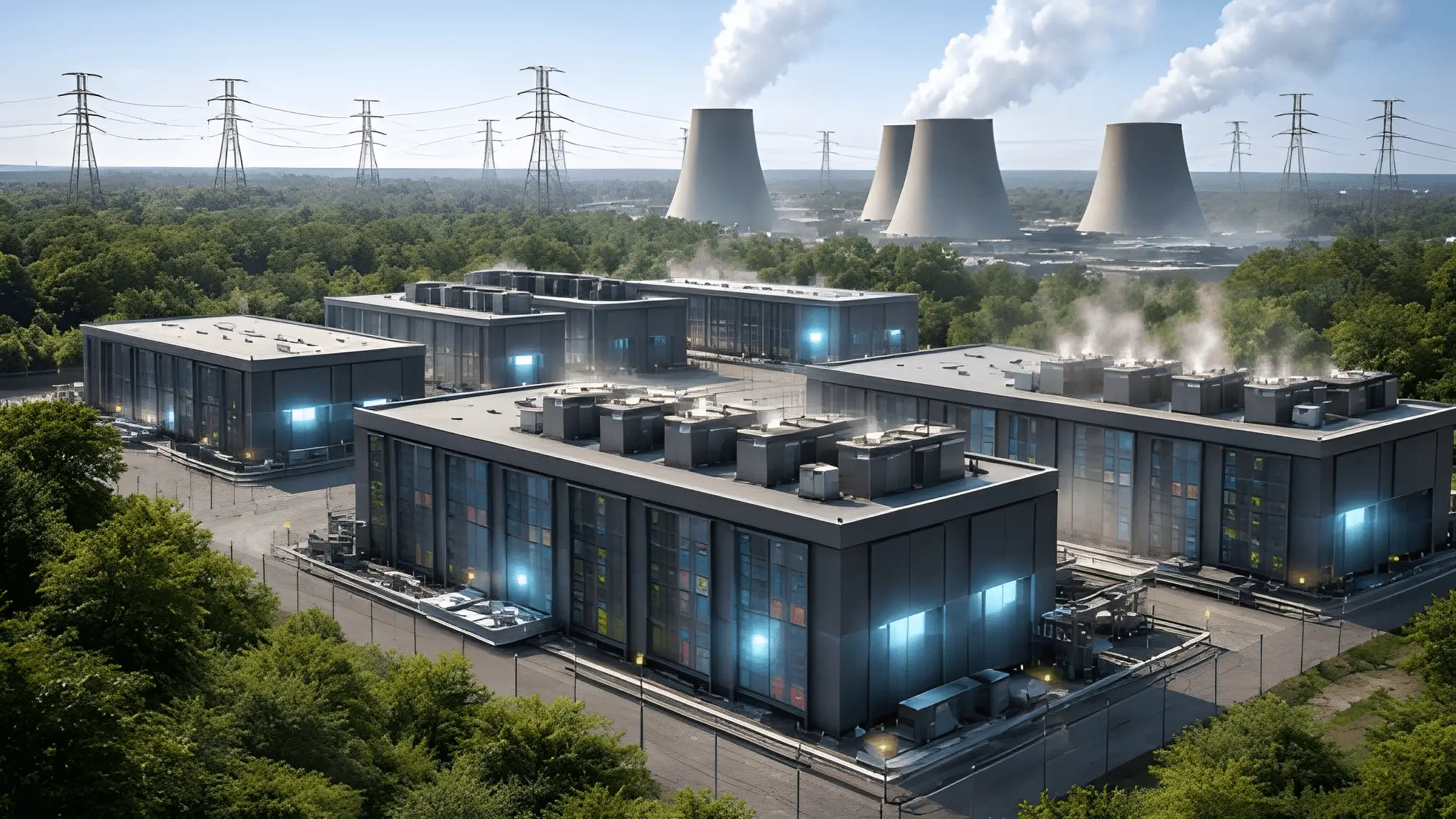
The breakneck expansion of artificial intelligence infrastructure is now colliding with a rapidly intensifying political reckoning. A proposal from Bernie Sanders and Alexandria Ocasio-Cortez aims to halt new datacenter construction across the United States, marking one of the most aggressive federal interventions yet in the AI economy.

The legislation calls for an immediate moratorium on new AI datacenters, a move designed to create space for federal regulators to define environmental, economic and societal guardrails. The initiative reflects a broader shift in Washington, where policymakers now treat compute infrastructure not just as a growth engine, but as a systemic risk vector.
“Despite the extraordinary importance of this issue and its impact on every man, woman and child in this country, AI has received far too little serious discussion here in our nation’s capital,” Sanders told reporters on Wednesday. “I fear that Congress is totally unprepared for the magnitude of the changes that are already taking place.”
That warning captures a widening disconnect: while capital continues to flood into AI infrastructure, regulatory frameworks lag far behind the scale and speed of deployment.
From Edge Case to Mainstream Policy Consideration
The idea of restricting datacenter expansion would have seemed politically untenable just a year ago. However, local governments across multiple US states have already moved ahead with temporary bans, citing strain on electricity grids, water resources and community infrastructure.
This groundswell has shifted the Overton window. Since mid-2025, municipalities in states such as Missouri, Indiana, Georgia and North Carolina have enacted restrictions, while at least 11 states now weigh similar measures. “A few months ago, when I proposed a moratorium on AI datacenters, it was perceived as a radical, fringe and Luddite idea,” Sanders wrote in a February statement. “Well, not any more.” The federal proposal builds on that local momentum, effectively elevating fragmented resistance into a coordinated national policy discussion.

At the center of the debate lies energy. AI datacenters, particularly those supporting large-scale model training and inference, demand unprecedented levels of electricity. This demand increasingly collides with grid constraints, long permitting timelines and decarbonization targets.
One analysis cited in reporting has shown that regions with dense clusters of datacenters have experienced power cost increases of as much as 267% over five years. These price signals highlight a structural imbalance: infrastructure expansion has outpaced energy system readiness. The proposed moratorium would remain in effect until federal legislation addresses several key risks, including rising utility costs, emissions intensity and grid stability. Moreover, it signals a recognition that compute growth cannot remain decoupled from energy system realities.
Environmental Externalities Move to the Forefront
Water consumption and emissions now sit at the heart of the AI infrastructure debate. Cooling requirements for hyperscale facilities have intensified scrutiny, particularly in drought-prone regions where water allocation already faces competing demands.
Environmental groups, including estimates cited by advocacy organizations, warn that datacenters could consume a significant share of allowable power-sector emissions under current US climate targets if growth continues unchecked. This projection reframes AI infrastructure from a digital concern into a material climate variable.
The proposed legislation explicitly targets these externalities, mandating safeguards to reduce environmental harm before expansion resumes. However, industry advocates argue that AI can also drive efficiency gains and emissions reductions across sectors, creating a tension between near-term impacts and long-term benefits.
Export Controls Expand the Policy Scope
The bill extends beyond domestic infrastructure. It proposes restrictions on exporting advanced computing hardware, including AI chips, to countries that lack comparable regulatory protections.
This provision adds a geopolitical dimension to the policy. By linking hardware flows to governance standards, lawmakers aim to shape global AI development norms while reinforcing domestic safeguards. The approach aligns with broader US efforts to control the diffusion of advanced semiconductors, particularly in relation to strategic competitors such as China.
The legislation also addresses labor displacement, a concern that continues to gain traction as AI adoption accelerates across industries. “Last year alone, AI was responsible for over 54,000 layoffs nationwide,” said Ocasio-Cortez. “And when we talk about those jobs, it’s not just a number. These are industries, these are communities, these are families.”
Lawmakers want mechanisms to ensure that the economic gains from AI distribute more broadly. The proposal calls for policies that prevent job loss from outpacing job creation and that channel wealth generated by AI companies back into the public domain. Therefore, the moratorium functions not only as an environmental or infrastructure measure, but also as a lever for rebalancing the economics of automation.
Public Sentiment Turns Cautious
Polling data cited in recent reports underscores a shift in public perception. A growing share of Americans express concern about AI’s societal impact, with majorities supporting stronger regulation.
Utility costs and energy consumption rank among the most immediate worries. Surveys show that voters consistently prioritize these issues when compared against other AI-related concerns.
This change in sentiment has created political space for proposals that would have previously faced stronger resistance. It also increases pressure on lawmakers to act before infrastructure buildout locks in long-term consequences.
Industry Promises Face Skepticism
In response to rising concern, technology companies have begun offering voluntary commitments to mitigate the impact of their datacenters. The Trump administration recently convened executives to secure voluntary pledges aimed at shielding consumers from utility rate increases.
Critics argue that these voluntary commitments lack enforcement mechanisms and fail to address structural issues. Public skepticism remains high, with many viewing voluntary pledges as insufficient given the scale of the challenge.
“We cannot sit back and allow a handful of billionaire Big Tech oligarchs to make decisions that will reshape our economy, our democracy and the future of humanity, said Sanders in his emailed statement. “We need serious public debate and democratic oversight over this enormously consequential issue. The time for action is now.” The debate extends beyond economics and infrastructure. Lawmakers have raised concerns about AI’s implications for democracy, privacy and mental health.
“What does it mean for young people to form friendships with AI and become more and more lonely and isolated from other human beings?” Sanders asked. “Everybody understands we have a major mental health crisis for our young people right now. I fear that AI could make it even worse.”
He also warned about synthetic media and misinformation risks, highlighting the potential for highly convincing fabricated content to undermine democratic processes.
“The story of AI is a story of corruption,” said Ocasio-Cortez. “It is fueled and funded by the same multi billion dollar corporations lobbying politicians to sit back and do nothing while they harm our communities.” These concerns position AI not just as a technological shift, but as a societal inflection point requiring coordinated governance.
Advocacy Groups Amplify Pressure
Civil society organizations have played a key role in pushing the moratorium into mainstream debate. More than 200 groups, led by Food and Water Watch, have called for federal action to curb datacenter expansion.
Mitch Jones, managing director of policy and litigation at Food and Water Watch, applauded the new proposal.
“We need a halt to the explosive growth of new AI datacenter construction now, because political and community leaders across the country have been caught completely off guard by this aggressive, profit-hungry industry,” he said. “It has yet to be determined if – not how – the industry can ever operate in a manner that sufficiently protects people and society from the profusion of inherent hazards and harms that datacenters bring wherever they appear.” Environmental advocates have echoed similar warnings, framing the datacenter boom as a potential ecological crisis.
Despite growing support, the proposal faces steep odds in Congress. The current administration continues to prioritize rapid AI development, viewing it as a strategic imperative for economic and national security leadership.
On Wednesday, the White House announced the nomination of major technology figures to an advisory committee focused on AI policy, reinforcing a pro-growth stance. This divergence highlights a fundamental policy tension: whether to accelerate AI deployment to maintain global competitiveness, or to pause and establish safeguards that could slow near-term progress.
Compute Growth Meets Systemic Limits
At a structural level, the moratorium debate reflects a deeper shift in how markets evaluate AI infrastructure. The limiting factors have expanded beyond capital and silicon to include energy availability, environmental capacity and social tolerance.
Datacenters now sit at the intersection of multiple constrained systems. Power grids, water resources and regulatory frameworks must all scale in parallel, a condition that rarely holds in practice.
“AI and robotics are creating the most sweeping technological revolution in the history of humanity,” Sanders said in an emailed statement. “The scale, scope, and speed of that change is unprecedented.” That scale introduces second-order effects that traditional growth models fail to capture.
A Defining Test for AI Governance
The introduction of this legislation signals the beginning of a more structured phase in AI governance. It brings together environmental policy, labor economics, national security, and technological innovation into a single legislative framework.
However, the outcome remains uncertain. While the bill may not pass, it has already shifted the Overton window, making previously fringe ideas part of mainstream policy discourse. Meanwhile, the broader implication is clear: the era of unchecked AI infrastructure expansion is giving way to one of negotiated growth. Policymakers, industry leaders, and communities must now define the boundaries of that growth.
The question is no longer whether guardrails will emerge, but whether they will arrive in time to shape the trajectory of the AI economy.












