 Skip to content
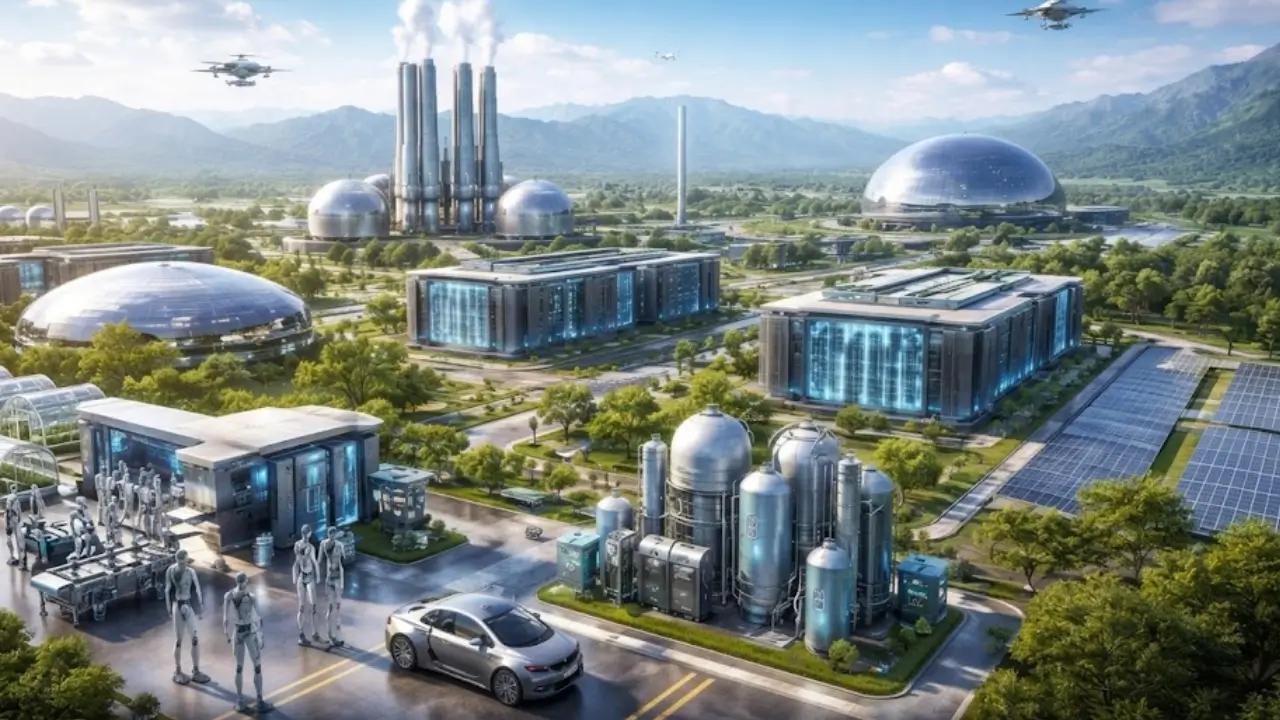
The buildout of U.S. artificial intelligence infrastructure is accelerating as MacroValor Corporation and Favis Advanced Robotics move to establish what they describe as the largest sovereign compute initiative.

The companies unveiled plans for Mount Hydrogen, a 3,000-megawatt AI, robotics, and semiconductor campus in Austin. The project aims to unify energy generation, advanced compute, and domestic manufacturing within a single operational footprint. Initial site planning, partner evaluations, and infrastructure modeling are already underway.
The scale reflects a growing mismatch between AI ambition and physical infrastructure readiness. U.S. technology firms increasingly face constraints tied to grid reliability, semiconductor supply exposure, and the accelerating demand for high-density compute. Mount Hydrogen positions itself as a vertically integrated response to these pressures.
“The bottleneck for AI is no longer the model, it’s the physical infrastructure behind it. Mount Hydrogen is how you solve energy, compute, and supply chain simultaneously, on American soil.” said, Steve Favis, CEO, Favis Advanced Robotics

Energy-First Architecture Anchors the Campus
At the center of the project sits a dedicated 3,000 MW natural hydrogen energy network. The system operates independently of the public grid, delivering continuous baseload power tailored for AI-scale workloads.
This approach introduces structural advantages that conventional data center models struggle to replicate. Fixed long-term energy costs shield operators from grid volatility and regulatory swings. In parallel, hydrogen baseload eliminates intermittency concerns that affect renewable-heavy deployments. Thermal management, often a bottleneck in GPU-intensive environments, integrates directly into the campus design.
However, the strategic implication runs deeper. By decoupling compute from public grid dependencies, MacroValor effectively redefines site selection logic for hyperscale AI infrastructure.
Subvertio AI Pushes Toward On-Device Intelligence
Mount Hydrogen will also act as the primary development environment for Subvertio AI, a platform designed to operate directly on sovereign hardware rather than through centralized cloud systems.
The architecture emphasizes multi-modal reasoning across vision, language, and embedded control systems. It also integrates self-diagnostics and runtime optimization, enabling continuous operation without reliance on external data pathways.
Therefore, Subvertio reflects a broader shift toward localized inference, particularly in defense, industrial automation, and mobility systems where latency and data sovereignty are critical.
Industrial-Scale Humanoid Robotics Enters Production
Favis Advanced Robotics plans to manufacture and train its Seraphim humanoid platform at the campus, extending Mount Hydrogen’s scope beyond compute into physical automation.
Seraphim targets precision deployment across defense, hazardous environments, and industrial operations. The system combines high-density proprioceptive sensing with nonlinear torque actuation, enabling human-like motion dynamics and fine motor control.
Training cycles will run on hydrogen-powered simulation clusters, allowing rapid iteration without the constraints imposed by conventional energy infrastructure. Moreover, this setup could compress development timelines for robotics systems that traditionally depend on limited compute availability.
The campus will also serve as a proving ground for Tachyon Link, a wireless interconnect architecture designed to replace traditional fiber cabling within data centers.
The system introduces ultra-low latency mesh networking between compute nodes, enabling dynamic bandwidth allocation based on workload demands. As a result, infrastructure deployment timelines could shrink while operational flexibility improves.
This shift away from fixed physical interconnects signals a rethinking of how hyperscale environments scale internally.
Domestic Semiconductor Pipeline Takes Shape
Mount Hydrogen includes a manufacturing layer through the ARC platform, a new hardware stack built on RISC-V architecture with FPGA acceleration and native AI inference optimization.
The initiative aims to establish a fully domestic semiconductor pipeline, covering everything from silicon design to finished devices such as the ARC Computer and ARC Phone. This move directly addresses ongoing concerns around foreign dependency in chip supply chains.
Furthermore, integrating semiconductor production within the same campus as compute and energy creates a tightly coupled ecosystem rarely seen in existing infrastructure models.
Expansion Signals a National Infrastructure Play
Mount Hydrogen represents the first phase of a broader rollout strategy that extends well beyond a single site. Planned expansion includes 30 hydrogen-powered regional AI data centers, scaled humanoid robotics manufacturing, and advanced additive production capabilities.
The roadmap also incorporates defense and industrial supply chain integration, positioning the initiative as both a commercial and strategic infrastructure layer.
Meanwhile, MacroValor and Favis Advanced Robotics are evaluating strategic partners and early-stage investors to participate in the development program. The scale and ambition suggest a long-term bet on vertically integrated, sovereign AI ecosystems as the next evolution of global compute infrastructure.












