 Skip to content
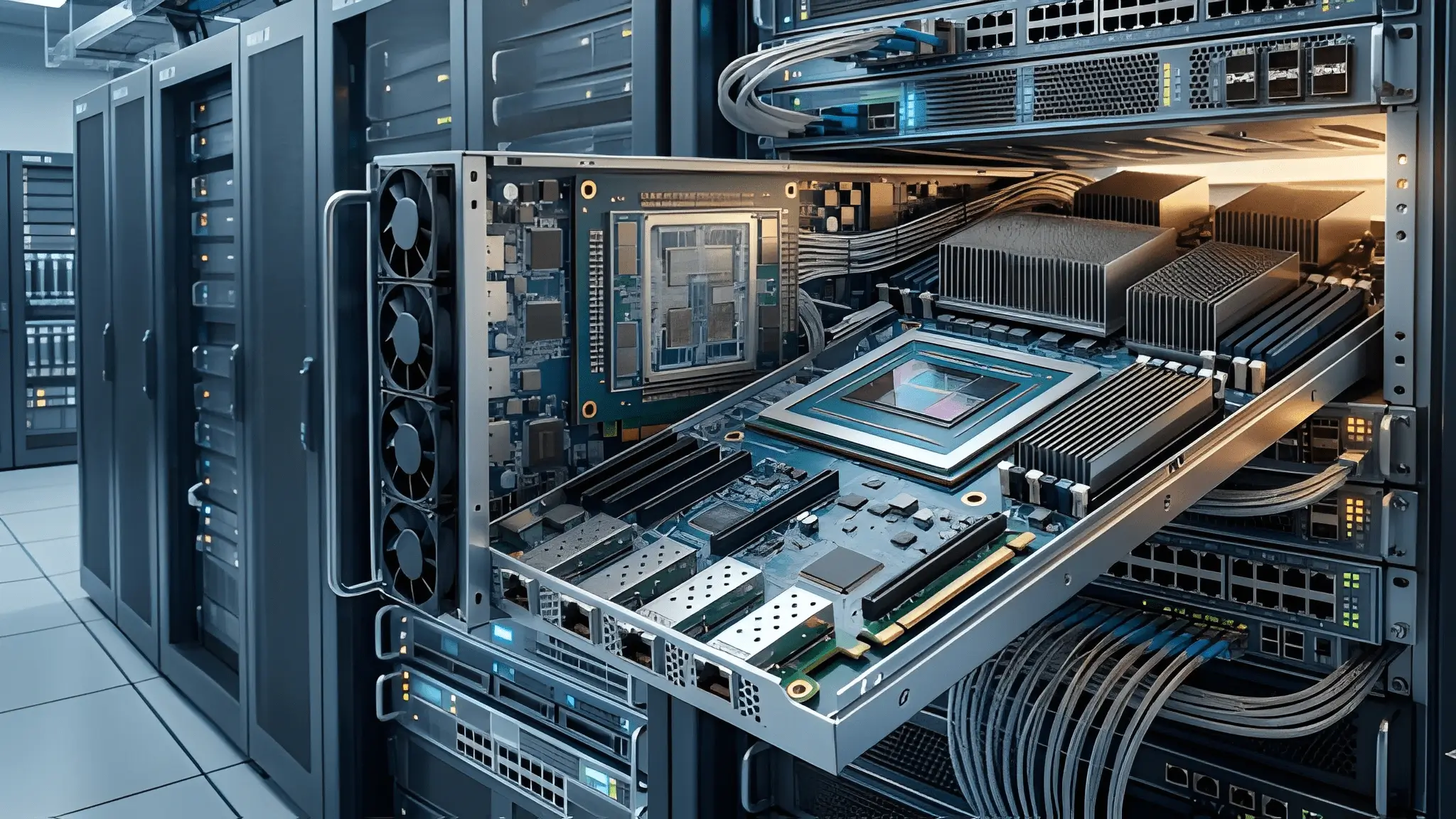
Altera and Arm are extending a decades-long collaboration into the core of AI data center infrastructure, signaling a broader industry pivot toward programmable, heterogeneous compute stacks.

The expanded integration links Altera’s FPGA portfolio with Arm’s AGI CPU, built on the Arm Neoverse CSS V3 platform. This move positions programmable acceleration as a foundational layer in next-generation AI architectures rather than a peripheral add-on.
For system architects, the implications are structural. AI data centers are no longer optimized solely for peak compute throughput; they are increasingly designed for adaptability, latency sensitivity, and workload-specific tuning. As a result, FPGA-CPU integration is emerging as a critical design pattern.
From Embedded Roots to Data Center Core
For over twenty years, Altera and Arm have collaborated across embedded, industrial, and communications markets. Their joint work has historically centered on SoC FPGAs, where deterministic performance and lifecycle longevity are essential.

However, that partnership is now moving upstream into hyperscale and enterprise AI environments. The integration extends programmable acceleration into Arm-based server architectures, an area gaining traction as cloud providers diversify away from traditional x86 dominance.
“The next generation of data center infrastructure will be shaped by increasingly intelligent AI workloads and the need for purpose-built compute,” said Mohamed Awad, Executive Vice President, Cloud AI Business Unit, Arm. “The Arm AGI CPU provides the efficient compute foundations required for these systems, and collaborating with partners like Altera helps expand that capability across the broader ecosystem.”
Why FPGAs Are Re-Emerging in AI Infrastructure
FPGAs have long occupied a niche role in data centers, typically deployed alongside CPUs and GPUs. They handle specialized tasks such as data pre-processing, networking acceleration, and orchestration of AI inference pipelines. Now, their role is expanding.
Altera’s FPGA solutions are already embedded in deployment models such as PCIe accelerator cards, SmartNICs, and DPUs, architectures that push compute closer to data paths. Consequently, latency-sensitive AI workloads benefit from real-time processing and deterministic execution.
The integration with Arm’s AGI CPU amplifies this advantage. It enables tighter coupling between general-purpose compute and programmable logic, reducing bottlenecks across data pipelines. Arm’s presence in data centers has steadily grown, driven by power efficiency and scalable performance. With the AGI CPU built on Neoverse CSS V3, Arm is targeting AI-native workloads that demand both throughput and efficiency.
Moreover, hyperscale operators are increasingly adopting Arm-based architectures to optimize total cost of ownership while maintaining performance. This trend aligns with the need for customizable compute stacks, where programmable acceleration plays a key role.
By integrating FPGAs directly into Arm ecosystems, the partnership creates a more cohesive platform for AI infrastructure, one that balances flexibility with performance at scale.
Unlocking a New Class of AI Compute Platforms
The collaboration points toward a new class of heterogeneous computing platforms. These systems combine CPUs, GPUs, and FPGAs in tightly integrated configurations, enabling workload-specific optimization.
“Altera and Arm have a long-standing track record of delivering SoC FPGA solutions targeting embedded markets,” said Raghib Hussain, president and CEO of Altera. “At the same time, Altera has established a strong footprint in data center infrastructure with a significant install base of FPGA-based SmartNICs and DPUs. This expanded collaboration with Arm enables a new class of heterogeneous computing designed to meet the growing performance and flexibility requirements of AI data centers.”
This approach reflects a broader industry realization: no single processor type can efficiently handle the diversity of AI workloads. Instead, programmable infrastructure is becoming essential for scaling AI systems.
The Altera-Arm partnership introduces competitive pressure across the AI hardware landscape. GPU-dominated architectures face increasing scrutiny as enterprises seek more flexible and cost-efficient alternatives.
Programmability Becomes Infrastructure
Additionally, FPGA-based acceleration offers advantages in scenarios where latency, determinism, and customization outweigh raw compute density. These factors are critical in edge-to-core AI pipelines, financial modeling, telecommunications, and real-time analytics.
Therefore, the collaboration is not just a product integration, it represents a strategic alignment aimed at redefining how AI infrastructure is built and deployed. AI data centers are entering a phase where programmability is no longer optional, it is foundational. The integration of Altera FPGAs with Arm’s AGI CPU reflects this shift toward adaptable, workload-aware infrastructure.
As AI workloads grow more complex, data center architectures must evolve beyond static compute models. The Altera-Arm alliance demonstrates how programmable acceleration can bridge performance gaps while enabling long-term scalability. In the race to define AI infrastructure, flexibility is emerging as the decisive advantage.












