 Skip to content
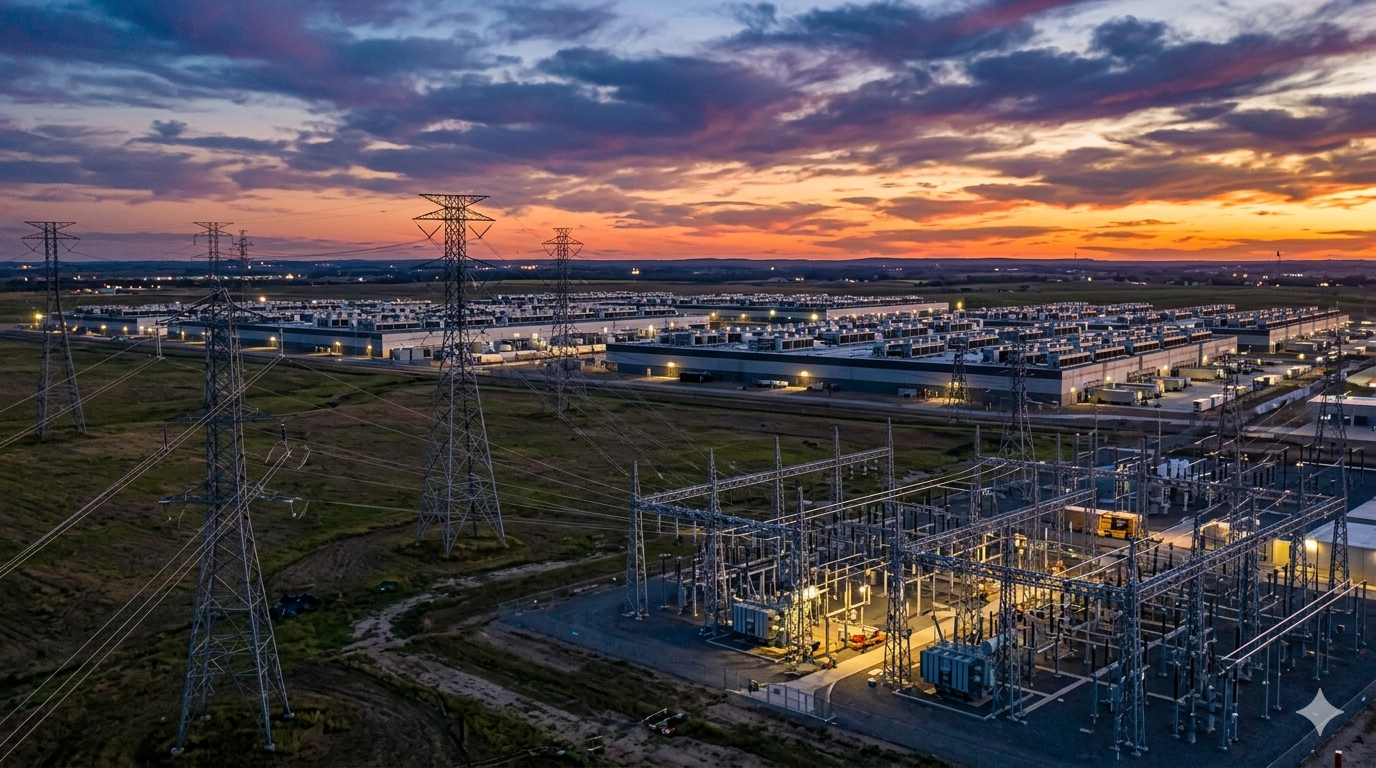
The data center industry has responded to growing scrutiny over its grid impact with a set of arguments that follow a familiar pattern. Operators point to renewable energy commitments, efficiency improvements, and demand response participation as evidence that the industry manages its grid footprint responsibly. Trade associations publish frameworks for voluntary best practices. Individual companies announce ambitious sustainability targets with timelines that extend far enough into the future that accountability remains abstract. These responses are not fabricated. The industry has made genuine progress on operational energy efficiency, and many large operators have pursued renewable energy procurement with real commitment.

Why Voluntary Action Misreads the Problem
The argument that voluntary action and self-regulation can resolve the structural tension between accelerating AI infrastructure demand and constrained grid capacity misreads both the nature of the problem and the history of how industries behave when growth objectives conflict with public infrastructure obligations. The grid capacity constraint that data center development encounters in markets across North America is not primarily a consequence of poor environmental stewardship by individual operators. It reflects the cumulative impact of many individually rational investment decisions on infrastructure that different demand assumptions built, and that cannot expand quickly enough to accommodate the current pace of load growth regardless of how efficiently any single operator runs its facility.
No amount of power usage effectiveness improvement by individual operators resolves the fundamental mismatch between the rate at which new large loads connect to the grid and the rate at which transmission and distribution infrastructure can expand to serve them. That mismatch requires systemic intervention at the regulatory and policy level, not incremental voluntary improvement by individual actors. The political dynamic around data center regulation has shifted faster than the industry’s communication strategy has adapted. Legislators who previously treated data centers as unambiguously positive economic development investments now ask harder questions about grid impacts, cost allocation, and the distribution of benefits and burdens between data center operators and other electricity customers.
The Senate letters requesting mandatory energy reporting from the Energy Information Administration reflect a recognition that the federal government currently lacks the data infrastructure to even measure the problem accurately, let alone address it through evidence-based policy. That recognition, once it takes hold in legislative and regulatory institutions, tends to produce frameworks that move faster and impose requirements more stringent than any the industry would have designed for itself.

What Self-Regulation Cannot Solve
Voluntary commitments address the behaviors that individual operators control. They do not address the systemic effects that emerge from the aggregate behavior of many operators making independent decisions in the same constrained infrastructure environment. Interconnection queue backlogs in major transmission regions reflect the cumulative impact of thousands of individual interconnection requests, each filed by an operator making a rational business decision. No individual operator has the incentive or the ability to reduce its queue filings in order to relieve pressure on the overall queue, because doing so would simply advantage competitors who continue filing.
The queue problem is a collective action problem that voluntary individual behavior cannot resolve. It requires regulatory intervention that changes the rules under which all operators file interconnection requests and prioritizes queue positions based on criteria that serve the public interest rather than filing speed alone. Cost allocation for grid upgrades triggered by large load additions follows the same logic. Individual operators negotiate cost allocation in their interconnection agreements with utilities, and those negotiations produce outcomes that reflect the relative bargaining power of the parties rather than a coherent public policy framework for who should bear the cost of expanding grid capacity to serve AI infrastructure demand.
The result is inconsistent cost allocation across markets that creates perverse incentives and does not reflect the public benefit that AI infrastructure investment generates. A regulatory framework that establishes clear, consistent cost allocation principles across markets would produce more equitable outcomes than the current patchwork of individually negotiated agreements, but it requires regulatory action that the industry cannot substitute with voluntary coordination.
The History of Infrastructure Industries and Self-Regulation
The pattern of infrastructure industries claiming self-regulatory sufficiency while resisting external oversight has a consistent historical record. Telecommunications, financial services, and energy generation have all passed through cycles in which industry arguments against regulatory intervention eventually gave way to frameworks that the industry resisted but that proved necessary to address problems that voluntary action failed to resolve. The data center industry is not unique in making these arguments, and it is not unique in the genuine belief that its voluntary actions are adequate. What the historical record suggests is that industries embedded in critical public infrastructure tend to underestimate the systemic effects of their aggregate behavior and overestimate the adequacy of voluntary coordination mechanisms when growth objectives create pressure against restraint.
The current moment in data center regulation resembles the early stages of previous infrastructure regulatory cycles more than the industry’s self-presentation suggests. Regulatory attention is increasing, data collection frameworks are being established, and the political constituency for inaction is shrinking as grid stress becomes visible to residential and commercial electricity customers who have no direct stake in AI infrastructure growth. The industry’s most effective response to this dynamic is not to resist regulatory engagement but to participate constructively in shaping frameworks that reflect operational realities while advancing the public interest goals that regulation will pursue regardless of industry preference. Operators who engage early in regulatory processes hold more influence over outcomes than those who engage late after frameworks have already solidified around assumptions that do not reflect operational reality.
What Constructive Regulatory Engagement Looks Like
The data center industry holds operational knowledge and technical expertise that regulators need to design effective frameworks. Grid impact modeling, demand response capability assessment, and interconnection process reform all benefit from input by operators who understand the technical dimensions of these problems in ways that regulatory staff cannot replicate from public data alone. Sharing this expertise in regulatory proceedings, transmission planning processes, and legislative staff briefings produces better regulatory outcomes than adversarial engagement that treats every regulatory proposal as a threat to operational flexibility.
The operators who have built relationships with utility planners and participated in transmission planning processes have already demonstrated that constructive engagement produces practical benefits in the form of better queue visibility, more predictable interconnection timelines, and influence over upgrade prioritization. Mandatory energy reporting, if implemented through the Energy Information Administration framework that the Senate has requested, would give the industry an opportunity to demonstrate the scale and efficiency of its grid engagement on terms that regulators and legislators can verify independently. Operators who have invested in efficiency and renewable energy procurement have nothing to fear from accurate reporting and significant credibility to gain from it.
The operators most resistant to mandatory reporting are those whose voluntary claims about sustainability performance would not survive independent verification, which is precisely the population whose behavior drives regulatory concern. The industry serves its own long-term interests by supporting reporting frameworks that distinguish responsible operators from those who treat voluntary commitments as marketing rather than operational discipline. Self-regulation has produced real improvements in data center energy efficiency, and those improvements deserve recognition in regulatory frameworks that reward demonstrated performance rather than treating all operators as equivalent risks.












