 Skip to content
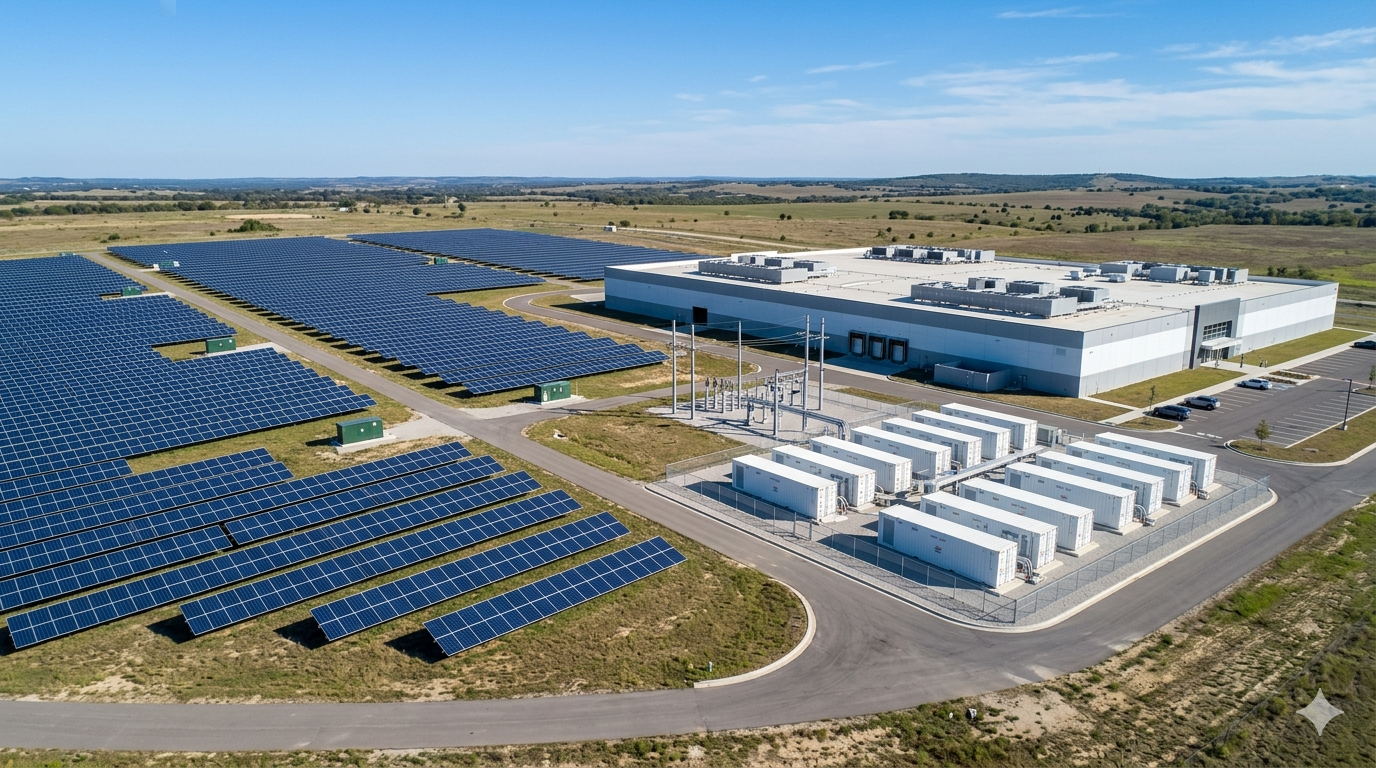
The relationship between data centers and the electricity grid has always involved a degree of financial complexity that site selection and development teams managed as a procurement function rather than a strategic discipline. Operators negotiated utility contracts, sized backup generation systems, and structured power purchase agreements within a framework that treated grid power as the primary supply and on-site generation as a contingency measure. That framework made commercial sense when grid power was reliable, affordable, and available at the capacities that data center loads required. The AI infrastructure buildout has strained all three of those conditions simultaneously, and the operators who are responding most effectively are the ones who have reconceptualized their energy procurement strategy around behind-the-meter generation as a primary supply source rather than a backup resource.

What Behind-the-Meter Power Actually Means for AI Data Centers
Behind-the-meter power refers to electricity generated on the customer’s side of the utility meter, which means that it does not flow through the utility’s transmission and distribution infrastructure to reach the load it serves. The economic implications of this distinction are substantial. Power that travels through utility infrastructure carries the cost of that infrastructure in the form of transmission charges, distribution charges, and various regulatory fees that utilities pass through to large commercial customers. Behind-the-meter generation avoids these charges entirely for the power it supplies, which creates a cost advantage that compounds significantly at the scale of electricity consumption that AI data centers represent.
The strategic shift toward behind-the-meter power in AI data centers is not primarily a response to transmission and distribution cost avoidance, however. It reflects a more fundamental recognition that grid access constraints in the markets where AI infrastructure demand concentrates have made utility power supply an uncertain foundation for development programs whose timelines and cost structures depend on power delivery certainty. An operator who builds a data center around utility power supply in a constrained market accepts interconnection timeline risk, capacity availability risk, and tariff escalation risk that a behind-the-meter generation strategy substantially reduces. The economics of behind-the-meter power must therefore be evaluated not just against the direct cost comparison with utility power but against the full risk-adjusted cost of utility dependency in markets where grid access is contested and expensive.
Why AI Workloads Make the Economic Case Stronger
The scale of AI workload power consumption amplifies every dimension of the behind-the-meter economic case in ways that do not apply to conventional data center operations. A facility supporting AI training workloads draws power continuously at near-peak levels for days or weeks at a time, generating a load profile that utility billing structures treat very differently from the variable loads that enterprise computing produces. Demand charges, which apply to peak power draw during a billing period, accumulate rapidly under AI workload conditions because the sustained near-peak consumption eliminates the natural variation that conventional loads use to moderate their demand charge exposure. Behind-the-meter generation that covers a meaningful fraction of AI workload consumption therefore produces demand charge savings that compound in proportion to workload intensity in ways that make the economic case stronger for AI-focused facilities than for conventional data centers operating at similar nameplate capacity.

The Regulatory Framework That Shapes Behind-the-Meter Economics
Behind-the-meter power economics do not operate in a regulatory vacuum. The cost advantages of on-site generation are real, but they interact with utility tariff structures, interconnection agreements, and state regulatory frameworks in ways that vary significantly across markets and that can either amplify or diminish the financial case for behind-the-meter investment. Standby charges, which utilities levy on customers with on-site generation to recover the cost of maintaining grid capacity that the customer uses when its own generation is unavailable, represent the most significant regulatory offset to behind-the-meter cost savings. These charges prevent customers with on-site generation from free-riding on grid infrastructure that other customers fund, and their structure varies enough across utility jurisdictions that they can materially affect the economics of specific projects.
Net metering policies, where they apply to commercial customers at data center scale, allow operators with excess on-site generation capacity to export power to the grid and receive credit against their utility charges. The value of these credits depends on the rate at which utilities compensate exported power, which varies from avoided cost rates that provide minimal economic benefit to retail rate credits that can substantially improve project economics. Most jurisdictions have moved away from retail rate net metering for large commercial customers, recognizing that the cross-subsidy implications of full retail rate compensation are difficult to justify at scale. The residual value of export credits in most markets is therefore modest, which means that behind-the-meter generation economics for AI data centers depend primarily on self-consumption rather than export value.
Interconnection Agreements and Their Cost Implications
Interconnection agreements between operators with behind-the-meter generation and utilities also affect project economics through the requirements they impose on protection systems, metering infrastructure, and operating procedures. These requirements add capital cost to behind-the-meter generation projects that simple comparisons of generation cost against utility tariffs do not capture. Operators who have negotiated multiple behind-the-meter interconnection agreements develop expertise in managing these requirements efficiently that reduces their incremental cost relative to first-time developers, creating a learning curve advantage that compounds across a portfolio of projects. The regulatory complexity of behind-the-meter power is therefore not just a cost factor but a barrier to entry that experienced operators navigate more efficiently than new entrants.
State-level regulatory proceedings increasingly address the treatment of large commercial customers with behind-the-meter generation explicitly, as utilities seek to recover fixed infrastructure costs from a customer base where the most creditworthy large customers reduce their net utility purchases through on-site generation. The outcome of these proceedings affects the long-term economics of behind-the-meter strategies in ways that operators must monitor continuously rather than assuming that current tariff structures will persist unchanged across the useful life of their generation investments. Operators who participate actively in utility rate cases and regulatory proceedings hold better visibility into the direction of tariff evolution than those who treat regulatory developments as an external variable beyond their influence.
The Technology Mix Behind Behind-the-Meter Generation
The generation technologies that AI data center operators evaluate for behind-the-meter deployment span a range of cost structures, operational characteristics, and environmental profiles that interact differently with AI workload requirements. Solar photovoltaic generation offers the lowest levelized cost of energy among widely deployed generation technologies and produces power with no fuel cost variability, but its intermittent generation profile creates a mismatch with the continuous, high-intensity load profile of AI workloads that battery storage systems must bridge. The economics of solar plus storage for AI data center applications depend critically on battery system sizing, which in turn depends on the local solar resource, the data center load profile, and the cost and availability of utility backup power for periods when solar generation and battery discharge cannot cover the full load.
Natural gas generation through combustion turbines or reciprocating engines offers dispatchable power that can match AI workload demand profiles without the intermittency challenge of solar generation. The fuel cost exposure that gas generation carries introduces a different form of cost uncertainty than the transmission and distribution charge variability of utility power, but operators can manage it through fuel supply contracts that provide price certainty over periods that match the data center’s financial planning horizon. Gas generation also carries emissions implications that operators with public carbon commitments must address, either through carbon offset procurement, renewable natural gas substitution, or eventual transition to lower-carbon generation technologies as they become commercially viable at the required scale.
Fuel Cells and Wind as Complementary Generation Sources
Fuel cells represent a generation technology that combines some of the dispatchability advantages of gas generation with lower emissions profiles, and their modular form factor suits data center deployment where space constraints limit the physical footprint available for on-site generation. The capital cost of fuel cell systems at data center scale has declined as the technology has matured, but it remains higher than comparable capacity in combustion-based generation on a per-kilowatt basis. The operational simplicity of fuel cells relative to combustion turbines, combined with their lower noise and emissions profiles, makes them attractive for urban or suburban data center locations where combustion-based generation faces permitting obstacles. Several large data center operators have deployed fuel cell systems at significant scale, demonstrating that the technology is operationally viable for continuous baseload applications at the power levels that AI workloads require.
Wind generation presents a different profile than solar for behind-the-meter applications, with generation patterns that in many locations complement solar by producing more consistently during evening and overnight hours when solar panels generate nothing. The physical requirements of wind generation, including turbine setback distances, noise limits, and visual impact considerations, create siting constraints that make co-location with data center facilities more challenging than solar installation. Offshore wind eliminates many of these siting constraints but introduces transmission requirements that defeat the behind-the-meter purpose unless cable routing to the data center site is technically feasible. Onshore wind in locations with favorable resource and limited siting constraints can provide a meaningful complement to solar generation in behind-the-meter portfolios designed to maximize renewable coverage of AI workload consumption.
Behind-the-Meter Storage and Its Role in AI Workload Economics
Battery energy storage systems play a qualitatively different role in behind-the-meter economics for AI data centers than they do in grid-scale storage applications. Grid-scale storage typically targets energy arbitrage, frequency regulation, or capacity market participation as its primary revenue streams. Behind-the-meter storage at AI data centers targets demand charge reduction, renewable energy integration, and backup power provision as its primary value applications, and the economics of these applications differ substantially from grid-scale storage economics in ways that affect optimal system sizing and technology selection.
Demand charge reduction represents the most straightforward economic case for behind-the-meter storage at AI data centers. Utility tariffs for large commercial customers typically include demand charges that apply to the peak power draw during a billing period, and these charges can represent a substantial fraction of the total utility bill. AI workloads generate demand profiles with peaks that are difficult to predict and manage through operational means alone, making battery discharge during peak demand periods an effective tool for reducing the demand charge component of utility costs. The economic return on storage investment for demand charge reduction depends on the magnitude of the demand charge in the applicable utility tariff, the frequency and predictability of peak demand events, and the round-trip efficiency of the storage system.
Renewable Integration and Long-Duration Storage
Renewable energy integration through storage allows operators with solar or wind generation to extend the effective hours of renewable supply beyond the generation window, shifting excess midday solar generation to evening and overnight hours when solar panels produce nothing but AI workloads continue at full intensity. The value of this shifting depends on the alternative cost of the energy that storage replaces, which in a behind-the-meter context is the cost of utility power during the hours when renewable generation is unavailable. Storage systems that enable operators to cover a larger fraction of their total energy consumption from behind-the-meter renewable generation reduce utility energy charges proportionally, and the economics of this application improve as battery costs decline and as the gap between peak and off-peak utility rates widens.
Long-duration energy storage technologies, which can store energy across periods longer than the four-hour window that lithium-ion batteries handle economically, are beginning to attract attention from AI data center operators who want to maximize renewable coverage without the fuel cost and emissions exposure of gas backup generation. Flow batteries, compressed air energy storage, and gravity-based storage systems all offer longer discharge durations than lithium-ion at different cost and operational tradeoff profiles. None of these technologies has yet achieved the commercial maturity and cost competitiveness that would make them the default choice for AI data center behind-the-meter applications, but their development trajectory suggests that operators planning facilities with ten-to-fifteen-year horizons should include them in their technology roadmap assessments rather than designing exclusively around currently dominant storage options.
The Financial Modeling Challenges of Behind-the-Meter Investment
Evaluating the economics of behind-the-meter power investment for AI data centers requires financial modeling approaches that capture the interaction between generation technology costs, storage system performance, utility tariff structures, AI workload characteristics, and regulatory frameworks across a time horizon that matches the useful life of the generation and storage assets. This modeling complexity exceeds what conventional data center capital expenditure analysis handles well, and operators who approach behind-the-meter investment decisions with standard data center financial models frequently underestimate both the benefits and the risks of specific configurations.
The most common modeling error involves treating utility power costs as a static benchmark against which behind-the-meter generation economics are evaluated. Utility tariffs for large commercial customers change through regulatory proceedings that can alter the cost structure substantially over periods that fall within the planning horizon of a generation investment. Transmission charges, standby charges, and demand charge structures all evolve in response to changing grid conditions, regulatory policy, and utility cost recovery requirements. Operators who model behind-the-meter economics against current utility tariffs without scenario analysis around tariff evolution accept regulatory risk that a more sophisticated analysis would quantify and potentially hedge through contract structures or technology choices that provide resilience across a range of tariff outcomes.
Capital Structure and Tax Treatment
The capital allocation implications of behind-the-meter power investment also require integration with the broader financial structure of the data center project in ways that conventional project finance models do not always accommodate smoothly. Generation and storage assets have different useful lives, depreciation profiles, and residual value characteristics than data center building and mechanical infrastructure. Financing structures that treat generation and storage as part of the overall data center capital stack may not optimize the cost of capital for each asset class, while separate financing structures for generation assets require additional transaction complexity that smaller operators may not have the resources to manage efficiently.
Tax treatment of behind-the-meter generation assets also affects project economics in ways that interact with the broader tax position of the operating entity. Investment tax credits for solar and storage assets, accelerated depreciation schedules for generation equipment, and the treatment of power purchase agreements versus direct ownership all have implications for the after-tax economics of behind-the-meter investment that vary by operator structure and jurisdiction. Operators who optimize their behind-the-meter strategies for tax efficiency alongside operational economics extract meaningfully more value from equivalent generation and storage assets than those who focus exclusively on pre-tax energy cost comparisons.
Supply Chain and Construction Considerations
The practical execution of behind-the-meter power strategies introduces supply chain and construction management challenges that financial modeling alone does not address. Solar panel procurement, inverter supply, battery system delivery, and interconnection equipment all carry lead times that must synchronize with data center construction schedules in ways that require active management rather than sequential procurement. A data center that reaches mechanical completion before its behind-the-meter generation system is operational must rely on utility power for commissioning and early operations, which may trigger minimum consumption commitments or demand charge exposure that the generation system was intended to avoid.
The construction sequencing of generation and storage systems relative to data center buildings also affects the physical layout of the site in ways that later modification is expensive to reverse. Solar arrays require land area and orientation that conflicts with data center building footprints and cooling infrastructure in some configurations, and planning for the physical integration of generation, storage, and data center systems requires coordination between electrical engineers, civil engineers, and data center designers that is most effective when it happens during early schematic design rather than after building placement has been determined. Operators who treat behind-the-meter power as an afterthought to data center design consistently encounter integration challenges that reduce system performance and increase cost relative to what integrated planning from project inception would have produced.
Contractor Relationships and Supply Chain Depth
The contractors and equipment suppliers with experience in behind-the-meter systems at data center scale form a limited pool that faces increasing competitive pressure as demand for their services grows. Operators who build relationships with experienced contractors and establish preferred supplier arrangements with equipment manufacturers reduce their exposure to procurement delays and construction quality issues that operators without these relationships encounter more frequently. The supply chain management dimension of behind-the-meter power execution is therefore a genuine competitive capability that compounds in value across a portfolio of projects, creating advantages that are difficult for operators without this track record to replicate quickly even when they have the capital and the development intent.
Operational Integration and Performance Monitoring
The ongoing management of behind-the-meter power systems at AI data centers requires operational capabilities that most data center facilities teams have not historically needed. Solar generation systems require routine maintenance including panel cleaning, inverter servicing, and performance monitoring that identifies degradation before it materially affects output. Battery systems require active thermal management, state-of-charge monitoring, and periodic capacity testing to ensure that they perform as modeled when called upon for demand charge reduction or backup power functions. Gas or fuel cell generation systems require fuel supply logistics, scheduled maintenance, and emissions compliance monitoring that utility power simply does not require. Each of these operational requirements demands technical expertise and management attention that operators must factor into the total cost of behind-the-meter ownership.
Control systems that optimize the dispatch of multiple generation and storage assets in real time represent a critical operational infrastructure investment that determines how much of the theoretical economic value of a behind-the-meter portfolio operators actually realize in practice. A solar array, battery system, and gas generator operating under a sophisticated energy management system that continuously optimizes dispatch based on real-time generation, load, and tariff conditions delivers substantially more economic value than the same physical assets operating under simple rule-based controls. The energy management system market for commercial and industrial behind-the-meter applications has matured considerably, with software platforms that integrate generation forecasting, load prediction, tariff optimization, and dispatch control within a single interface that facilities teams can operate without deep power systems expertise.
Internal Expertise as a Long-Term Competitive Asset
Data center operators who build internal expertise in behind-the-meter system performance monitoring develop the capability to identify underperformance earlier and to optimize operational parameters in ways that improve economic outcomes over the asset lifecycle. This internal expertise also supports better decision-making about asset replacement timing, technology upgrades, and expansion investments by providing a foundation of empirical performance data that external advisors cannot replicate from general market knowledge alone. The organizational investment in behind-the-meter operational capability is therefore not just a cost of managing existing assets but an input to the quality of future investment decisions that compounds in value as the portfolio grows and as the technology landscape continues to evolve.
The Competitive Implications of Behind-the-Meter Power Mastery
Operators who master behind-the-meter power economics gain competitive advantages that extend beyond the direct cost savings of avoided transmission and distribution charges. The ability to develop AI data center capacity in markets where utility grid access is constrained expands the geographic range of viable development locations beyond what grid-dependent operators can access. This geographic flexibility has compounding value in a market where interconnection queues in primary markets are extending development timelines by years. An operator who can develop at locations that grid-dependent competitors cannot serves customer demand that would otherwise go unmet and builds market presence in locations where competition is limited by the infrastructure constraints that have deterred others.
The energy cost certainty that behind-the-meter generation provides is also increasingly valuable in commercial negotiations with hyperscaler customers who are building multi-year capacity pipelines and who need to model the total cost of their AI infrastructure programs with accuracy. An operator who can offer a long-term power cost structure that does not depend on utility tariff evolution provides a planning certainty that grid-dependent operators cannot match in markets where regulatory uncertainty around large load tariffs is increasing. This commercial advantage compounds as hyperscaler AI infrastructure programs grow in scale and as the difference between accurately predictable and uncertain energy costs becomes material to program economics.
Sustainability Credentials and Customer Differentiation
The sustainability positioning that behind-the-meter renewable generation enables also carries increasing commercial value as enterprise customers raise their requirements for verifiable renewable energy in the data center services they procure. An operator with behind-the-meter solar and storage can offer renewable energy certificates that reflect actual generation co-located with the data center load rather than unbundled certificates that represent renewable generation anywhere on the grid. This locational specificity satisfies sustainability procurement requirements that unbundled certificates increasingly fail to meet, and it allows operators to differentiate their renewable energy credentials in ways that strengthen customer relationships and support premium pricing in competitive markets.
Behind-the-meter power is not simply an energy procurement strategy for AI data centers navigating constrained grid markets. It is becoming a core dimension of competitive positioning that affects development geography, customer relationships, cost structure, sustainability credentials, and the organizational knowledge that compounds into durable advantage as the AI infrastructure market continues to evolve. Operators who treat behind-the-meter power as a core strategic capability rather than a project-level procurement decision will find that this positioning pays dividends across every dimension of their competitive position as the AI infrastructure market continues to evolve around the energy constraints that behind-the-meter strategies are uniquely positioned to address. The operators who build this capability now, when development opportunities are most abundant and competitive advantages are most durable, position themselves ahead of a market transition that will make these capabilities table stakes rather than differentiators within the current decade.












