 Skip to content
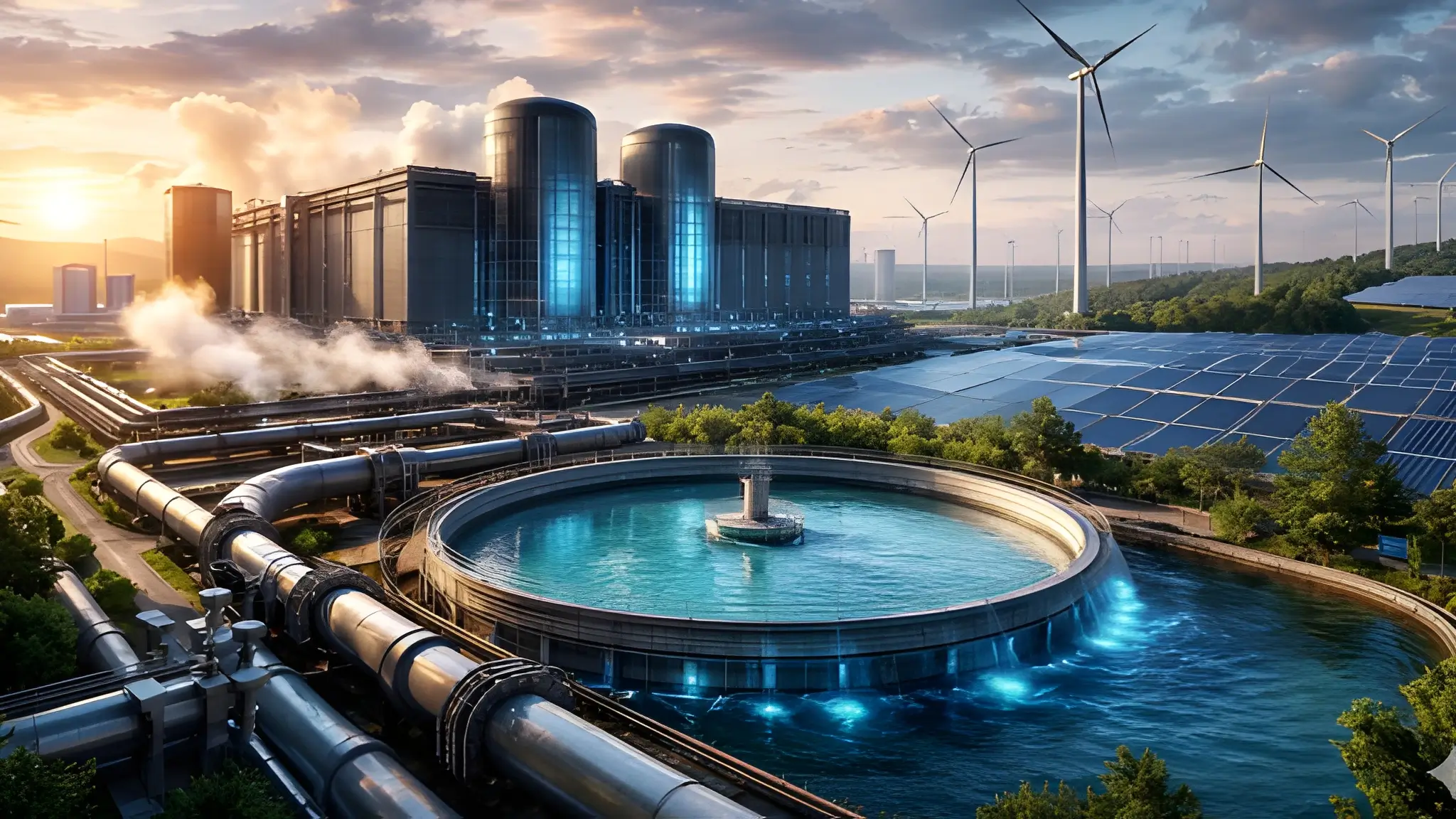
India’s data centre expansion narrative continues to assume linear scalability, yet AI workloads are reshaping infrastructure requirements at a non-linear pace. GPU-dense clusters, particularly those supporting large-scale model training and inference, demand significantly higher cooling efficiency per rack compared to traditional enterprise workloads. Water consumption emerges as a critical constraint because liquid cooling and evaporative systems increasingly support thermal management at scale. Power-water interdependency intensifies as higher compute density translates into both elevated electricity draw and cooling demand. Planning models, however, still rely on outdated assumptions rooted in low-density server environments that do not reflect AI-era realities. This disconnect creates a structural mismatch between projected capacity growth and the physical limits of water and energy systems.

The shift toward high-performance computing clusters alters not just consumption patterns but also infrastructure design priorities across facilities. Operators now face decisions that involve trade-offs between air cooling retrofits and direct-to-chip liquid cooling adoption. These decisions directly influence water withdrawal rates, especially in regions where municipal supply already faces stress. Meanwhile, hyperscale operators continue to optimize for latency and proximity to demand, often overlooking resource availability constraints during early-stage planning. The result is an implicit assumption that water resources will scale alongside compute deployment without friction. However, evidence from global markets suggests that such assumptions tend to break down under sustained AI workload growth. This growing gap between compute ambition and environmental capacity introduces long-term operational risks that cannot be mitigated through incremental efficiency gains alone.
India’s leading data centre hubs, including Mumbai, Chennai, and Hyderabad, have attracted disproportionate investment due to connectivity advantages and established ecosystem maturity. These metros offer strong fiber infrastructure, proximity to subsea cable landing stations, and access to enterprise demand clusters. However, sustained expansion in these regions increasingly intersects with documented urban water stress and land constraints, although direct attribution to data centre demand remains limited by publicly available city-level data. Urban water systems in these cities already operate under seasonal variability, which introduces uncertainty for continuous cooling requirements. As clusters expand, localized demand spikes amplify stress on municipal supply networks that were not designed for industrial-scale consumption. This dynamic creates a feedback loop where infrastructure growth exacerbates the very constraints it depends upon.
Clustering effects further intensify systemic risks because multiple facilities compete for the same limited resources within tightly bounded geographies. Data centre campuses, when concentrated within a single metropolitan region, increase cumulative water withdrawal and energy demand density. This pattern mirrors global precedents where rapid clustering led to resource bottlenecks and regulatory intervention. In addition, land constraints within metros drive vertical expansion and higher rack densities, which in turn increase cooling intensity per square meter. Such compounding factors make metro-centric growth increasingly fragile under long-term stress scenarios. Therefore, continuing to prioritize these hubs without recalibrating for resource constraints risks replicating inefficiencies observed in other global markets.

India’s policy environment has actively supported data centre growth through incentives, infrastructure status recognition, and state-level facilitation frameworks. These measures have accelerated investment flows and reduced entry barriers for both domestic and global operators. However, execution frameworks have not kept pace with the evolving complexity of AI-driven infrastructure requirements. Water-linked siting norms remain inconsistently defined across jurisdictions, which leaves developers to navigate resource planning without a unified and clearly codified regulatory framework.Fragmented governance across central, state, and municipal authorities further complicates approval processes. This fragmentation leads to inconsistencies in how water usage permissions and environmental clearances are evaluated.
Approval gaps also create uncertainty in project timelines, particularly when local authorities impose ad hoc restrictions in response to emerging resource stress. Developers often encounter delays due to shifting compliance requirements that were not anticipated during initial planning stages. In many cases, environmental impact assessments provide project-level evaluations, while cumulative effects of clustered developments on water systems are not consistently assessed within a unified regional framework. This lack of holistic assessment limits the ability to anticipate long-term systemic risks across regions. Meanwhile, policy frameworks continue to emphasize capacity addition rather than sustainable deployment metrics. Consequently, infrastructure growth advances faster than the regulatory mechanisms needed to support it responsibly.
Water risk in data centre operations extends beyond facility boundaries into broader regional infrastructure ecosystems. Cooling efficiency improvements within individual sites cannot compensate for deficiencies in external water supply and management systems. India currently has limited deployment of dedicated industrial water pipeline networks capable of delivering non-potable water at scale to emerging data centre clusters. This absence forces operators to rely on municipal supply or groundwater extraction, both of which face increasing regulatory scrutiny. In addition, wastewater recycling ecosystems remain underdeveloped, limiting opportunities for closed-loop water usage. These gaps constrain the scalability of sustainable operations even when facility-level technologies are optimized.
Basin-level planning represents another critical missing layer in India’s infrastructure strategy for data centre expansion. Water availability varies significantly across regions, yet siting decisions rarely incorporate hydrological assessments at a systemic level. This disconnect leads to deployments in areas where long-term water security remains uncertain. Industrial corridors and emerging economic zones often lack integrated planning for water reuse and distribution networks. As a result, infrastructure development proceeds in silos without alignment between compute growth and resource provisioning. However, bridging this gap requires coordinated investment across public and private stakeholders, which remains limited at present.
A shift toward resource-aligned geographies has started to gain traction as operators reassess long-term sustainability risks. Secondary cities and emerging industrial regions offer advantages in terms of land availability and lower baseline resource stress. Coastal regions, in particular, present opportunities for alternative cooling strategies, including seawater-based systems where feasible. These locations also benefit from proximity to renewable energy sources, which supports decarbonization goals alongside operational efficiency. However, site selection now involves more complex trade-offs between latency requirements and infrastructure resilience. This evolving calculus reflects a broader transition toward integrating environmental constraints into core planning decisions.
Resource-first siting introduces a fundamentally different approach to infrastructure development by prioritizing long-term viability over immediate connectivity advantages. Operators evaluate water availability, energy access, and climate risk alongside traditional metrics such as network latency and proximity to demand. This multidimensional assessment enables more balanced distribution of data centre capacity across regions. It also reduces the concentration of risk within a limited number of metropolitan hubs. Meanwhile, advancements in edge computing and distributed architectures help mitigate latency concerns associated with non-metro deployments. As a result, the industry begins to align growth strategies with the realities of physical resource constraints.
India now stands at a critical juncture where infrastructure strategy must evolve in response to accelerating AI-driven demand. The convergence of high-density compute, water constraints, and energy requirements creates a complex planning environment that cannot rely on legacy assumptions. Integrating water and power considerations into early-stage design processes will determine the sustainability of future deployments. Operators and policymakers must adopt systems-level thinking that accounts for interdependencies across infrastructure layers. This approach requires coordinated action across regulatory frameworks, investment strategies, and technological innovation. The ability to navigate these complexities will shape India’s position in the global digital infrastructure landscape.
Constraint-aware design offers a pathway to balance growth with resilience by embedding environmental considerations into core decision-making processes. Data centre operators that proactively address water risk and infrastructure gaps can achieve more stable long-term performance. Policymakers, in turn, can enable this transition through clearer guidelines and integrated planning frameworks. The shift from speed-driven expansion to sustainability-driven deployment reflects a maturation of the industry’s strategic priorities. Ultimately, India’s ability to avoid global mistakes will depend on how effectively it aligns technological ambition with physical resource realities. This inflection point defines not just the pace of growth but the durability of the entire ecosystem.










