 Skip to content
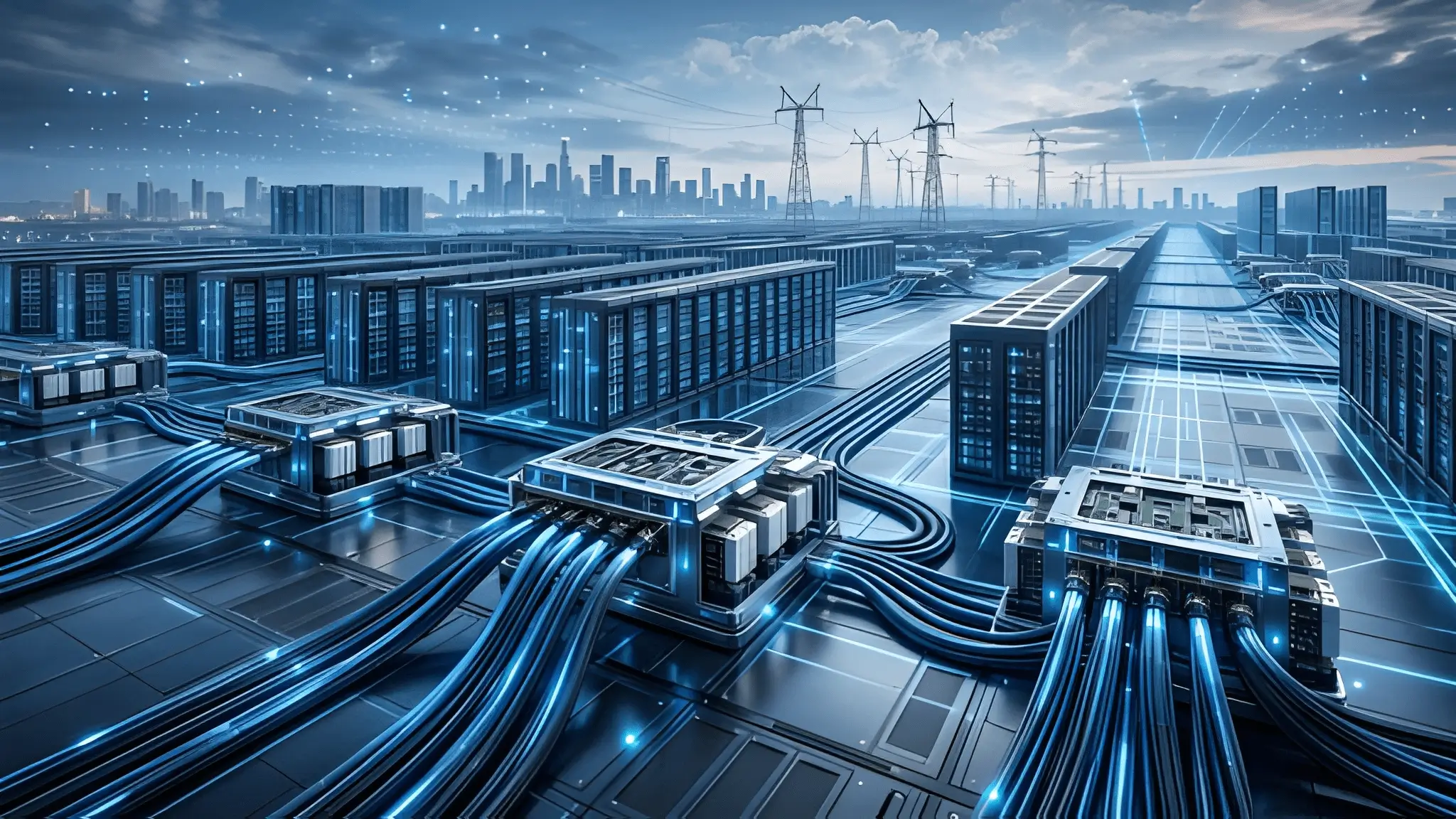
Infineon Technologies AG and DG Matrix have entered a strategic collaboration to reshape how power flows into AI-driven infrastructure. The partnership focuses on accelerating the deployment of solid-state transformer (SST) systems, an emerging architecture positioned to address the growing strain AI data centers place on global grids.

As AI workloads scale rapidly, operators face rising pressure to improve power conversion efficiency while maintaining grid stability. This collaboration directly targets that challenge by integrating next-generation silicon carbide (SiC) semiconductors into DG Matrix’s Interport multi-port SST platform.
Notably, DG Matrix will source Infineon’s latest SiC technology to strengthen its semiconductor supply chain while enhancing system-level performance. The move signals a deeper alignment between semiconductor innovation and infrastructure deployment.
Why Solid-State Transformers Are Gaining Ground
Solid-state transformers are emerging as a critical layer in next-generation energy systems. Unlike conventional copper-and-iron transformers, SSTs rely on semiconductor-based architectures that enable dynamic control of voltage and power flow.
As a result, these systems deliver significantly higher efficiency and power density. Industry estimates indicate SSTs can be up to 14 times smaller and 40 times lighter than traditional transformers, enabling faster deployment across constrained environments such as hyperscale campuses.
Moreover, SSTs enable direct conversion from medium-voltage grid supply to the low-voltage requirements of AI data centers, electric vehicle charging networks, and industrial microgrids. This capability reduces conversion losses and simplifies infrastructure design.

Executive Alignment Signals Long-Term Bet
Andreas Weisl, Executive VP and Chief Sales Officer of Industrial and Infrastructure at Infineon, said, “AI data centers and next-generation electrification systems demand higher efficiency, higher power density and uncompromising reliability. Solid-state technology, enabled by Infineon’s leading silicon carbide power semiconductors, can deliver this next level of performance and value.
“Therefore, we are pleased to support DG Matrix with our latest-generation silicon carbide technology to help enable scalable, high-performance power infrastructure. DG Matrix’s multi-port solid-state transformer architecture represents an innovative approach to power conversion.”
The emphasis on SiC reflects a broader industry shift toward wide-bandgap semiconductors, which offer superior thermal performance and switching efficiency compared to traditional silicon.
Haroon Inam, CEO and co-founder of DG Matrix, said, “Our multi-port architecture was designed to take full advantage of the performance envelope that silicon carbide enables. Infineon’s latest-generation SiC devices strengthen our supply chain and enhance the efficiency, power density and reliability of our Interport platforms. This collaboration supports our mission to deploy faster, more efficient power infrastructure for AI data centers and electrification worldwide.”
DG Matrix’s Interport platform introduces a multi-port design that allows simultaneous connection of diverse energy sources and loads. Consequently, operators gain greater flexibility in managing distributed energy systems, including renewables and storage. This architectural shift aligns with the increasing complexity of modern grids, where centralized and decentralized energy flows must coexist.
AI Demand Reshapes Grid Economics
Global electricity demand continues to rise as electrification and digitalization accelerate. AI data centers, in particular, have emerged as one of the most energy-intensive infrastructure categories.
Therefore, utilities and infrastructure providers must rethink grid design. Traditional systems struggle to accommodate the dynamic load profiles and density requirements of AI clusters. SST-based platforms offer a pathway to modernize grid interfaces while maintaining stability. They enable real-time control of power quality and voltage, which is critical for sensitive compute workloads.
Infineon expects the semiconductor market tied to SST deployments to approach $1 billion within the next five years, underscoring the commercial momentum behind the technology.
Silicon carbide is increasingly positioned as a foundational technology for high-performance power systems. Its ability to operate at higher voltages, temperatures, and switching frequencies makes it particularly suited for AI-scale infrastructure.
Furthermore, integrating SiC into SST platforms unlocks higher efficiency and reduced energy losses, which directly impacts operational costs for hyperscale operators. This shift also reflects a broader convergence between semiconductor innovation and energy infrastructure, an intersection that is becoming central to AI scalability.
Roadmap Extends Toward High-Voltage, High-Volume Deployment
Looking ahead, both companies plan to deepen collaboration across next-generation SiC device roadmaps. DG Matrix aims to scale toward higher-voltage platforms while expanding production capacity.
The integration of Infineon’s SiC technology across DG Matrix’s Interport product family reinforces a shared objective: accelerating the deployment of resilient, scalable, and efficient power infrastructure. Ultimately, as AI transitions from experimentation to industrial-scale deployment, power infrastructure will define the limits of growth. Partnerships like this signal where the industry is heading toward tightly integrated ecosystems where semiconductors and energy systems evolve in tandem.












