 Skip to content
Submarine cables carry more than ninety-five percent of international internet traffic. Yet they rarely feature in mainstream discussions about digital infrastructure or AI competitiveness. The satellite networks that capture public imagination handle a fraction of the actual data volume that flows between continents. The fiber optic cables running across ocean floors represent the physical foundation on which the entire global digital economy operates. That foundation has always carried geopolitical significance. The AI era is elevating that significance in ways that are reshaping how governments, hyperscalers, and infrastructure investors think about submarine cable networks as strategic assets rather than purely commercial infrastructure.

The shift is not simply about data volume, although the volume dimension is real and growing. AI training workloads require the movement of enormous datasets between research facilities, data centers, and cloud platforms that span multiple continents. AI inference deployments that serve global user populations require low-latency connectivity between compute clusters and end users across geographic distances that only submarine cables can bridge at commercial scale. The infrastructure that carries this traffic is physically vulnerable, geographically constrained, and increasingly contested. Its strategic management has become a genuine priority for every government and every technology company with serious AI ambitions.
The Physical Reality of Submarine Cable Networks
Submarine cables are not evenly distributed across the world’s oceans. They concentrate along routes that reflect historical patterns of trade, communication, and economic activity. Dense clusters connect North America to Europe, the United States to Asia Pacific, and the major economies of East Asia to each other and to the rest of the world. The chokepoints that this geography creates are well understood by military planners and intelligence services. What has changed in the AI era is the economic value concentrated on these routes and the range of actors who have both the incentive and the capability to interfere with cables that carry AI-related traffic.
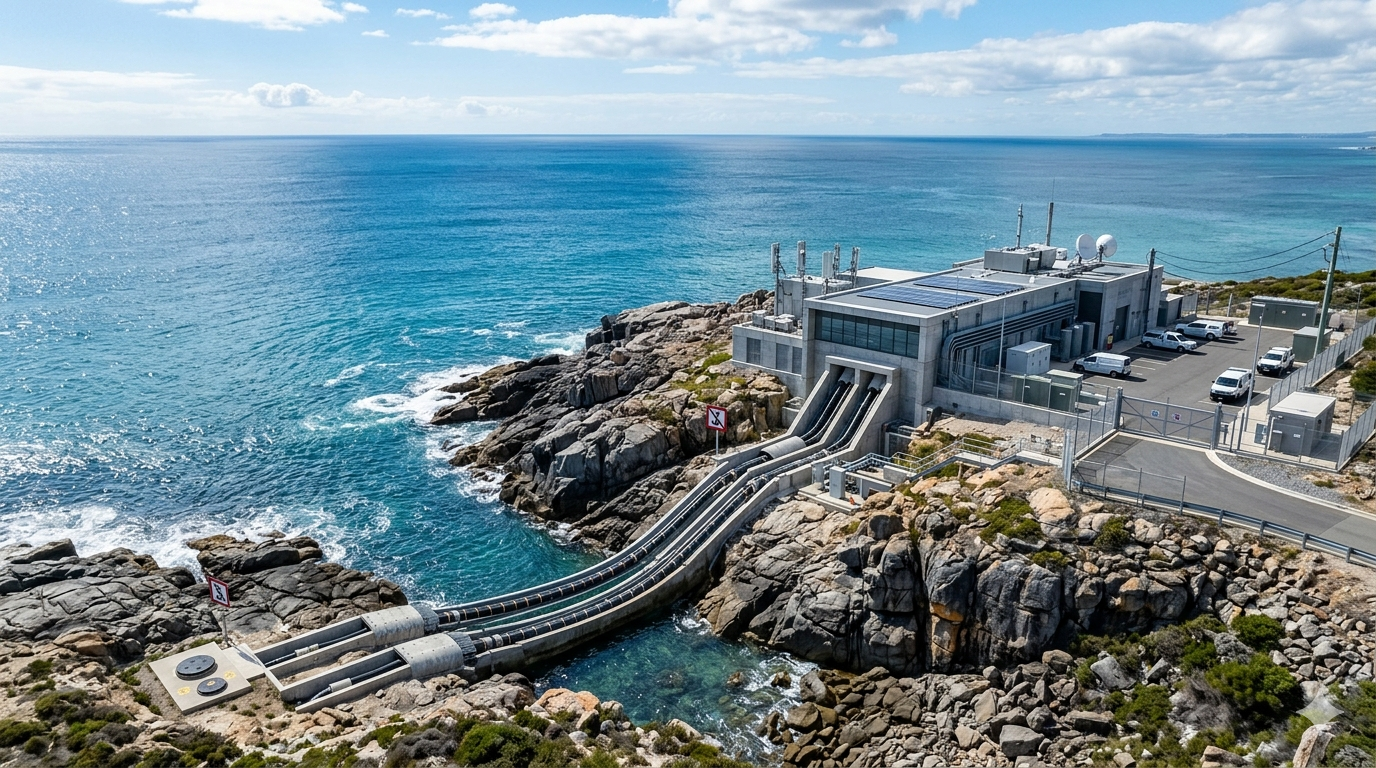
The physical construction of submarine cables involves laying fiber optic strands encased in protective armoring along carefully planned routes. These routes must navigate seafloor geography, avoid fishing areas and shipping lanes where possible, and terminate at landing stations that connect the undersea infrastructure to terrestrial networks. Landing stations are fixed installations whose locations are publicly known. Their disruption would interrupt the traffic of every cable that lands at that facility. The concentration of multiple cable systems at a small number of landing stations reflects the practical constraints of coastal geography and regulatory approvals. It also creates single points of failure whose strategic significance has not always received adequate attention in national infrastructure security planning.

Route diversity represents the primary mechanism through which submarine cable networks manage disruption risk. A cable system that follows a different seafloor route from its redundant counterpart provides genuine protection against localized disruption events. Cable systems that share landing stations or follow similar routes provide less genuine diversity than their nominal redundancy suggests. Events that affect one system may affect co-located systems through the same mechanism.
Depth Profiles and Risk
The depth profile of submarine cable routes creates very different risk profiles across shallow-water and deep-water sections. Cables in water shallower than two thousand meters are accessible to a wider range of actors, including commercial fishing vessels, anchor-dragging cargo ships, and naval assets without specialized deep-diving capability. The majority of cable breaks happen in relatively shallow water near coastlines where human activity concentrates. Cables in deeper water are harder to reach accidentally and harder to reach deliberately. The consequences of deep-water breaks are also more severe because repair vessels must navigate greater technical challenges and longer timelines to locate and fix damage at depth.
The repair capacity for submarine cables remains concentrated among a small number of specialized vessels operated by a handful of companies. Demand for repair services has grown faster than repair capacity has expanded. A major disruption event affecting multiple cable systems simultaneously would create a repair queue extending months rather than weeks. Planning for this scenario requires both physical redundancy across genuinely diverse routes and operational resilience that allows AI infrastructure programs to function at reduced capacity during extended connectivity disruptions rather than failing completely.
How Traffic Concentration Amplifies Vulnerability
The concentration of AI-related traffic on specific cable routes amplifies the consequences of disruption events in ways that conventional traffic analysis does not fully capture. A cable system carrying a significant fraction of the synchronization traffic between distributed AI training clusters represents a higher-value disruption target than traffic distribution metrics alone would suggest. Disrupting that specific traffic type degrades AI training throughput far more than disrupting an equivalent volume of general internet traffic. Infrastructure security planning that does not account for the changed traffic value distribution that AI workloads create will systematically underestimate the strategic significance of specific cable systems.
State Actors and the Cable Security Problem
The involvement of state actors in submarine cable security has moved from a background intelligence concern to an active policy priority across multiple major governments. The concern operates at several levels simultaneously. Submarine cables carrying sensitive government and military communications represent intelligence collection targets whose physical accessibility makes them attractive to adversaries with the naval capability to reach cables at operational depths. Serious infrastructure security planning now assumes adversary access to cable traffic as a baseline condition rather than a contingency to be prevented.
At a more commercially significant level, the ownership and operational control of submarine cable systems has become a dimension of geopolitical competition that governments actively manage through regulatory intervention. The involvement of Chinese telecommunications companies in submarine cable construction and operations has prompted security reviews in the United States, Australia, and several European countries. These reviews have resulted in restrictions on cable projects involving specific vendors or ownership structures. The concern is not just about intelligence collection. It also covers the potential for cable owners or operators to disrupt traffic during periods of geopolitical tension, either through physical interference or through manipulation of network management systems.
How Regulatory Responses Vary
The regulatory responses that these concerns have generated vary significantly across jurisdictions. The United States has developed a formal review process through the Team Telecom framework. This subjects landing license applications to national security review by the Department of Justice, Department of Defense, and Department of Homeland Security. Australia has implemented similar review mechanisms that have blocked or restructured several cable projects with Chinese involvement. European Union member states apply varying national security review standards that create inconsistent treatment of cable projects across the bloc. This inconsistency complicates the development of cable systems landing in multiple European countries.
The Bifurcation of Global Cable Infrastructure
The competition between the United States and China for influence over submarine cable infrastructure has become one of the most consequential dimensions of broader technology competition. Chinese telecommunications companies have participated in the construction of submarine cable systems across Southeast Asia, the Pacific, Africa, and Latin America at significant scale. This gives China substantial involvement in the cable infrastructure serving regions where both US and Chinese technology companies compete to deploy AI applications.
The US government response has moved from case-by-case review to more systematic exclusion of Chinese vendors and ownership interests from cable systems landing in the United States and its allies. This limits direct Chinese company involvement in the most commercially significant cable routes. It does not address Chinese participation in cable infrastructure serving third-country markets where US regulatory jurisdiction does not apply. The result is an emerging bifurcation of global cable infrastructure along geopolitical lines. US-aligned cable systems serve markets where US regulatory influence is strongest. Chinese-affiliated systems serve markets where that influence is weaker.
This bifurcation has direct implications for AI infrastructure development in affected regions. Data center operators who build AI infrastructure in markets served primarily by Chinese-affiliated cable systems face connectivity constraints that affect their ability to integrate with US-based AI platforms. The geopolitical alignment of cable infrastructure is becoming a site selection consideration for AI infrastructure development in ways that pure connectivity and cost analysis does not capture.
Hyperscalers as Cable Infrastructure Investors
The entry of hyperscalers as direct investors in and owners of submarine cable infrastructure represents one of the most significant structural changes in the cable industry over the past decade. Google, Meta, Microsoft, and Amazon have collectively invested in submarine cable systems that now carry a substantial fraction of global internet traffic. This has shifted the ownership structure of this critical infrastructure from a consortium model dominated by telecommunications carriers to one where technology companies with global AI ambitions hold significant and growing stakes.
The motivations for these investments began as capacity and cost management strategies. A hyperscaler that owns its cable capacity does not pay the per-bit transit fees that using third-party capacity involves. It can also prioritize its own traffic during congestion events in ways that shared capacity arrangements do not permit. As AI workloads have grown in scale and latency sensitivity, the value of owned cable capacity has increased beyond the original cost management rationale. A hyperscaler AI infrastructure program requiring guaranteed low-latency connectivity between data centers on different continents cannot rely on best-effort capacity from third-party cable operators whose traffic management priorities may not align with AI training synchronization requirements.
Geopolitical Implications of Hyperscaler Ownership
The geopolitical implications of hyperscaler cable ownership operate through several channels that governments are beginning to examine more carefully. Hyperscaler cable systems landing in strategically significant locations create equities in the security of those systems that diplomatic relationships must protect. Cable systems owned by companies headquartered in specific jurisdictions carry implicit national affiliation that affects how host governments treat their landing applications. The concentration of cable ownership among a small number of US-headquartered technology companies creates a structural alignment between US commercial interests and US government security interests. Some countries view this as a form of infrastructure dependency they want to reduce through investments in domestically owned or controlled cable capacity.
Sovereign Cable Investment as a Strategic Response
Several governments have responded to hyperscaler cable dominance by investing in sovereign cable infrastructure that serves national connectivity goals independently of commercial operator decisions. Australia’s investment in the Australia-Pacific cable network connecting Pacific island nations reflects both commercial connectivity objectives and strategic interest in ensuring those nations have access to cable infrastructure that does not route through potentially hostile jurisdictions. Similar motivations drive European investment in Atlantic cable systems that provide connectivity options independent of cable infrastructure controlled by US technology companies or built with Chinese vendor involvement.
The sovereign cable investment trend creates a more complex ownership landscape that complicates the security oversight frameworks national regulators have developed around commercial cable projects. Government-owned cable systems may receive different regulatory treatment than commercially owned systems. Their operation may involve national security considerations that commercial operators do not face. The integration of sovereign cable systems with commercial networks requires interconnection arrangements that create security interfaces between systems with different ownership structures and operational priorities.
Landing Station Security and Terrestrial Vulnerability
The terrestrial components of submarine cable systems, particularly the landing stations where undersea cables connect to onshore networks, represent physical infrastructure whose security has not always received proportional attention relative to the value of the traffic they handle. Landing stations typically sit in coastal areas that are not easily integrated into urban security infrastructure. They may be physically isolated in ways that create access control challenges. The network management systems operating within landing stations provide the control plane for traffic routing across cable systems. This makes them attractive targets for adversaries seeking to disrupt or surveil traffic without physically cutting cables.
The convergence of submarine cable landing infrastructure with data center development in coastal markets reflects both the practical logic of minimizing terrestrial transmission distance and the commercial attraction of locating compute capacity close to international connectivity that AI workloads require. This convergence creates security planning challenges distinct from those of either cable landing stations or data centers operating independently. The combined facility represents a higher-value target that concentrates multiple critical infrastructure functions in a single physical location. The security frameworks governing data centers and those governing cable landing stations have developed largely independently. Integrated facilities that combine both functions require security planning that addresses the combined risk profile.
Physical Security Standards at Landing Stations
Physical perimeter security, access control systems, and surveillance infrastructure at landing stations have historically reflected the relatively low public profile of these facilities rather than the strategic value of the traffic they handle. The AI era concentrates more economically significant traffic on fewer cable systems. This requires a corresponding upgrade in the physical security standards applied to landing stations handling AI-related traffic at commercial scale. Several governments have initiated reviews of landing station physical security that reflect this recognition. The implementation of upgraded security standards faces the practical challenge that many existing landing stations were designed and built to specifications that did not anticipate their current strategic significance.
Network Management System Vulnerabilities
The software systems that manage traffic routing, capacity allocation, and fault response across submarine cable networks represent a category of vulnerability that physical security measures alone cannot address. Network management systems for submarine cable infrastructure are typically proprietary platforms developed by the small number of equipment vendors who supply cable systems globally. Their security properties reflect development priorities that emphasized functionality and reliability over adversarial security considerations. The attack surface these systems present includes remote access interfaces used for maintenance and monitoring, software update mechanisms that provide pathways for malicious code introduction, and integration points with terrestrial network management systems.
The concentration of network management system supply among a small number of vendors creates systemic risk that affects multiple cable systems simultaneously if a vulnerability in widely deployed management software is exploited. Unlike physical cable infrastructure, which requires physical presence to attack, network management system vulnerabilities can be exploited remotely. The responsible disclosure and rapid patching processes that general enterprise software security relies on operate more slowly in submarine cable network management systems. Software updates require validation processes that reflect the operational criticality of the systems being updated and the consequences of update failures that interrupt live traffic.
Regulatory Frameworks and Their Gaps
The regulatory frameworks governing submarine cable infrastructure vary significantly across jurisdictions in ways that create gaps and inconsistencies sophisticated actors can exploit. International law provides basic protections against deliberate interference but does not establish the comprehensive security oversight framework that this infrastructure warrants in the AI era. The International Telecommunication Union coordinates some aspects of cable infrastructure governance, but its authority is limited. Its processes move slowly relative to the pace at which commercial and geopolitical pressures are reshaping the cable industry.
National regulatory frameworks fill some of the gaps that international law leaves, but their jurisdictional limits create coverage gaps in international waters and in the territorial waters of countries that have not developed sophisticated cable security oversight. The landing license review processes that the United States and Australia have developed represent meaningful advances in national security oversight. They apply only to cable systems landing in those countries, however, and do not address the security of the same systems in other jurisdictions along their routes. A cable system that receives rigorous security review for its US landing but transits the territorial waters of multiple other countries faces varying levels of security oversight that may not collectively provide adequate protection.
Emerging Policy Responses and Their Limitations
The policy responses that governments have developed reflect genuine recognition of the strategic significance of this infrastructure. They also reveal the limitations of national regulatory action in addressing problems that are inherently international in character. Export controls on submarine cable equipment that limit the involvement of specific vendors address one dimension of the supply chain security problem. They also create compliance burdens for cable projects that must navigate different vendor restriction regimes across multiple landing jurisdictions. The development of allied country coordination frameworks for cable security is conceptually sound. In practice it faces the challenge that allied countries have different commercial relationships with cable vendors that create divergent interests in how restrictive shared frameworks should be.
The investment screening mechanisms that several countries have developed to review foreign investment in cable infrastructure represent a more targeted approach to ownership security concerns. Their effectiveness depends on the ability of reviewing agencies to assess the security implications of complex ownership structures that may obscure the ultimate beneficial ownership of cable assets. Private equity investment in cable infrastructure has grown substantially as the asset class attracts institutional capital seeking long-term infrastructure returns. This creates ownership structures whose ultimate beneficial owners may not be immediately apparent and whose security implications require analysis that goes beyond the face value of corporate ownership documents.
The Future Architecture of Submarine Cable Networks
The investment patterns driving submarine cable development over the next decade reflect the AI infrastructure buildout in ways that will reshape both the physical geography of cable networks and the geopolitical dynamics that surround them. Hyperscaler cable investments concentrate on routes that serve AI infrastructure hubs in ways that reflect AI workload geography rather than historical telecommunications traffic patterns. New cable systems land in locations that serve emerging data center markets in Southeast Asia, the Middle East, and Africa that conventional cable development did not prioritize. This creates connectivity infrastructure that enables development in markets that previously lacked the international connectivity that AI applications require.
The technology of submarine cables is also evolving in ways that affect their strategic characteristics. Higher capacity cable systems carry more traffic per cable, which concentrates the consequences of disruption on fewer physical systems. The development of software-defined networking capabilities for submarine cable systems enables more sophisticated traffic management and rerouting in response to disruption events. This improves resilience but also creates new attack surfaces in the software layer that controls physical traffic routing. Security planning for next-generation cable systems must address both the physical vulnerability that has always characterized this infrastructure and the software vulnerabilities that advanced network management capabilities introduce.
Space-Based Alternatives and Their Limits
Space-based connectivity alternatives, particularly low-earth orbit satellite constellations, represent a partial substitute for submarine cable capacity that changes the risk calculus for AI infrastructure programs in some scenarios. Low-earth orbit satellites provide lower latency than geostationary satellites and can serve locations that submarine cables do not reach. Their capacity per unit of spectrum remains substantially lower than fiber optic cable systems, however. Their resilience to deliberate interference through jamming or anti-satellite weapons represents a different vulnerability profile rather than an absence of vulnerability. AI infrastructure programs that require the sustained high-bandwidth connectivity that training workloads generate cannot currently substitute satellite capacity for submarine cable capacity at commercial scale. Cable vulnerability therefore remains a first-order concern for AI infrastructure security planning regardless of how satellite alternatives develop.
Cable Infrastructure and the Long-Term AI Competition
The operators and governments who develop the most sophisticated understanding of submarine cable infrastructure as a strategic asset will be better positioned to protect their AI infrastructure investments as the competition for AI advantage intensifies. The decisions that hyperscalers, governments, and infrastructure investors make about cable routes, ownership structures, security standards, and regulatory engagement over the next several years will determine the resilience and geopolitical alignment of the cable infrastructure that AI applications depend on for decades to come.
The cables on the ocean floor are the least visible component of the AI infrastructure stack, but they are among the most strategically consequential. The geopolitical competition surrounding them will shape the architecture of global AI development in ways that decisions about data center locations, chip supply chains, and model architectures will not fully determine. Understanding that competition, and investing in the cable infrastructure and security frameworks it demands, represents one of the most important and least discussed priorities in serious AI infrastructure strategy.
The window during which foundational positions in submarine cable infrastructure can be established at reasonable cost is narrowing. Hyperscaler investment activity concentrates ownership of the most strategically significant routes, while geopolitical pressure raises the cost of regulatory approvals that new cable systems require. The commercial incentives that drive submarine cable investment do not always align with the security imperatives that AI infrastructure programs require. Commercial cable operators optimize for traffic volume, route efficiency, and cost recovery. Security agencies optimize for threat mitigation and resilience against adversary action.
Closing the Gap Between Commercial and Security Logic
The intersection of these optimization frameworks requires institutional coordination that most countries have not yet developed to the degree that the AI era demands. The operators who recognize this gap and invest in bridging it will build AI infrastructure programs that prove more resilient than those that treat submarine cable security as someone else’s problem. The geopolitical competition for submarine cable infrastructure is not a future scenario. It is happening now, in regulatory proceedings, investment decisions, and diplomatic negotiations that rarely make headlines but that will determine the connectivity architecture of global AI development for decades.
The Strategic Imperative for AI Infrastructure Programs
The strategic management of submarine cable infrastructure requires a level of organizational commitment that most AI infrastructure programs have not yet built. It involves monitoring geopolitical developments that affect cable security, participating in regulatory proceedings that shape cable oversight frameworks, building relationships with cable operators and government security agencies that provide early warning of emerging threats, and integrating cable resilience planning into AI infrastructure architecture decisions. These activities do not fit naturally into the project management frameworks that data center development programs typically use. Building the organizational capability to execute them requires deliberate investment that competes with the more immediately visible demands of facility construction and equipment procurement.
The operators who make that investment now, before submarine cable infrastructure becomes the subject of the same urgent attention that power availability and interconnection queue management currently receive, will find that their early positioning produces compounding advantages as the AI infrastructure buildout continues. Cable capacity that seems abundant today may prove constrained tomorrow as hyperscaler AI programs consume bandwidth at rates that existing cable systems did not anticipate. Route diversity that seems adequate for current traffic volumes may prove insufficient when AI workload growth concentrates traffic on specific paths in ways that expose the limitations of diversity strategies designed for pre-AI traffic distributions.
Anticipating Constraints Before They Become Critical
The operators who anticipate these constraints and position accordingly will be better equipped to serve the AI infrastructure requirements of the next decade than those who discover the constraints after they have already affected program execution and competitive positioning. Submarine cable infrastructure deserves a place in the strategic planning frameworks of every serious AI infrastructure program. Its absence from most such frameworks reflects the invisibility of infrastructure that works reliably rather than its unimportance to the programs that depend on it.
The AI era is making that invisibility increasingly difficult to sustain, as the traffic volumes, latency requirements, and geopolitical significance of submarine cable networks all escalate simultaneously. Treating cable infrastructure as a background assumption rather than a strategic variable is a planning error that the most sophisticated AI infrastructure programs are beginning to correct. The window for making that correction before it becomes urgent rather than proactive is narrowing with each passing quarter of accelerating AI infrastructure investment. The organizations that engage with this competition deliberately and strategically will build AI programs on connectivity foundations that prove more resilient, more capable, and more strategically defensible than those built on the assumption that submarine cable infrastructure will always be available, affordable, and aligned with their interests.












