 Skip to content
Telecom operators spent the last decade watching hyperscalers build the infrastructure that runs the internet. They provided the pipes. Someone else built the compute. That arrangement is now shifting. AI inference workloads are moving out of centralized data centers and toward the network edge. Telecom operators sit on exactly the real estate, power, and connectivity those workloads need. The question is no longer whether telecoms will play a role in AI infrastructure. It is whether they move fast enough to claim it before someone else does.

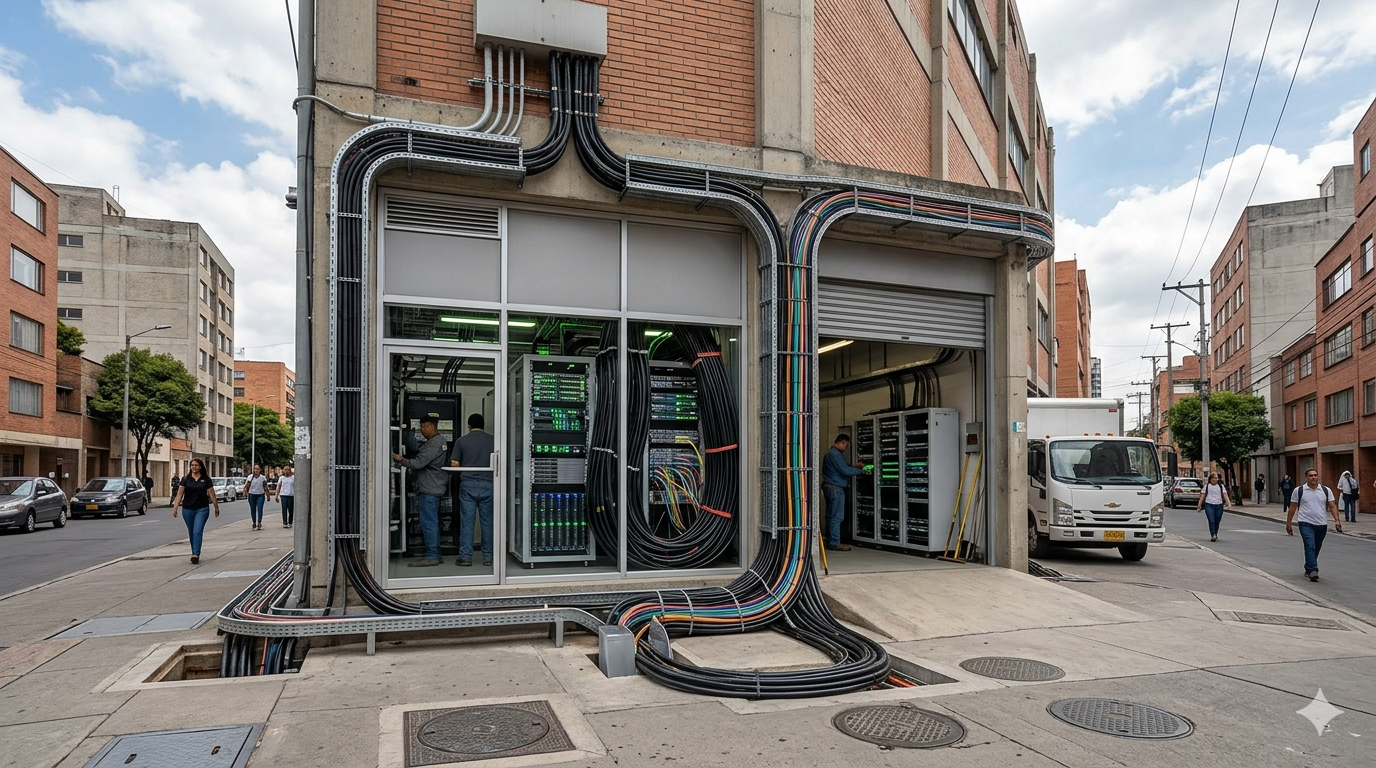
The structural advantage telecoms hold is significant. They operate roughly 100,000 distributed network facilities worldwide. These span regional hubs, mobile switching offices, and central offices. Many of these sites already carry power, cooling, and fiber connectivity. They also sit close to end users in cities and suburbs where AI inference latency matters most. An AI inference workload running on a GPU in a telecom exchange can reach a nearby device in under ten milliseconds. The same workload running from a centralized hyperscale data center cannot match that. For autonomous systems, real-time analytics, and interactive AI applications, that latency gap is the difference between a viable product and one that does not work.
Why AI Inference Needs the Edge
Centralized data centers handle AI training efficiently. They concentrate power, cooling, and compute in one place. Training workloads also tolerate the latency of a round trip to a distant facility. Inference is different. Inference workloads serve real users and real devices in real time. Every millisecond of latency is visible in the application experience. As AI moves from experimental to operational across industries, the gap between what centralized infrastructure delivers and what inference applications require is widening. The network topology of AI inference is fundamentally distributed, not centralized. Telecom infrastructure maps directly onto that distribution.
The shift became concrete at MWC Barcelona 2026, where major operators announced AI grid deployments using their existing network footprint. AT&T partnered with Cisco and Nvidia to build an AI grid for IoT applications. Spectrum outlined deployments spanning more than 1,000 edge data center locations. Furthermore, Indosat Ooredoo Hutchison connected its sovereign AI factory with distributed edge sites across Indonesia. These are not pilot programs or proofs of concept. They are operational commitments from operators who recognize that their network infrastructure is the deployment platform for the next phase of AI.

What Telecoms Actually Bring to This
The case for telecoms in AI infrastructure goes beyond physical proximity. Telecom operators hold spectrum licenses and operate fiber networks. They also maintain relationships with enterprises and governments that hyperscalers do not have in the same way. They can offer AI inference as a managed service with guaranteed latency, data residency, and security characteristics. These matter especially to regulated industries. A hospital running AI diagnostics does not want its data transiting a hyperscale cloud region in another country. A telecom operator with local edge compute can offer something a distant data center simply cannot.
SoftBank is pursuing this directly through its Telco AI Cloud vision. The approach integrates large-scale AI data center infrastructure with AI-RAN-based edge compute and a distributed software stack. The goal is to evolve from a telecommunications operator into an AI infrastructure provider. That framing captures the strategic intent of the broader shift. Telecoms that build this capability are not simply upgrading their networks. Instead, they are repositioning their entire business model around latency-sensitive AI infrastructure that only their network position can deliver at scale.
The Infrastructure Investment Required
Building edge AI infrastructure on telecom facilities is not simply a matter of installing GPUs in exchange buildings. The power density of AI accelerators exceeds what most legacy telecom facilities were designed to support. Cooling systems built for networking equipment cannot handle the thermal output of GPU racks running continuous inference workloads. Therefore, operators who want to activate their edge footprint for AI must invest in power upgrades, cooling retrofits, and high-speed interconnects between edge sites and core data centers. That investment is substantial. The operators moving fastest are those who treat it as a strategic infrastructure commitment rather than a standard network upgrade.
The immersion cooling approaches emerging for edge data center applications are directly relevant here. Telecom exchange buildings have limited physical space. That makes cooling efficiency a harder constraint than in purpose-built data centers. Immersion and direct liquid cooling reduce the physical footprint of thermal management systems. As a result, AI deployment in constrained telecom facilities becomes more feasible. Operators who invest in cooling infrastructure that matches the thermal requirements of AI accelerators remove the physical constraint that would otherwise limit how much AI compute their edge footprint can support.
The Monetization Question
Telecoms have a history of building infrastructure that others monetize. 4G networks created the foundation for the app economy. Yet most of that value accrued to the companies building apps, not the operators providing connectivity. The risk with edge AI infrastructure is that the same pattern repeats. Operators invest in compute and connectivity, and platform companies capture the margin. Avoiding that outcome requires telecoms to offer AI infrastructure as a managed service with their own software stack, not just as raw compute capacity that anyone can rent.
The neocloud infrastructure model offers a useful reference point for what telecoms can build. Neoclouds differentiated from hyperscalers by specializing in AI workloads and offering infrastructure optimized for GPU performance. Telecoms can differentiate further by combining AI compute with their network position, latency guarantees, and enterprise relationships. That combination is genuinely unique. No hyperscaler or neocloud can replicate it without the network infrastructure that telecoms have spent decades building. The operators who recognize that and invest accordingly are positioning themselves at the center of AI infrastructure delivery, not at its edge.












