
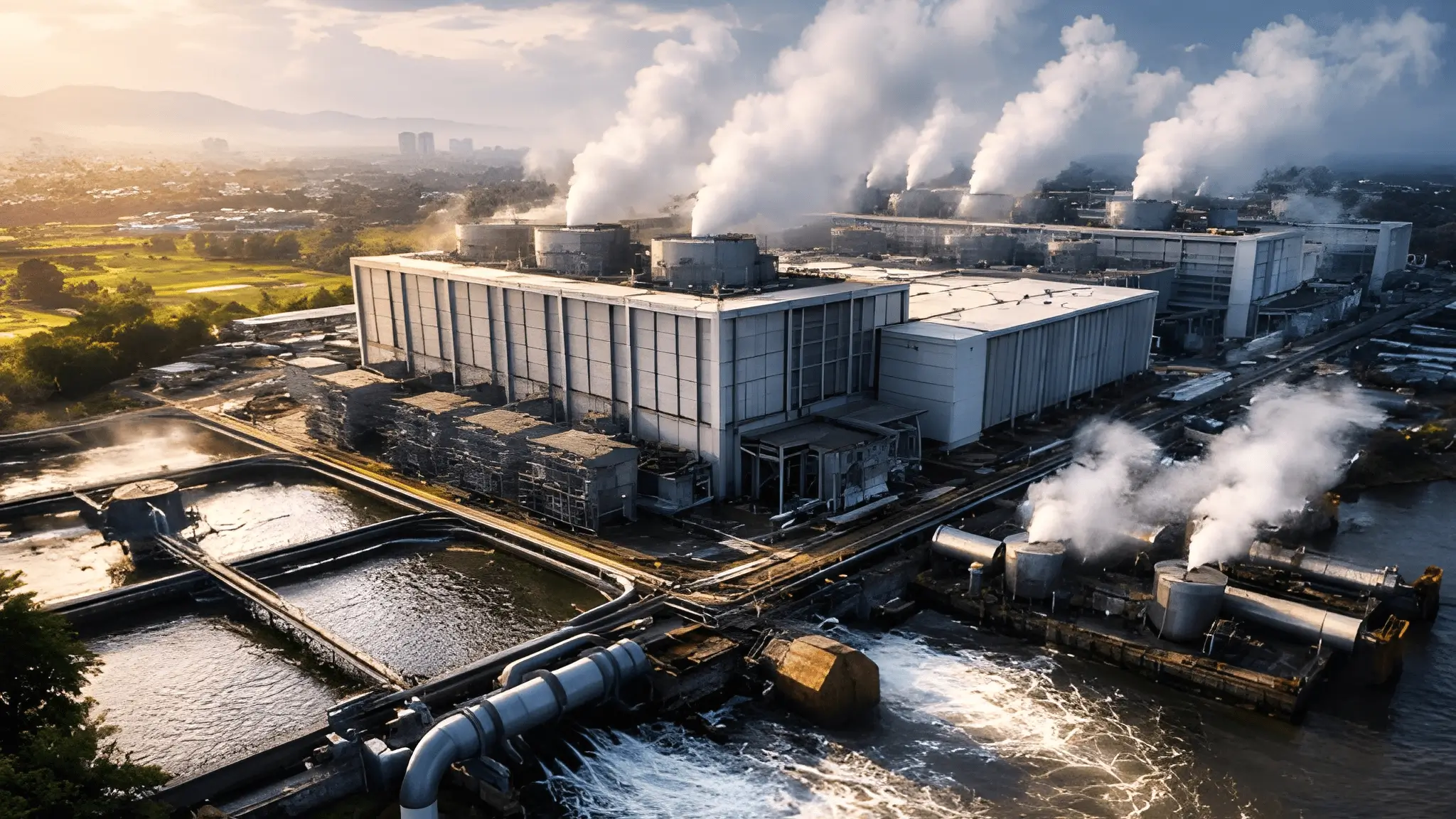
A Digital Surge Meets a Finite Resource
Indonesia’s rise as a digital infrastructure hub is accelerating at a pace few in Southeast Asia can match. Global cloud providers, hyperscale operators, and regional investors are moving quickly to establish capacity across the archipelago, drawn by a large consumer market, expanding digital economy, and favorable geographic positioning.

Artificial intelligence workloads are adding further momentum, driving demand for high-density compute environments that require constant, efficient cooling to operate. Yet beneath this rapid expansion lies a constraint that is gaining urgency: water.
Large-scale data centers depend heavily on water-based cooling systems to maintain thermal stability. As facilities scale in size and density, their water requirements increase accordingly. In
Indonesia, where water access remains uneven and certain regions already face stress, this rising industrial demand introduces a structural tension between digital growth and resource sustainability. The challenge is not hypothetical. It is emerging in real time as infrastructure deployment accelerates faster than the systems designed to support it.

Cooling the Cloud, Draining Local Supply
Modern data centers rely on advanced cooling technologies to manage heat generated by high-performance computing. Among the most widely used methods are evaporative cooling systems, which consume significant volumes of water to dissipate heat efficiently. While these systems offer energy advantages compared to traditional air cooling, they shift the burden onto water resources.
In Indonesia, this trade-off carries distinct implications. Urban centers and industrial zones, prime locations for data center development, often coincide with areas where water demand is already high. Residential consumption, agricultural irrigation, and industrial use compete within the same supply networks. Adding large-scale digital infrastructure into this equation increases pressure on systems that may already be operating near capacity.
This dynamic raises concerns about allocation and prioritization. Water is not simply an operational input for data centers; it is a critical resource for communities and economic stability. When demand rises without corresponding improvements in supply management, the risk of imbalance grows.
Policy Gaps in a High-Growth Environment
Indonesia’s digital ambitions are clear. Policymakers have positioned the country as a regional leader in cloud adoption and AI readiness, encouraging investment through regulatory support and infrastructure development initiatives. However, oversight mechanisms related to water usage in data centers remain limited in scope and consistency.
Transparency represents one of the most pressing gaps. Public disclosure of water consumption metrics is not yet standardized across operators, making it difficult to assess cumulative impact at a regional or national level. Without clear reporting frameworks, policymakers and stakeholders lack the data needed to make informed decisions about resource allocation.
Regulatory frameworks also face the challenge of keeping pace with technological change. Data center deployment cycles have shortened significantly, while policy development often moves more slowly. This mismatch creates a window in which infrastructure can expand without comprehensive environmental safeguards in place.
The result is not necessarily mismanagement, but misalignment. Growth is proceeding as planned, yet governance structures are still evolving to address its full implications.
The Geography of Risk
Indonesia’s geographic diversity adds complexity to the issue. Water availability varies widely across islands and regions, influenced by climate patterns, infrastructure development, and population density. Some areas experience seasonal abundance, while others face chronic shortages.
Data center operators tend to cluster in locations with strong connectivity, reliable power, and proximity to demand centers. These factors do not always align with water availability. In some cases, facilities are being developed in regions where water stress is already a concern, amplifying existing vulnerabilities.
This geographic mismatch introduces systemic risk. If water constraints intensify in key infrastructure hubs, they could affect not only local communities but also the reliability of digital services that depend on those facilities. In a highly interconnected digital economy, localized resource issues can have broader operational consequences.
Technology Alternatives Remain Underutilized
The industry is not without solutions. Alternative cooling technologies, including liquid immersion systems and closed-loop cooling architectures, offer pathways to reduce water consumption. These approaches can significantly lower or even eliminate reliance on external water sources, depending on implementation.
However, adoption remains limited. Cost considerations, technical complexity, and existing infrastructure designs often favor established cooling methods. Retrofitting facilities or deploying newer technologies at scale requires capital investment and operational adjustments that not all operators are prepared to undertake.
This creates a paradox. The technologies needed to address water risk exist, yet their deployment lags behind the pace of infrastructure expansion. Without stronger incentives or regulatory signals, this gap is unlikely to close quickly.
Competing Priorities in a Strategic Market
Indonesia’s position in Southeast Asia’s digital economy places it at the center of competing priorities. On one side is the imperative to build capacity, attract investment, and support economic growth through digital transformation. On the other is the need to safeguard natural resources that underpin long-term stability.
These priorities are not inherently incompatible. However, they require coordination and foresight to align effectively. Rapid infrastructure expansion without integrated resource planning increases the likelihood of trade-offs that may become more difficult to manage over time.
Industry stakeholders are beginning to recognize this balance. Investors and operators increasingly face expectations around environmental performance, including water usage. At the same time, governments are under pressure to ensure that development benefits are distributed equitably and sustainably.
A Narrowing Window for Proactive Action
The current phase of Indonesia’s data center expansion presents a critical window for action. Decisions made now will shape the trajectory of both digital infrastructure and resource management for years to come.
Establishing standardized reporting frameworks for water usage would provide greater visibility into the scale and distribution of demand. Strengthening regulatory oversight could help ensure that new developments align with local resource conditions. Encouraging the adoption of alternative cooling technologies would reduce long-term dependency on water-intensive systems.
These measures do not require a slowdown in growth. Instead, they offer a pathway to make that growth more resilient.
The Cost of Delay
If current trends continue without adjustment, the risks are likely to compound. Increased competition for water resources could lead to supply constraints, affecting both communities and industries. Environmental stress may intensify in already vulnerable regions, creating broader socio-economic challenges.
For the data center sector, these risks translate into operational uncertainty. Water scarcity can disrupt cooling processes, increase costs, and introduce regulatory or reputational pressures. In extreme cases, it could limit the viability of certain locations for future development.
The cost of inaction, therefore, extends beyond environmental impact. It carries implications for the sustainability of the digital economy itself.
Balancing Growth With Stewardship
Indonesia’s digital ambitions remain well within reach. The country’s market fundamentals, strategic location, and policy direction continue to attract investment and drive expansion. However, sustaining this trajectory will require a more integrated approach to resource management.
Water, often overlooked in discussions of digital infrastructure, is emerging as a defining constraint. Addressing this challenge does not diminish the importance of growth; it reinforces the need to pursue it responsibly.
The question facing policymakers and industry leaders is not whether Indonesia should continue its data center expansion. It is whether that expansion can proceed in a way that preserves the resources it depends on.
The answer will determine not only the future of Indonesia’s digital economy, but also the resilience of the systems that support it.











