 Skip to content
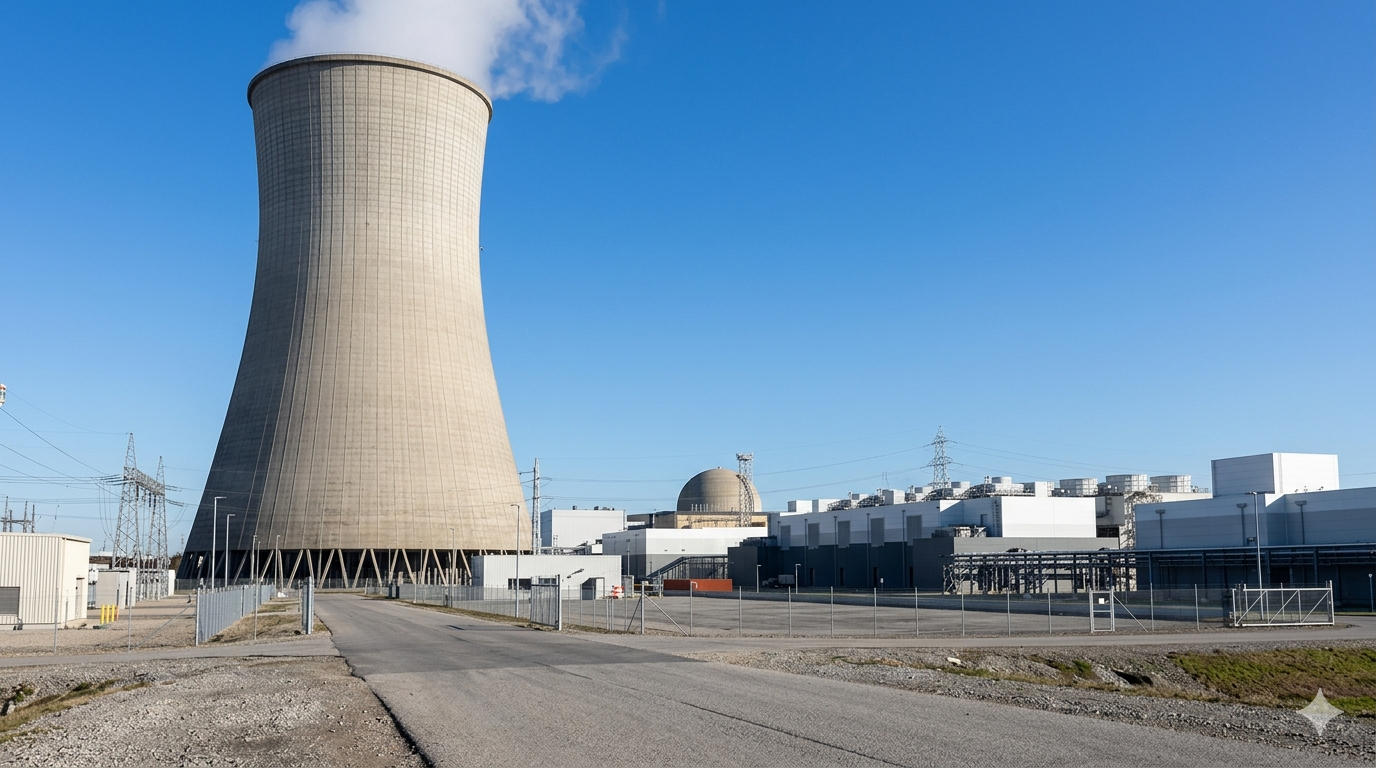
The nuclear narrative in AI infrastructure has never been louder. Microsoft restarted a reactor at the former Three Mile Island site under a power purchase agreement with Constellation Energy. Google signed a deal with Kairos Power to bring a 500-megawatt small modular reactor online by 2030. Amazon committed over $20 billion to nuclear-powered cloud infrastructure. Meanwhile, Meta announced it is actively seeking a nuclear energy developer to power its future AI operations. The language from hyperscalers has shifted from cautious interest to structural commitment.

The problem is straightforward. Nuclear power will not materially contribute to the AI infrastructure power requirement until well into the next decade. The announcements are real. The power is not, and that gap is shaping how the industry actually keeps its data centers running today.
What Nuclear Can and Cannot Do
Nuclear energy’s appeal for AI infrastructure is clear. It produces firm, 24-hour, carbon-free power. It does not depend on weather, time of day, or fuel price volatility. For data centers running AI workloads continuously, that reliability profile is exactly what the grid often fails to provide. The case for firm power comes down to operational certainty. AI workloads cannot be interrupted by grid instability or renewable intermittency without significant cost and performance consequences.
Small modular reactors offer additional advantages over conventional nuclear. Their modular construction allows phased deployment and smaller land requirements. Additionally, they can be sited closer to industrial zones, including data center campuses. On-site SMR deployment could allow operators to bypass grid interconnection queues entirely, securing dedicated power independent of transmission infrastructure. In markets where interconnection timelines stretch five years or more, that independence carries enormous strategic value.
The Timeline Problem
The SMR timeline is the central challenge. Only one SMR design has received full regulatory certification in the United States. All other designs are in pre-licensing or early application stages. As a result, the first commercial SMR deployments in the U.S. are realistically ten years away. Even optimistic projections place meaningful SMR capacity for hyperscalers in the mid-2030s at earliest. Building new nuclear in the U.S. remains slow and complex. SMRs, despite their smaller scale, are no exception.
The industry has already confronted the limits of renewables alone. Solar and wind cannot provide continuous, high-density power without substantial storage. Storage at the scale needed for gigawatt AI campuses does not yet exist at commercially viable cost. Nuclear is the logical long-term answer to that gap. However, logical long-term answers do not power data centers that need to come online in the next 18 months.

What Fills the Gap
The honest answer to the interim power question is natural gas. Hyperscalers that have committed publicly to nuclear timelines are simultaneously signing long-term gas agreements and building behind-the-meter gas generation. In some cases, they are funding natural gas plant construction adjacent to data center sites. Meta signed a deal with a utility to fund the construction of gas plants specifically to power its AI buildout. The nuclear narrative and the gas reality are running in parallel, and the industry knows it.
This is not hypocrisy. It is rational infrastructure planning under genuine constraint. The power AI infrastructure needs today cannot wait for 2035. Gas turbines deploy in 18 to 24 months. They produce firm, dispatchable power at a cost that project finance can underwrite. Furthermore, they fill the gap between today’s grid constraints and tomorrow’s nuclear ambitions. The industry’s credibility depends on being transparent about that sequencing rather than leading with the nuclear headline while quietly building gas infrastructure behind it.
The Structural Commitment Still Matters
None of this diminishes the strategic importance of the nuclear commitments hyperscalers are making now. Restarting existing nuclear plants, as Microsoft has done, delivers carbon-free firm power within existing timelines. Funding SMR developers accelerates licensing, design certification, and supply chain development. Those investments will determine whether commercial SMR deployment happens in 2032 or 2038. Consequently, the capital being deployed today in nuclear development is not generating power in 2026, but it is compressing the timeline toward the point where nuclear becomes a meaningful part of the AI infrastructure power mix.
The data center industry’s energy problem is a decade-long problem, not a quarterly one. Nuclear is the right long-term answer for firm, carbon-free power at the scale AI infrastructure requires. The industry should say so clearly. At the same time, it should be equally clear that natural gas is filling the gap in the interim. Presenting nuclear commitments as if they address today’s power constraints does not serve the industry’s credibility, nor does it serve the communities and policymakers trying to understand what AI infrastructure actually needs and when.












