NVIDIA H200 shipments delayed to Q3  · BREAKING: Microsoft confirms 3GW data centre expansion in Asia-Pacific ·  AWS announces new sovereign cloud regions in India and UAE  · Arm-based servers now 24% of hyperscale deployments ·  EU AI Act enforcement enters phase two  · Global data centre investment hits $612B in 2026 ·  TSMC Arizona yields improve to 68% on 3nm process  · OpenAI valuation reaches $400B after latest funding round ·  NVIDIA H200 shipments delayed to Q3  · BREAKING: Microsoft confirms 3GW data centre expansion in Asia-Pacific ·  AWS announces new sovereign cloud regions in India and UAE  · Arm-based servers now 24% of hyperscale deployments ·  EU AI Act enforcement enters phase two  · Global data centre investment hits $612B in 2026

Natural Gas Is Back: How AI Is Reversing the Clean Energy Narrative

Three years ago, major technology companies were competing to announce the most ambitious renewable energy commitments. 100 percent clean energy

Share
Natural gas AI data center power hyperscaler clean energy reversal 2026

Three years ago, major technology companies were competing to announce the most ambitious renewable energy commitments. 100 percent clean energy by 2030. Carbon negativity by 2040. Power purchase agreements with offshore wind farms, utility-scale solar, and geothermal projects. The narrative was settled. Hyperscalers were leading the energy transition, and their data center buildout would run on clean power.

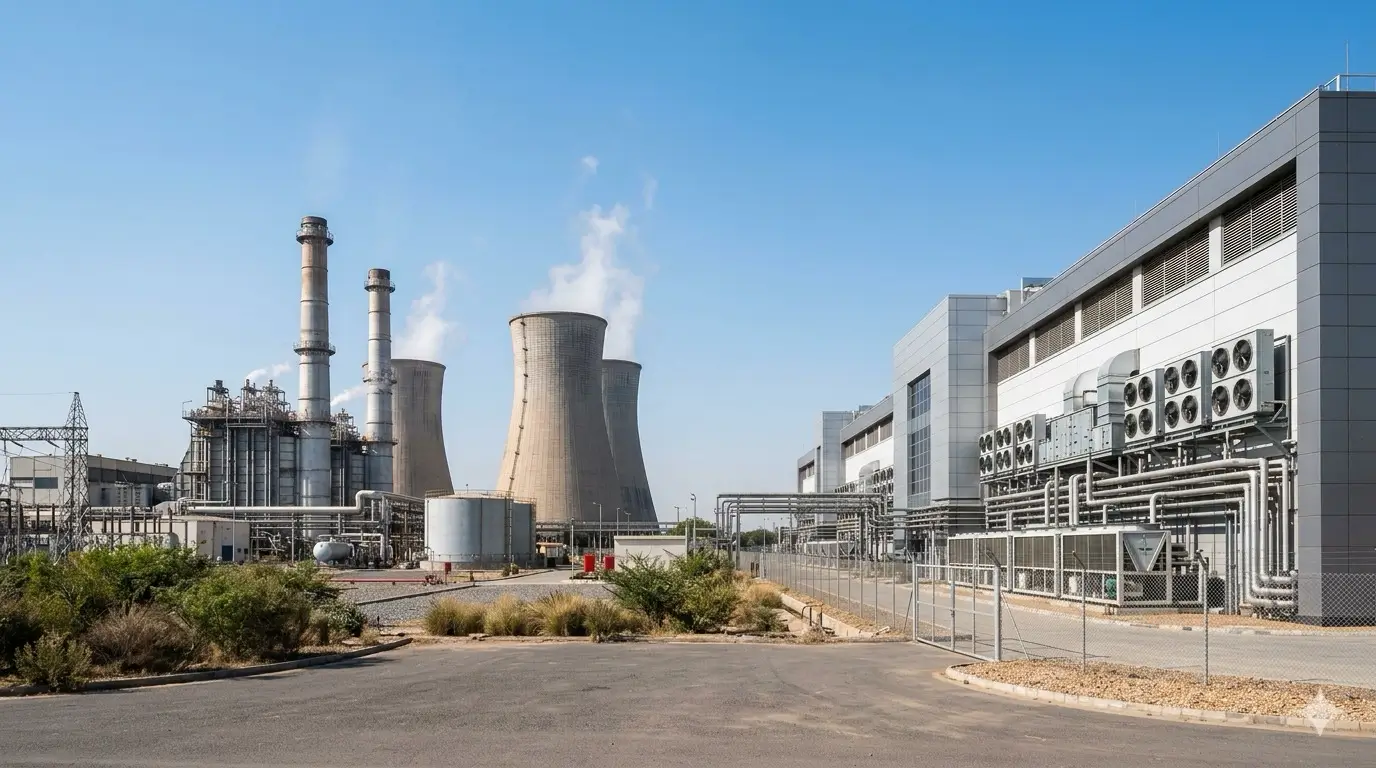
That narrative has not collapsed. But it has fractured significantly, and the fracture lines run directly through the natural gas decisions hyperscalers are now making quietly while their sustainability communications stay unchanged. Microsoft is working with Chevron to build a dedicated gas plant in West Texas for its AI data centers. Google partnered with Crusoe to construct a 933-megawatt gas plant in Texas that will not connect to the public grid. Meta is funding dedicated gas generation at multiple sites. The companies building the most consequential AI infrastructure in history are choosing natural gas not despite their sustainability commitments but alongside them, because the grid cannot deliver power fast enough.

Speed Is Beating Sustainability in the Procurement Decision

The driver of the gas reversal is not ideology. It is logistics. Grid connection timelines in major markets now stretch three to seven years. A solar-plus-storage project that bypasses queue constraints by co-locating with a data center is one solution, and operators are pursuing it. However, those projects still take time to develop, permit, and build. A gas turbine plant can reach operational status in 18 to 24 months. When every month of delay represents hundreds of millions in lost AI revenue, that speed advantage is decisive.

Roughly 30 percent of all planned new data center power capacity now expects to come from on-site generation, up from nearly zero a year ago. Some analysts project that figure reaching 50 percent as more hyperscalers secure direct generation partnerships with energy companies. Williams, the major gas pipeline company, committed over $5 billion to building modular gas-fired power plants directly at data center sites. Exxon Mobil has a pipeline of over 2.7 gigawatts in data center power projects. Energy companies that a decade ago faced political pressure over fossil fuels are now at the centre of the most important infrastructure buildout in modern history.

The Behind-the-Meter Logic

Moving gas generation behind the meter gives hyperscalers a second advantage beyond speed. By generating power on-site and connecting directly to their data centers without flowing through the utility grid, operators avoid the grid congestion, reliability risks, and ratepayer cost allocation debates that come with grid-connected large loads. The arrangement lets companies claim they are bringing their own power rather than straining the shared grid, which provides some political cover in markets where data center energy consumption has become a regulatory flashpoint.

Baseload power from gas turbines is filling the gap that renewables cannot close quickly enough. The firm, dispatchable nature of gas generation matches the continuous power profile that AI inference workloads demand. Unlike solar or wind, gas turbines produce power on demand regardless of weather or time of day. For operators running GPU clusters continuously, that reliability profile is not just convenient. It is operationally essential.

What It Means for the Clean Energy Commitment

The honest assessment is that the clean energy commitments and the gas buildout are running in parallel, and in the near term the gas buildout is winning. Renewables hit a structural wall in the AI infrastructure context because the pace of renewable deployment and the pace of grid connection cannot match the pace at which hyperscalers need new power. Hyperscalers are not abandoning their long-term clean energy targets. They are sequencing gas now and renewables and nuclear later, betting that cleaner alternatives will eventually replace the gas infrastructure they are building today.

That sequencing strategy carries real risk. Gas turbines built in 2026 will run for decades. If small modular reactors and large-scale renewables do not reach commercial deployment fast enough to replace this generation, the gas assets built in this cycle become a long-term carbon liability rather than a bridge fuel. The companies making these bets are sophisticated enough to understand that risk. They are making it anyway because the alternative, waiting for clean power, means ceding ground in the AI race to competitors who are not waiting.

The Sustainability Credibility Problem

The gap between what hyperscalers say about clean energy and what they are actually building is becoming harder to ignore. Corporate sustainability reports continue to lead with renewable energy commitments and carbon neutrality targets. The permit filings and construction contracts tell a different story. Google’s Goodnight campus gas plant could emit up to 4.5 million tonnes of CO2 per year. That figure sits uncomfortably alongside the company’s public climate commitments, and it is not unique.

The industry faces a credibility problem it has not yet fully resolved. The most defensible position is to acknowledge the sequencing explicitly. Gas now bridges the gap while the clean energy pipeline develops. The least defensible position is to continue presenting clean energy commitments as if they describe current procurement reality rather than long-term aspiration. The companies that engage honestly with this tension will be better positioned with regulators, communities, and institutional investors than those that allow the gap to widen in silence.


[simple-author-box]

More from AI Infrastructure

Power negotiations often conclude long before operational constraints reveal themselves inside a live facility.

Artificial intelligence infrastructure has compressed deployment timelines to the point where electrical capacity is

Boards increasingly expect organizations to support sustainability reporting with evidence that aligns with governance

COMPUTE WEEKLY

The briefing that 40,000+ tech leaders read every Monday. Sharp, fast, essential.

Great! We’ve received your information.

We couldn’t process your submission. Please retry

Building an AI Startup Without Owning GPUs

Not owning GPUs has become the default, deliberate strategy for building an AI company — not a compromise founders accept reluctantly. H100 rental rates fell 64-75% in fifteen months, a dense ecosystem of neoclouds and inference-as-a-service providers now lets startups skip infrastructure entirely, and credit programs can fund a company’s first year before a founder writes a check
Most Read

Infrastructure planning discussions often prioritize engineering, construction, and utility considerations before examining how end

AI infrastructure deployment schedules depend on coordinated progress across hardware availability, electrical infrastructure, cooling

Artificial intelligence has transformed the economics of digital infrastructure. Every new AI model requires

Data centers do not visibly smoke. They have no smokestacks, no visible exhaust, and

Artificial intelligence has transformed the economics of digital infrastructure. Companies once competed by acquiring

Disruptor Spotlight

Cerebras Systems

The chip that makes Nvidia nervous. Cerebras’ Wafer Scale Engine is rewriting the rules of AI inference at scale.
Faster
0 x
YoY Revenue
0 x
Transistors
0 T
Market Pulse
NVDA
$924.60
-2.11%
MSFT
$421.30
-2.94%
AMZN
$192.80
-4.87%
AMD
$924.60
-2.40%
TSMC
$924.60
-2.32%
Indicative only · Not financial advice
Upcoming Events
SEP
The AI Infrastructure Race (India)
WEBINAR · ONLINE
The AI Infrastructure Race: Won on Power, Land and Trust — Not Capital
MAY
0
AI Infrastructure Summit
DUBAI · IN PERSON
MEA’s premier AI infrastructure event.
JUN
0 0
Compute Forecast Summit
SINGAPORE · IN PERSON
Our flagship APAC event. Early bird open.
Latest Moves
Live
ecolab
Ecolab Deepens Cooling Strategy With $4.75B CoolIT Acquisition
Ecolab is making one of its biggest moves yet into AI infrastructure after completing its $4.75 billion acquisition of liquid cooling specialist CoolIT Systems
Pure DC AVK Europe data center microgrid Dublin 110MW AI infrastructure Ireland 2026
Pure DC and AVK Deploy Europe’s First 110 MW Data Center Microgrid in Dublin
The Pure DC Dublin microgrid has made history as Europe’s first large-scale on-site data center microgrid, launched in partnership with power solutions provider AVK at Pure DC’s campus in Ireland.
Pace Digitek
Pace Digitek Partners With MEGMEET to Expand AI Data Center Power Business
India’s AI infrastructure ecosystem continues to mature as domestic technology manufacturers move beyond traditional telecommunications and industrial markets toward high-growth digital infrastructure opportunities
Follow Compute Forecast
11K followers
1200 followers
Companies to Watch
CW
CoreWeave
Neo Cloud · $19B · IPO Watch
CB
Cerebras Systems
AI Hardware · $4.25B · Pre-IPO
G42
G42
Sovereign AI · Abu Dhabi
H
Humain
Saudi AI · $40B Fund
Latest Podcast
AI Capex, Cloud Margins & the Nuclear Bet
48 MIN · 25 APR 2026

Natural Gas Is Back: How AI Is Reversing the Clean Energy Narrative

Three years ago, major technology companies were competing to announce the most ambitious renewable energy commitments. 100 percent clean energy

Share
Natural gas AI data center power hyperscaler clean energy reversal 2026
13
847 SHARES

0
SHARES

[simple-author-box]

More from AI Infrastructure

Infrastructure planning discussions often prioritize engineering, construction, and utility considerations before examining how end

AI infrastructure deployment schedules depend on coordinated progress across hardware availability, electrical infrastructure, cooling

Artificial intelligence has transformed the economics of digital infrastructure. Every new AI model requires

Data centers do not visibly smoke. They have no smokestacks, no visible exhaust, and

COMPUTE WEEKLY

The briefing that 40,000+ tech leaders read every Monday. Sharp, fast, essential.

Great! We’ve received your information.

We couldn’t process your submission. Please retry

Global AI Infrastructure Outlook 2026

The briefing that 40,000+ tech leaders read every Monday. Sharp, fast, essential.
Download Free
Most Read

Infrastructure planning discussions often prioritize engineering, construction, and utility considerations before examining how end

AI infrastructure deployment schedules depend on coordinated progress across hardware availability, electrical infrastructure, cooling

Artificial intelligence has transformed the economics of digital infrastructure. Every new AI model requires

Data centers do not visibly smoke. They have no smokestacks, no visible exhaust, and

Artificial intelligence has transformed the economics of digital infrastructure. Companies once competed by acquiring

Disruptor Spotlight

Cerebras Systems

The chip that makes Nvidia nervous. Cerebras’ Wafer Scale Engine is rewriting the rules of AI inference at scale.
Faster
0 x
YoY Revenue
0 x
Transistors
0 T
Market Pulse
NVDA
$924.60
+2.4%
MSFT
$421.30
+1.1%
AMZN
$192.80
-0.6%
NVDA
$924.60
+2.4%
NVDA
$924.60
+2.4%
Indicative only · Not financial advice
Upcoming Events
MAY
0 0
DCD Global — London
LONDON · IN PERSON
World’s largest DC event. CF is media partner.
MAY
0
AI Infrastructure Summit
DUBAI · IN PERSON
MEA’s premier AI infrastructure event.
JUN
0 0

Compute Forecast Summit

SINGAPORE · IN PERSON
Our flagship APAC event. Early bird open.
Latest Moves
  • Live
Sam Altman
OpenAI appoints new Chief Infrastructure Officer to lead $100B DC programme
27 APR · OPENAI
Sam Altman
OpenAI appoints new Chief Infrastructure Officer to lead $100B DC programme
27 APR · OPENAI
Sam Altman
OpenAI appoints new Chief Infrastructure Officer to lead $100B DC programme
27 APR · OPENAI
Follow Compute Forecast
18.4K followers
12.1K followers
9.3K subscribers
41 episodes
Companies to Watch
CW
CoreWeave
Neo Cloud · $19B · IPO Watch
CB
Cerebras Systems
AI Hardware · $4.25B · Pre-IPO
G42
G42
Sovereign AI · Abu Dhabi
CW
Humain
Saudi AI · $40B Fund
Latest Podcast
AI Capex, Cloud Margins & the Nuclear Bet
48 MIN · 25 APR 2026
Scroll to Top