 Skip to content
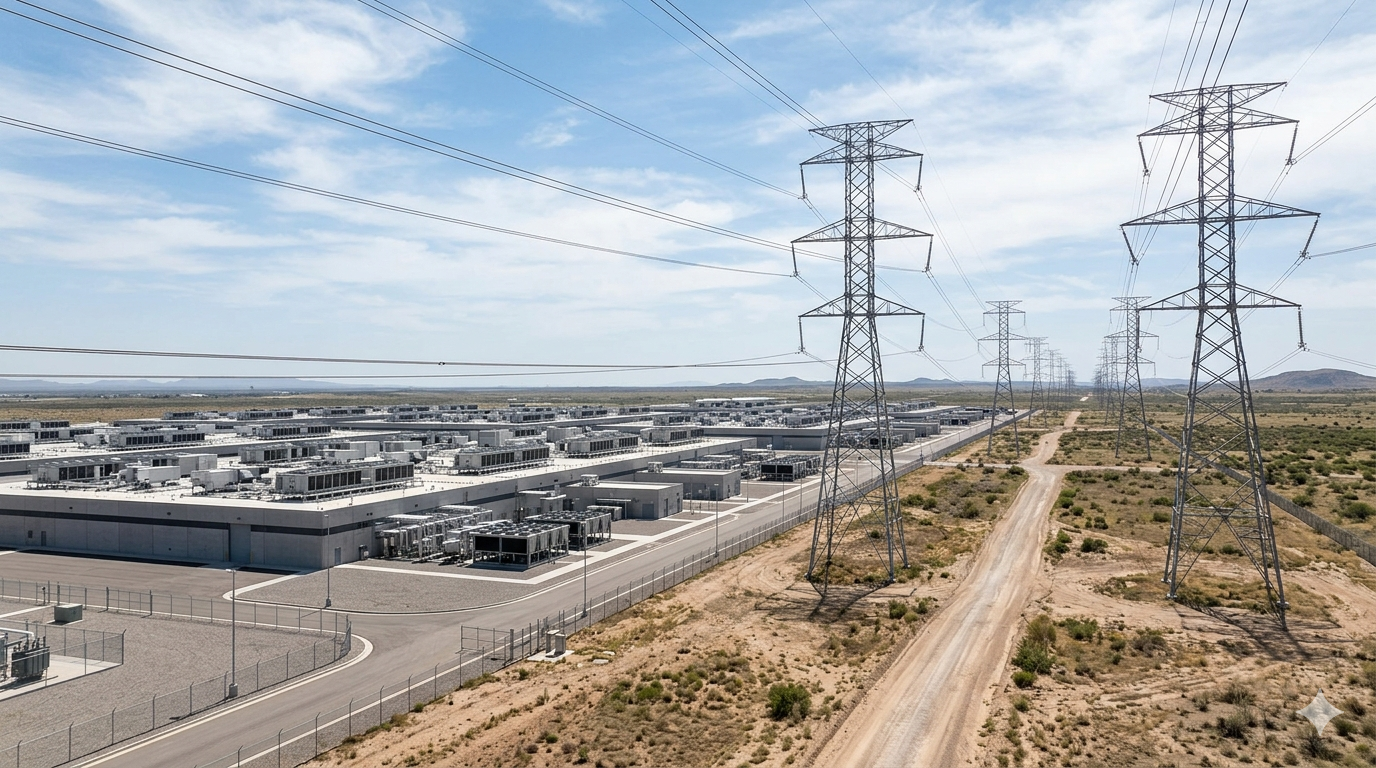
Twenty-seven states are currently considering legislation that would require large data center operators to bear the full cost of the electricity infrastructure their facilities demand. Three states have already passed it. The White House, meanwhile, has been pushing in the opposite direction, calling for streamlined permitting, reduced regulatory friction, and faster grid access for AI infrastructure projects it has designated as national priorities.

This conflict between federal AI infrastructure ambition and state-level cost protection is real, growing, and not going away. On the core question of who should pay for the grid upgrades that data center growth requires, the states are right.
The Math That States Are Responding To
The scale of the cost transfer happening between data center operators and utility ratepayers is not subtle. In Virginia, data centers now consume as much as 26 percent of local electricity supply. PJM’s independent market monitor has estimated that removing all data centers from its demand forecasts would reduce capacity payments by more than $9 billion. That figure reflects the grid expansion cost attributable to a single category of electricity consumer. Moreover, that cost does not disappear. It gets distributed across the 65 million residential and commercial ratepayers in PJM’s 13-state footprint as higher electricity bills.
This pattern repeats across every major data center market. In Texas, Georgia, Indiana, and Arizona, the grid infrastructure required to serve rapid data center growth generates costs that ratepayers absorb while the operators generating the demand benefit from the capacity. That arrangement made some sense when data centers were a modest fraction of grid load and their economic activity justified some public subsidy. It makes much less sense when a single category of electricity consumer drives the majority of new grid demand and captures most of the economic value that demand creates.
What the Ratepayer Protection Pledge Actually Proved
In March 2026, major data center developers signed the White House’s Ratepayer Protection Pledge, committing to cover the full cost of new electric generation resources needed to meet their energy demands. The industry presented the pledge as evidence it was taking cost responsibility seriously. However, what it actually demonstrated was that operators acknowledge the problem exists and prefer a voluntary commitment without legal enforcement over legislation with actual teeth.
The pledge has not slowed state legislative activity. It carries no enforcement mechanism, does not specify how costs will be calculated, allocated, or verified, and covers new generation resources while staying silent on the transmission and distribution infrastructure that connects those resources to existing grids. Furthermore, developers who signed it have every financial incentive to keep infrastructure cost obligations as vague and voluntary as possible. States moving forward with legislation are not overreacting to the pledge. They correctly identify that a voluntary commitment without enforcement is not a substitute for a legal obligation with consequences.

The Federal Argument Does Not Hold Up
The federal case for clearing regulatory friction from AI infrastructure development rests on national competitiveness arguments. The US needs to build AI capacity faster than its rivals. State-level cost requirements add complexity and expense that could slow that buildout. Additionally, requiring data centers to fund their own grid infrastructure raises project costs and extends timelines in ways that compound the supply constraints already limiting AI capacity deployment.
The time-to-power crisis is already the primary constraint on AI infrastructure expansion, and anything that adds cost or complexity to power procurement makes it worse. That argument is not wrong. It is simply incomplete. The national competitiveness case for AI infrastructure is an argument for building more infrastructure faster. However, it is not an argument for building that infrastructure by transferring its costs to households that capture none of the economic value it generates. Those are two separate policy questions, and conflating them is how the industry has avoided taking full responsibility for its grid impact.
AI data centers must earn their grid access on terms that reflect their actual cost to the system. That principle does not prevent rapid AI infrastructure buildout. Instead, it determines who pays for it. The answer is not a national security issue. It is a cost allocation issue, and it is straightforward: operators generating the demand should bear the costs that demand creates, not the ratepayers who had no say in where those facilities went.
What Good Policy Actually Looks Like
The state legislation moving through 27 state houses is not uniformly well designed. Some proposals are blunt instruments that create genuine barriers to infrastructure investment without proportionate benefit to ratepayers. Others conflate the legitimate question of cost allocation with broader opposition to data center development that is more about land use and community character than grid economics. Getting the policy right matters, because poorly designed cost requirements can produce outcomes that satisfy nobody, adding burden to developers while delivering little relief to ratepayers.
The model that works is demand-led cost allocation with clear methodology. Data center operators should pay for the specific grid infrastructure upgrades their interconnection requests require, calculated against a transparent cost methodology that distinguishes their marginal grid impact from baseline grid investment. That approach recovers the actual cost of serving large loads from the entities creating those loads, rather than spreading it through arbitrary surcharges. California, Ohio, and Utah have enacted legislation along broadly these lines. The variation in approach reflects different grid architectures and regulatory frameworks, but the core principle holds consistently: large load customers pay for the grid capacity they consume.
The Industry Response Reveals the Stakes
The data center industry’s response to state legislation has been instructive. Operators have mobilised significant lobbying effort against cost requirements, arguing that mandatory infrastructure funding will deter investment and harm economic development. That argument deserves scrutiny. Operators are spending hundreds of billions on AI infrastructure because the returns justify it. Consequently, the marginal cost of funding grid upgrades is a real but manageable addition to project economics that well-capitalised operators can absorb.
The economic development argument, that communities should subsidise infrastructure costs to attract data center investment, made more sense when data centers generated substantial local employment. Modern hyperscale AI facilities are highly automated. The jobs they create are a fraction of what their power and land cost would justify in a conventional economic development calculation.
States moving forward with cost legislation are not anti-AI. They are pro-ratepayer, and there is nothing contradictory about those positions. The AI buildout can proceed at scale, deliver its promised productivity benefits, and still pay for its own grid infrastructure. The fact that the industry fights hard against that outcome suggests the current arrangement, where ratepayers absorb grid costs so operators can improve their project economics, is more valuable to operators than they are willing to acknowledge publicly.
The federal government’s role in AI infrastructure policy should be to accelerate the process of connecting new capacity to the grid, not to shield operators from the legitimate cost obligations that connection creates. Those are different things. Keeping them distinct is the difference between policy that serves the national interest and policy that serves the industry’s balance sheet.












