
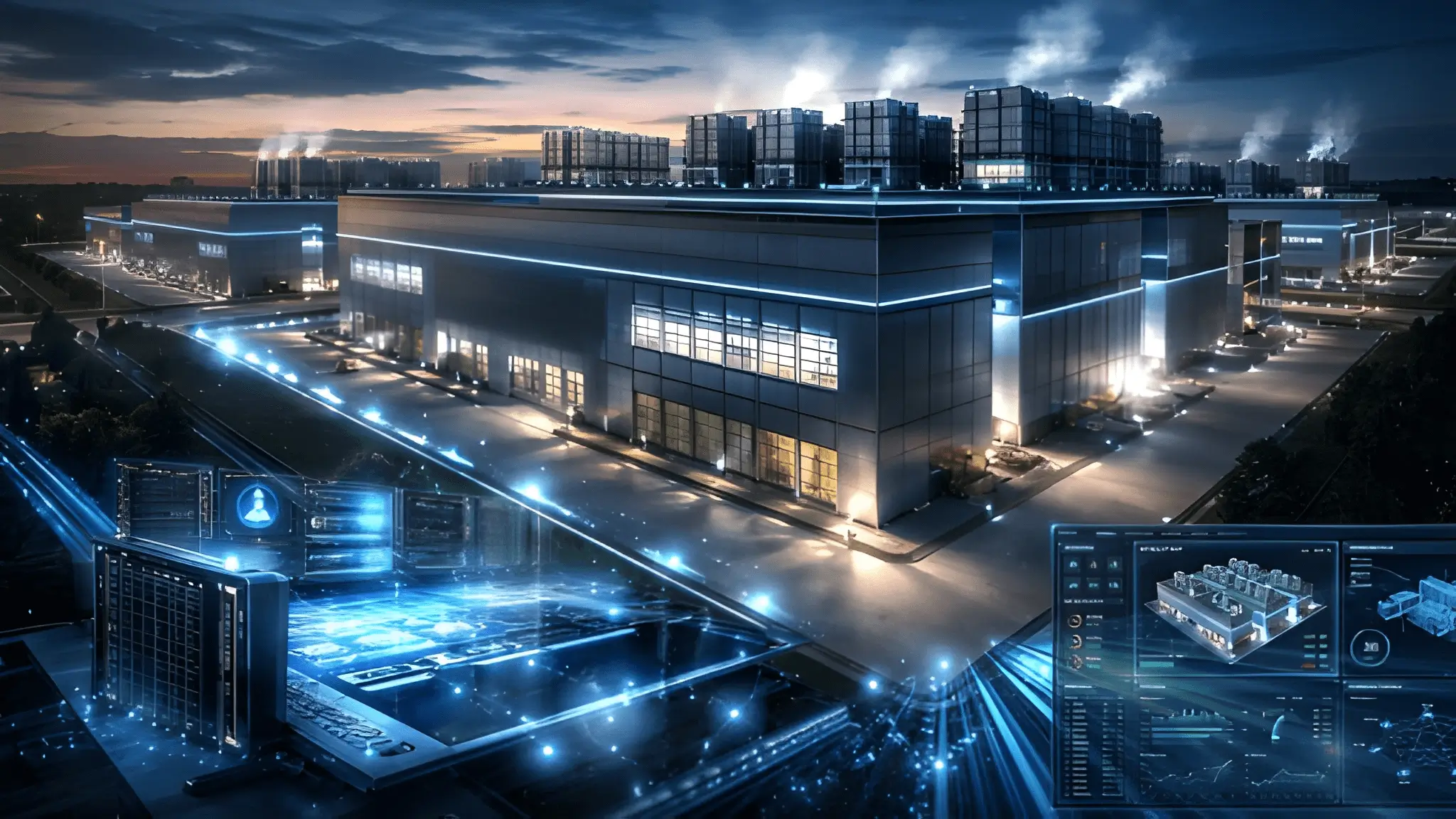
Delska has officially brought online EU North Riga LV DC1, a 10 MW data center purpose-built for artificial intelligence and high-performance computing workloads. The launch positions Latvia inside a rapidly shifting European infrastructure map, where capacity shortages in traditional hubs now push demand toward emerging regions.

The Riga facility enters the market at a time when enterprises struggle to secure scalable compute in Western Europe. By contrast, the Baltics offer both available land and a policy environment aligned with digital growth. This shift signals more than expansion, it reflects a redistribution of compute gravity across Europe.
The project has already secured industry recognition, winning first place at the Latvian Construction Annual Award in the “Production Facility, Industrial Building” category.
Government Alignment Strengthens Digital Sovereignty Narrative
The launch event drew more than 400 stakeholders, including government officials, foreign ambassadors, and enterprise leaders, underscoring the geopolitical weight behind infrastructure investments.

“Two years ago, I had the honor of attending the topping-out ceremony of the new Delska data center and today marks the beginning of a new chapter in Latvia’s IT sector. I am confident that EU North Riga LV DC1 will become a significant milestone in Latvia’s digital development, proving our ability not only to follow global trends but also to actively shape them,” emphasized Daiga Mierina.
Latvia’s leadership framed the facility as critical national infrastructure, reinforcing a broader European push toward sovereign computing capabilities.
“The opening of the Delska data center is a strong signal of Latvia’s economic maturity and its ability to attract secure, high-added-value investments. It demonstrates that Latvia is a stable and reliable location for future-oriented projects. Today, digital infrastructure forms the foundation of both economic resilience and national security. This project is also an example of how technological development can be combined with sustainability,” Evika Silina said in her speech.
Engineering for AI and HPC at Scale
EU North Riga LV DC1 introduces a modular architecture designed to scale from 10 MW to 30 MW, aligning with the unpredictable growth curves of AI workloads. The 7,100 m² facility supports densities up to 250 kW per rack, placing it firmly in the next-generation compute category.
The site meets Tier III standards, delivering 99.982% uptime, an essential benchmark for enterprises running latency-sensitive AI inference and training pipelines.
However, the real differentiator lies in its energy profile. The facility targets a power usage effectiveness (PUE) below 1.3, leveraging renewable energy sourced from Northern Europe’s wind, solar, and hydro systems. Backup systems rely on Neste MY renewable diesel, reflecting a hybrid approach to resilience and sustainability.
Delska used the launch to position the facility within a broader ecosystem strategy. Presentations from Dell Technologies, 11Stream, and Veeam highlighted themes such as sovereign computing, AI infrastructure scaling, and data portability.
The messaging suggests that EU North Riga LV DC1 is not just a standalone asset but part of a larger platform designed to attract hyperscalers, enterprises, and AI-native companies.
The Baltics Emerge as Europe’s Next Compute Frontier
The Riga launch marks an inflection point for the Baltic region. As traditional European data center hubs face constraints around power, land, and regulation, secondary markets gain strategic importance.
Moreover, Delska has already begun preparing infrastructure for its first customers, indicating early demand validation. The project strengthens the Baltics’ positioning as a sustainable and competitive digital infrastructure hub in Northern Europe, one capable of absorbing overflow demand from saturated markets while offering a cleaner energy mix.
Delska’s Riga facility represents more than a regional milestone. It signals a structural shift in how Europe builds, distributes, and secures its next generation of compute infrastructure. As AI workloads intensify and capacity gaps widen, the Baltics are no longer peripheral, they are becoming essential.











