 Skip to content
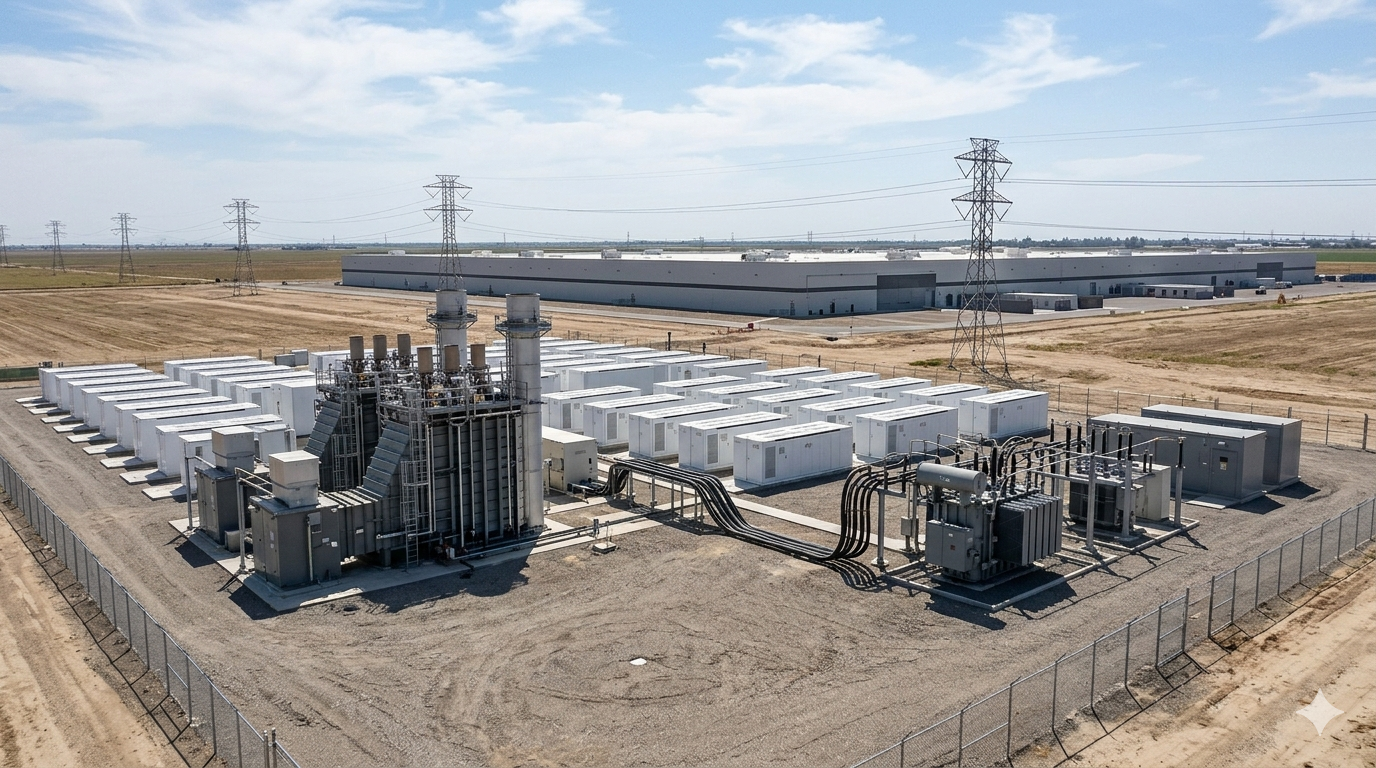
Eos Energy Enterprises (NASDAQ: EOSE) and TURBINE-X Energy announced a Joint Development Agreement on April 15, 2026, to develop and deploy private power infrastructure for AI data centers. The partnership combines TURBINE-X’s behind-the-meter gas-fired generation with Eos Energy’s Indensity zinc-based battery storage. Together, these systems deliver firm, dispatchable power to hyperscale data centers in months rather than years.

Under the agreement, TURBINE-X will procure up to 2 gigawatt-hours of energy storage systems from Eos Energy over 36 months. First deployments start in 2027. For context, 2 GWh equals Eos Energy’s entire 2025 production output, making this a significant commercial milestone for the company. Several large projects are already in development, each targeting hundreds of megawatts per site. Engineering, siting, and customer engagement are underway across multiple locations.
Why the “Bring Your Own Power” Model Is Gaining Traction
The deal reflects the rise of what the energy market now calls “Bring Your Own Power.” Under this model, AI infrastructure operators build private on-site generation rather than waiting for grid connections. In most primary US markets, those connections take three to five years to secure. Justin Vagnozzi, Eos SVP of Technical Sales and Commercial Operations, put it plainly: power has moved onto the critical path, and traditional grid timelines no longer align with hyperscale AI deployment speed.
The combined platform fills a specific gap. Gas-fired turbines deliver fast-response, firm power for the sustained compute loads that GPU clusters demand. Meanwhile, Eos Energy’s Indensity battery storage smooths the rapid fluctuations that GPU workloads generate. This allows the system to operate independently of utility infrastructure while maintaining the stability that mission-critical AI environments require.

What the Eos-TURBINE-X Model Offers That Others Don’t
What sets this partnership apart is the integration of long-duration zinc-based storage alongside gas generation. Most behind-the-meter deployments today rely on fuel cells or short-cycle lithium-ion batteries. Zinc-based storage, however, offers longer discharge duration and a different cost structure. Consequently, it suits the continuous, around-the-clock load profile that AI inference infrastructure generates far better than lithium alternatives.
Eos Energy is already preparing its second production line, with ambitions to eventually support 100-plus GWh deployments across multiple sites. That trajectory places the company at the intersection of two accelerating trends: AI infrastructure’s growing need for off-grid firm power, and the energy storage industry’s push beyond lithium-ion chemistry. Additionally, Eos Energy’s stock closed up 12 percent on the announcement day, signalling strong investor conviction that the private power infrastructure category will scale significantly over the next three to five years.












