
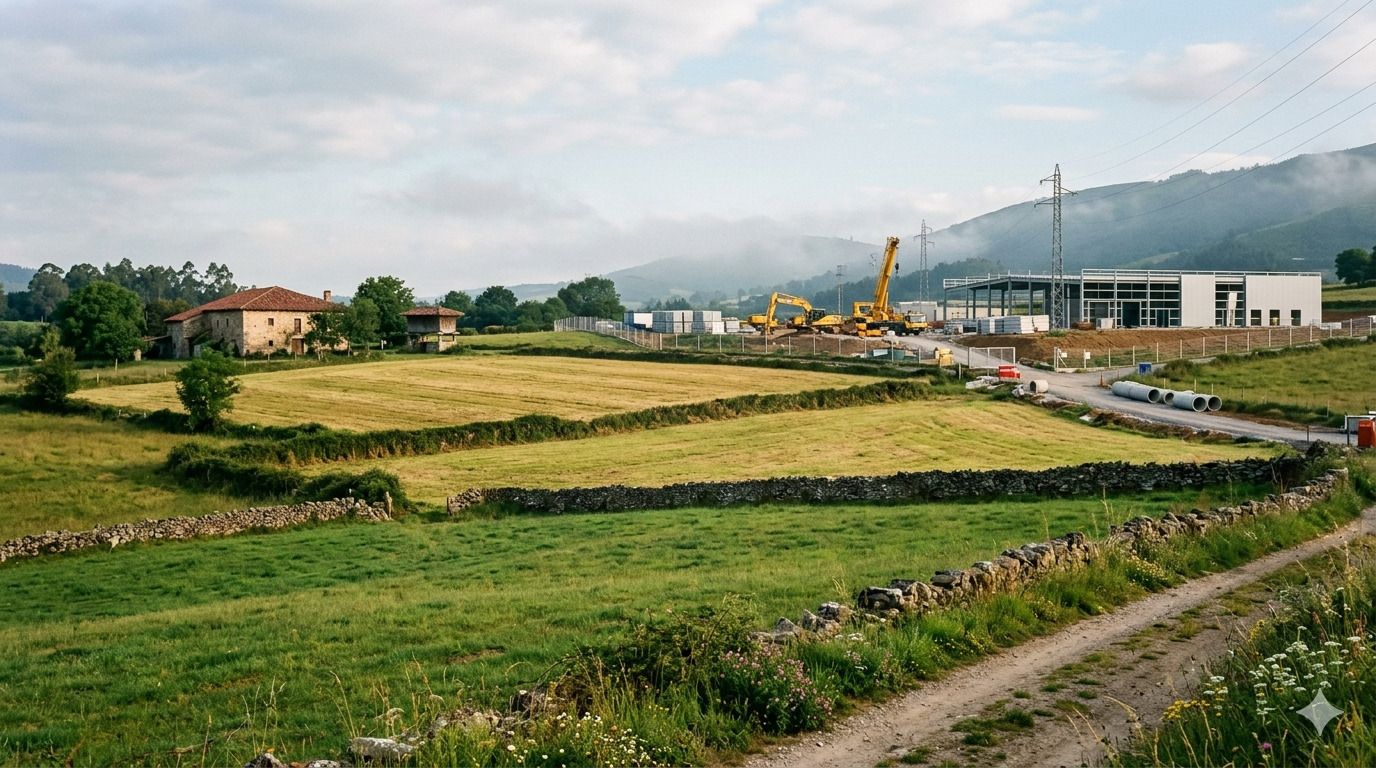
Spain’s data center land acquisition controversy is escalating as the government’s €90 billion AI infrastructure expansion draws commitments from Amazon Web Services and Microsoft while sparking friction with farming communities in Aragón and beyond.

Amazon outlined a €33.7 billion investment to expand cloud and AI infrastructure across Spain, including supply chain facilities in Aragón to support operations across Europe. Microsoft has made parallel commitments. The Spanish government has designated data center projects as being of general interest, a classification that allows compulsory land acquisition under public purpose laws previously applied to transport and energy infrastructure.
How Land Acquisition Is Creating Community Friction
The designation of AI data centers as public purpose projects has created a new dynamic in communities where agricultural land is being acquired to accommodate hyperscale facilities. Landowners in Aragón are receiving formal letters from AWS representatives offering what the letters describe as superior compensation and requesting responses within four days. The compressed timeline and the unfamiliarity of the process have alarmed families that have owned the land for generations.
Spain is not alone in this tension. In India, Google and Microsoft are facing protests from farmers over data center projects in Andhra Pradesh and other agricultural regions. In the US, Google withdrew a $1 billion Indianapolis data center project in September 2025 after community opposition, and Microsoft paused its Michigan plans to engage more deeply with local communities first.

What This Means for European AI Infrastructure Policy
European policymakers backing the AI infrastructure buildout now face a governance challenge that sits between national competitiveness objectives and community interests. The current project-by-project approach applies general interest designations on an ad hoc basis with no community consultation framework, producing friction that could slow permitting timelines on future projects if organised political opposition takes hold.
Spain’s experience will likely become the test case for how European governments balance the urgency of AI infrastructure development with the procedural protections communities expect when public purpose laws override private property rights. The countries that build clear, consistent community engagement frameworks alongside land acquisition processes will move faster than those that renegotiate each project individually as opposition grows.











