
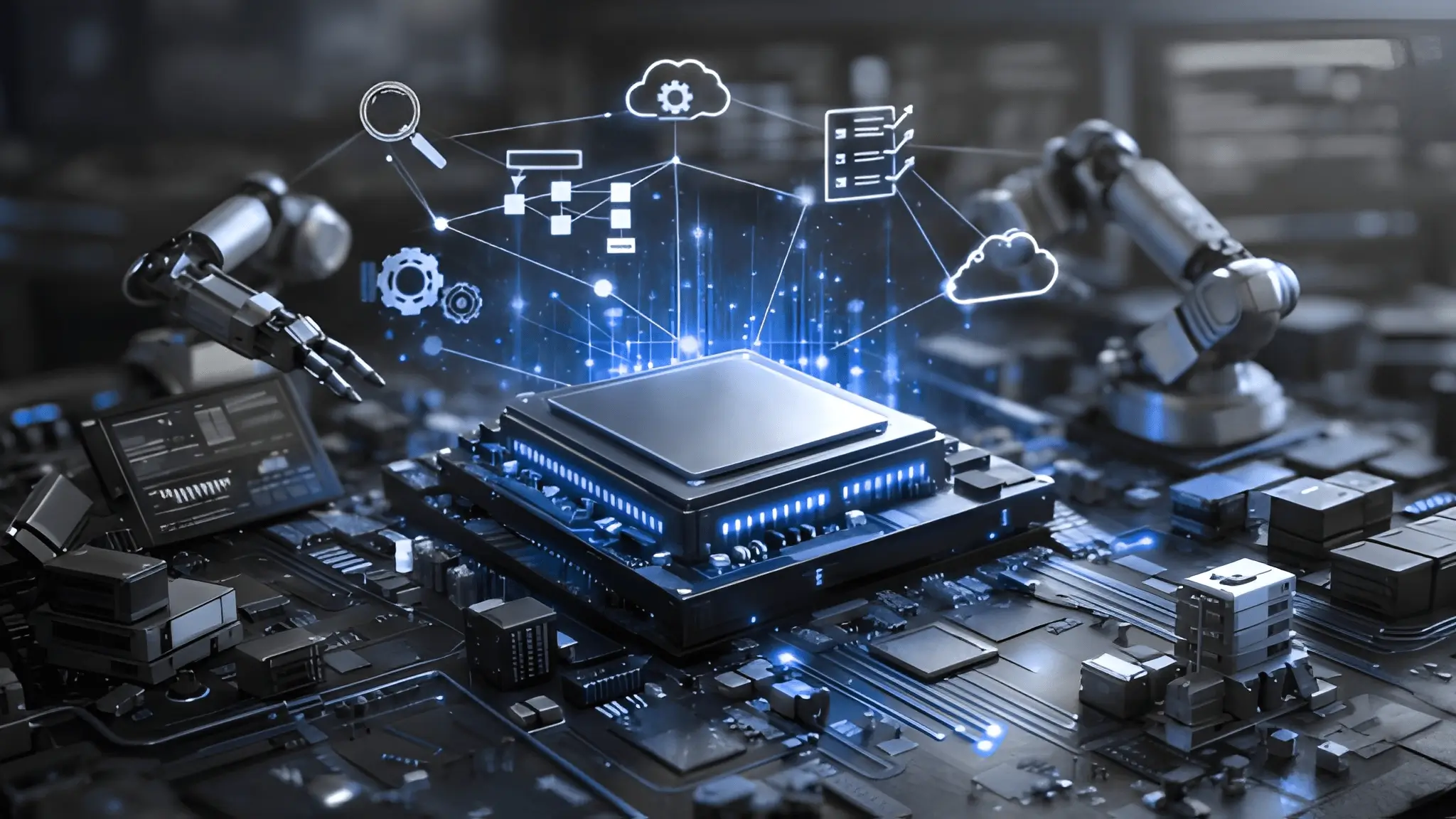
Modern AI systems no longer end their lifecycle at the moment they generate an output, because that output often triggers a cascade of additional system-level actions that remain invisible to users. A single response can initiate validation routines, policy checks, retrieval augmentation, and downstream API calls that collectively extend the execution chain far beyond what appears on the surface. This shift reframes AI outputs as entry points into broader computational pipelines rather than final deliverables, which changes how engineers must think about system boundaries. As a result, the architecture surrounding large language models increasingly resembles distributed workflows instead of isolated inference engines. These workflows integrate memory layers, tool invocation systems, and feedback loops that continuously refine results after the initial response. Consequently, infrastructure planning must account for post-response execution paths that consume resources even after the user interaction appears complete.

AI orchestration layers coordinate multiple subsystems that operate sequentially and in parallel, ensuring that each response meets quality, safety, and contextual requirements before final delivery. These layers handle prompt augmentation, intermediate reasoning steps, and structured output formatting, all of which introduce additional computational overhead. The orchestration process often includes retries, fallback models, and conditional branching logic that expands execution complexity beyond linear inference. Engineers now design systems where the visible response represents only a fraction of the total compute involved in delivering it. This design pattern reflects a broader transition toward composable AI systems that rely on interconnected services rather than monolithic models. Therefore, the true cost of an AI response lies in the orchestration pipeline that surrounds it, not just the model inference itself.
One Request, Dozens of Compute Calls
A single AI request can trigger multiple internal compute calls across different services, and in more complex systems this can extend to dozens of calls, including embedding generation, vector database queries, model inference, and validation checks. These calls often occur in rapid succession, creating a dense execution graph that remains hidden from end users. Each step introduces latency and resource consumption, which accumulates into a significant infrastructure footprint for even simple queries. Engineers increasingly observe that the number of internal operations per request scales with system sophistication rather than user complexity. This pattern highlights the growing gap between perceived and actual compute usage in AI systems. As systems evolve, the internal call graph becomes a critical factor in determining performance and cost efficiency.
The expansion of internal compute calls stems from the need to integrate multiple capabilities within a single AI interaction, such as reasoning, retrieval, and tool execution. These capabilities require distinct models and services that operate in coordination, which increases the number of compute steps per request. In addition, systems often perform parallel evaluations to ensure reliability, including ensemble methods and cross-model validation. This redundancy improves output quality but also multiplies resource consumption behind the scenes. The resulting execution pattern resembles a microservices architecture where each component contributes a small portion of the overall workload. Thus, understanding AI infrastructure now requires analyzing the full chain of compute calls rather than focusing solely on the primary model.

The Shift to Always-On Background Compute
AI systems increasingly operate as continuous processes rather than event-driven workloads, generating compute activity even when no explicit user request exists. Agentic architectures maintain persistent context, monitor external signals, and proactively update internal states, which leads to ongoing background computation. These systems perform tasks such as memory consolidation, knowledge graph updates, and environment monitoring without direct user interaction. This behavior transforms AI infrastructure into an always-on system that resembles real-time data processing pipelines. The shift introduces new challenges in resource allocation and system optimization, as idle periods no longer equate to zero compute usage. As a result, infrastructure must support sustained workloads that fluctuate independently of user demand.
Continuous background compute also enables AI agents to anticipate user needs and prepare responses in advance, which improves responsiveness but increases resource consumption. Systems may prefetch data, run simulations, or evaluate potential actions before receiving explicit instructions. These proactive operations require coordination across multiple services, which further amplifies orchestration complexity. Engineers must design scheduling mechanisms that balance proactive computation with resource efficiency to avoid unnecessary overhead. The emergence of always-on AI workloads challenges traditional assumptions about request-based scaling models. Therefore, infrastructure strategies must evolve to accommodate persistent compute patterns that operate independently of user interactions.
Why CPUs Are Carrying the Quiet Load
CPUs play a central role in AI orchestration because they handle the control logic that coordinates complex workflows across distributed systems. While GPUs accelerate model inference, CPUs manage sequencing, task scheduling, data movement, and system-level decision-making. These responsibilities require low-latency execution and flexible control structures, which align with CPU architecture strengths. The orchestration layer relies on CPUs to integrate outputs from multiple models and services into a coherent response. This division of labor places CPUs at the center of the hidden compute workload that supports AI systems. Consequently, CPU utilization often increases alongside AI adoption in orchestration-heavy deployments, although the degree of increase depends on system architecture and workload design, even when GPU usage receives more attention.
The orchestration process involves numerous lightweight operations that do not benefit from GPU acceleration, such as parsing, validation, and conditional logic execution. These tasks accumulate into a substantial workload that remains largely invisible in traditional performance metrics. CPUs handle retries, error handling, and fallback mechanisms that ensure system reliability under varying conditions. In addition, they coordinate communication between services, which introduces further computational overhead. This pattern highlights the importance of optimizing CPU performance in AI infrastructure, as inefficiencies in orchestration can degrade overall system performance. Thus, CPUs carry a significant portion of the hidden workload that enables complex AI interactions.
Measuring the Work You Never See
The concept of orchestration tax introduces a proposed way to quantify the hidden compute costs associated with AI systems, focusing on CPU cycles consumed per decision chain as a conceptual metric rather than an industry-standard measure. This metric captures the cumulative impact of orchestration tasks that extend beyond primary model inference. By measuring CPU usage across the entire execution pipeline, engineers can gain a more accurate understanding of system efficiency. Traditional metrics such as latency and throughput fail to account for the complexity of orchestration layers. The orchestration tax provides a framework for evaluating the true cost of delivering AI capabilities. Therefore, it enables more informed decisions about infrastructure design and optimization.
Implementing the orchestration tax requires detailed instrumentation of system components to track compute usage at each stage of the execution chain. This approach involves monitoring CPU cycles, memory access patterns, and inter-service communication overhead. Engineers must aggregate these measurements to calculate the total orchestration cost associated with each AI interaction. The resulting data can reveal inefficiencies and bottlenecks that remain hidden under traditional monitoring approaches. In addition, it supports capacity planning by providing a clearer picture of resource requirements. Consequently, the orchestration tax becomes a critical metric for managing the complexity of modern AI systems.
AI infrastructure continues to scale through layers of computation that remain largely invisible to users and often underrepresented in system metrics. These layers include orchestration logic, background processes, and inter-service coordination that collectively define the true cost of AI operations. Infrastructure planners often focus on model performance and GPU capacity, while some evidence suggests the growing impact of CPU-driven orchestration workloads may receive comparatively less explicit attention in planning frameworks. This gap creates challenges in capacity planning, cost management, and system optimization. The orchestration tax highlights the need to account for these hidden layers when designing and scaling AI systems. Ultimately, organizations must adopt more comprehensive metrics to capture the full scope of AI compute usage.
The shift toward complex, multi-stage AI workflows requires a rethinking of infrastructure strategies to ensure efficient resource utilization. Operators must integrate orchestration-aware monitoring tools and optimize CPU performance alongside GPU acceleration. Hyperscalers need to adjust pricing models and capacity planning frameworks to reflect the true cost of AI workloads. Architects must design systems that minimize unnecessary orchestration overhead while maintaining reliability and scalability. This evolution underscores the importance of understanding AI as a system-level phenomenon rather than a model-centric capability. As AI adoption accelerates, the ability to measure and manage invisible compute layers will define infrastructure competitiveness.











