Skip to content
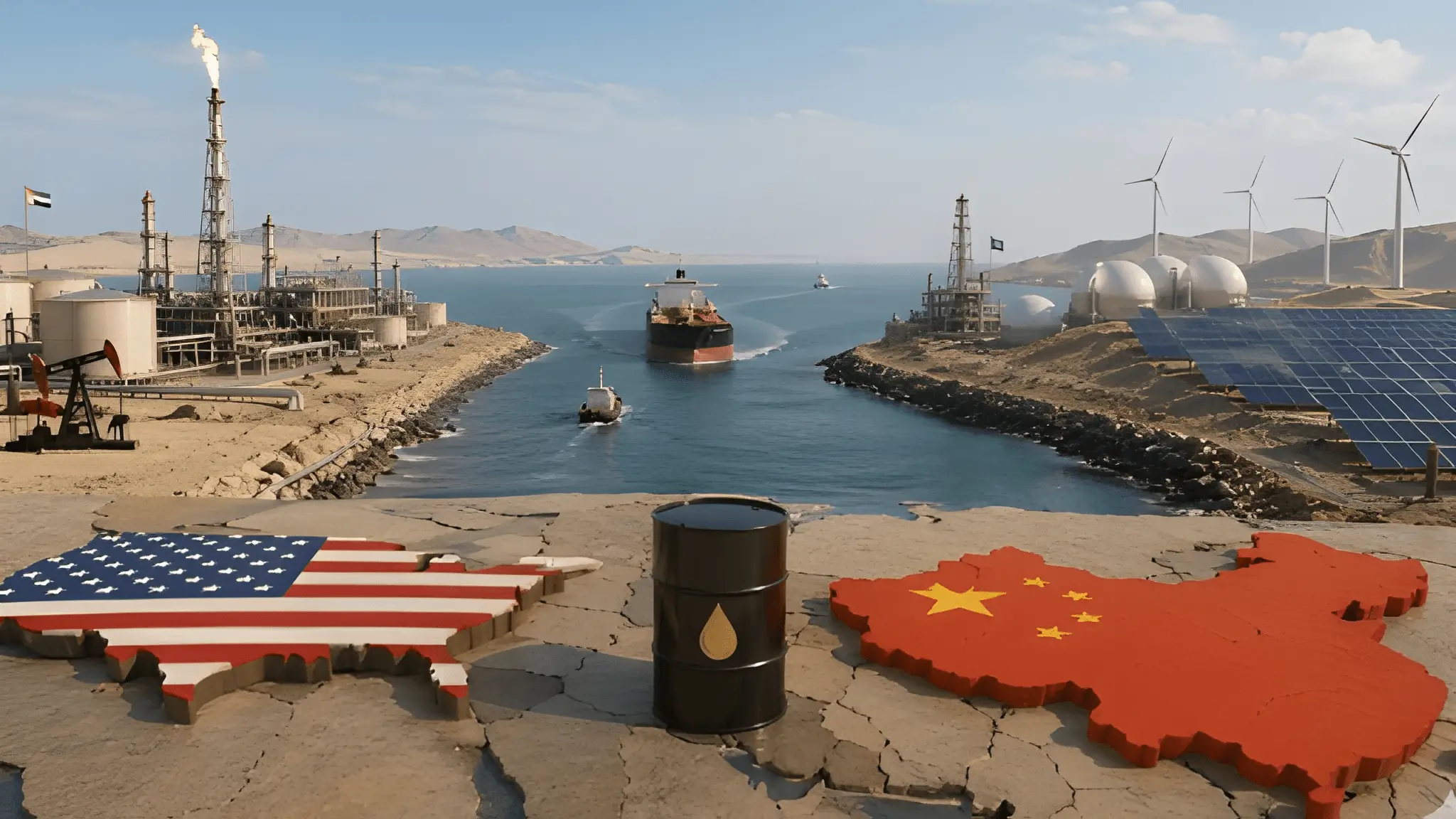
The End of Assumed Stability
The Gulf energy crisis is not an isolated disruption. It is a structural stress test for the global system that has, for decades, operated on the assumption of stable energy flows and predictable geopolitical behavior. That assumption is now under strain.

Energy markets had only begun stabilizing after previous shocks when renewed tensions in the Gulf introduced a new layer of uncertainty. The region remains one of the most critical arteries of global energy supply, and any instability there reverberates across continents. What distinguishes this moment is not just the disruption itself, but the exposure of how concentrated and fragile the system has become.
Globalization has long depended on efficiency. Energy moved where it was cheapest to produce and easiest to transport. That model prioritized cost optimization over resilience. The Gulf crisis reveals the limits of that approach. When a handful of chokepoints dictate global supply conditions, efficiency becomes vulnerability.
Strategic Chokepoints as Pressure Points
The Gulf’s significance lies not only in production volumes but in geography. Maritime routes, export terminals, and regional infrastructure form a network that cannot be easily substituted. Disruptions in this system do not remain local; they cascade into global trade flows.

Shipping risks increase insurance costs. Delays in transit affect industrial supply chains. Price volatility feeds directly into inflation metrics across major economies. These are not abstract risks they translate into tangible economic consequences, from manufacturing slowdowns to shifts in consumer pricing.
The crisis highlights a fundamental imbalance: global demand has diversified, but supply routes remain concentrated. That imbalance is now a strategic liability. Governments and corporations alike are being forced to reassess exposure to these chokepoints, not as temporary risks but as persistent structural challenges.
Energy as a Geopolitical Instrument
Energy has always carried political weight, but its role is evolving. It is no longer just a commodity traded in markets; it is increasingly deployed as a tool of influence.
In the current environment, decisions around production, transport, and pricing are intertwined with broader geopolitical objectives. Alliances are being shaped not only by security concerns but by energy dependencies. Access to supply has become a negotiating asset, while disruption risks serve as leverage.
This shift marks a departure from the post-Cold War era, where market mechanisms often dictated outcomes. Today, state interests are reasserting themselves more explicitly in energy strategy. The Gulf crisis accelerates this transition, reinforcing the idea that energy security and national security are inseparable.
U.S.-China Divergence Deepens
At the center of the evolving landscape is the widening strategic divide between the United States and China. Both nations rely on Gulf energy flows, but their approaches increasingly diverge.
The United States, with its expanded domestic production capacity, views the region through a broader security lens. Stability in the Gulf remains important, but energy dependence has shifted. This allows for greater flexibility in response, including the use of diplomatic and strategic tools to manage risk.
China, by contrast, remains deeply tied to imported energy. Gulf supplies are central to its industrial base and economic continuity. This dependence shapes its strategic calculations, driving efforts to secure long-term supply agreements and diversify transport routes.
The divergence is not merely economic, it is systemic. Coordination between the two powers on energy stability appears limited, as competition increasingly defines their interactions. The Gulf crisis, rather than encouraging alignment, is reinforcing parallel strategies.
Fragmentation of the Energy Order
What emerges from this dynamic is a more fragmented global energy system. The integrated model that once defined globalization is giving way to a patchwork of regional strategies and bilateral arrangements.
Supply chains are being reconfigured with resilience in mind. Countries are investing in alternative routes, storage capacity, and diversified sourcing. Efficiency remains important, but it is no longer the dominant priority.
Security considerations now shape decisions that were once purely economic. Governments are willing to absorb higher costs in exchange for reduced exposure to geopolitical risk. This recalibration signals a broader shift in how energy markets operate.
The fragmentation extends beyond logistics. It influences trade relationships, investment flows, and technological development. Energy infrastructure is increasingly designed with strategic autonomy in mind, rather than global integration.
Industrial and Economic Consequences
The ripple effects of the Gulf crisis extend into industrial systems. Energy price volatility directly impacts production costs across sectors, from manufacturing to transportation. Companies face a more complex operating environment, where input costs can shift rapidly.
Inflationary pressures are amplified as energy costs feed into broader economic indicators. Central banks must navigate these dynamics while balancing growth and stability. The interplay between energy markets and monetary policy becomes more pronounced.
Industries that rely heavily on stable energy inputs are particularly exposed. Long-term planning becomes more challenging when supply conditions are uncertain. This uncertainty influences investment decisions, potentially slowing expansion and innovation in certain sectors.
At the same time, the crisis creates incentives for technological adaptation. Efficiency improvements, alternative energy adoption, and localized production models gain traction as companies seek to mitigate risk.
Reordering Global Alignments
The geopolitical implications of the Gulf crisis extend beyond energy markets. Nations are being pushed toward clearer alignments, shaped by their access to resources and their strategic priorities.
Energy partnerships are becoming more explicit. Countries are forming agreements that reflect not just economic interests but security considerations. These partnerships influence broader diplomatic relationships, reinforcing existing alliances or creating new ones.
The shift toward alignment does not imply stability. It introduces new complexities, as competing blocs pursue their own strategies. The global system becomes less predictable, with multiple centers of influence shaping outcomes.
The Gulf, in this context, serves as a focal point. It is no longer just a supplier of energy, it is a stage where broader geopolitical dynamics play out. Decisions made in the region carry implications far beyond its borders.
A System Under Transition
The Gulf energy crisis underscores a larger transition in the global order. The era of seamless globalization, built on assumptions of stability and efficiency, is being replaced by a more contested and fragmented landscape.
This transition does not suggest a collapse of global trade, but it does indicate a reconfiguration. Systems are being redesigned to account for risk, even at the expense of efficiency. The balance between openness and security is shifting.
Energy sits at the center of this transformation. Its role as both an economic input and a geopolitical tool ensures that it will remain a defining factor in global dynamics.
The crisis, therefore, is not an anomaly. It is a signal, one that highlights the need for new frameworks to manage complexity, uncertainty, and competition in an evolving world order.